Wyoming State Trust Land Hunting
One of the biggest headaches for any hunter in Wyoming, especially if you're not a local, is figuring out exactly where you can legally set foot. You see vast stretches of what looks like open country, but the boundaries can be a confusing patchwork of private, federal, and state lands. This guide is all about demystifying Wyoming State Trust Land, helping you understand what it is, how to find it, and most importantly, how to hunt it legally and ethically.
Understanding Wyoming State Trust Land: What It Is and Why It Matters
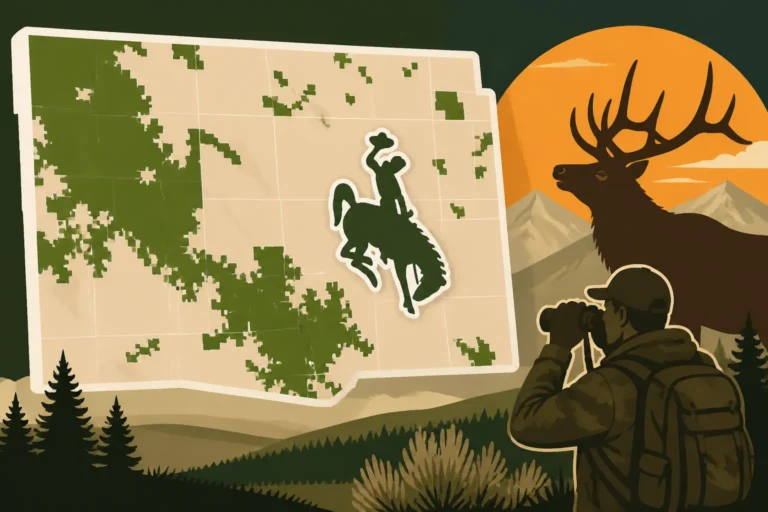
When you're poring over maps of Wyoming, you'll often encounter parcels of land colored differently than the vast swaths of Bureau of Land Management (BLM) or National Forest. These are often State Trust Lands, and they represent a unique segment of public access that many hunters either overlook or misunderstand. Unlike federal lands, which are managed for broad public benefit, State Trust Lands have a very specific purpose.
History and Purpose of State Trust Land
Imagine the early days of statehood, when the federal government wanted to encourage growth and development in new states like Wyoming. As part of this push, large grants of land were set aside by the federal government for the benefit of specific state institutions, primarily public schools. These lands were essentially given in trust, to be managed by the state to generate revenue. This revenue, whether from grazing leases, mineral extraction, or timber sales, directly funds public education and other vital state services.
So, while these lands are indeed "publicly owned" by the state, their primary purpose isn't recreation in the same way a National Forest might be. Their management is geared towards maximizing income for beneficiaries. This distinction is absolutely critical because it influences how and when you can access them, and it often means that these lands come with different rules and expectations than the federal lands you might be more familiar with.
Distinguishing State Trust Land from Other Public Lands
It’s easy to lump all non-private land into one "public" category, but that's a mistake in Wyoming. State Trust Land operates under a different management philosophy than federal lands like those managed by the Bureau of Land Management (BLM) or the U.S. Forest Service. BLM and Forest Service lands are typically managed for multiple uses, including recreation, conservation, and resource development, with a general presumption of public access unless otherwise specified.
State Trust Lands, however, are managed by the Wyoming Office of State Lands and Investments. While they do offer recreational opportunities, especially hunting and fishing, these are usually secondary to their revenue-generating purpose. This means you might find active grazing leases, oil and gas operations, or other commercial activities on State Trust Land that might not be as prevalent or managed the same way on federal land. Crucially, the biggest difference lies in access: while most federal lands are generally open if you can physically get there, State Trust Lands are only open if they are "legally accessible," a point we'll dive into next. This distinction is vital for avoiding inadvertent trespass and ensuring a legal hunt.
The Absolute Rules for Accessing Wyoming State Trust Land for Hunting
This is where many hunters, even seasoned ones, can get tripped up. Just because a parcel of land is marked "State Trust Land" on your map doesn't automatically mean you can walk or drive onto it. The legal definition of access is paramount, and ignoring it can lead to serious trouble.
The Crucial "Legally Accessible" Requirement
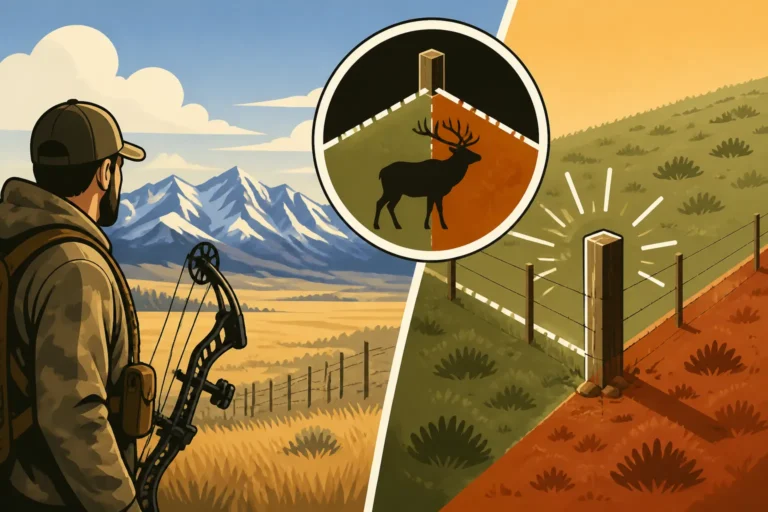
Here's the golden rule for State Trust Land: it must be "legally accessible" to the public. What does that mean? It means you can reach it without crossing private land that does not have a public easement or right-of-way. This is not a suggestion; it's the law. Many State Trust Land parcels are completely surrounded by private property, making them "landlocked" to the public. You cannot jump a fence or walk across a corner of private land to reach a State Trust parcel, even if you can see it right there. How Wyoming's Checkerboard Land Pattern Came About often leads to these tricky access situations, making it incredibly important to plan your approach meticulously.
The Wyoming Office of State Lands and Investments does a decent job of trying to identify legally accessible parcels, but ultimately, the burden of proof is on you, the hunter. Always assume that if you have to cross private property to get there, it's not legally accessible unless you have explicit, documented permission from the landowner or there's a recognized public easement. It’s far better to err on the side of caution than to face a trespass charge in a remote corner of Wyoming.
Understanding Easements and Rights-of-Way
Sometimes, a road or trail that crosses private land is actually a public easement or a public right-of-way. This means that while the land around the road is private, the path itself is legally open for public travel. Identifying these can be a game-changer for accessing otherwise landlocked State Trust Land. However, it's not always obvious. A simple "Private Road" sign could mean exactly that, or it could refer to the land adjacent to a public easement.
How do you know the difference? This is where good mapping tools and diligent research come into play. Public road atlases, county plat maps, and advanced hunting apps like onX Hunt often highlight these public access routes. It’s important to understand that an easement for grazing or oil and gas development does not automatically grant public hunting access. You need a public recreational easement. Always confirm with local county offices or the Wyoming Office of State Lands and Investments if you're unsure about the status of a specific access point.
What "Adjoining" Public Land Really Means
The simplest and most common way to legally access State Trust Land for hunting is when it "adjoins" or shares a boundary with other public land, such as BLM or National Forest. In these scenarios, you can simply walk or ride from the federal land onto the State Trust Land, and you're good to go. This is the ideal situation, as it usually means clear, undisputed access. Many hunters utilize this by staging on federal ground and then moving into adjacent State Trust parcels.
However, even "adjoining" can have nuances. Make sure the public land you're using for access is also legally accessible to you. For instance, if a strip of BLM land is landlocked by private property, and that BLM land then adjoins State Trust Land, you still cannot get to the State Trust Land without trespassing across the private land first. It's a chain of legal access, and every link must be public. This is why tools like onX Hunt are so valuable; they allow you to visualize these landownership boundaries with incredible detail, helping you plan your approach without crossing any lines. Reaching Wyoming Public Land by Public Road and Walking In From Bordering Public Land are excellent strategies to employ.
Locating State Trust Land for Your Wyoming Hunt
Alright, so you know what State Trust Land is and the critical rules around accessing it. Now, how do you actually find these parcels and integrate them into your hunt plan? Modern technology has made this infinitely easier, but it still requires diligence.
Using Digital Mapping Tools like onX Hunt and GoHunt
In today's hunting world, digital mapping apps are your best friend, and they are absolutely indispensable for navigating Wyoming's complex land ownership. Tools like onX Hunt and GoHunt are purpose-built for this kind of reconnaissance, layering public land boundaries onto high-resolution satellite imagery. With a premium subscription, you can clearly see State Trust Land parcels highlighted, often in a distinct color, alongside BLM, National Forest, and private property.
These apps allow you to:
- Identify State Trust Land: Quickly spot these parcels on your map.
- Check Accessibility: Trace potential access routes from public roads or adjacent public lands. You can zoom in to see fences, two-tracks, and topography.
- Plan Your Stalk: Use the contour lines and satellite imagery to plan an approach, identify bedding areas, or find water sources on these lands.
- Offline Mode: Download maps for offline use, which is critical in remote Wyoming where cell service is often nonexistent.
Before you ever leave your living room, you can spend hours e-scouting, marking potential access points, and identifying key features on State Trust Land. E-Scouting a Unit Before the Season Opens is a tactic that truly shines when working with these land types. Remember, these tools are incredibly powerful, but they are only as good as the data they present and your ability to interpret it. Always be aware that conditions on the ground can change.
Interpreting Official State Trust Land Maps
While digital apps are fantastic, it's always wise to cross-reference with official state resources. The Wyoming Office of State Lands and Investments (OSLI) often provides maps, sometimes interactive, that specifically delineate State Trust Land. These maps are the definitive source for ownership boundaries and can sometimes offer more granular detail on easements or specific use restrictions than a general hunting app might.
You might also find physical maps at regional Game and Fish offices or local county courthouses. These can be particularly useful for understanding historical easements or rights-of-way that might not be immediately obvious on a digital map. The combination of modern digital tools and official paper maps provides the most robust approach to verifying your access and understanding the lay of the land. Don't be afraid to pick up the phone and call the local OSLI office if you have specific questions about a parcel you're interested in.
Ground-Truthing Your Access Plan
E-scouting and map study are excellent starting points, but nothing beats "ground-truthing" your access plan. This means physically visiting the access points and boundaries before hunting season, if at all possible. Roads marked as public on a map might be washed out, gated (if they're private), or simply impassable for your vehicle. What looks like an easy walk across a public corner might turn into a thorny, marshy bog.
By actually putting boots on the ground, you can:
- Verify Public Access Points: Confirm that roads or trails are indeed open and traversable.
- Identify Boundary Markers: Look for fences, signs, or changes in vegetation that denote property lines.
- Assess Terrain: Understand the actual elevation changes, cover, and water sources.
- Spot Existing Use: Notice any active grazing, logging, or energy operations that might affect your hunt.
Even a quick drive through an area can provide invaluable insights that no map, digital or physical, can fully convey. This pre-season reconnaissance can save you immense frustration and potential legal issues when the season actually opens.
Specific Regulations and Considerations for Hunting Wyoming State Trust Land
Once you've confirmed legal access, you need to be aware that while hunting on State Trust Land is generally permitted, there are some specific rules and ethical considerations that go beyond standard big game regulations. Remember, these lands are often working landscapes.
General Hunting Rules That Apply
First and foremost, all statewide Wyoming Game and Fish Department hunting regulations apply on State Trust Land, just as they would on any other public or private land. This includes valid licenses and tags, legal hunting hours, species-specific seasons, bag limits, and legal weapon requirements. You still need your Wyoming Conservation Stamp and Who Needs One and you must follow all rules regarding game retrieval and tagging.
However, State Trust Land can sometimes have additional, specific restrictions depending on the parcel and its current lease agreements. For example, some areas might have seasonal vehicle restrictions, or even temporary closures for active grazing operations. It's always a good idea to check the Wyoming Game and Fish Department's Access Yes program maps, as some State Trust Land parcels are enrolled in programs like Hunter Management Areas, which might require a permission slip even though the underlying land is public. Always carry a copy of the current regulations with you, and double-check for any special provisions for the specific hunt area you are in.
Respecting Adjacent Private Property
This cannot be stressed enough: boundaries are absolute. When you are on State Trust Land, you must be extremely mindful of the adjacent private property. This means:
- No Trespassing: Do not cross onto private land, even for a few steps, without explicit permission. This includes retrieving game that runs onto private property.
- Shooting Lanes: Be aware of your shooting lanes. Never shoot across private property without permission. Always ensure your bullet will impact on public land.
- Vehicle Access: Stick to designated public roads or established two-tracks. Do not create new routes, and do not drive off-road onto private land.
- Noise and Disturbances: While hunting, minimize any disturbances that could affect landowners or their livestock.
The "corner crossing" debate highlights the tension between public land access and private property rights. While a recent federal court ruling affirmed the legality of stepping from one piece of public land to another at a common corner, it's a very specific context. When dealing with State Trust Land, assume you cannot cross private land in any way to reach it unless a clear, public easement exists. Whether Corner Crossing Is Legal in Wyoming covers this complex topic in more detail. Your ethical behavior on State Trust Land reflects on all hunters and can impact future access opportunities.
Camping and Vehicle Use on State Trust Land
Regulations regarding camping and vehicle use on State Trust Land are often more restrictive than on federal lands. While dispersed camping might be allowed on some parcels, it's not a universal right as it often is on BLM or National Forest. Many State Trust Land parcels are day-use only. Before planning an overnight stay, you absolutely must verify that camping is permitted for that specific parcel. Check with the Wyoming Office of State Lands and Investments.
Vehicle use is also typically limited to established roads and two-tracks. Off-road travel is generally prohibited, as it can damage the land, disturb grazing operations, and create erosion issues. Always look for signage, and if in doubt, assume vehicles are restricted. Respecting these rules is critical for maintaining access and good relationships with lessees and land managers. Remember to leave no trace, pack out everything you pack in, and be extra careful with fire, especially in dry conditions.
State Trust Land's Role in Wyoming's Broader Public Access Landscape
State Trust Land, while sometimes challenging to access, is a vital piece of the public land puzzle for Wyoming hunters. Understanding how it fits in with federal and other state programs can significantly expand your hunting opportunities.
Comparing State Trust Land to BLM and National Forest
To put it simply, State Trust Land is often the "third sibling" in the public land family, after the more widely known BLM (Bureau of Land Management) and National Forest lands. While all three are publicly owned, their primary management objectives and therefore their access rules, can differ significantly.
Here's a quick comparison:
| Feature | BLM Land | National Forest Land | Wyoming State Trust Land |
|---|---|---|---|
| Primary Purpose | Multiple use (grazing, energy, recreation, conservation) | Multiple use (timber, recreation, water, wildlife) | Revenue generation for state beneficiaries (e.g., schools) |
| Access Default | Generally open to public | Generally open to public | Only open if legally accessible from public roads or adjacent public land |
| Camping | Dispersed camping widely allowed | Dispersed camping widely allowed | Often restricted; check specific parcel rules; day-use common |
| Vehicle Use | Generally on established roads/trails | Generally on established roads/trails | Limited to established roads/two-tracks; off-road generally prohibited |
| Management | Federal (Department of Interior) | Federal (Department of Agriculture) | State (Wyoming Office of State Lands and Investments) |
| Leases | Grazing, energy, recreation permits | Grazing, timber, recreation permits | Grazing, agriculture, energy, commercial leases |
Understanding these differences is key to successful and legal hunting in Wyoming. Many hunters will target areas that combine all three types of land, strategically moving between them based on game movement and access points. How Much Land the State of Wyoming Owns might surprise you, given these unique access rules.
Integrating State Trust Land into Your Hunt Planning
Don't dismiss State Trust Land just because access can be tricky. These parcels often hold incredible hunting opportunities. They can be located in diverse habitats, from sagebrush flats critical for antelope and mule deer to timbered draws that hold elk. Because they are often overlooked or underutilized due to access challenges, they can sometimes offer less pressured hunting than easily accessible federal lands.
When planning your hunt, consider State Trust Land in these ways:
- Connector Pieces: A small State Trust parcel might connect two larger blocks of federal land, providing a crucial corridor for game movement or hunter access.
- Hidden Gems: An isolated parcel that's technically accessible (perhaps by a long walk-in from a public road) could hold unpressured animals.
- Buffer Zones: State Trust Land can sometimes border private land known for holding game, offering a public staging area to hunt animals that might move between the two.
Use your digital mapping apps, like onX Hunt, to identify these opportunities. Look for water sources, changes in topography, and areas with good cover. Think of State Trust Land as another tool in your access toolbox, requiring a bit more thought and planning but offering potentially big rewards.
Access Yes and State Trust Land Overlaps
The Wyoming Game and Fish Department's "Access Yes" program is an incredible resource for hunters seeking public access to private and sometimes state lands. This program works by compensating landowners for allowing public hunting, effectively opening up tens of thousands of acres that would otherwise be closed. Crucially, some State Trust Land parcels are included in the Access Yes program, often as part of larger Hunter Management Areas (HMAs) or Walk-In Areas (WIAs).
If you find a State Trust Land parcel within an HMA, you'll likely need to obtain a permission slip from the Game and Fish Department before hunting it, even though it's technically public land. This helps the department manage hunter pressure and ensures compliance with the agreement. Always check the Access Yes website and current maps before hunting any parcel identified as an HMA or WIA. How Wyoming's Access Yes Program Works is a must-read for anyone serious about expanding their access options in the state. This program can make previously inaccessible State Trust Land a viable option for your next hunt.
Challenges and Best Practices for Hunting State Trust Land
Hunting State Trust Land in Wyoming comes with its unique set of challenges, but with careful planning and adherence to best practices, these lands can provide excellent opportunities.
Navigating Landlocked Parcels
The most significant challenge with State Trust Land is undoubtedly the prevalence of landlocked parcels. These are pieces of State Trust Land entirely surrounded by private property, rendering them inaccessible to the public without express permission from the surrounding landowners. You can identify these on your maps using tools like GoHunt, which clearly delineate property boundaries.
When encountering such a parcel, your options are limited:
- Seek Permission: Your best bet is to respectfully contact the adjacent private landowner to request permission to cross their property. Be prepared for a "no," but a polite, well-articulated request demonstrating your understanding of their property rights might sometimes yield a "yes."
- Move On: If permission isn't granted, or if you can't identify or contact the landowner, you must simply move on to a different area that offers legal access. The penalties for trespassing are severe and not worth the risk.
Never assume you can just "slip in." The property owners in Wyoming are often very protective of their land, and they know their boundaries. Always confirm legal access before entering.
Ethical Hunting and Conservation on State Trust Land
Because State Trust Land is often managed for commercial purposes (like grazing), ethical behavior takes on an even greater importance. Your actions directly impact how these lands are perceived and managed for future public access.
Best practices include:
- Respect the Land: Minimize your footprint. Stay on existing roads and trails. Pack out all trash, including spent shell casings.
- Respect Livestock: Expect to encounter cattle or other livestock. Give them a wide berth. Close all gates you open. Do not harass or disturb them.
- Report Issues: If you see illegal dumping, trespassers, or other issues, report them to the Wyoming Office of State Lands and Investments or the Game and Fish Department.
- Leave No Trace: Practice Leave No Trace principles rigorously. This includes proper waste disposal, minimizing campfire impacts (if fires are even allowed), and being considerate of other users.
- Be a Steward: View yourself as a temporary steward of these lands. Your responsible actions contribute to the continuation of public access.
A positive reputation for hunters ensures that the Office of State Lands and Investments continues to view public recreation as a compatible use, rather than a liability.
The Future of State Trust Land Access
The landscape of public land access is always evolving, and State Trust Land is no exception. There's an ongoing dialogue between various stakeholders—hunters, ranchers, conservationists, and state agencies—about how these lands should be managed and accessed. Programs like Access Yes are a testament to efforts to expand public hunting opportunities through cooperative agreements.
Hunters can play a crucial role in advocating for continued and expanded access by being responsible, ethical, and engaged. Support organizations that work to secure public land access. Participate in public meetings or comment periods when decisions about State Trust Land management are being made. The more you understand these lands, respect their primary purpose, and demonstrate ethical behavior, the better the chances that these valuable hunting grounds will remain open for generations to come.
Disclaimer
This article is for general informational purposes only and does not constitute professional advice. Laws, prices and regulations vary by location and change over time. Consult a qualified professional for guidance on your specific situation.