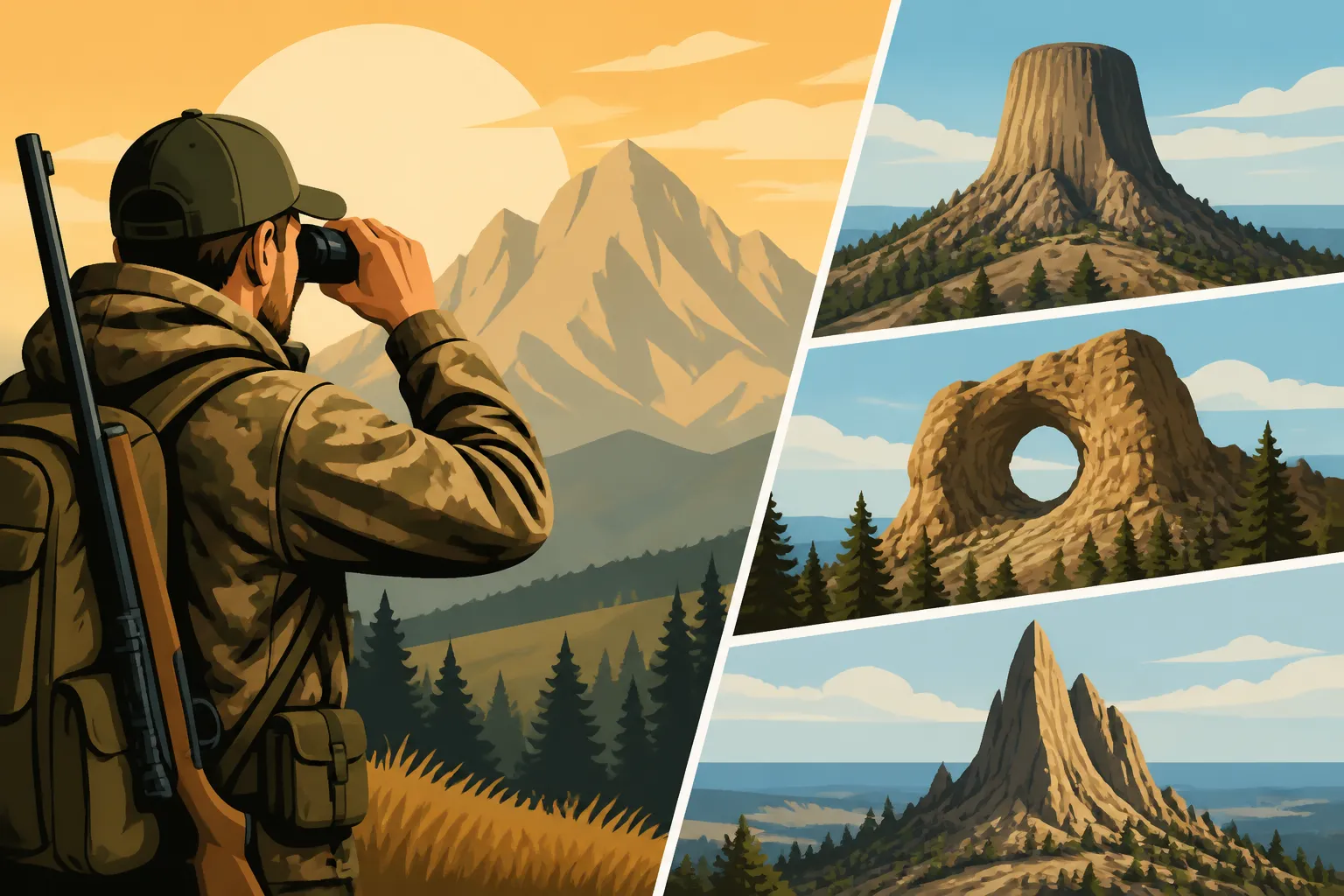
Wyoming’s Bearlodge, Keyhole and Inyan Kara
Hunting in eastern Wyoming’s Black Hills region can feel like a completely different world compared to the vast, open sagebrush of the rest of the state. If you've been frustrated by trying to apply open-country glassing tactics to dense timber or struggling to understand the patchwork of public and private ground, you're not alone. This guide will walk you through three distinctive deer hunting areas – Bearlodge, Keyhole, and Inyan Kara – giving you a realistic look at the terrain, the challenges, and the rewarding opportunities each presents for both mule deer and whitetail hunters.
Unpacking Wyoming's Black Hills Deer Country
When most folks picture Wyoming hunting, they imagine endless plains and towering mountains. But tucked away in the state's northeast corner lies a unique landscape: the Wyoming Black Hills. This area offers a distinct hunting experience, often characterized by dense Ponderosa pine forests, rolling hills, and a complex mosaic of public and private lands. It's a place where you'll find both mule deer and whitetails, sometimes even sharing the same drainages, presenting a diverse challenge for any hunter. The habitat here is a stark contrast to the high desert or alpine environments, requiring a different set of scouting and hunting strategies.
The game animals in this region often behave differently than their cousins further west. Whitetail deer, especially, will rely heavily on the thick cover and riparian zones, making them elusive. Mule deer, while present, tend to stick to the fringes or more open, broken terrain where they can use their keen eyesight. Understanding these subtle differences in animal behavior and habitat preference is the first step toward success in areas like Bearlodge, Keyhole, and Inyan Kara. This isn't a place for casual hunting; it demands dedicated effort, attention to detail, and often, a willingness to get into the thick stuff.
The Allure of Eastern Wyoming Whitetails
For hunters accustomed to the vastness of the American West, the Black Hills offers a refreshing change with its significant whitetail population, especially along the river bottoms and forested drainages. These aren't your Midwestern farm country whitetails entirely; they still navigate a landscape that feels wild and rugged, but their behavior is decidedly more focused on cover and edge habitat. You'll find them hugging the dense stands of timber, slipping through brushy ravines, and utilizing the cover offered by the Ponderosa pines. Hunting the Whitetail River Bottoms of Eastern Wyoming is a completely different game than chasing mule deer on open slopes.
Hunting whitetails here often involves a more intimate approach. Still-hunting through timber patches, carefully stalking ridges, or sitting patiently near known travel corridors or food sources can be highly effective. Unlike glassing vast expanses for mule deer, finding whitetails in the Black Hills means slowing down, paying close attention to fresh sign, and understanding how they use the limited open areas and dense cover to their advantage. The rut period can be particularly exciting as bucks become more active, venturing out of their secure hideouts, but even then, cover is king.
Mule Deer in the Black Hills Fringe
While whitetails dominate many of the lower, timbered areas and river bottoms, the Black Hills also holds a population of mule deer, particularly in the more broken, rougher country and at higher elevations. These aren't the trophy-class bucks that Wyoming is famous for in its western ranges, but they offer a challenging and rewarding hunt. Mule deer in this region often occupy areas where the dense timber gives way to more open clearings, rocky outcrops, or steep, brushy slopes, allowing them to survey their surroundings.
Hunting these Black Hills mule deer requires a blend of tactics. You might start your day glassing some of the more open slopes at dawn or dusk, looking for deer moving between feeding and bedding areas. Once located, an effective stalk, often utilizing the timber and terrain for cover, becomes crucial. Understanding Best Time of Day to Glass Mule Deer can make a significant difference in spotting these elusive animals before they spot you. They are masters of using the mixed terrain to disappear, so patience and careful observation are paramount.
Bearlodge: Hunting the Rugged Heart of the Black Hills
The Bearlodge Ranger District, located in the northern part of Wyoming's Black Hills, is a prime example of the unique hunting opportunities this region provides. It's an area defined by its deep canyons, thick Ponderosa pine forests, and a maze of roads and trails. For those seeking an immersive timber hunting experience, Bearlodge delivers. It’s also known for its mixed bag potential, offering chances at mule deer, whitetail, and even some elk and bear, depending on the specific unit and season. But don't mistake the timber for easy hunting; it's dense, often steep, and demands physical stamina and careful navigation.
Hunters here often face challenges with visibility and access. The thick timber can make spotting game from a distance nearly impossible, forcing you to hunt at closer quarters. Furthermore, the mix of public (National Forest and BLM) and private lands requires diligence in knowing exactly where you stand. It's a place where having reliable mapping tools like onX Hunt becomes absolutely essential for staying on public ground and identifying access corridors.
Terrain and Cover in Bearlodge
Bearlodge is characterized by its heavily forested landscape, primarily Ponderosa pine, interspersed with aspen groves, oak brush, and grassy clearings. This dense cover is both a blessing and a curse. It provides excellent sanctuary for deer, allowing them to feel secure and often bed down without moving far. However, it also significantly limits a hunter's line of sight, often reducing shooting opportunities to short ranges. This necessitates a more active hunting style, favoring still-hunting or methodical tracking over expansive glassing.
The terrain itself can be quite rugged, with numerous draws, drainages, and steep hillsides. This topography, combined with the dense vegetation, makes for physically demanding hunting. Deer will use these natural contours to travel undetected, often sticking to the bottom of draws or the lee side of ridges. Understanding how deer utilize these features is key. Focus your efforts on pinch points, saddles, and areas where different cover types merge, as these are natural travel corridors.
Access and Public Land Considerations in Bearlodge
Navigating the land ownership in Bearlodge can be tricky. While a good portion is National Forest, there are also significant parcels of private land, sometimes intermingled in a checkerboard pattern. This requires meticulous planning before and during your hunt. Ignoring property lines can lead to serious issues, so having a clear understanding of boundaries is paramount. Access Points Into the Bearlodge Deer Area are well-documented, but knowing which trails lead where, and what land they cross, is critical.
Digital mapping apps, such as onX Hunt, are invaluable here. They allow you to see property boundaries in real-time, ensuring you stay on public land. Before heading out, spend time scouting these areas virtually. Look for public road access, walk-in access areas, or sections of National Forest that might be landlocked without careful planning. Even with maps, always be respectful of private landowners and their property; if there's any doubt, err on the side of caution. Remember, good hunter-landowner relations benefit everyone.
Keyhole Reservoir: Water, Timber, and Deer
Moving slightly southeast from Bearlodge, you'll find the Keyhole Reservoir area, offering a distinct hunting environment influenced by the large body of water. Keyhole is not just a popular spot for fishing and boating; its surrounding lands provide excellent habitat for deer, especially whitetails, drawn to the water and the varied cover. This area presents a unique blend of open shoreline, rolling sagebrush hills, and scattered timber, requiring hunters to adapt their tactics to the diverse landscape.
The hunting pressure around Keyhole can sometimes be higher due to its recreational appeal, but persistent hunters who are willing to venture away from the main roads can find success. The presence of the reservoir creates natural bottlenecks and travel corridors for deer, making it a potentially predictable area if you can decode their movements. Like Bearlodge, it's a mixed-ownership area, so understanding boundaries is crucial.
The Keyhole Landscape
The landscape around Keyhole Reservoir is a fascinating mosaic. You'll encounter areas of open sagebrush and grasslands, especially closer to the water's edge and in the rolling hills surrounding the lake. However, interspersed throughout are stands of Ponderosa pine, juniper, and various riparian shrubs along seasonal creeks and drainages. This varied cover provides everything deer need: food, water, and security. The shoreline itself can be a major draw for deer, particularly in dry years when other water sources are scarce.
Deer, especially whitetails, will often gravitate towards the dense pockets of timber and brush that provide security during the day, moving out into more open areas to feed at dawn and dusk. The numerous fingers and coves of the reservoir can act as funnels, concentrating deer movement, making them ideal spots for ambushes or strategic glassing. Consider how deer might use these landscape features to move between bedding areas in the timber and feeding grounds or water sources. Hunting the Deer Country Around Keyhole Reservoir often means understanding how the lake itself influences deer behavior.
Tactics for Keyhole Deer
Successfully hunting Keyhole deer often involves combining elements of open-country glassing with timber-hunting tactics. In the early mornings and late evenings, position yourself to glass the more open slopes and edges of timber stands, looking for deer moving. As the sun rises, the deer will likely retreat into the thicker cover. This is when still-hunting, slow methodical walks through timber, or even setting up near known trails and water sources becomes effective.
Don't overlook the potential of hunting near water. Deer need to drink, and during dry periods, the reservoir can be a magnet. Look for fresh tracks along the shoreline or in muddy areas near seeps and springs. If you're hunting during the rifle season, remember Blaze Orange Requirements Through the Rifle Season for safety, as this area can see a fair amount of recreational activity in addition to hunting. Persistence and adaptability are your best friends here, as deer patterns can shift with pressure and weather.
Inyan Kara: Iconic Peak, Hidden Deer
Further east, rising dramatically from the surrounding plains, is Inyan Kara Mountain, an iconic landmark in the Wyoming Black Hills. While not a massive mountain range, its distinctive peak and surrounding rugged terrain create pockets of excellent deer habitat. This area is less about expansive timber and more about broken topography, steep draws, and scattered, dense timber patches. It's a place where hunters often need to work harder, focusing on precise scouting and patient observation to locate deer that are masters of using the complex terrain for cover.
Inyan Kara holds both mule deer and whitetail, often at different elevations or within distinct pockets of habitat. The challenges here include the steep, often rocky ground, and the difficulty of spotting deer that are skilled at blending into the landscape. This is truly a place where your binocular and spotting scope will get a workout, followed by a demanding stalk.
Unique Features and Habitat of Inyan Kara
Inyan Kara Mountain and its surrounding hills offer a rugged, broken landscape. You'll find a mix of Ponderosa pine stringers, juniper thickets, and oak brush in the draws and on north-facing slopes, contrasting with more open, grassy or rocky south-facing slopes. The elevational changes, even if not extreme, create diverse micro-climates and vegetation zones that deer exploit. This varied habitat means deer can move between different food sources and bedding areas with relative ease, making them a challenge to pattern.
Whitetails here tend to stick to the denser draws and thicker timber patches, especially those with water. Mule deer are often found higher up on the more open, rockier slopes or in areas of interspersed timber and brush where they can use their eyesight. The key is to identify these transition zones and areas of dense cover within the broader, more open landscape. Fresh sign, like tracks and rubs, becomes incredibly important in pinpointing where deer are spending their time.
Stalking and Scouting Strategies for Inyan Kara
Given the mixed terrain and scattered cover, hunting Inyan Kara requires a combination of smart glassing and careful stalking. Start by finding a good vantage point at dawn or dusk to glass the hillsides, draws, and timber edges for moving deer. Use high-quality optics and take your time, picking apart every shadow and patch of cover. Once you spot a deer, the stalk begins. This is where Terrain That Hides an Approach becomes critical.
The broken topography offers numerous opportunities for concealed movement, but it also means you might need to navigate steep, rocky, or brushy ground. Plan your approach carefully, always playing the wind, and using every dip, rise, and tree for cover. For a more detailed look at the area, maps showing Hunting the Country Around Inyan Kara can help you identify key terrain features and access points before you ever set foot on the ground. Be prepared for a physically demanding hunt, but one that can be incredibly rewarding when you finally get into position for a shot.
General Strategies and Resources for Black Hills Hunting
Hunting in Wyoming's Black Hills region, whether it's Bearlodge, Keyhole, or Inyan Kara, requires a specific mindset and a well-thought-out approach. These areas are not for the faint of heart or the unprepared. The combination of dense cover, varied terrain, and checkerboard land ownership means that success often hinges on meticulous planning, effective use of technology, and a willingness to work hard for every opportunity. Without a solid strategy and the right tools, you might find yourself frustrated by missed opportunities or, worse, trespassing unknowingly.
These areas demand a hunter who is adaptable and persistent. You might need to change your tactics several times throughout a single day, shifting from glassing to still-hunting, or focusing on different habitat types as the day progresses. The rewards, however, are significant: a truly wild hunting experience and the chance to take a hard-earned deer in a unique corner of Wyoming.
Navigating Public and Private Land
The biggest challenge for many hunters in the Black Hills, and indeed much of Wyoming, is navigating the complex land ownership patterns. Large blocks of public land exist, but they are often intermingled with private ground, sometimes in a confusing checkerboard pattern. Knowing exactly where you are at all times is not just good practice; it's a legal necessity. This is where modern mapping technology shines.
Tools like onX Hunt are indispensable. They provide detailed satellite imagery overlaid with public and private land boundaries, enabling you to see precisely where you stand. Before your hunt, spend considerable time Using onX Public Land Layers in Wyoming to identify public access routes, potential landlocked public parcels that require permission to cross private ground, and overall unit boundaries. Always carry a physical map as a backup, but rely on your digital tools for real-time accuracy. Respecting private property is paramount, and a good map will help you do just that.
Essential Gear and Scouting for Black Hills Hunts
Successful hunting in these varied Black Hills areas hinges on both your gear and your pre-season preparation. Optics are crucial, even in timber. While you might not be glassing miles, high-quality binoculars and a spotting scope will help you pick apart dense cover, identify deer in shadows, and verify animals at intermediate distances. Good boots are non-negotiable; you'll be covering a lot of ground, often on uneven terrain. Layered clothing is also key, as temperatures can swing dramatically between early morning and midday.
Pre-season scouting, both in person and digitally, can greatly increase your odds. For digital scouting, platforms like GoHunt provide valuable insights into draw odds, harvest statistics, and detailed unit breakdowns, helping you choose the right unit and understand its potential. Combine this with aerial reconnaissance using Google Earth or onX Hunt to identify potential bedding areas, travel corridors, water sources, and natural funnels. E-Scouting a Unit Before the Season Opens allows you to familiarize yourself with the terrain and plan potential routes, saving precious hunting time. Also, don't forget to review the current year's regulations found in The Wyoming Hunt Planner for specific area rules and season dates.
| Hunting Area | Primary Deer Species | Key Terrain Features | Main Hunting Style | Access Challenges |
|---|---|---|---|---|
| Bearlodge | Whitetail, Mule Deer | Dense Ponderosa pine, deep canyons, rolling hills | Still-hunting, tracking | Complex public/private mosaic, dense timber limits visibility |
| Keyhole | Whitetail, Mule Deer | Reservoir shoreline, scattered timber, open hills | Still-hunting, ambush, water focus | Mixed public/private, recreational traffic |
| Inyan Kara | Mule Deer, Whitetail | Iconic peak, steep draws, broken country, scattered timber | Glassing, stalking | Rugged terrain, steep climbs, limited cover for stalks |
Planning Your Wyoming Black Hills Adventure
Hunting the Bearlodge, Keyhole, or Inyan Kara regions of Wyoming's Black Hills is a true adventure, offering a hunting experience that stands apart from the rest of the state. It's a place where meticulous planning, physical preparedness, and a deep understanding of the diverse terrain will pay dividends. Don't underestimate the challenges, but embrace the unique opportunities these areas present. With the right preparation and a respectful approach to the land, you'll discover a different side of Wyoming hunting that's both demanding and incredibly rewarding.
This is a region that will test your timber skills, your map-reading abilities, and your patience, but it will also reward you with unforgettable moments and the chance to harvest deer that are truly a product of their wild, rugged home. Pack your boots, charge your mapping device, and get ready to explore the hidden gems of Wyoming's eastern deer country.
Disclaimer
This article is for general informational purposes only and does not constitute professional advice. Laws, prices and regulations vary by location and change over time. Consult a qualified professional for guidance on your specific situation.