Are Shotguns Legal for Hunting Deer Out West?
Hunting deer out west can feel like a whole new ballgame, especially if you're coming from states where a trusty shotgun is your go-to deer getter. It's totally understandable to wonder if your slug gun has a place in Wyoming's vast landscapes. The truth is, the rules here are often very different from what you might be used to, and it's easy to get tangled up in what's legal and what's not. This guide is going to clear up that confusion, specifically addressing whether shotguns are a legal option for deer hunting in the Cowboy State.
Wyoming's Approach to Legal Firearms for Big Game
Wyoming's regulations for hunting big game, which certainly includes deer, are quite specific about the types of firearms you can use. Unlike many eastern or Midwestern states that have "shotgun-only" zones due to population density or terrain constraints, Wyoming generally leans heavily towards centerfire rifles for its big game animals. This isn't just an arbitrary preference; it's a reflection of the open, expansive terrain that characterizes much of the state, where long-range shots are often the norm.
The core idea behind Wyoming's rules is to ensure a humane and effective harvest, and that often means requiring a firearm capable of delivering sufficient energy and precision at the distances typically encountered when pursuing deer, elk, or antelope across vast prairies and mountain slopes. This focus on ethical hunting drives the caliber and bullet requirements you'll find in the regulations. It's a pragmatic approach born from the unique challenges of hunting in the American West.
The Core Requirements for Caliber and Energy
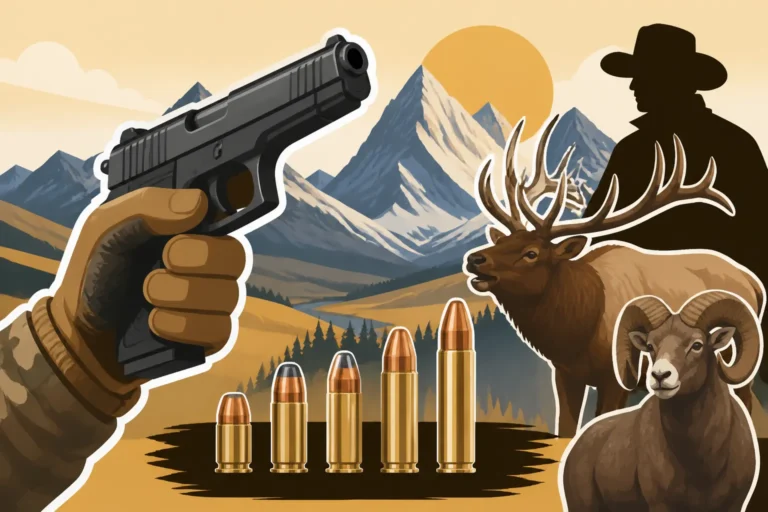
When it comes to legal firearms for big game, Wyoming sets clear minimum standards for both caliber and projectile energy. Generally speaking, hunters need to use a centerfire rifle that fires a bullet at least .23 caliber (or .23 inches in diameter). But it's not just about the hole it punches; the projectile must also generate at least 2,000 foot-pounds of energy at the muzzle. This energy requirement is crucial because it ensures enough knockdown power for a clean kill, especially on tougher animals like elk, but it certainly applies to deer as well.
This emphasis on energy and caliber immediately starts to narrow down the viable options. Most traditional shotgun slugs, while large in diameter, often struggle to meet the kinetic energy requirement over the distances you’d typically be shooting deer in Wyoming. While a 12-gauge slug certainly packs a punch up close, its ballistic performance drops off sharply, making it less suitable for the varied ranges found in the sagebrush and timber. For those looking for a comprehensive list of what is allowed, you'll want to review What Wyoming Counts as a Legal Firearm for Big Game.
The Specific Exclusion or Inclusion of Shotguns
Here's the direct answer you've been looking for: For deer, elk, and antelope hunting, shotguns are generally not legal in Wyoming. The regulations specifically state that big game animals must be hunted with a firearm of .23 caliber or larger, and it must be a centerfire firearm that produces a minimum of 2,000 foot-pounds of energy at the muzzle. While some modern shotgun slugs might meet the .23 caliber (or larger) requirement in terms of diameter, they overwhelmingly fail to meet the "centerfire" or the consistent "2,000 foot-pounds of energy" rule at practical hunting distances in Wyoming's typical open terrain. The rule also specifies a bullet, which for most big game is understood to mean a single projectile from a rifle, not shot from a shotgun.
There isn't a provision for "slug guns" in Wyoming's big game regulations like there is in many other states. If you’re coming from a state where shotguns are a primary deer weapon, this can be a significant adjustment. It really boils down to the type of hunting experience Wyoming is set up for – one that historically and practically favors the flatter trajectories and greater effective range of centerfire rifles.
Why the Confusion Exists: Regional Differences in Hunting Regulations
It's completely normal for hunters to be confused about shotgun legality when transitioning to hunting out west. Regulations vary wildly from state to state, and what's standard practice in one region can be completely unheard of in another. This isn't a critique of your knowledge, but rather a testament to the diverse hunting cultures and landscapes across the United States. Many hunters have grown up in areas where the shotgun is king for deer, and that experience shapes their expectations.
The primary driver for "shotgun-only" zones in other states is often safety and population density. In areas with smaller parcels of land, more residential areas, or flatter terrain where a rifle bullet could travel for miles, states often mandate shotguns with slugs. These projectiles tend to lose energy and drop much faster than rifle bullets, significantly reducing the maximum dangerous range. Wyoming, with its vast tracts of undeveloped land and sparse population, simply doesn't face the same pressures, allowing for different regulatory priorities.
Shotgun-Only Zones in Other States
Think about states like Ohio, Illinois, Iowa, Michigan, or even parts of Pennsylvania. In these places, it’s not just legal to hunt deer with a shotgun slug, it’s often the only legal firearm choice for deer during general firearms seasons. This is primarily a safety measure. When you're hunting in dense woods, often near agricultural fields and residential areas, the limited range of a shotgun slug provides a crucial safety buffer. A rifle round can travel for miles, posing a risk in populated areas. Slug guns have advanced significantly, with rifled barrels and sabot slugs offering impressive accuracy out to 150-200 yards, making them effective tools within their prescribed limits.
Hunters from these regions might have invested heavily in top-of-the-line slug guns, scopes, and specialized ammunition, making them perfectly capable and ethical deer hunters in their home states. They might have years of successful harvests under their belt with these very weapons. So, when they look to travel to a state like Wyoming, their first thought is naturally, "Can I bring my trusted deer gun?" It’s a logical question rooted in years of successful hunting experience in a different regulatory environment.
The Western Landscape and Weapon Choices
Contrast those "shotgun-only" zones with the sheer scale of Wyoming. Here, you might be glassing mule deer or antelope across immense sagebrush flats, spotting animals a mile or more away. Even in timbered elk country, shooting lanes can open up to several hundred yards. The prevailing wisdom and practical reality of hunting in these environments naturally gravitate towards rifles. A good quality hunting rifle chambered in a cartridge like a .30-06 Springfield, .270 Winchester, or a 7mm Remington Magnum, paired with a reliable optic, allows for ethical shots at 200-400 yards, which is a common range for big game in Wyoming.
This isn't to say that close-range encounters don't happen, but relying solely on a weapon with a significantly limited effective range, like a shotgun slug, would put a hunter at a severe disadvantage and potentially compromise ethical shot opportunities in many Wyoming settings. The landscape itself, dictating longer typical shot distances and demanding flatter trajectories, has shaped the accepted and regulated weapon choices over time. When planning your hunt, using resources like GoHunt can help you understand the specific characteristics of different hunt areas, further illustrating why certain weapon types are favored.
When a Shotgun Might Actually Be Legal (or an Exception Made)
Given Wyoming's general stance against shotguns for deer, it's natural to wonder if there are any exceptions or specific scenarios where they might be allowed. While it's important to reiterate that for standard deer hunting, shotguns are not the norm, let's delve into what the regulations do permit and if any modern advancements or specific situations could create an overlap. This section aims to be exhaustive in exploring potential avenues, even if ultimately confirming the general rule.
It’s always a good idea to consult the most current Wyoming Game and Fish Department regulations directly, as rules can occasionally change or have very specific interpretations. What holds true for most big game may not hold for small game or certain predator species, and understanding these nuances is key to staying legal in the field.
Specialized Shotgun Ammunition and "Straight-Wall Cartridge" Rules
In recent years, some states have embraced "straight-wall cartridge" regulations, often in areas that were traditionally shotgun-only. Cartridges like the .45-70 Government, .350 Legend, or .450 Bushmaster, which are fired from rifles but have a straight-walled case design (similar to many handgun cartridges), offer improved ballistic performance over traditional shotgun slugs while still adhering to the safety principles of reduced maximum range compared to bottlenecked rifle cartridges. These have become popular deer hunting options in states with these specific rules.
However, Wyoming's regulations for big game generally focus on the centerfire rifle and muzzle energy requirements, without a specific "straight-wall cartridge" exception that would open the door for shotguns. Even modern, high-performance sabot slugs fired from rifled shotgun barrels, while effective at closer ranges, typically don't meet the "centerfire rifle" definition as interpreted by Wyoming Game and Fish for big game, nor do they consistently meet the 2,000 foot-pound muzzle energy rule at distances that would be considered practical in western hunting. For clarity on what is considered a legal firearm, specifically regarding specific calibers, you might look into The Straight-Wall Cartridge Questions Hunters Keep Asking or Where the .22 WMR Is Legal for Hunting, though these generally apply to rifles or rimfire, not shotguns for big game.
Specific Hunt Areas or Special Provisions
It's highly unlikely that any specific deer hunt areas in Wyoming would permit shotguns where rifles are not allowed, or would make an exception for shotguns that don't meet the general big game firearm requirements. Wyoming's hunting areas are designated by number and often have specific weapon restrictions (e.g., archery-only seasons), but these restrictions typically limit weapon choices, rather than broadening them to include firearms that don't meet the general state criteria.
For example, there might be archery-only areas or seasons, or areas where only muzzleloaders are permitted, but these are specified to narrower categories, not to allow shotguns as a general rule. In the unlikely event of a very localized rule change or experimental hunt, it would be explicitly stated in the annual regulations for that specific hunt area. However, as of current and historical regulations, shotguns are not considered legal for deer and other big game in Wyoming. Always verify specific regulations for your chosen hunt area using official Wyoming Game and Fish resources or platforms like GoHunt that aggregate this information, but don't expect to find a "shotgun exception" for deer.
Practical Considerations for Deer Hunting in Wyoming
Beyond the legalities, there are very real practical reasons why shotguns are simply not a common or recommended choice for deer hunting in Wyoming. Even if, hypothetically, they were permitted under some obscure rule, the environment itself would make them a significant handicap for most hunters. Understanding these practical considerations can help you choose the right equipment and prepare effectively for a successful and ethical hunt in the West.
When you're packing for a Wyoming deer hunt, whether it's for mule deer in the high country or whitetails along river bottoms, your gear choices are critical. The sheer scale of the landscape and the potential for widely varying shot distances mean that reliability and capability at range are paramount.
Effective Range and Precision
The most glaring practical limitation of shotguns for Wyoming deer hunting is their effective range and inherent precision compared to centerfire rifles. Even with modern rifled barrels and sabot slugs, a shotgun slug's effective ethical range for deer is typically considered to be 150-200 yards, with accuracy often diminishing significantly beyond that. While this is perfectly adequate for many eastern timber hunts, it falls short in Wyoming.
Imagine spotting a fantastic mule deer buck bedded on a distant ridge 350 yards away. With a well-sighted-in rifle and proper technique, this is a manageable, ethical shot for many experienced western hunters. With a shotgun slug, however, that shot would be incredibly difficult, if not impossible, to make humanely. The bullet drop and wind drift of a slug are far more pronounced than a rifle cartridge, making precision at extended distances a major challenge. In Wyoming, hunters often zero their rifles for 200 or even 300 yards, allowing for precision at longer distances. Rifle Zero Distance for Open Country Shooting is a critical skill here. Attempting to compensate for the drastic drop of a shotgun slug at similar ranges would require immense skill and luck, neither of which should be relied upon for an ethical kill.
Gear for Wyoming Deer Hunting
Given these realities, the gear list for a successful Wyoming deer hunt almost invariably includes a quality centerfire rifle. Hunters typically opt for calibers that offer a good balance of flat trajectory, moderate recoil, and sufficient energy for deer, such as a .270 Winchester, .308 Winchester, 6.5 Creedmoor, or .30-06 Springfield. Paired with a reliable scope with appropriate magnification, these setups are designed for the open country.
Beyond the firearm itself, consider other essential gear. Optics are paramount; a good set of binoculars (10×42 or 12×50) and potentially a spotting scope are indispensable for glassing vast areas and identifying deer from afar. You'll likely also want a sturdy bipod or shooting sticks to ensure stability for those longer shots, as discussed in Shooting Sticks or Bipod in Deep Sagebrush. Many hunters also find value in using digital mapping apps like those offered by GoHunt to scout areas virtually, understand public land boundaries, and navigate the terrain efficiently. These tools become crucial when you're hunting in areas where finding an animal might mean covering miles of ground, and knowing your precise location is key for both safety and legal compliance.
Ultimately, while the shotgun holds a cherished place in the hunting traditions of many regions, for deer hunting in Wyoming, the regulations and the practical demands of the landscape firmly point to the use of centerfire rifles. Preparing with the right equipment for the terrain will not only keep you legal but also greatly increase your chances of a successful and ethical harvest.
Disclaimer
Please note that hunting regulations are subject to change. While this guide aims to provide accurate and current information, it is the individual hunter's responsibility to review the most recent Wyoming Game and Fish Department regulations prior to any hunting activity.