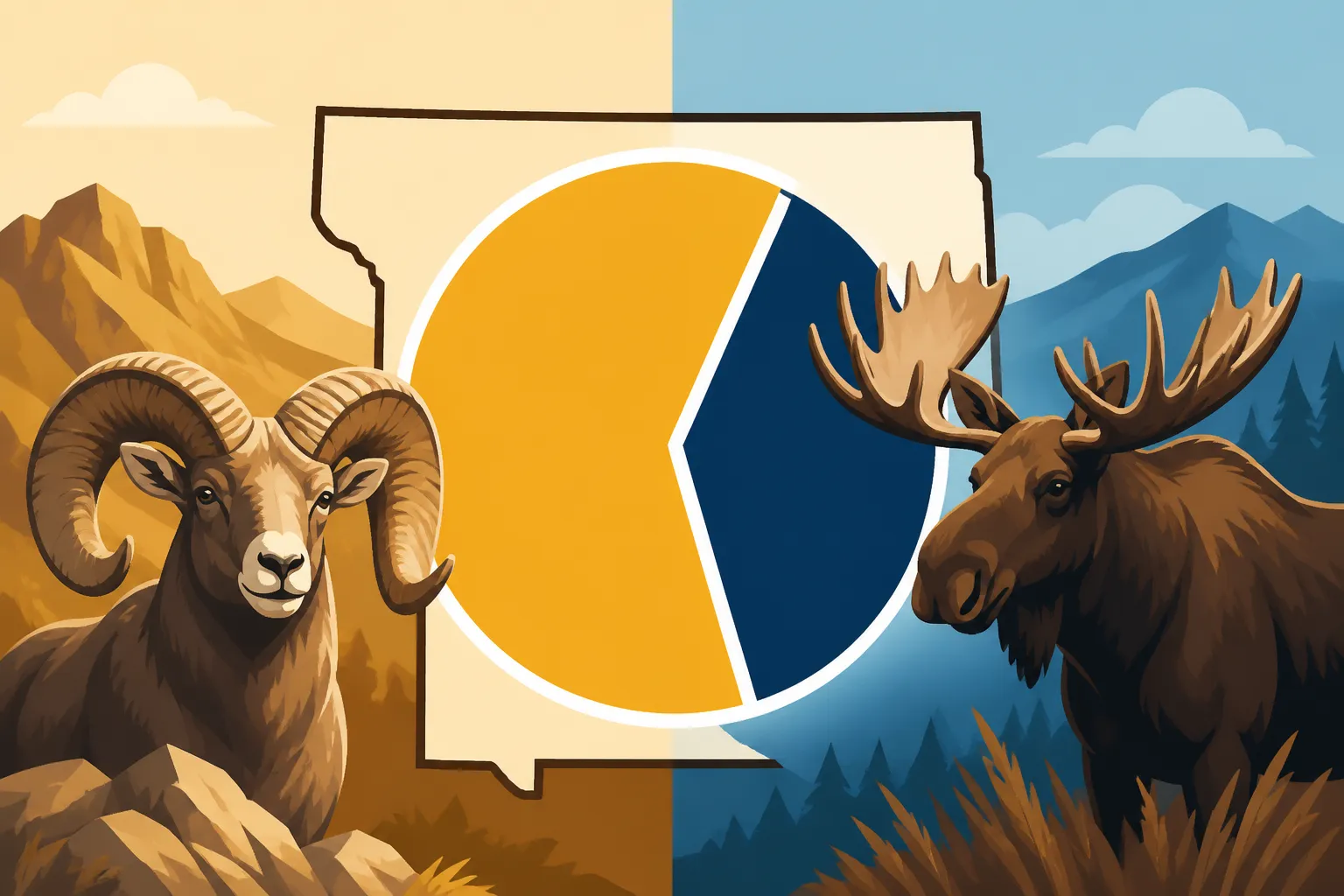
The 90/10 Split That Reshaped Wyoming’s Sheep and Moose Draws
Trying to navigate the complex world of Wyoming hunting draws, especially for those highly sought-after tags like bighorn sheep and Shiras moose, can feel like you're trying to solve a puzzle with half the pieces missing. Many hopeful hunters, particularly non-residents, find themselves utterly bewildered by the fluctuating odds and the feeling that the goalposts keep moving. This guide aims to demystify one of the biggest changes to the draw system for these premier species: the 90/10 split, explaining exactly what it means for your hunting aspirations in the Cowboy State.
Understanding the Wyoming Draw System for Premier Species
Wyoming's draw system is, to put it mildly, a beast of its own, especially when you're talking about species that are considered true trophies. Unlike many other states that might offer a simpler lottery, Wyoming layers in preference points, random draws, and specific allocations that can leave even seasoned applicants scratching their heads. For a non-resident, the pathway to a bighorn sheep or Shiras moose tag often seems shrouded in mystery and very, very long odds.
The Preference Point System and Its Limitations
Wyoming utilizes a preference point system for many of its big game species draws. The basic idea is straightforward: for every year you apply for a license and are unsuccessful, you accrue a preference point. The more points you have, the better your chances are in future draws, as a percentage of available tags are often allocated to the highest point holders. It's designed to reward persistence, theoretically giving long-term applicants a better shot. However, this system isn't a golden ticket, especially for truly limited species. For certain high-demand tags, point accumulation can lead to what's known as "point creep," where the number of points needed to draw a tag steadily increases each year, often faster than many hunters can accumulate them. This means you could be sitting on a pile of points, yet still feel years away from drawing a premier tag. It's a frustrating reality when you're meticulously building points, only to see the goal line move further away.
Why Sheep and Moose Tags Are So Coveted
There’s a reason why bighorn sheep and Shiras moose are often referred to as "once-in-a-lifetime" species in Wyoming. These animals represent the pinnacle of North American big game hunting. A Wyoming bighorn sheep hunt often takes you into some of the state's most rugged and breathtaking mountain ranges, testing a hunter's physical endurance, mental fortitude, and hunting skills to their absolute limits. The sheer challenge, combined with the majestic beauty of the animal and its incredible habitat, makes drawing a sheep tag a dream for many. Similarly, a Shiras moose hunt in Wyoming offers an encounter with one of the largest and most solitary members of the deer family. These hunts typically unfold in dense timber and willow bottoms, requiring a different kind of persistence and tracking skill. Both species offer truly wild, fair-chase experiences in iconic Western landscapes, and the rarity of the tags only amplifies their allure, driving thousands of applications for a mere handful of licenses each year.
The Challenge for Non-Resident Hunters
For non-resident hunters, the pursuit of a Wyoming sheep or moose tag is fraught with even greater challenges. First and foremost are the financial commitments; the cost of a non-resident tag, when you finally draw one, is substantial, often running into the thousands of dollars. You can delve into the specific figures in a guide like Wyoming Nonresident Tags Run $326 to $1,965. Beyond the price, non-residents often face significantly lower tag allocations compared to residents, a reality that the 90/10 split only intensifies. Many non-residents live hundreds or even thousands of miles away, making pre-scouting a unit a logistical and financial hurdle. They rely heavily on mapping software, historical draw odds, and often, the services of a reputable outfitter once they do draw a tag. The entire endeavor for a non-resident is a high-stakes, long-game investment, often requiring years, if not decades, of consistent application and a fair bit of luck.
Deconstructing the 90/10 Split: What It Means on Paper
The 90/10 split is a crucial piece of legislation that dramatically altered the landscape for obtaining sheep and moose tags in Wyoming. It's a policy designed to prioritize resident hunters for these highly coveted, limited-entry opportunities. Understanding its mechanics is essential for anyone hoping to draw one of these tags.
How the Percentage Allocation Works
Prior to the 90/10 split, the allocation of sheep, moose, and mountain goat licenses was divided between residents and non-residents with a different ratio. However, under the current regulations, for these specific "once-in-a-lifetime" species, 90% of the available tags in any given hunt area are reserved for Wyoming residents, while only 10% are allocated to non-residents. This is a significant shift that heavily favors residents, ensuring that the vast majority of these unique opportunities remain within the state. To illustrate, if a particular hunt area for bighorn sheep has 10 tags available in a given year, 9 of those tags will go to residents, and only 1 will be available to the entire pool of non-resident applicants. If there are fewer than 10 tags, the math can get even more challenging, often resulting in no non-resident tags being issued in certain areas for years at a time. This makes the odds for non-residents incredibly steep, often leading to draw odds well below 1%.
The Rationale Behind the Policy Shift
The implementation of the 90/10 split wasn't a sudden, arbitrary decision; it was the result of considerable advocacy and debate within Wyoming, primarily driven by resident hunters and conservation groups. The core rationale centered on the idea that these incredibly limited and valuable hunting opportunities should primarily benefit the citizens of Wyoming, who contribute to the state's conservation efforts through license fees, taxes, and direct involvement in managing wildlife habitat. There was a prevailing sentiment that as non-resident applications surged, particularly for species like bighorn sheep and moose, resident opportunities were being diluted. By changing the allocation, the state aimed to ensure that its residents had a much more tangible and predictable pathway to draw these tags, reinforcing the idea of local stewardship over local resources. It was a move to protect what many residents viewed as their heritage and birthright, ensuring access to Wyoming's unique wildlife for generations to come.
Impact on Total Tag Availability
While the 90/10 split directly impacts the allocation ratio, it doesn't necessarily change the total number of tags issued for sheep and moose across the state. The overall tag numbers are primarily determined by herd health, population objectives, and habitat conditions in specific hunt areas, as set by the Wyoming Game and Fish Department biologists. What the 90/10 split does is drastically shrink the pool of tags available to non-residents, making an already rare opportunity even rarer. For instance, if a hunt unit could only sustain 5 moose tags in a given year, under the 90/10 split, that means zero tags for non-residents. Only when the total number of tags reaches 10 or more would a single non-resident tag theoretically become available. This can lead to entire hunt areas going years without a non-resident drawing, concentrating what little opportunity exists into a very few, highly competitive areas, or relying on years with exceptionally high tag numbers. It fundamentally reshapes the odds for non-residents and compels them to consider applying for these species as an extreme long-shot gamble rather than a predictable progression through a preference point system.
The Historical Context: Before the 90/10 Split
To truly grasp the significance of the 90/10 split, it's helpful to look back at how things operated before this legislative change. The previous system, while still challenging for non-residents, offered a different set of probabilities and a distinct application dynamic. Understanding this history sheds light on why the shift was deemed necessary by many.
The Previous Draw System and Its Allocation
Before the 90/10 split came into effect for sheep, moose, and mountain goat, these premier species were included in a broader non-resident allocation system that typically followed a 75/25 split for the preference point portion of the draw, and a 75/25 split for the random portion. This meant that for every four tags allocated, generally three would go to residents and one to non-residents. While still favoring residents, a 25% allocation for non-residents was considerably more generous than the current 10%. This older system also applied to elk, deer, and antelope, species that still largely follow the 75/25 split. You can learn more about this general allocation in Wyoming's 75/25 Draw Split Explained. Under the prior system, non-residents had a statistically better chance, albeit still slim, of eventually drawing a sheep or moose tag, particularly if they consistently built up preference points. This created a long-term strategy where hopeful non-residents could realistically aim for these tags, even if it meant waiting for a decade or more.
Why the Change Was Advocated
The advocacy for the 90/10 split grew out of several factors. One primary driver was the increasing pressure on Wyoming's highly sought-after trophy species. As the popularity of Western hunting exploded and more non-residents applied for tags, the limited pool of sheep and moose licenses became intensely competitive. Residents felt that their access to these iconic hunts, which are often once-in-a-lifetime opportunities, was being squeezed. There was a strong desire to ensure that the unique experiences of hunting a trophy bighorn ram in the Absaroka Range or a Shiras moose in the Gros Ventre were primarily available to those who call Wyoming home. Additionally, local conservation groups and hunters often contribute significantly to habitat improvement and wildlife management initiatives within the state, reinforcing the argument that they should receive priority access to these resources. The sentiment was clear: these rare tags were considered a privilege of residency, and the existing allocation wasn't sufficiently reflecting that priority.
Legislative Action and Implementation
The transition to the 90/10 split was a legislative process, meaning it involved the Wyoming State Legislature debating and ultimately passing a bill to amend the state's hunting statutes. This wasn't a decision made solely by the Wyoming Game and Fish Department (WGFD), though the department would certainly have provided biological data and input on the potential impacts. The process involved public hearings, committee discussions, and votes, reflecting a broad consensus among state lawmakers that a change was necessary to protect resident hunting opportunities for these specific species. Once passed into law, the WGFD then updated its regulations to implement the new allocation percentages. This formal legislative action underscored the importance of the issue to the state and its citizens, cementing the 90/10 split as a permanent fixture in the draw rules for bighorn sheep, moose, and mountain goat. This change reshaped the application strategies for thousands of hunters and significantly altered the long-term prospects for non-residents.
Real-World Implications for Non-Resident Applicants
The 90/10 split has fundamentally altered the calculus for non-resident hunters hoping to draw a Wyoming sheep or moose tag. What was once a long shot has, for many, become an almost statistical impossibility without an extraordinary run of luck. It's a tough pill to swallow for those who have been building points for years.
Dramatic Changes in Draw Odds
The most immediate and striking implication of the 90/10 split is the dramatic decrease in draw odds for non-resident applicants. With only 10% of the tags available, and often fewer than 10 tags even being issued in many hunt areas, the chances of drawing have plummeted. For example, if a unit offers 20 bighorn sheep tags, 18 go to residents, and only 2 go to non-residents. If that same unit only offers 5 tags, zero go to non-residents. This makes it incredibly difficult for non-residents to even enter the random draw, let alone the preference point draw, for many units. Websites like GoHunt, which provide detailed draw odds analysis, clearly show this stark reality, illustrating how slim the chances truly are for non-residents for these species. Many non-residents now face years, even decades, of applying without any realistic expectation of drawing, simply hoping to hit the lottery in a year with unusually high tag numbers or incredibly low applicant numbers in a particular unit. It essentially transforms the draw from a long-term strategy into a pure gamble.
The "Once-in-a-Lifetime" Species Dynamic
Wyoming designates bighorn sheep, moose, and mountain goat as "once-in-a-lifetime" species. This means that if you successfully draw a license and harvest one of these animals in Wyoming, you are generally not eligible to apply for or harvest that same species again in the state. This rule heightens the stakes even further. For non-residents, drawing one of these tags under the 90/10 split is not just a rare achievement, it's the rare achievement, a singular opportunity that may only come once in a lifetime, if at all. This "once-in-a-lifetime" rule, combined with the extreme scarcity created by the 90/10 split, means that non-residents often pool their applications, or apply for years simply hoping for that one golden ticket. It also means that when a non-resident does draw, the pressure to make that hunt count is immense, as there won't be a second chance in Wyoming. This makes the hunt preparation, research, and selection of a unit even more critical, as every aspect of the experience is magnified by its singular nature.
Strategies for Navigating Reduced Odds
Given the drastically reduced odds, non-residents interested in Wyoming sheep or moose tags need to adopt highly strategic and realistic approaches. One common strategy is to consistently buy preference points year after year, even if you don't apply for a tag, purely to keep accumulating points in the hope that, one day, the stars align. You can find out more about this in Buying Wyoming Preference Points Without Applying for a Tag. Another approach is to meticulously research draw odds using resources like GoHunt, looking for units that historically offer at least one non-resident tag, or have a slightly higher (though still incredibly low) chance. This often means targeting units that might be less popular or more physically demanding, which can slightly reduce the applicant pool. Some hunters focus on mountain goat, which is also a once-in-a-lifetime species but, due to its even lower overall tag numbers, does not factor preference points into its draw, making it a pure lottery, equally random for all applicants. This means you have zero points, and a non-resident with 20 points has the same chance. Ultimately, managing expectations is key. For many non-residents, hunting Wyoming for sheep or moose under the 90/10 split is less about a predictable outcome and more about playing a very long game with a deeply cherished, but exceptionally rare, prize at the end.
Resident Hunters and the 90/10 Advantage
While non-residents grapple with the increased difficulty, Wyoming residents have seen a significant enhancement in their opportunities to draw sheep and moose tags. The 90/10 split was specifically designed to benefit them, reinforcing their access to these prized hunts.
Increased Opportunities for Wyoming Residents
For Wyoming residents, the 90/10 split has translated into a tangible increase in their draw odds for bighorn sheep and Shiras moose. With 90% of the tags reserved for them, residents now face a much more favorable, though still competitive, landscape. This means that many long-time resident applicants who had accumulated preference points are now seeing those points translate into successful draws much sooner than they would have under the previous system. For new resident hunters, or those with fewer points, the sheer volume of tags allocated to residents provides a more realistic pathway to drawing a coveted tag within a reasonable timeframe. This policy effectively prioritizes the local hunting community, ensuring that these high-value licenses are primarily distributed among those who live in the state. It allows residents to plan more confidently for these hunts, knowing their chances are substantially better than their non-resident counterparts.
Managing Resident Expectations
Even with the increased allocation, drawing a sheep or moose tag as a Wyoming resident isn't a guaranteed annual event. These animals are still very limited, and the number of available tags each year is dictated by biological factors like population health, age class structure, and habitat conditions. While a resident's odds are significantly better, they still face competition from thousands of other residents who are also applying for the same handful of tags. For example, even if a hunt unit has 10 tags, and 9 go to residents, there might be hundreds or even thousands of resident applicants for those 9 tags. Therefore, managing expectations is crucial. Residents still need to be strategic in their application choices, consider building preference points, and realistically assess their odds for different hunt areas. While the 90/10 split is a huge win for residents, it doesn't eliminate the need for careful planning and a healthy dose of patience, particularly for the most popular and productive hunt areas known for trophy-class animals.
The Balance Between Resident and Non-Resident Opportunity
The 90/10 split represents a deliberate policy decision to heavily tip the balance of opportunity towards residents for these specific species. While it significantly benefits residents, it does so by substantially reducing non-resident access. This creates a challenging equilibrium that states often navigate: how to provide ample opportunity for residents while still attracting non-resident hunters, who contribute significantly to the state's conservation funding through their license purchases and economic activity. Non-residents often pay higher license fees, and their spending on travel, lodging, and gear injects considerable revenue into local economies. Therefore, while the 90/10 split addresses resident concerns about tag access for sheep and moose, it's part of a broader discussion about how Wyoming distributes all its hunting opportunities, including those still operating under a 75/25 split for species like elk, deer, and antelope. The state seeks a balance that supports its wildlife populations, satisfies its resident hunters, and remains attractive enough to non-residents to sustain vital conservation funding.
Species-Specific Dive: Sheep and Moose Draws Under 90/10
The 90/10 split is not just a theoretical percentage; it manifests in very real, often dramatic, ways when you look at the draw odds and application strategies for bighorn sheep and Shiras moose. Each species has its own nuances, habitats, and draw history that influence how the 90/10 rule plays out.
Wyoming Bighorn Sheep Draw Odds Under the New Rules
Wyoming's bighorn sheep draw is legendary for its difficulty, and the 90/10 split has only magnified this for non-residents. The total number of bighorn sheep tags issued each year is relatively low across the state, often numbering in the low hundreds. With 90% going to residents, the number of non-resident tags typically drops to a mere handful statewide, often fewer than 20-30 tags annually. This means that a non-resident's chance of drawing a bighorn sheep tag is astronomically low, often below 0.5% even with maximum preference points in some units. Consider the various Wyoming Bighorn Sheep Hunt Districts; many of these districts only issue a few tags, making it highly probable that no non-resident tag will be available in a given year. The only way for non-residents to draw is generally by accumulating maximum points and then getting extremely lucky in one of the few years and units where a non-resident tag is available. This reality leads many non-residents to simply buy a preference point each year, recognizing that the actual draw is a pure lottery for them, hoping to hit the random draw when their number finally comes up.
Shiras Moose: A Wyoming Tag Measured in Decades
The Shiras moose draw in Wyoming is another profoundly challenging endeavor, particularly for non-residents. Similar to bighorn sheep, moose populations are managed carefully, resulting in a limited number of tags distributed across specific hunt areas. Under the 90/10 split, the non-resident allocation for moose tags is also incredibly small, often resulting in only a handful of tags for the entire non-resident applicant pool statewide. It is not uncommon for hunters to experience Wyoming Moose Wait Times Under the 90/10 Split that literally span decades of consistent application. For many, even after accumulating maximum preference points (which often takes 20+ years), the draw odds remain stubbornly low, perhaps only a few percentage points at best in the most favorable units. For non-residents, a Wyoming moose tag truly embodies the "once-in-a-lifetime" ethos, often requiring a commitment that outlasts many hunters' active careers. It's a testament to the animal's mystique and the challenge of the hunt that so many continue to apply year after year, fully aware of the almost insurmountable odds.
Comparing Other High-Demand Species (e.g., Mountain Goat)
It's useful to compare the 90/10 split's impact on sheep and moose with other high-demand, limited-entry species, particularly mountain goat. Mountain goats in Wyoming are also considered a once-in-a-lifetime species, but their overall population and tag numbers are even lower than sheep or moose. Because there are so few mountain goat tags issued statewide each year (often less than a dozen), there are frequently no non-resident tags available at all under the 90/10 rule. What makes mountain goat distinct, however, is that Wyoming does not utilize a preference point system for this species; it's a pure random draw. This means that every applicant, resident or non-resident, starts with zero points, and thus, has an equally random chance if a non-resident tag does become available. While the odds are still miniscule for non-residents, the absence of preference points makes it an equal playing field in that one respect, unlike the preference point-driven draws for sheep and moose where long-term point holders have a statistical (though small for non-residents) advantage. This difference can influence which "once-in-a-lifetime" species non-residents choose to focus their long-shot efforts on.
Here's a quick comparison of the species under the 90/10 split:
| Feature | Bighorn Sheep | Shiras Moose | Mountain Goat |
|---|---|---|---|
| Draw System | Preference Point + Random Draw | Preference Point + Random Draw | Pure Random Draw (No Preference Points) |
| Non-Resident Allocation | 10% of total tags (if tags >= 10) | 10% of total tags (if tags >= 10) | 10% of total tags (if tags >= 10) |
| Tag Rarity | Extremely Rare | Extremely Rare | Extremely Rare (Even Fewer Tags Annually) |
| "Once-in-a-Lifetime" | Yes | Yes | Yes |
| Typical NR Draw Chance | <1% (even with max points in many units) | <1-2% (even with max points in many units) | <1% (pure lottery, if NR tag available) |
| Wait Time (NR) | Often 15-30+ years of point accumulation, if ever | Often 20-40+ years of point accumulation, if ever | Pure luck, can be drawn in year 1 or never |
Beyond the Numbers: Broader Impacts and Future Outlook
The 90/10 split for Wyoming's sheep and moose draws extends far beyond just draw odds and application strategies. It has ripple effects across the state's hunting economy, influences the long-term engagement of non-resident hunters, and shapes discussions about future wildlife management policies.
The Economic Ripple Effect on Outfitters and Communities
The reduced non-resident allocation for sheep and moose has a direct economic impact, particularly on the guiding and outfitting industry. Outfitters who specialize in these species often rely heavily on non-resident clients, who typically pay premium prices for guided hunts. With fewer non-resident tags available, these outfitters face a shrinking client pool for their highest-value hunts. This can force them to adapt their business models, perhaps focusing more on resident clients (who often pay less) or diversifying into other species that still have a more favorable non-resident draw. The ripple effect extends to small communities that benefit from hunter spending on lodging, food, fuel, and supplies. While residents still draw tags and spend locally, the reduction in high-spending non-resident clients for these specific species can be felt. This is an important consideration when discussing policy changes, as a robust hunting economy often underpins vital conservation efforts, a point worth remembering when considering any changes to the system. Understanding the local economic landscape is crucial, as even a seemingly small change can affect various stakeholders.
Potential for Future Adjustments
Wildlife management policies, including draw allocations, are rarely set in stone forever. They are dynamic systems that can be reviewed and adjusted based on scientific data, public sentiment, and legislative action. While the 90/10 split is firmly in place for sheep and moose now, it's not impossible that future conditions could lead to calls for adjustments. Factors like significant population changes in these species, shifting demographics of hunters, or evolving economic realities could all trigger new discussions. However, any proposed changes, especially those that would alter the resident/non-resident split, would likely face intense scrutiny and debate. Altering a policy that so strongly favors resident hunters would require a compelling argument and significant political will. For now, it's reasonable to assume the 90/10 split will remain a cornerstone of sheep and moose tag allocation in Wyoming for the foreseeable future. Staying informed about proposed legislation and WGFD meetings can help hunters track any potential future shifts.
Data Resources for Researching Draw Odds
For any hunter navigating Wyoming's complex draw system, especially with the 90/10 split for premier species, reliable data is absolutely critical. The Wyoming Game and Fish Department (WGFD) is the primary source of official information, publishing detailed draw statistics after each application period. These statistics typically include the number of applicants, tags issued, and preference points required to draw in each hunt area. However, interpreting this raw data can be time-consuming. This is where third-party platforms like GoHunt become invaluable. GoHunt's Insider tool, for instance, aggregates and analyzes WGFD data, presenting it in an easy-to-understand format with predictive draw odds, unit breakdowns, and strategic insights. These tools allow hunters to see how many points it took to draw in a specific unit, the resident vs. non-resident success rates, and the impact of the 90/10 split in real numbers. Utilizing these resources to research draw odds before you apply is an absolute must, allowing you to make informed decisions and manage your expectations for these incredibly difficult draws. Another valuable official resource is the WGFD's online The Wyoming Hunt Planner tool, which offers maps, regulations, and season dates by hunt area, complementing the draw odds data by providing critical context for unit selection.
Disclaimer
Please remember that hunting regulations, license fees, and draw odds can change. Always consult the official Wyoming Game and Fish Department regulations for the most current and accurate information before planning your hunt. This guide is for informational purposes only and does not constitute legal advice.