Shiras Moose: A Wyoming Tag Measured in Decades
Hunting Shiras moose in Wyoming is often described as the pinnacle of a western big game career, but let's be honest, for most of us, just drawing one of these coveted tags feels like hitting the lottery. The reality is, a Wyoming moose tag is something many hunters will apply for their entire lives without ever seeing success. It's a journey measured in decades, not seasons, and understanding the odds, the application process, and what truly makes these animals so special is key to even beginning that lifelong pursuit. This comprehensive guide will walk you through everything you need to know about pursuing Shiras moose in the Cowboy State, from the biology that makes them unique to the tactics that give you an edge, and the harsh realities of the draw.
Understanding the Elusive Shiras Moose in Wyoming
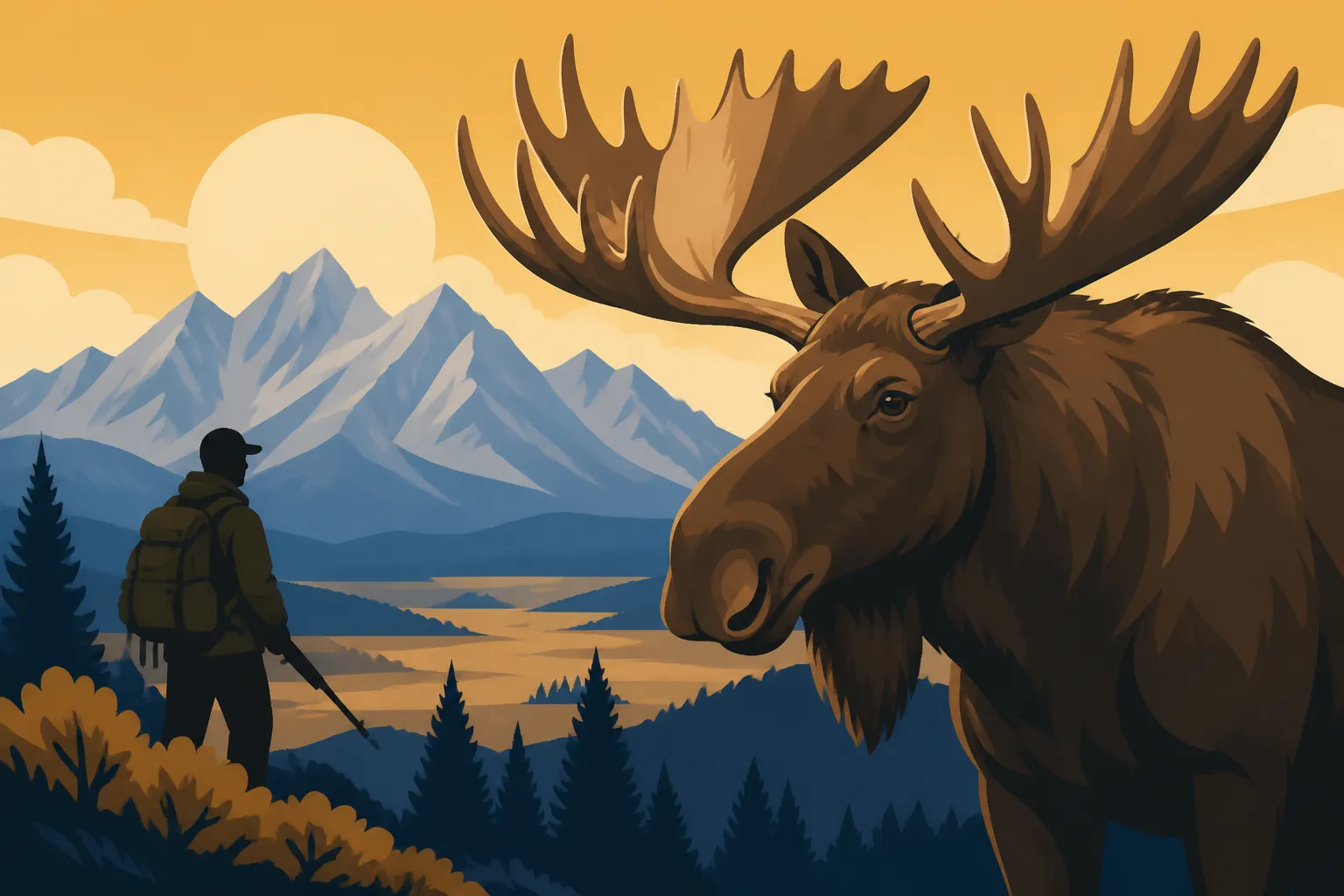
The Shiras moose, the smallest of North America's moose subspecies, are magnificent creatures, perfectly adapted to the high-elevation, riparian habitats of the Rocky Mountains. Unlike their larger Canadian or Alaskan cousins, these moose prefer dense willow bottoms and timbered areas near water, making them incredibly challenging to locate and even harder to approach. Their presence in Wyoming is a testament to the state's wild character, but their populations are fragile, leading to extremely limited hunting opportunities.
Shiras Moose Population and Distribution
Wyoming’s Shiras moose populations are a delicate balance, spread across specific mountainous regions where their preferred habitat exists. You'll primarily find them in the northwestern and western parts of the state, particularly in areas like the Jackson Hole region, the Wind River Range, and the Gros Ventre Mountains, where lush riparian zones provide ample forage. The Wyoming Game and Fish Department closely monitors these populations, and their management strategies often lead to conservative tag allocations to ensure long-term sustainability.
However, these populations face ongoing challenges, including habitat fragmentation, disease, and predation, which can cause fluctuations in herd health and numbers. Unlike other big game species like elk or deer, moose don't often form large herds, instead preferring more solitary lives or small family groups. This dispersal, combined with their dense habitat preferences, makes accurate population counts difficult and contributes to the mystique surrounding these animals. Their localized distribution means that hunt areas are often quite specific, designed to manage small, discrete populations rather than broad, sweeping herds.
Unique Characteristics and Habitat
Shiras moose are distinctive, characterized by their dark brown to black coats, light-colored legs, and the iconic dewlap (or "bell") hanging from their throats. Bulls grow impressive, broad antlers that are more palmated and less massive than those of northern moose, but no less striking. Their long legs are perfectly suited for navigating deep snow and boggy terrain, and their keen senses make them incredibly wary.
Their habitat is typically defined by water and thick cover. Look for them in willow thickets, beaver ponds, and aspen groves along mountain streams and rivers. During warmer months, they might be found higher on mountain slopes, browsing on various forbs and shrubs, but they rarely stray far from water sources. This reliance on specific habitats means that successful moose hunting often revolves around understanding these ecosystems and knowing where to focus your efforts. A moose standing silently in a dense willow patch can be nearly invisible, even at close range, making patience and meticulous glassing crucial tools for any hunter.
Why Moose Tags Are So Hard to Come By
The difficulty in drawing a Wyoming moose tag isn't just a rumor; it's a cold, hard fact rooted in the science of wildlife management and the incredible demand for these unique opportunities. Simply put, Wyoming has a relatively small, sensitive moose population compared to its vast land area and the number of hunters who dream of a moose hunt. The Wyoming Game and Fish Department (WGFD) issues a very limited number of tags each year to maintain healthy population levels, ensure sustainable hunting, and prevent overharvest.
This scarcity creates a hyper-competitive draw system. Every year, thousands of eager hunters, both residents and nonresidents, throw their hats in the ring for a handful of available licenses. For nonresidents, the odds are even tougher due to the statutory allocation percentages. When you combine low tag numbers with high demand, you get draw odds that often hover in the low single digits, or even fractions of a percent, for many hunt districts. This isn't like drawing an antelope tag where you might get lucky on your first try; this is a long-term commitment, often spanning decades of applying.
The Wyoming Moose Draw: A Decade-Long Wait
For most hunters, the journey to a Wyoming moose tag is less about the hunt itself and more about the waiting game of the draw. It's a marathon, not a sprint, and understanding the nuances of Wyoming's complex preference point system and draw allocation is paramount. Many seasoned applicants view applying for a moose tag as an investment in a future hunt, acknowledging that immediate gratification is almost never part of the equation.
Navigating the Preference Point System
Wyoming utilizes a preference point system for its moose draw, designed to reward loyalty and persistence. For every year you apply for a moose tag and are unsuccessful, you accrue one preference point. These points accumulate and are added to your application in subsequent years, theoretically increasing your odds of drawing a coveted tag over time. It's a system that helps long-term applicants eventually achieve success, rather than relying purely on random chance.
You can also opt to purchase a preference point without applying for a tag, which is a popular strategy for hunters who aren't ready to commit to a hunt in a given year but want to continue building their points. This option is available during a specific window, typically from July to November. Understanding how Wyoming Awards a Preference Point and actively managing your point accumulation is critical. However, it's important to remember that preference points only improve your odds; they don't guarantee a tag. With the sheer number of applicants, even hunters with a significant number of points can still be unsuccessful for several years, a phenomenon often referred to as "point creep."
Moose Draw Odds by Hunt District
Not all moose hunt districts in Wyoming are created equal when it comes to draw odds. Some districts, known for producing larger bulls or offering more accessible terrain, are incredibly popular and require a monumental number of preference points to draw. Other, often more remote or physically demanding districts, might have slightly better odds, but still remain incredibly challenging. The specific draw odds for each hunt district are published annually by the WGFD, and they are essential reading for any applicant.
Tools like GoHunt's Insider service are invaluable here. They compile historical draw data, allowing you to analyze success rates for residents and nonresidents, and the minimum and average preference points required for each hunt area. This level of detail is crucial for making informed decisions. Do you aim for a blue-chip unit that might take 25+ points, or do you try for a unit with slightly worse trophy potential but a slightly better chance of drawing with fewer points? This strategic decision can shave years off your waiting time or lead to continued frustration if you miscalculate. Remember, the goal isn't just to draw any moose tag, but to draw one in a unit that aligns with your hunting goals and accumulated points.
The 90/10 Split and Nonresident Chances
Wyoming's allocation system for moose (along with bighorn sheep and mountain goat) is particularly challenging for nonresident hunters due to what's known as the 90/10 split. This regulation mandates that a minimum of 90% of the available tags for these once-in-a-lifetime species (or species with very limited quotas) must be allocated to resident hunters, leaving a maximum of 10% for nonresidents. This creates an incredibly tight bottleneck for out-of-state applicants, making the draw even more competitive.
For example, if a hunt district has 10 moose tags available, only 1 of those tags can go to a nonresident. If there are 9 tags, nonresidents still only get one. If there are 20 tags, nonresidents get 2. This mathematical reality means that nonresident draw odds are drastically lower than resident odds, regardless of preference points. It's a stark reminder of the premium placed on these tags for Wyoming residents. While the system encourages a focus on local hunters, it makes the dream of a nonresident Shiras moose tag truly a "once-in-a-lifetime" aspiration, often requiring maximum preference points and a significant stroke of luck. This 90/10 Split That Reshaped Wyoming's Sheep and Moose Draws fundamentally dictates the nonresident experience.
Applying for Your Wyoming Moose Tag
Successfully navigating the Wyoming moose draw requires meticulous planning, a solid understanding of the rules, and a long-term strategy. It's not just about filling out a form; it's about making informed decisions that could impact your hunting future for years to come. Many hunters find the application process itself to be a significant hurdle, given the financial investment and the emotional weight tied to such a rare opportunity.
Application Deadlines and Requirements
The application period for Wyoming moose is one of the earliest for big game, typically closing in early spring. Specifically, applications for sheep, goat, moose, and bison close April 30 in Wyoming. Missing this deadline means waiting another year to even start building points or applying for a tag. It's crucial to mark your calendar well in advance and double-check the exact dates on the Wyoming Game and Fish Department website each year, as they can sometimes shift slightly.
Beyond the deadline, there are specific requirements you'll need to meet. You'll need a valid Wyoming hunting license (or apply for one during the process), and a Conservation Stamp is also required for all hunters. The application itself will require you to select your preferred hunt areas and license types. It's vital to ensure all your personal information is accurate and up-to-date in the Wyoming Electronic Licensing System (ELS) to avoid any issues that could invalidate your application. Additionally, make sure your credit card information is current and has sufficient funds, as the full license fee is usually held during the draw.
Choosing the Right Hunt District
This is perhaps the most critical decision an aspiring moose hunter will make. With such long odds, picking the right hunt district is a delicate balance between your accumulated preference points, your hunting aspirations (trophy quality vs. just getting a tag), and your willingness to hunt challenging terrain. As mentioned, some districts are renowned for their trophy potential, leading to incredibly high point requirements. Others might offer a more "obtainable" tag, but in areas that are very remote, physically demanding, or have lower bull-to-cow ratios.
Researching your chosen hunt district thoroughly is non-negotiable. Leverage resources like the WGFD's hunt planner, which provides detailed maps, historical harvest data, and season dates. This is another area where a tool like GoHunt can be immensely helpful, offering advanced analytics and filtering options to sort units by draw odds, trophy potential, and access. Consider factors like public land access (Wyoming's Federal Land Split: BLM and Forest Service can affect this), wilderness boundaries (where a guide might be legally required), and the general habitat conditions. Don't be afraid to call the local WGFD biologist for the units you are considering; they often have invaluable insights into population trends and access challenges that aren't readily available elsewhere.
Maximizing Your Application Strategy
Developing a long-term application strategy is essential for a Wyoming moose tag. For nonresidents, this almost always means committing to buying a preference point every single year, patiently accumulating them over a decade or more. You'll want to avoid units that currently require more points than you have, unless you're truly playing the lottery with a minimal chance. Instead, focus on understanding "point creep" – the gradual increase in points needed to draw a tag over time – and trying to stay ahead of it.
Many hunters employ a strategy of selecting a first-choice unit that might be a long shot but is their dream unit, while listing a second and third choice that they have a more realistic chance of drawing with their current points. However, for moose, the odds are so low that often only your first choice matters, especially for nonresidents. It's a game of patience, consistency, and intelligent research. Review the Moose Draw Odds by Hunt District data from previous years carefully. Don't waste your precious points on a unit that consistently draws with 10 points when you only have 5, unless you're consciously taking a gamble. The goal is to make every application count towards your ultimate success.
Essential Gear for a Wyoming Moose Hunt
A Wyoming moose hunt is not your typical deer hunt. The animals are massive, often found in thick, challenging terrain, and the weather can be unpredictable. Proper gear isn't just about comfort; it's about safety, efficiency, and ensuring you can effectively pursue and pack out one of the largest big game animals in North America. Investing in high-quality, reliable equipment is paramount.
Rifles, Ammunition, and Optics Considerations
When it comes to firearms, reliability and sufficient stopping power are key. While a .30-06 Springfield or .270 Winchester could certainly take a moose, many experienced hunters prefer cartridges with more knockdown power, such as a .300 Winchester Magnum, .338 Winchester Magnum, or even a .375 H&H Magnum, especially if shots might be through dense brush or at longer ranges. The legal firearm requirements in Wyoming typically state that for big game, a rifle must be a centerfire firearm, shooting a bullet with a soft point or expanding tip. For moose, specifically, ensuring your rifle meets these general requirements is critical.
Ammunition should be premium, controlled-expansion bullets designed for large, tough-skinned animals. Brands like Barnes TSX, Nosler Partition, Hornady ELD-X, or Swift A-Frame are popular choices. Optics are equally vital. A high-quality rifle scope with good light-gathering capabilities and a moderate magnification range (e.g., 3-9x or 4-12x) is ideal for varying conditions, from dark timber to open mountain slopes. Binoculars (10×42 or 12×50) and a spotting scope are indispensable for long-range glassing, helping you locate moose in expansive landscapes without spooking them. Remember, these animals are often found in thick cover, so clarity and brightness in your optics are crucial for discerning details in low light or dense shadows.
Clothing Systems for Mountain and River Bottom Hunting
Moose habitat in Wyoming often involves significant changes in elevation and can expose you to a wide range of weather conditions, from warm, sunny days to freezing rain or snow, sometimes within the same hunt. A layered clothing system is non-negotiable. Start with a moisture-wicking base layer to manage sweat, followed by insulating mid-layers (fleece or synthetic puffy jackets) to provide warmth. An outer shell that is both waterproof and windproof is essential to protect against the elements.
Material choices are important: avoid cotton entirely, as it loses its insulating properties when wet. Wool and synthetic fabrics are your best friends. Pay close attention to footwear; waterproof, sturdy hiking boots with good ankle support are critical for navigating uneven, wet, and often muddy terrain. Bring multiple pairs of socks (wool or synthetic) to keep your feet dry and blister-free. Don't forget a warm hat, gloves, and a neck gaiter to complete your system, as much heat is lost through your head and extremities.
Backpacking and Camp Gear for Moose Country
Depending on your hunting style and the remoteness of your chosen unit, your backpacking and camp gear will vary, but a few items are universal. A sturdy backpack (60-80 liters) capable of hauling heavy loads is essential, especially if you plan to pack out meat yourself. Moose are massive, and you'll need a pack that can handle multiple trips or substantial weight. Game bags are a must for preserving meat in the field.
Beyond that, consider a reliable shelter system (tent or tarp), a warm sleeping bag rated for below-freezing temperatures, and a comfortable sleeping pad. A portable stove and fuel are necessary for cooking and boiling water, and a water filter or purification tablets are crucial for hydrating in the backcountry. Navigation tools like a GPS device (and spare batteries), a map, and a compass are non-negotiable, particularly in dense timber where visibility can be limited. Finally, don't overlook a reliable headlamp, a first-aid kit, and bear spray, as you'll often be in grizzly country, especially in the western part of the state.
Hunting Tactics for Shiras Moose
Hunting Shiras moose isn't like hunting elk or deer in many respects. Their habitat, behavior, and sheer size demand a different approach. Patience, keen observation, and a willingness to work hard in often unforgiving terrain are the hallmarks of a successful moose hunter. The goal is to find them, get close, and make an ethical shot on an animal that can weigh over 1,000 pounds.
Reading Sign and Tracking in Dense Cover
Moose are masters of disappearing into their preferred habitat – dense willow thickets, aspen groves, and timbered creek bottoms. Therefore, reading sign becomes incredibly important. Look for large, heart-shaped tracks, often found near water or muddy areas. Fresh tracks, especially those with clear dew claw marks, indicate a recent passage. Beyond tracks, moose leave distinct feeding signs. They are primarily browsers, so look for stripped bark on aspens and willows, or branches with ragged, broken ends where they've nipped off leaves and twigs. Their droppings, large and often resembling elongated pellets, are also clear indicators of their presence.
Rub marks on small trees or shrubs, particularly during the rut, signify a bull in the area. These rubs are often higher than deer or even elk rubs. Still-hunting through dense cover, moving slowly and deliberately, pausing frequently to listen and scan, is a highly effective tactic. Focus on transitions where dense cover meets more open areas, or along the edges of water bodies. Learning to differentiate fresh sign from old is an art developed through experience, but it’s invaluable when trying to pinpoint where a moose might be currently feeding or bedding.
Calling Moose: When and How to Bugle or Cow Call
Calling can be an incredibly effective tactic for Shiras moose, particularly during the rut, which typically peaks in late September and early October. Unlike elk, moose calls are generally less complex but equally powerful. A bull moose call is a low, guttural grunt, often followed by a raking sound as they thrash brush with their antlers to challenge rivals. Cow calls are long, drawn-out moans, designed to attract a bull.
Effective calling involves understanding the specific sounds and when to use them. A deep, challenging bull grunt can sometimes entice a bull to approach, especially if he thinks a rival is encroaching on his territory or cows. More often, using a cow call is a safer bet, as it appeals to a bull's desire to find a mate without immediately challenging him. If a bull responds, be patient and listen closely to judge his direction and enthusiasm. Sometimes, subtle cow calls are all it takes to pique a bull's interest and draw him out of thick cover. Remember that calling on Pressured Wyoming Public Land might require more subtlety, as animals can become call-shy.
Stalking and Shot Placement Strategies
Once you’ve located a moose, whether by spotting, tracking, or calling, the real challenge begins: the stalk. Moose have excellent hearing and a superb sense of smell, so playing the wind is paramount. Due to their dense habitat, long-range shots are rare. Most moose encounters in the thick stuff will be at closer ranges, often under 100 yards. This means a quiet, deliberate approach, utilizing every bit of cover, is essential.
When you get within shooting range, focus on ethical shot placement. A moose is an enormous animal, and while they may appear slow, they can cover ground quickly when startled. Aim for the classic lung-heart shot, just behind the shoulder, targeting the vitals. Avoid shoulder shots unless absolutely necessary, as their dense bone structure can deflect bullets. If a moose is quartering away, aim to penetrate the vitals by aiming towards the opposite shoulder. After the shot, be patient. A big moose can often stand for a moment or two before falling, or travel a short distance into even thicker cover. Wait a reasonable amount of time before taking up the blood trail, and always assume the animal is still alive until you have your hands on it.
Understanding Wyoming's Moose Hunting Regulations
Wyoming has a well-defined set of hunting regulations, and moose hunting is no exception. Given the rarity of the tags and the specific nature of moose management, it’s critical to be intimately familiar with every rule before you ever step foot in the field. Ignorance of the law is never an excuse, and violations can lead to severe penalties, including fines, license revocation, and even hunting bans.
Legal Shooting Hours and Tagging Requirements
Wyoming's legal shooting hours for big game typically run from one-half hour before sunrise to one-half hour after sunset. These times are strictly enforced, and it is your responsibility as a hunter to know the exact sunrise and sunset times for your specific location on any given day. Carrying a reliable watch or using a hunting app that provides these times is highly recommended. Hunting outside of these hours is a serious offense.
Once you have successfully harvested a moose, the tagging requirements are immediate and non-negotiable. You must immediately validate your license by detaching the proper carcass coupon, dating it, and attaching it to the carcass of the animal. The tag must remain affixed to the carcass until it reaches the hunter's residence or a processing plant. Failure to properly tag an animal can lead to a charge of possessing game without a license. It’s a simple but vital step that every hunter must perform correctly.
Evidence of Sex and Meat Salvage Rules
Wyoming has strict rules regarding evidence of sex, particularly for antlered animals like moose. For any moose with antlers, a portion of the head or antlers must remain naturally attached to the carcass until it reaches the point of final processing. This allows game wardens to verify that a legally antlered animal was harvested. This is crucial for verifying that you haven't mistakenly taken a cow when you have a bull tag, or vice versa if applicable.
Furthermore, Wyoming has stringent wanton waste laws, which dictate that all edible portions of game meat must be salvaged. For moose, this means all four quarters, the backstraps, and the tenderloins. You cannot simply take the antlers or the cape and leave the meat to waste. This is a fundamental ethical principle of hunting, ensuring that the animal's life is taken with respect and that its meat is utilized. Given the immense size of a moose, proper field dressing and rapid cooling of the meat are essential, especially in warmer temperatures, to prevent spoilage and ensure all edible portions are salvaged. This responsibility is a significant part of the challenge and reward of harvesting a moose.
Accessing Moose Habitat on Public and Private Land
Moose habitat in Wyoming often spans a patchwork of public and private lands. While vast tracts of national forest and BLM land are open to public hunting, many critical moose areas might be found on private ranches or state trust lands with specific access rules. Understanding land ownership is paramount to avoiding trespass and ensuring a legal hunt. Using GPS mapping apps like onX Hunt or GoHunt is highly recommended to clearly delineate public and private boundaries.
If hunting on private land, you must obtain permission from the landowner beforehand. Do not assume access. For state trust lands, general access for hunting is often permitted, but always verify specific rules and regulations for the particular parcel you intend to hunt. Some state lands may have additional restrictions or require specific permission. Areas managed by the Wyoming Game and Fish Department, such as Wildlife Habitat Management Areas, are generally open but may have seasonal closures or specific rules that limit vehicle access or require sign-in permits. Thoroughly researching the specific access rules for your chosen hunt area is a critical step in your planning process.
Preparing for the Physical Demands of a Moose Hunt
Hunting a Shiras moose in Wyoming is not for the faint of heart. These hunts often take place in rugged, remote, and high-altitude environments. The sheer size of a moose means that packing one out is an immense physical undertaking. Mental and physical preparation are just as important as having the right gear or a keen eye for sign.
Physical Fitness and Altitude Acclimatization
Moose country typically involves steep terrain, dense timber, and often requires covering significant distances on foot, sometimes off-trail. Being in excellent cardiovascular shape is non-negotiable. Incorporate regular hiking, stair climbing, and strength training into your routine well in advance of your hunt. Focus on exercises that build leg strength and core stability, which are crucial for navigating uneven ground with a heavy pack.
For many nonresident hunters, the altitude itself can be a major factor. Much of Wyoming's moose habitat sits at elevations of 7,000 to 10,000 feet or more. If you're coming from sea level, the reduced oxygen can severely impact your energy levels and cognitive function. Arriving several days before your hunt to allow your body to acclimate to the higher elevation is highly recommended. Take it easy the first day or two, stay hydrated, and avoid strenuous activity to give your body time to adjust. Ignoring altitude sickness can ruin a hunt and, in severe cases, be dangerous.
Packing Out a Moose in Remote Terrain
This is arguably the most physically demanding aspect of a moose hunt. A bull Shiras moose can weigh upwards of 700 to 1,000 pounds or more, sometimes even 1,200 pounds for a large specimen. Even when quartered, each piece can weigh 80-150 pounds, plus the head and cape. If you are miles deep in rough terrain, this requires multiple strenuous trips, often over several days. You absolutely cannot do this alone.
Plan to hunt with at least one, preferably two or three, strong hunting partners. Bring plenty of high-quality game bags to keep the meat clean and cool. Knowing how to efficiently quarter an animal in the field is a vital skill. Consider the logistics: will you pack it all out on your back, or do you have a plan for pack animals? Many hunters pursuing moose in remote areas will hire Pack String Outfitters Working in Wyoming to assist with meat retrieval, which can save immense time and physical exertion. Without a solid plan for packing out a moose, you risk losing valuable meat or putting yourself in a dangerous situation.
Safety Considerations in Moose Country
Hunting in moose country, especially in the rugged wilderness of Wyoming, comes with inherent risks beyond the physical demands. Bear safety is paramount, particularly in areas like the Greater Yellowstone Ecosystem, where grizzly bears are present. Always carry bear spray, know how to use it, and have it readily accessible. Practice proper food storage in camp to avoid attracting bears.
Weather can change rapidly in the mountains, turning a pleasant day into a dangerous situation with sudden snowstorms or torrential rain. Always carry extra layers, a fire-starting kit, and an emergency shelter. Hypothermia is a real threat. Navigation is also critical; it's easy to get disoriented in dense timber or unfamiliar terrain. Always carry a GPS, a physical map, and a compass, and know how to use them. Let someone know your hunt plan and expected return time. Finally, be mindful of hunting alone. While some experienced hunters do, the immense task of packing out a moose and the potential for injury make having a partner a much safer choice.
Working with Outfitters and Guides for a Moose Hunt
Given the incredible challenge of drawing a tag and the unique demands of a moose hunt, many hunters, particularly nonresidents, choose to enlist the services of an outfitter or guide. While not always a legal requirement, a good guide can dramatically increase your chances of success and provide invaluable assistance with logistics and safety.
When a Guide Might Be Necessary
For nonresident hunters, a guide is legally required when hunting specific big game species (including moose) within Wyoming's designated wilderness areas. This is known as the Wilderness Guide Rule for Elk Hunters, but it applies to moose and other species as well. These are often the most remote and prime moose habitats, making a guide a necessity if you draw a tag in one of these areas.
Even outside of wilderness areas, a guide can be immensely beneficial. Their intimate knowledge of the local terrain, moose habits, and effective hunting techniques can save you years of trial and error. They handle the complex logistics of camp setup, transportation into remote areas (often with horses or ATVs where permitted), and, critically, the daunting task of packing out a massive moose carcass. For hunters with limited time, physical constraints, or those simply wanting to maximize their once-in-a-lifetime opportunity, a guide offers unparalleled support and expertise.
Vetting Moose Outfitters
Choosing the right outfitter is as important as drawing the tag itself. A bad outfitter can ruin a hunt of a lifetime. Start your research early, ideally years before you even expect to draw your tag. Look for outfitters who specialize in moose hunts and have a proven track record. The Wyoming Board of Outfitters and Professional Guides is an excellent resource for verifying an outfitter's license and checking their complaint history.
Ask specific questions: What is their success rate on moose? How many hunters do they take each season? What is the guide-to-hunter ratio? What is included in the hunt package (lodging, food, transportation, caping, meat care)? What is their emergency plan? Most importantly, ask for a list of recent references (from the last 1-3 years) and call every single one. Ask past clients about their experience, the guide's professionalism, the quality of the camp, and whether the hunt met their expectations. Pay close attention to how they handle difficult situations or unsuccessful hunts. Remember, you might only get one chance at a Wyoming moose, so choose your outfitter wisely. A typical What a Guided Moose Hunt Costs can be substantial, so due diligence is key.
Drop Camps vs. Fully Guided Hunts
When working with an outfitter, you generally have a few options, each with different levels of service and cost. A fully guided hunt is the most comprehensive option. This typically includes a dedicated guide, all meals, lodging (from tent camps to cabins), transportation in the field, and full assistance with animal recovery and field care. This is the most expensive option but provides the highest level of support and expertise.
A drop camp, on the other hand, is a more independent experience. The outfitter will pack you and your gear into a remote location, set up a basic camp, and then leave you to hunt on your own. They will return at a pre-determined date to pack you and your harvested animal back out. Drop camps are less expensive than fully guided hunts and appeal to experienced hunters who prefer to call their own shots but need assistance with access to remote areas and game retrieval. Be honest with yourself about your hunting skills, experience, and physical capabilities when deciding between a drop camp and a fully guided hunt. Both can be effective, but they cater to very different hunting styles and expectations.
Disclaimer
The information provided in this guide is for general informational purposes only and does not constitute legal advice. Hunting regulations and laws can change frequently. It is the responsibility of every hunter to consult the most current Wyoming Game and Fish Department regulations, federal land agency rules, and any local ordinances before planning or engaging in any hunting activities. Always ensure you are in compliance with all applicable laws.