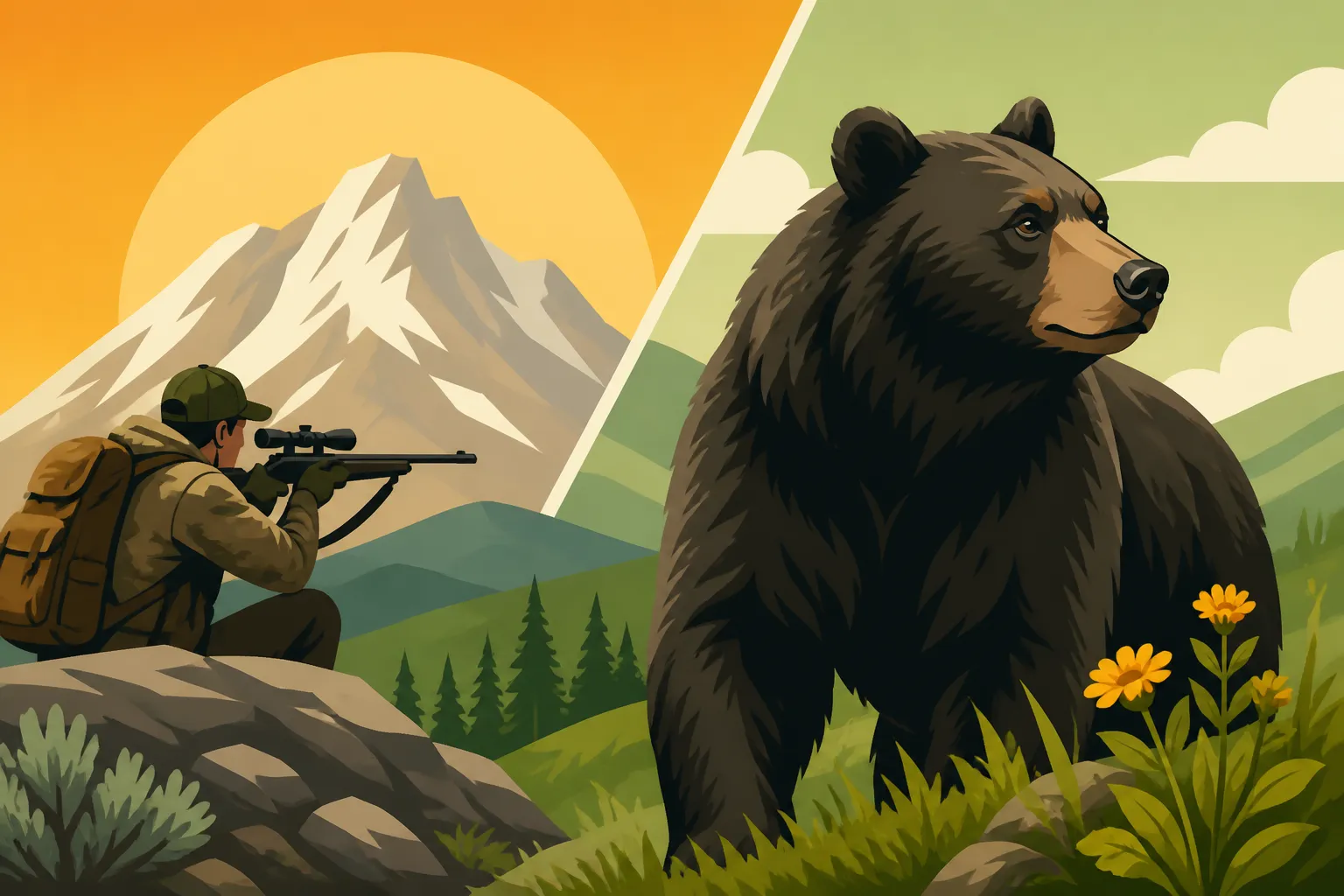
When Wyoming’s Spring Bear Season Falls
Trying to nail down the exact dates for Wyoming's spring black bear season can feel like a game of whack-a-mole, especially for those new to the state's hunting regulations. It's not a simple, single statewide opener and closer, but rather a dynamic puzzle influenced by specific hunt areas and fluctuating quotas that can change on a moment's notice. This guide will help you understand the intricacies of Wyoming's spring bear season, explaining how to find the critical dates, monitor quotas, and plan a successful hunt.
The Unique Appeal of Wyoming's Spring Bear Season
Spring bear hunting in Wyoming offers a distinct experience, often differing greatly from the fall seasons. It's a time when the mountains are just shedding their winter coats, and bears are emerging, hungry and often predictable. However, this predictability comes with its own set of challenges, from unpredictable weather to the constant need to monitor specific hunt area closures.
Why Spring for Black Bear?
For many hunters, the appeal of spring bear hunting lies in the opportunity to be out in the wilderness when life is reawakening. After a long winter in hibernation, black bears emerge with a ravenous appetite, making them more active and often more visible than they might be in the dense foliage of summer or the distraction of the fall rut for other species. Their primary focus early in the season is finding readily available food sources, often meaning lush, green slopes or areas where winterkill might have occurred. The relatively sparse vegetation of early spring also aids in spotting bears, particularly when glassing large, open landscapes. Additionally, the hides harvested in the spring, post-hibernation, are typically in prime condition, thick and lustrous, making for excellent taxidermy.
General Season Framework
Unlike some other big game species, Wyoming's spring black bear season doesn't adhere to a single, statewide calendar. Instead, it operates within a broad window, typically commencing in late spring—often in May—and extending into early summer, sometimes through June. This generalized timeframe is then broken down into highly specific season dates for individual hunt areas. These dates are meticulously set by the Wyoming Game and Fish Department (WGFD), taking into account factors like local bear populations, den emergence patterns, and the management objectives for each area. Hunters need to understand that even within this general spring window, specific hunt areas will have their own opening and closing dates, which can vary significantly depending on elevation, climate, and biological considerations. This requires a dedicated approach to research, moving beyond a simple "spring season" idea and diving into the specifics of your chosen hunting grounds.
How Hunt Areas Influence Season Dates
One of the biggest hurdles for hunters looking at Wyoming's black bear season is the sheer variability. It's not like deer or elk where you might have broader regional dates. With bear, it really is specific down to the individual hunt area, and understanding this distinction is paramount.
It's All About the Unit
Wyoming's approach to game management is highly granular, breaking the state down into distinct hunt areas, often referred to as units. This applies just as much to black bears as it does to elk or deer. Each black bear hunt area is assigned its own set of regulations, including specific opening and closing dates, as well as quotas. This means that a hunt area in the Bighorn Mountains might have a completely different season structure, starting earlier or later and ending at a different time, compared to a unit in the western part of the state near the Tetons. The logic behind this unit-specific approach is sound: it allows wildlife managers to tailor regulations to the local bear population dynamics, habitat conditions, and human-wildlife conflict considerations unique to that particular area. What works for a high-density bear population with ample food sources in one region might not be appropriate for a more dispersed population in another. You can see similar unit-specific breakdowns when looking at other species, for example, A Full List of Wyoming's Elk Hunt Units illustrates how even for elk, the state is carved into distinct management zones.
The challenge this presents for hunters is clear: you can't just assume that if one area is open, all others are. You absolutely have to identify the specific hunt area you intend to pursue and then dive into those specific regulations. Ignoring this detail is a common mistake that can lead to being in the wrong place at the wrong time, or worse, hunting out of season. It emphasizes the need for thorough pre-hunt research, often requiring careful study of WGFD maps and regulation booklets to pinpoint the precise boundaries and dates for your chosen unit.
Variability Across the State
The sheer geographical and ecological diversity of Wyoming means that spring's arrival, and thus the timing of bear emergence, varies dramatically from east to west and north to south, as well as by elevation. For example, lower elevation foothills and eastern plains areas might see bears emerging from dens in late April or early May, while high-country wilderness areas in the Wind River Range or the Absaroka-Beartooth Wilderness might still be under heavy snow well into June. This natural variability directly translates into different season dates across the state. Hunt areas in the warmer, earlier-thawing regions will typically have earlier opening dates for spring bear, allowing hunters to target bears shortly after they wake up. Conversely, units in higher, more rugged terrain, where snowpack lingers and bears den longer, will often have later opening dates, sometimes pushing into early June.
This means that a hunter planning a spring bear hunt needs to consider not just the specific hunt area number, but also its geographical location and typical climate. Are you targeting a unit known for its early green-up and access, or are you planning a rugged backcountry trip that will demand navigating lingering snowdrifts and higher elevations? Understanding these environmental factors helps explain why the dates vary and allows you to better predict where bears will be active within those varied landscapes. It underscores the personalized nature of spring bear hunting in Wyoming, where a successful plan is deeply tied to the specific environment you choose to explore.
Understanding Quotas and Closures
Perhaps the most critical, and sometimes frustrating, aspect of Wyoming's spring black bear season is the quota system and the very real possibility of an early closure. This isn't a "hunt until the season ends" scenario; it's a "hunt until the quota is met" situation.
The Quota System Explained
Wyoming manages its black bear population through a meticulously monitored quota system. This means that for each individual hunt area, there's a predetermined maximum number of bears that can be harvested during the spring season. What makes this even more nuanced is that often, these quotas are further broken down by sex—meaning there might be a separate quota for male bears (boars) and female bears (sows), or an overall quota with a specific sub-quota for sows that, once met, shuts down the entire season for that area. This dual-layer quota system is a crucial management tool designed to maintain healthy bear populations, particularly by protecting breeding females, while still offering hunting opportunities.
When applying for or planning a spring bear hunt, it's absolutely vital to know not just the season dates, but also the specific quotas for your chosen hunt area. This information is published annually in the WGFD regulations. For example, some units might have a total quota of 15 bears, with a sub-quota of 5 sows. If five sows are harvested in that unit, the entire bear season for that area closes, regardless of how many boars have been taken or if the overall quota of 15 hasn't been reached. This adds a layer of urgency and requires hunters to be intimately familiar with the quotas before heading afield.
Real-Time Closures: Staying Ahead
Because the season for any given hunt area can close instantly once its quota is met, staying informed about real-time closures is paramount. This isn't a situation where you'll get a week's notice. It could be hours. The Wyoming Game and Fish Department maintains an active "bear quota update" system, often accessible via their website or a dedicated hotline. Hunters are expected to check this system frequently, sometimes multiple times a day, while in the field. Imagine spending days scouting, finally getting an opportunity, only to find out the season for your unit closed yesterday morning because another hunter filled the quota. It's a real frustration many hunters face.
Many seasoned bear hunters rely on technology and frequent communication to navigate this. Online resources and apps, such as those provided by GoHunt, often integrate or link to the WGFD's quota updates, making it easier to monitor the status of your chosen hunt area. Without this vigilant monitoring, you risk an illegal harvest or a wasted trip. The responsibility falls entirely on the hunter to know if the season is open or closed for their specific unit at the exact moment they pull the trigger. For those who choose to use baiting as a method for black bear, keeping track of these closures is even more critical, as bait sites require ongoing maintenance, and you certainly don't want to be tending a bait site in a closed season. More on those regulations can be found in The Black Bear Baiting Rules in Wyoming.
Planning Your Spring Bear Hunt
A successful spring bear hunt in Wyoming requires more than just knowing when the season might be open. It demands meticulous planning, from understanding regulations to preparing physically and mentally for the backcountry.
Navigating the Regulations
The official Wyoming Game and Fish Department hunting regulations are your Bible for planning any hunt in the state, and this is especially true for spring black bear. These regulations are published annually and detail everything from season dates and hunt area boundaries to weapon restrictions, baiting rules, and harvest reporting requirements. Don't rely on word-of-mouth or outdated information. Always consult the most current regulation booklet available on the WGFD website. This document will clearly outline the specific season dates for each black bear hunt area, list the quotas (overall and sow-specific), and explain the procedures for reporting a harvest, which is critical for quota management.
Beyond the printed regulations, the WGFD website also typically hosts interactive maps and a dedicated "Hunt Planner" tool, which can be immensely helpful in visualizing hunt area boundaries and understanding the overlap with public and private lands. Online resources like GoHunt can also be invaluable for cross-referencing information and visualizing hunt area boundaries, helping you confirm that the information you're working with is accurate and up-to-date. The sheer volume of information can be overwhelming, but a diligent review is non-negotiable for a legal and ethical hunt. Remember, ignorance of the law is no excuse, especially when it comes to wildlife regulations. If you're ever unsure about a specific rule, don't hesitate to contact the WGFD directly for clarification. You can find comprehensive regulatory details by checking Where the Current Wyoming Regulations Are Posted.
E-Scouting and Gear Prep
Planning your bear hunt starts long before the season, and platforms such as GoHunt provide excellent e-scouting capabilities. Utilize satellite imagery, topo maps, and public land overlays to identify promising habitat. Look for south-facing slopes that shed snow earlier and green up first, as these are often prime feeding areas for bears emerging from hibernation. Identify potential travel corridors, water sources, and areas with dense cover that could serve as bedding sites. Good e-scouting can save you countless miles of walking in the field. When you are ready to hit the field, be prepared for highly variable weather conditions that are typical of Wyoming in spring. You could experience warm sunshine, driving rain, or even heavy snow within the same day. Pack layers, quality rain gear, and reliable footwear.
Glassing is often the name of the game for spring bear hunting, especially in Wyoming's vast, open country. A good set of binoculars, a spotting scope, and a sturdy tripod are essential tools for covering expansive terrain and picking apart distant hillsides. Look for that tell-tale black blob moving against the green, or a distinct sway that signals a bear rather than a rock or stump. Remember, bears can be incredibly hard to spot even in open country, so patience and good optics are critical. For more on effective glassing techniques, refer to Glassing Wyoming Basins Before You Take a Step. Beyond optics, consider bear spray, a robust first-aid kit, and reliable navigation tools (GPS, paper map, compass). Given the remote nature of many bear hunting areas, a satellite communication device can also be a lifesaver. This extensive preparation, beginning with E-Scouting a Unit Before the Season Opens, sets the stage for a safer and more productive hunt.
The Role of Outfitters and Guides
While Wyoming does not typically require a guide for black bear hunting in general units (unlike some wilderness areas for big game like elk, as discussed in Do You Need a Guide to Hunt Wyoming?), hiring a reputable outfitter or guide can significantly increase your chances of success, especially for non-resident hunters or those unfamiliar with the specific area. Outfitters often have years of experience in particular units, intimate knowledge of bear behavior, and established bait sites (where legal and ethical to do so). They can navigate the complexities of real-time quota closures and understand local nuances that might be missed by a do-it-yourself hunter.
An outfitter can provide everything from camp logistics and equipment to expert guidance on locating and stalking bears. They are also well-versed in the specific regulations, including harvest reporting, which streamlines the process for the hunter. For those looking for a more immersive, yet self-sufficient experience, some outfitters offer "drop camps," where they pack you and your gear into a remote location and leave you to hunt independently, returning at a predetermined time for pickup. This can be a great middle ground between a fully guided hunt and a full DIY adventure, providing access to remote areas without the full logistical burden. To get a better sense of what these services entail, you might want to look at resources like What a Wyoming Drop Camp Actually Includes. Whether fully guided or a drop camp, vetting your outfitter is key to ensuring a safe and ethical hunt.
Table: Hypothetical Spring Bear Season Examples by Area Type
To illustrate the variability, here's a hypothetical look at how different "types" of hunt areas might have varying spring bear season dates and quotas. Remember, these are fictional examples and do not reflect current Wyoming regulations or actual hunt areas. Always consult the official WGFD regulations for real-world information.
| Hunt Area Type (Hypothetical) | General Season Start | General Season End | Overall Quota (Hypothetical) | Sow Sub-Quota (Hypothetical) | Key Considerations |
|---|---|---|---|---|---|
| Low-Elevation Foothills | Early May | Mid-June | 15 | 5 | Early green-up, road access, potentially higher hunter pressure. |
| Mid-Elevation Mountains | Mid-May | Late June | 20 | 7 | Mix of timber and open slopes, varied access. |
| High-Country Wilderness | Late May | Early July | 10 | 3 | Snowpack delays, challenging access, requires physical conditioning. |
| Eastern Prairie/River Bottom | Early May | Early June | 8 | 2 | Limited bear numbers, focused on specific drainages. |
Note: The dates and quotas in this table are entirely illustrative and do not reflect actual Wyoming hunting regulations. Always verify information with the official Wyoming Game and Fish Department resources.
Disclaimer
This article is for general informational purposes only and does not constitute professional advice. Laws, prices and regulations vary by location and change over time. Consult a qualified professional for guidance on your specific situation.