BLM Holds 27,860 Square Miles of Wyoming
For many hunters, especially those of us who don't have private land access handed down through generations, the thought of finding vast, open hunting grounds can feel like a pipe dream. You look at maps, see all this "public land," but the sheer scale of it, and the complexities of actually accessing it, can be incredibly daunting. This guide is here to unravel the mystery of Bureau of Land Management (BLM) land in Wyoming, showing you just how much opportunity lies out there and how you can confidently navigate its immense hunting potential.
Understanding Wyoming's Public Land Landscape
Wyoming is famous for its wide-open spaces, and a huge chunk of that open country is managed by the Bureau of Land Management. For hunters, this isn't just a fun fact; it's the foundation of countless public land opportunities for big game like deer, antelope, and even elk, along with a host of other species. Understanding the sheer scale and the multi-use philosophy behind BLM land is the first step to unlocking its potential.
The Sheer Scale of BLM Land in Wyoming
When we talk about public land in Wyoming, BLM land is often the biggest player in the room. We're talking about millions of acres, vast stretches of sagebrush steppe, rolling hills, and deep coulees that define much of the state's iconic landscape. It's truly immense, making up a significant portion of the land available to you as a hunter. This isn't small, isolated patches; these are often expansive, contiguous areas that allow for true wilderness-style hunting, even if it's not officially designated wilderness. Imagine endless miles where you can glass for antelope in the morning, stalk a mule deer buck in the afternoon, or just simply breathe in the vastness without seeing another soul for miles. It’s a completely different experience than hunting smaller, more fragmented public areas. This scale provides not just opportunity, but also a sense of freedom that's hard to find elsewhere.
BLM's Role in Multi-Use Management
It's important to remember that while we, as hunters, appreciate BLM land for its game, it's managed under a "multi-use" philosophy. This means that besides hunting, these lands are also used for livestock grazing, energy development (think oil and gas), mineral extraction, recreation like hiking and off-roading, and even cultural resource preservation. What does this mean for you, the hunter? It means you might encounter cattle on your hunt, or see active oil and gas infrastructure in the distance, or come across OHV trails. It's all part of the landscape. Sometimes, those cattle trails can actually be helpful for walking, and resource roads can provide access, but you also need to be aware of other users. The key is to be respectful of all legitimate uses and to understand that you're sharing this incredible resource with many others. It’s a shared space, and part of hunting responsibly on BLM land is recognizing and accommodating these other activities.
Navigating the Checkerboard: Challenges and Solutions
Ah, the infamous "checkerboard" land pattern in Wyoming. It's a frustrating reality for many hunters, especially non-residents, who come across maps showing tantalizing patches of public land surrounded entirely by private ground. It feels like you're staring at a feast you can't reach, and it can really test your patience. But understanding why it exists and the evolving solutions to access it are crucial.
The Frustration of Landlocked Public Parcels
Imagine pouring over your digital maps, meticulously planning a hunt, only to zoom in and see those bright green public squares completely encompassed by white private sections. This checkerboard pattern, where alternating squares of public and private land create a literal grid, is a relic of historic railway grants. Back in the day, the government granted railroads alternate sections of land to encourage expansion, and what we're left with today is a complex puzzle of ownership. The frustration is real: you know that prime mule deer or antelope habitat is sitting right there, legally public, but if every single access point crosses private land, you're essentially locked out. It's a common pain point for hunters, particularly those unfamiliar with the specific intricacies of How Wyoming's Checkerboard Land Pattern Came About. It requires a detailed approach and a good understanding of what constitutes legal access.
Corner Crossing and Its Implications
For years, the issue of "corner crossing"—stepping from one piece of public land across a common corner touching private land to another piece of public land—was a legal gray area that caused immense frustration and even legal battles. However, significant legal developments have clarified the situation, with a federal appeals court ruling that corner crossing is, in fact, legal, as long as you don't physically touch the private land or cause damage. This is a game-changer for accessing some of those previously landlocked public squares, offering a legal pathway to ground that was once considered unreachable.
However, it's not a free-for-all. Hunters still need to be incredibly vigilant. You can't set up camp on the private side of the corner, you can't trespass, and you definitely can't cause any disturbance to the private landowner. It means you might have to literally straddle a fence or use a small ladder to step over a fence at the corner post, ensuring you stay in the airspace above public ground. Understanding Whether Corner Crossing Is Legal in Wyoming and the nuances of Is There a Buffer Around a Corner Post? is absolutely vital. Always carry your mapping app, double-check your position, and if there's any doubt, err on the side of caution. This ruling provides a powerful new tool for public land hunters, but it comes with a heavy responsibility to act ethically and legally.
Practical Tools for Locating BLM Land
Hunting Wyoming's vast BLM lands successfully isn't just about drawing a tag; it's about knowing where you can go and how to get there. In today's world, technology has made mapping and navigating these expansive areas far more accessible than ever before. Gone are the days of relying solely on paper maps and guesswork (though those still have their place!).
Digital Mapping Apps for Hunters
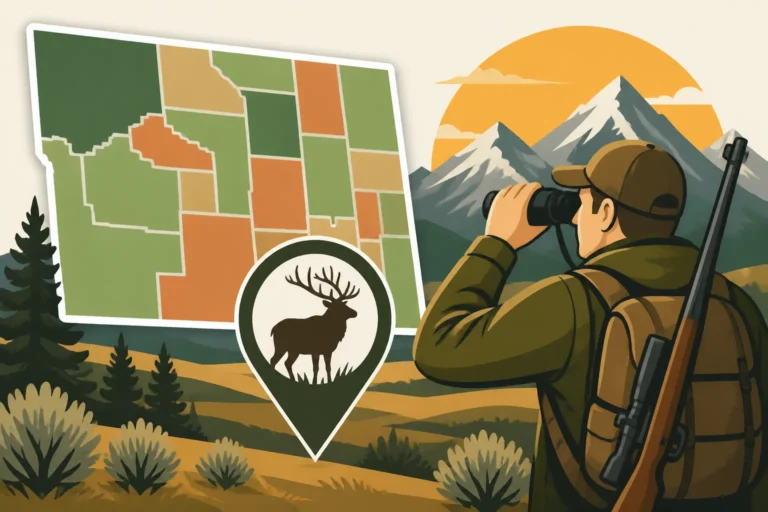
If you're heading out to hunt BLM land in Wyoming, a digital mapping app is no longer a luxury—it's an essential piece of gear. Tools like onX Hunt and GoHunt have revolutionized how hunters approach public land. These apps offer incredibly detailed public/private land ownership overlays, which are absolutely critical for navigating the complex boundaries often found on BLM. You can see, in real-time, whether you're standing on BLM ground, state land, or private property. This helps you avoid accidental trespass, which is crucial given the mix of lands out here.
Beyond just land ownership, these apps provide invaluable features. You can download maps for offline use, which is a lifesaver in areas with no cell service – and believe me, there are plenty of those in Wyoming! They also allow you to mark waypoints for your truck, a glassing knob, a water source, or even game sightings. You can track your movements, measure distances, and understand the topography with detailed contour lines. For a truly deep dive into making the most of these powerful features, you'll want to explore topics like Using onX Public Land Layers in Wyoming. These apps don't just show you where the BLM is; they help you plan your entire hunt, from approach to execution.
Traditional Maps and Official Resources
While digital apps are fantastic, don't completely discount the value of traditional paper maps and official government resources. There’s something inherently reliable about a topographical map that doesn't run out of battery. USGS (U.S. Geological Survey) quad maps offer incredibly detailed terrain information, showing every little creek bed, hill, and contour. BLM also produces its own surface management maps which often highlight specific access points, roads, and other features pertinent to their lands.
The Wyoming Game and Fish Department is another invaluable resource. They often publish hunt area maps, access guides, and even specific information about hunter management areas or walk-in access programs that might be adjacent to or intermixed with BLM ground. Before any big hunt, cross-referencing your digital maps with a physical map can help you catch details you might otherwise miss. Plus, having a paper map as a backup when your phone dies or gets wet is just good preparedness. Learning how to truly decipher maps and use all available information, including official resources like The Wyoming Public Land Owner Map Explained, can give you a significant edge in finding and accessing prime hunting locations.
Rules and Regulations on BLM Ground
Hunting on BLM land offers incredible freedom, but it's not a free-for-all. These lands are governed by both federal regulations specific to BLM management and, crucially, Wyoming's state hunting laws. Understanding these rules is paramount not only for legal compliance but also for ensuring a safe, ethical, and enjoyable experience for everyone who uses these shared resources.
General Hunting Regulations on BLM Land
First and foremost, when you're hunting on BLM land in Wyoming, all of the state's hunting laws apply. This means you need the proper licenses and tags for the species you're pursuing, you must adhere to season dates, bag limits, and legal shooting hours, and you must use legal methods of take. For instance, knowing Wyoming Legal Firearm List for Big Game is just as important on BLM as it is on any other type of land. Broadhead regulations, minimum draw weights for archery, and caliber requirements for firearms don't change just because you're on federal ground.
Beyond the species-specific rules, ethical hunting practices are always expected. This includes knowing your target, ensuring a clean kill, and respecting fair chase principles. Remember to retrieve all downed game and avoid wanton waste, which is a serious offense. Being a responsible hunter means upholding the integrity of the sport, regardless of where you are. Always check the most current Wyoming Game and Fish regulations before your hunt, as rules can occasionally be updated.
Vehicle Access and Travel Management
One of the biggest areas where hunters can run into trouble on BLM land is with vehicle use. While many BLM areas have roads, not all routes are open to motorized travel, and many are subject to seasonal closures. The Bureau of Land Management produces Motor Vehicle Use Maps (MVUMs) that are your absolute best friend in this regard. These maps specifically designate which roads and trails are open to motorized vehicles, which are closed, and which have seasonal restrictions. You might find a perfectly good-looking two-track that's actually closed to vehicles, and driving on it could land you a hefty fine.
It's your responsibility to know and follow these regulations. Respecting closures helps prevent habitat damage, minimizes disturbance to wildlife, and ensures that these routes remain viable for access. Park in designated areas, or pull completely off the road without blocking access or damaging vegetation. Understanding Reading a Motor Vehicle Use Map is essential to avoid fines and ensure you're not inadvertently impacting the land or other users. Planning your approach based on these maps will save you headaches and keep you on the right side of the law.
Dispersed Camping and Camp Etiquette
The beauty of BLM land is often the ability to find a quiet spot and set up a dispersed camp, truly immersing yourself in the landscape. Unlike developed campgrounds, there are usually no amenities, which means more freedom but also more responsibility. While there are often no fees or reservations required for dispersed camping, there are rules and best practices to follow.
Typically, you can camp for a certain number of days (often 14 or 16 within a 30-day period) in the same spot before needing to move a specified distance. Always check for fire restrictions, especially during dry seasons; wildfires are a serious threat in Wyoming, and violating fire bans can have devastating consequences. Pack out everything you pack in, including trash, food scraps, and even human waste if facilities aren't available—the "Leave No Trace" principle is paramount here. Burying human waste at least 6-8 inches deep and 200 feet from water sources is a common guideline. Also, be mindful of water sources and set up camp away from them to avoid contaminating vital wildlife or livestock drinking areas. For more details on responsible camping practices, consult resources like Dispersed Camping Limits on BLM Ground. Being a good steward of the land ensures that these camping opportunities remain available for future generations of hunters and outdoor enthusiasts.
Maximizing Your BLM Hunting Experience
Hunting BLM land, especially in a state like Wyoming, is an art form. It's often about vast landscapes, long-distance spotting, and careful, strategic approaches. It demands preparation, patience, and a deep understanding of the environment. Simply driving around hoping to spot something isn't a strategy that often pays off on these expansive public lands.
Scouting and Planning Your Hunt
The most successful hunters on BLM land are usually those who've put in their homework long before they ever step foot in the field. This starts with extensive e-scouting from your home. Use those digital mapping tools like onX Hunt or GoHunt to identify potential travel corridors, water sources, bedding areas, and glassing points. Look for terrain features that might concentrate animals, such as draws, saddles, or isolated patches of cover. Pay attention to how public and private lands are interspersed, identifying potential access routes or areas where game might move between the two.
Beyond digital tools, understanding seasonal animal behavior is key. When is the rut? What are the migration patterns for mule deer or elk in your chosen unit? Are there specific winter ranges or summer pastures that might influence where animals are during your hunt? Once you have a preliminary plan, if possible, doing some physical pre-season scouting can be invaluable. Even if it's just a weekend trip to drive around, walk a few ridges, and confirm your assumptions, that firsthand knowledge is priceless. It will help you refine your approach and adapt to real-world conditions. A great starting point for leveraging technology in your planning is to learn more about E-Scouting a Unit Before the Season Opens.
Strategies for Hunting Open Country
Once you're on the ground, the sheer scale of BLM land means your hunting tactics need to be adapted for open country. The number one tool in your arsenal will likely be quality optics and the patience to use them. Whether it's a good set of binoculars, a spotting scope, or both, you'll spend a significant amount of time glassing. Find a vantage point that allows you to see for miles, then methodically pick apart the landscape, looking for even the smallest flick of an ear, a patch of hide, or an antler tine. Patience is key; often, animals simply appear as you continue to scrutinize the same areas. For an in-depth look at effective glassing, check out Glassing Wyoming Basins Before You Take a Step.
Once an animal is spotted, the challenge shifts to the stalk. On open BLM, closing the distance without being seen is often the hardest part. You'll need to use every bit of available cover—small washes, rolling hills, even isolated sagebrush clumps—to your advantage. Always, always pay attention to the wind. In wide-open spaces, thermals can shift, and wind can swirl, giving away your position in an instant. Understanding Playing Wind Direction on an Open Sagebrush Stalk is critical; a bad wind will ruin your hunt faster than anything else. Plan your approach to keep the wind in your favor, even if it means taking a much longer, more circuitous route.
Respecting Other Users and Private Land Boundaries
Hunting on BLM land means you're sharing the landscape. You'll encounter other hunters, hikers, campers, and sometimes, ranchers moving cattle or tending to their operations. Being respectful of everyone is not just good manners; it's essential for maintaining a positive image of hunters and ensuring continued access to these lands. Give other hunters space, especially if they were there first. Share the trail.
Crucially, always respect private property boundaries. This cannot be stressed enough. Even with the corner crossing ruling, accidentally or intentionally trespassing can have severe consequences, including fines, license revocation, and a terrible reputation for hunters. Know where the lines are, use your mapping apps, and if you're unsure, stay off. If you need to cross private land for access to public ground, you must secure permission from the landowner beforehand. Don't assume. A quick call or knock on the door can prevent a major headache. Learning the nuances of Getting Permission to Cross Private Ground can save you a lot of trouble and ensure you're always hunting ethically and legally. Building good relationships with landowners, even if it's just a polite wave, goes a long way.
Species-Specific Opportunities on BLM
Wyoming's BLM lands are a treasure trove for hunters, particularly for certain iconic Western big game species. While you might not find huge concentrations of elk on every acre of BLM, it’s absolutely prime habitat for other animals, and knowing which species thrive where can significantly boost your success.
Antelope and Mule Deer Hotbeds
If there's one thing BLM land in Wyoming is famous for, it's antelope and mule deer. The vast, open sagebrush steppe, rolling hills, and coulees that characterize much of Wyoming's BLM are absolutely ideal for both of these species. For pronghorn, often called antelope, these lands are their kingdom. They thrive on the native grasses and forbs, and the wide-open nature of the landscape allows them to use their incredible eyesight and speed as their primary defenses. You'll often find large herds grazing peacefully across massive BLM parcels, particularly in central and southern Wyoming. Learning about The Wyoming Pronghorn Population Estimate Explained will show you just how many opportunities exist on these lands.
Mule deer, too, are perfectly adapted to the varied terrain of BLM. They'll use the draws and river bottoms for cover, especially during the heat of the day, and feed on the hillsides in the mornings and evenings. While you might find bigger bucks in more mountainous, private areas, many quality mule deer are harvested annually on BLM. Look for areas with a good mix of sage, bitterbrush, and some topographical relief that offers both feed and security cover. Winter range areas on BLM can also be critical, but remember that many of these are subject to seasonal closures to protect the deer during vulnerable periods. Even with some recent population challenges, mule deer on BLM still offer incredible hunting experiences. A look at The Wyoming Range Mule Deer Herd Against Its Objective will give you an idea of herd health in various regions.
Elk and Other Big Game on BLM Edges
While elk are often associated with the high country and national forests, BLM lands can absolutely hold elk, especially as transition zones or on the fringes of their primary mountain habitats. Some hunt units will have significant elk populations that move onto or through BLM parcels, particularly during migration periods or when pressured off private land or more mountainous public ground. Don't overlook the potential for a cow elk tag on BLM, as these hunts are often focused on herd management and can provide excellent meat opportunities. It often requires more extensive scouting and understanding of local herd movements, but the reward can be substantial. For a broader understanding of elk populations, delve into The Wyoming Elk Population Estimate Explained.
Beyond the big three (deer, antelope, elk), BLM lands also provide habitat for other species. Black bears can be found in timbered draws and drainages within BLM, especially where it borders national forests. Various predator species like coyotes and foxes are abundant. And of course, there's a host of small game and upland birds, though often in lower densities than dedicated bird hunting areas. Always check the regulations for these specific species and hunt areas, as rules can vary widely. The key is to think broadly about the ecosystem and understand how different animals use the diverse habitats found across BLM lands.
Responsible Practices and Conservation
Hunting on BLM land isn't just about bagging an animal; it's about being a responsible land user and contributing to the conservation of these vital public resources. Our actions in the field directly impact future access and the health of the ecosystems we cherish. It's a privilege, not a right, and we must treat it as such.
Leave No Trace Principles in Action
The "Leave No Trace" philosophy is more than just a catchy phrase; it's a set of principles designed to minimize our impact on the outdoors. On BLM land, where dispersed use is common and infrastructure is minimal, these principles are particularly critical. This means packing out all your trash, every single wrapper, shell casing, and piece of garbage. Don't bury it; pack it out. This also extends to human waste – if no facilities are available, dig a cathole 6-8 inches deep and at least 200 feet from water, trails, and camp, then cover it completely.
Minimize campfire impacts by using existing fire rings if possible, keeping fires small, and ensuring they are completely out and cold to the touch before leaving. Travel and camp on durable surfaces to avoid creating new trails or disturbing sensitive vegetation. Respect wildlife by observing from a distance and never disturbing animals, especially during sensitive times like breeding or winter. Ultimately, the goal is to leave the land as if you were never there, ensuring its pristine nature for the next person and for the wildlife that calls it home.
Supporting Public Land Access and Conservation
As hunters, we are arguably the original conservationists. Through our license fees, excise taxes on firearms and ammunition (Pittman-Robertson Act), and active participation in wildlife management, we contribute billions to conservation efforts nationwide. On BLM land, this contribution helps fund habitat restoration, public access programs, and wildlife research that directly benefits the animals we pursue.
Beyond financial contributions, it's about advocating for continued public land access. Participate in public comment periods for BLM management plans, support organizations that fight for public access, and educate others about the value of these lands. Report any violations you see, such as illegal dumping, poaching, or habitat destruction, to the appropriate authorities. By being ethical, responsible, and engaged, hunters play a crucial role in safeguarding Wyoming's incredible BLM hunting opportunities for generations to come.
Disclaimer
This article is for general informational purposes only and does not constitute professional advice. Laws, prices and regulations vary by location and change over time. Consult a qualified professional for guidance on your specific situation.