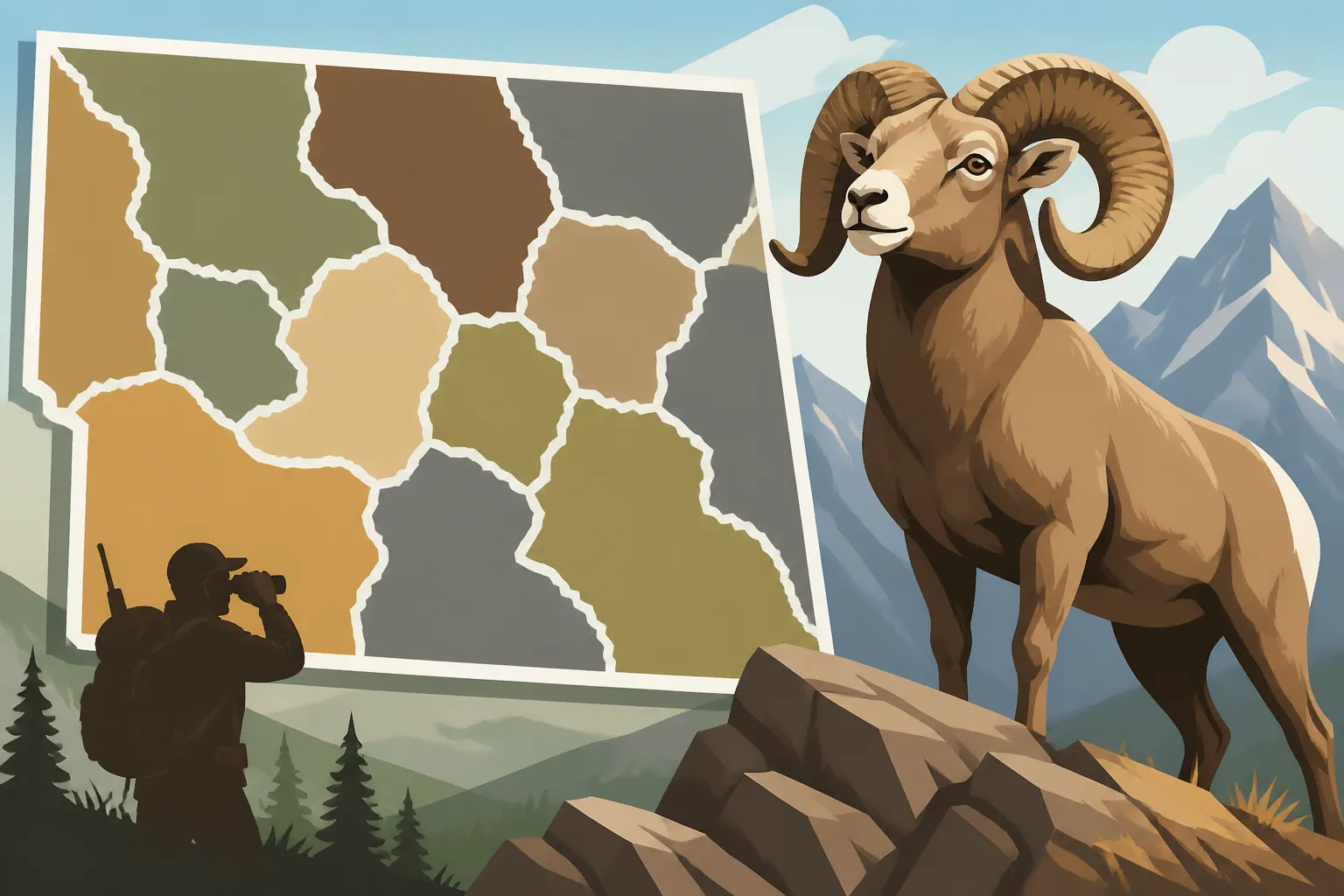
Wyoming Bighorn Sheep Hunt Districts
Oh, the elusive bighorn sheep tag in Wyoming – it's often considered the holy grail for many Western hunters, and the sheer difficulty of drawing one can feel like an insurmountable barrier. For those dreaming of a high-country ram, understanding the unique characteristics of Wyoming's bighorn sheep hunt districts isn't just helpful; it's absolutely critical for even the slimmest chance of success. This comprehensive guide is here to meticulously break down these challenging districts, shedding light on their geography, the harsh realities of the draw, and strategies to help you navigate the application process.
Understanding Wyoming's Bighorn Sheep Hunt Districts
When you talk about bighorn sheep in Wyoming, you're immediately stepping into a world of rugged, remote mountains and some of the most sought-after tags in North America. Unlike deer or elk, where general tags might be available or limited quotas are still somewhat achievable, bighorn sheep hunting operates on an entirely different level. Each hunt district for bighorns is a distinct puzzle piece, with its own specific regulations, population dynamics, and terrain challenges.
What Defines a Hunt District for Bighorn Sheep
A bighorn sheep hunt district in Wyoming isn't just an arbitrary line on a map; it's a meticulously defined area where specific management objectives are applied to the bighorn population residing within those boundaries. These districts are drawn based on everything from geographic features like mountain ranges and major drainages to known sheep herd movements and wintering grounds. The Wyoming Game and Fish Department uses these boundaries to track population numbers, assess ram-to-ewe ratios, and ultimately determine how many tags can be issued each year without negatively impacting the long-term health of the herd. This granular approach ensures that the limited hunting pressure is distributed in a way that aligns with conservation goals, often making each district a unique application proposition.
How Population Objectives Shape Hunt Districts
The underlying purpose of each bighorn sheep hunt district is rooted in population objectives set by the Wyoming Game and Fish Department. These objectives aren't static; they fluctuate based on herd health, habitat availability, disease prevalence, and even factors like severe winters or predation. For instance, a district might have an objective to maintain a certain number of mature rams, influencing how many ram tags are allocated. Other districts might be focused on overall herd growth, potentially leading to the issuance of a few ewe tags in specific years to manage population density. When you dive into the regulations, you'll see how these numbers directly translate into the type and quantity of licenses offered, making some districts almost impossibly difficult to draw for a ram, while others might occasionally offer a very limited number of "management" ewe tags. The constant monitoring and adjustment of these objectives are what make applying for bighorn sheep so complex and dynamic year after year.
The Evolution of Wyoming's Sheep Management Areas
Wyoming's bighorn sheep management has a long history, evolving significantly over decades as wildlife biology advanced and population data became more robust. Historically, some areas might have been managed under broader regulations, but as more was learned about specific herd genetics, disease vulnerabilities, and migration patterns, the districts became more finely tuned. For example, some districts might have been consolidated or split to better manage distinct, isolated herds, each facing its own set of challenges. This continuous evolution means that a district you researched five years ago might have slightly different boundaries or management priorities today. Staying current with the annual regulations and understanding the historical context of a district, often available through Game and Fish reports or resources like GoHunt's historical draw odds, can provide invaluable insight into future trends and potential tag allocations.
The Geography and Habitat of Key Sheep Districts
Wyoming is home to several iconic mountain ranges that harbor bighorn sheep, each offering a distinct challenge and unique landscape for these hardy animals. Understanding these geographic nuances is crucial, not just for the hunt itself, but for strategizing your application. The specific conditions within a district, from its elevation profiles to its vegetation, play a huge role in supporting the sheep population and dictating hunting conditions.
The Iconic Absaroka and Cody Region Districts
When most hunters picture Wyoming bighorn sheep, their minds often drift to the dramatic, jagged peaks of the Absaroka Range and the areas surrounding Cody. These districts, like portions of Hunt Area 1 and 2, are renowned for their rugged, high-elevation terrain, characterized by deep canyons, extensive rock slides, and alpine basins. The sheep here often live above timberline for much of the year, thriving in steep, broken country that provides both escape terrain from predators and access to sparse but nutritious forage. Hunters pursuing rams in these districts can expect physically demanding hunts at elevations often exceeding 10,000 feet, where weather can change in an instant, even in late summer or early fall. The sheep populations in these areas, while robust in their chosen habitat, face challenges like disease transmission from domestic sheep and harsh winter conditions, which wildlife managers constantly monitor.
Districts in the Bridger-Teton and Gros Ventre Ranges
Further south, the Bridger-Teton National Forest and the Gros Ventre Range also host significant bighorn sheep populations, often in hunt districts like portions of Area 7 or 8. These areas, particularly the Gros Ventre, are famous for producing some truly magnificent rams, but they come with their own unique set of challenges. The terrain is equally rugged, perhaps even more densely forested in lower elevations than the Absarokas, with vast wilderness areas that require significant pack-in efforts. Access can be limited, often necessitating horseback or extensive backpacking trips into remote basins and high ridges. The sheep in these regions are expert at disappearing into the timber or utilizing the extreme topography to their advantage, making for incredibly difficult but rewarding hunts. If you're considering a hunt here, be prepared for physically grueling days and the need for superior glassing skills to locate sheep in vast, complex landscapes, much like when you're trying to spot mule deer. Hunters interested in these areas should pay close attention to the specific regulations for hunting within designated wilderness, as rules such as the Wyoming's Wilderness Guide Law for Nonresidents can significantly impact your planning.
Lesser-Known but Still Challenging Districts
While the Absarokas and Gros Ventre get a lot of attention, Wyoming has other bighorn sheep hunt districts that, though perhaps less famous, are no less challenging or rewarding. Areas like the Whiskey Mountain herd, part of districts around Dubois, or sheep found in parts of the Wind River Range, also offer incredible hunting opportunities. These districts might have slightly different ecological characteristics, perhaps with more intermingled timber and open rock fields, or different access points. Some might be closer to human development, while others are deep in protected wilderness. The key takeaway is that no bighorn sheep hunt in Wyoming is "easy." Each district demands respect for the terrain, the animals, and your own physical limits. Researching these lesser-known districts, often through the detailed hunt planner on the Wyoming Game and Fish Department website or by consulting tools that analyze draw odds by hunt district, can sometimes reveal hidden gems or slightly better odds, though "better" is a relative term when it comes to bighorn sheep.
Draw Odds, Points, and the Once-in-a-Lifetime Factor
The bighorn sheep draw in Wyoming is notoriously difficult, a fact that can be incredibly frustrating for hopeful hunters. Understanding the precise mechanisms of the draw, especially regarding draw odds and the unique "once-in-a-lifetime" rule, is paramount before you even consider submitting an application. It's a system designed for extreme selectivity, making every application a long shot.
The Reality of Random Draw Odds for Bighorn Sheep
Let's not sugarcoat it: the draw odds for bighorn sheep in Wyoming are abysmal for most applicants. Unlike elk or deer, where preference points accumulate and can eventually lead to a tag, Wyoming Bighorn Sheep Random Odds Sit Under One Percent for many nonresident hopefuls, and even residents face extremely long odds in premier units. The system is largely a pure lottery, with no preference points for sheep licenses, meaning every applicant, regardless of how many times they've applied unsuccessfully, theoretically starts on equal footing for the random portion of the draw. This can be disheartening, as it means consistent application year after year offers no tangible advantage in accumulating points, only increased participation in a pure game of chance. Hunters are essentially buying a lottery ticket each year, hoping their name is one of the few pulled from a massive hat.
Why Sheep is a Once-in-a-Lifetime License in Wyoming
One of the most significant rules dictating the bighorn sheep draw is its "once-in-a-lifetime" status. This means if you are fortunate enough to draw and harvest a bighorn sheep ram in Wyoming, you are generally ineligible to draw another ram tag for the remainder of your life. This policy is in place for several critical reasons, primarily conservation. By ensuring that successful hunters can only harvest one ram, the state maximizes the opportunity for a broader number of individuals to experience a bighorn hunt and distributes the limited harvest pressure across the population more equitably over time. This rule also underscores the preciousness of these animals and the extremely limited number of tags available. It's a stark reminder that this isn't a species you'll hunt every few years; for most, it's a dream that, if realized, will be a singular, cherished event.
How the 90/10 Split Affects Nonresident Opportunities
Further impacting the already slim odds for nonresidents is Wyoming's 90/10 split that reshaped the distribution of tags for once-in-a-lifetime species like sheep and moose. This regulation mandates that 90% of the available tags for species like bighorn sheep are allocated to residents, while a mere 10% are reserved for nonresidents. In units with only a handful of tags, this often translates to one, or even zero, nonresident tags being available in a given year. For example, if a hunt district has ten ram tags, only one would be available to the thousands of nonresident applicants. If a district only has three tags, it's highly likely that no nonresident will draw that year. This 90/10 split significantly reduces the number of opportunities for out-of-state hunters, making the draw for them an even longer shot and necessitating a deep understanding of which districts, if any, even offer a nonresident tag in a specific year. This is a critical factor when considering your application against the backdrop of Wyoming Nonresident Tags Run $326 to $1,965.
Strategies for Applying in Wyoming's Bighorn Sheep Draw
Given the brutal draw odds and the "once-in-a-lifetime" rule, applying for a Wyoming bighorn sheep tag isn't about accumulating points or guaranteed success; it's about playing the long game with informed decisions. It demands meticulous research and a realistic understanding of the lottery-style process.
Researching Districts and Understanding Success Rates
Before you even think about putting in for a bighorn sheep tag, immerse yourself in research. This means poring over the Wyoming Game and Fish Department's annual hunting regulations, studying the detailed hunt district maps, and examining historical draw odds and harvest reports. Tools provided by services like GoHunt are invaluable here, as they often compile this complex data into user-friendly formats, showing success rates, ram age class, and even historical weather patterns for specific districts. Look for trends in tag allocations—are certain districts consistently offering more tags? What are the nonresident odds like in those areas, keeping in mind the 90/10 split? Understanding what factors influence success rates, such as access challenges or population health, can guide your choices. Remember, a "high" success rate for bighorn sheep might still only mean 50-60% for drawn hunters, far from a guarantee, and drawing is the biggest hurdle.
Here's a simplified look at how draw odds for nonresidents might appear across different types of bighorn sheep hunt districts in Wyoming:
| Hunt District Type | Typical Nonresident Tag Allocation | Rough Nonresident Odds (Estimate) | Characteristics |
|---|---|---|---|
| Premier Wilderness | 0-1 (very rare) | <0.1% | Remote, high-elevation, physically demanding, often requires guide |
| Absaroka/Cody Region | 1-2 | <0.2% | Rugged, rocky, high success for drawn hunters |
| Bridger-Teton/Gros Ventre | 1-2 | <0.2% | Steep, timbered, wilderness, large rams |
| Smaller, Scattered Herds | 0-1 (very inconsistent) | <0.1% | Isolated populations, may have unique access challenges |
Please note: These odds are illustrative estimates and fluctuate wildly year to year based on tag allocations and applicant numbers. Always consult the most current Wyoming Game and Fish Department regulations and draw odds for precise figures.
The Role of Preference Points in the Sheep Draw
One of the most disheartening realities for bighorn sheep applicants is that there are no preference points for these tags in Wyoming, a significant departure from how the state manages elk, deer, and antelope draws. This means that every year you apply for a bighorn sheep tag, you are essentially starting from scratch in the lottery. There's no accumulating an advantage over time, no knowing that eventually, your turn will come. This purely random system can be frustrating for those who diligently build points for other species, but it also means that a first-time applicant has the exact same chance as someone who has applied for twenty years straight. While it might feel unfair, it also means that if you're truly dedicated, every year offers an equal, albeit slim, shot at drawing that once-in-a-lifetime tag. This absence of points makes the application process less about strategy and more about persistent participation, highlighting how Wyoming's Four Application Deadlines, February Through June apply universally, but with different internal mechanics for different species.
Deciding Between Ram Tags and Ewe Hunts
While the dream is almost always a majestic ram, it's worth considering the occasional ewe tag, especially if your primary goal is the experience of a bighorn sheep hunt. Wyoming does sometimes offer Ewe Hunts Against Full-Price Ram Tags in specific districts, usually as part of herd management strategies to control population numbers or address disease concerns. These ewe tags are typically fewer in number and may have slightly different season dates or geographic restrictions. The draw odds for ewe tags are generally still very challenging, but in some instances, they can be marginally better than for ram tags. However, like ram tags, ewe tags are also considered "once-in-a-lifetime" for some species, depending on the specific regulations, meaning that harvesting a ewe might preclude you from ever drawing a ram tag later. Carefully review the current regulations to understand these distinctions before applying. Weigh your aspirations: is it the full curl ram you seek, or is the high-country experience of chasing any bighorn sheep paramount? Your answer will inform your application choices.
Preparing for a Wyoming Bighorn Sheep Hunt
Drawing a bighorn sheep tag in Wyoming is just the first, albeit biggest, hurdle. The actual hunt is an entirely different beast, demanding extreme physical and mental fortitude, specialized gear, and careful planning. This is not a hunt for the faint of heart or the unprepared.
Physical Conditioning and Altitude Acclimation
A Wyoming bighorn sheep hunt is perhaps the most physically demanding big game hunt in North America. You'll be climbing steep, rocky terrain, often above 10,000 feet, carrying heavy packs, and covering many miles each day. The air is thin, and your body will feel it. Altitude sickness is a real concern, with symptoms ranging from headaches and nausea to more severe, life-threatening conditions. Therefore, physical conditioning must begin months, if not a year, before your hunt. Focus on cardiovascular endurance, leg strength, and carrying weight uphill. Activities like hiking with a loaded pack, stair climbing, and running are essential. If you live at sea level, plan to arrive in Wyoming several days, or even a week, before your hunt starts to allow your body time to acclimate to the higher elevation. This is not a suggestion; it's a necessity to maximize your chances of success and, more importantly, ensure your safety.
Essential Gear for a High-Country Sheep Hunt
Your gear list for a bighorn sheep hunt will be extensive and specialized, focusing on durability, low weight, and performance in extreme conditions. High-quality optics are non-negotiable; you'll need powerful binoculars (10×42 or 12×50) and a top-tier spotting scope (20-60x or 25-75x) on a sturdy tripod. Glassing Wyoming Basins Before You Take a Step for hours on end is the primary method for locating sheep. Layered clothing, including a robust waterproof/breathable outer shell, is essential for rapidly changing mountain weather. A lightweight yet warm sleeping bag and shelter suitable for alpine conditions are also critical. Beyond the basics, consider specialized items like trekking poles for stability, a water filtration system, and a reliable GPS device or satellite communication device (like a Garmin inReach) for safety in remote areas. Your boots should be well broken-in, waterproof, and provide excellent ankle support for navigating scree and rock. Every item you carry will be scrutinized for its necessity versus its weight, as every ounce counts in the vertical world of bighorn sheep.
Finding a Reputable Outfitter or Planning a DIY Adventure
Deciding whether to hire an outfitter or attempt a do-it-yourself (DIY) hunt is a major decision, particularly for nonresident hunters. If your tag is in a designated wilderness area, Wyoming requires a guide for nonresidents, making a professional outfitter a necessity. Even outside of wilderness areas, the sheer difficulty, remote terrain, and the once-in-a-lifetime nature of the tag lead many hunters to hire an experienced outfitter. A good outfitter provides invaluable local knowledge, horses for packing in gear, and expertise in locating sheep and navigating the treacherous terrain. When vetting an outfitter, look for a long track record, excellent references, and transparent communication about success rates, costs, and hunt logistics. For those considering a DIY hunt, especially if you're a resident or drawn a non-wilderness tag, understand that this is an undertaking of epic proportions. It requires extensive backcountry experience, exceptional physical fitness, self-reliance, and a deep understanding of the hunt district. Both options demand meticulous planning, but a DIY sheep hunt arguably requires more preparatory effort than almost any other big game pursuit. Regardless of your choice, remember to always prioritize safety in the high country.
Disclaimer
Please be aware that hunting regulations, fees, and draw odds in Wyoming are subject to change annually. Always consult the most current Wyoming Game and Fish Department official regulations before making any hunting plans or submitting applications. This guide provides general informational purposes only and should not be considered legal advice or a substitute for official sources.