Wyoming Black Bear Runs Spring and Fall
The crisp mountain air of Wyoming whispers promises of adventure, but for those dreaming of a black bear hunt, the calendar isn't just a guide—it's a critical puzzle piece. Many hunters find themselves scratching their heads, wondering if the elusive black bear is fair game in spring, fall, or both, and what specific rules come with each season. This comprehensive guide is here to unravel those complexities, walking you through everything you need to know about pursuing black bears in the Cowboy State, from understanding their habits to navigating the unique regulations of both the spring and fall hunts.
Understanding Wyoming's Black Bear Seasons
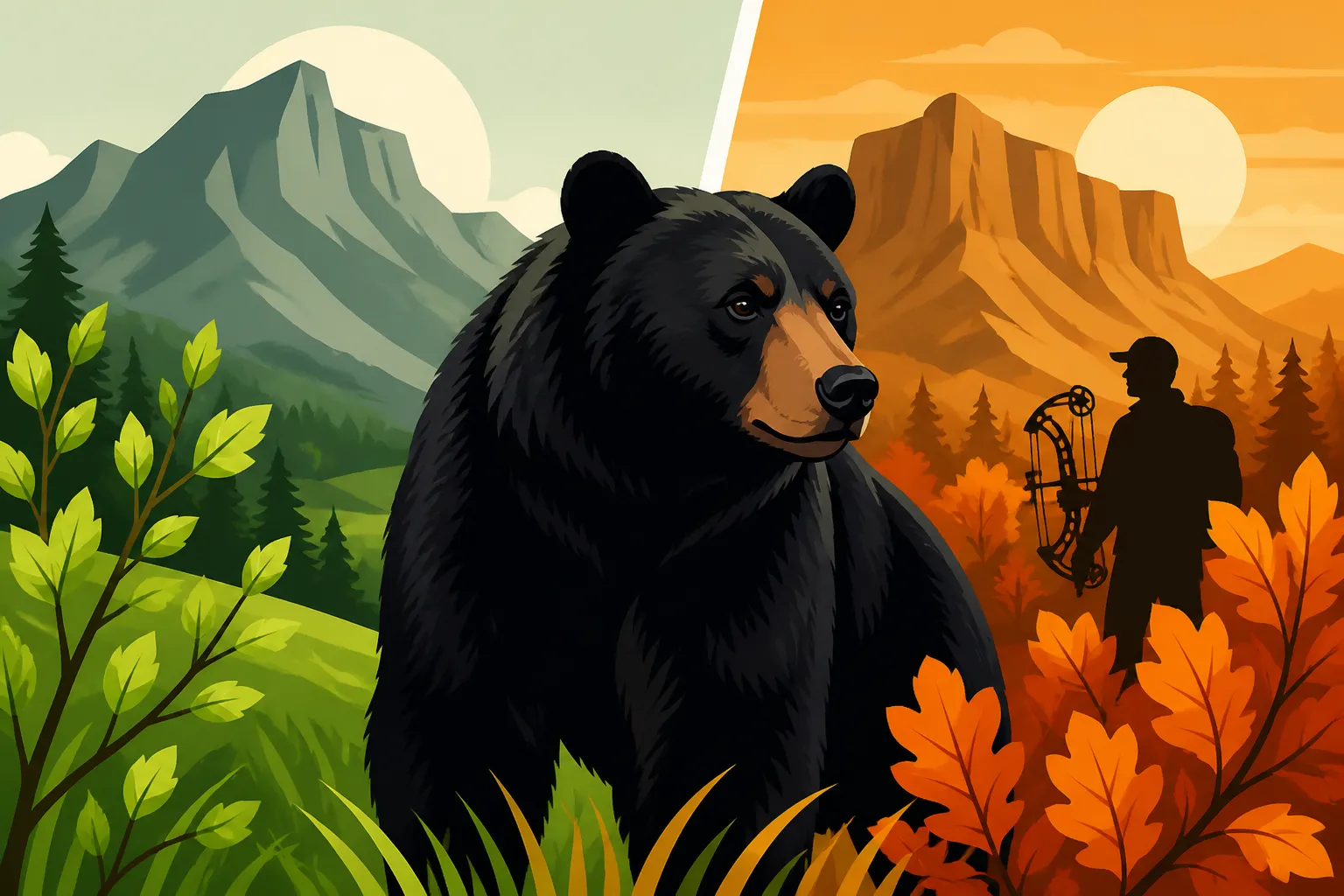
Wyoming offers a unique opportunity for black bear enthusiasts, allowing hunters to pursue these magnificent animals in both the rejuvenating days of spring and the golden hues of autumn. However, it's not simply a matter of picking a season; each period presents its own set of challenges, opportunities, and very specific regulations that you need to be intimately familiar with. Missing a detail can mean missing a chance at a bear or, worse, running afoul of the law.
Spring Bear: A Test of Patience and Scouting
The spring black bear season is, for many, the ultimate test of patience and dedicated scouting. After a long winter in hibernation, bears emerge with a ravenous appetite, looking to replenish lost fat and energy. This drive for food is what dictates their movements and, consequently, your hunting strategy. As soon as the snow begins to recede from south-facing slopes, often in April or May, bears will be found grazing on tender new grasses and forbs. These early season sightings can be fantastic, but they demand keen eyes and often, high-quality optics.
The challenge in spring lies in the unpredictable nature of the weather and the bears themselves. One day might be warm and sunny, bringing bears out in droves, while a sudden snowstorm can send them back into temporary dens or halt their activity for days. This means your scouting needs to be intense, not just looking for bears, but looking for fresh sign: scat, tracks, and flipped rocks where they've been searching for insects. The bears are often solitary at this time, covering significant ground in their search for sustenance. Unlike other big game species, hunting a bear in spring feels more like a pure wilderness pursuit, often requiring long hours of glassing remote hillsides and thick timber edges. The window for legal shooting hours for big game in Wyoming is also a critical factor during these long spring days.
Fall Bear: Opportunity and Overlap
Fall black bear hunting in Wyoming brings a different dynamic, often overlapping with popular deer and elk seasons. This creates both unique opportunities and challenges. In the fall, bears are once again in a hyperphagia state, meaning they're eating as much as possible to put on fat for the upcoming winter hibernation. This often translates to more predictable feeding patterns, as they gravitate towards areas rich in berries, acorns, and other mast crops. If you find a good patch of chokecherries or serviceberries, chances are a bear will eventually visit it.
The overlap with other big game seasons means you might be packing your bear tag alongside your elk or deer tag, creating exciting "combo hunt" possibilities. However, it also means shared hunting pressure. Many hunters are in the woods, and bears can become more nocturnal or move into thicker cover if disturbed. Fall bears also have a thicker, denser coat, which makes for a more impressive hide if you're looking for a trophy. The rich array of fall foliage can make spotting bears difficult, but the cooler temperatures and absence of swarming insects often make for a more comfortable hunt. Understanding when the elk rut actually peaks out west could also give you an advantage, as bears will often be found scavenging on downed animals or preying on vulnerable calves.
Season Dates: A Unit-by-Unit Deep Dive
It cannot be stressed enough: black bear season dates and regulations in Wyoming are highly specific to individual hunt areas. What's legal in one unit might be completely different in an adjacent one. The Wyoming Game and Fish Department (WGFD) sets these dates annually, and they can vary significantly. For example, some units might have a spring season that runs from April 15th to May 31st, while others might extend into June or even have different opening dates. The same applies to fall seasons, which often open in September and can run through November, depending on the unit.
Beyond just the dates, some units have specific quotas that can lead to an early closure of the season. This is particularly common in areas with a history of high harvest or specific management objectives. If a quota is met, the season can close with very little notice, sometimes even mid-day. This means it is absolutely critical to check the WGFD website or call their offices for the most up-to-date information on your specific hunt area. Utilizing resources like the Wyoming Hunt Planner and checking draw odds before you apply can provide invaluable insights into your chosen unit. Do not rely on last year's regulations; always consult the current year's season information before heading into the field.
Black Bear Biology and Behavior in Wyoming
To consistently find and successfully hunt black bears in Wyoming, you need to understand them not just as a quarry, but as a living, breathing part of the ecosystem. Their behaviors are deeply intertwined with the seasons, the availability of food, and their instinctual need to survive. A successful hunter often thinks like the animal they pursue, predicting its movements and understanding its habits.
Diet and Foraging Patterns
Black bears are omnivores, meaning they eat both plants and animals, and their diet shifts dramatically with the seasons. In spring, as they emerge from their dens, their digestive systems are just waking up, and they initially seek out easily digestible foods. This includes new growth of grasses, clovers, and forbs on south-facing slopes, which act as a natural laxative and help them cleanse their systems. They’ll also be on the lookout for carrion—animals that didn't survive the winter—or vulnerable newborn elk calves. As the spring progresses, they'll start turning over rocks and logs to find insects like ants, grubs, and beetle larvae.
By summer, their diet diversifies further, including various berries such as serviceberries, huckleberries, chokecherries, and buffaloberries. They'll also consume roots, tubers, and the occasional small mammal. When fall arrives, bears enter a critical phase called hyperphagia, where they consume enormous amounts of calories to build up fat reserves for winter. Their diet at this time is heavily focused on high-energy foods like acorns, pine nuts, and the abundant berries of late summer and early fall. Understanding these dietary shifts is crucial; it tells you exactly where bears will be concentrating their efforts to feed throughout the different seasons.
Habitat Preferences Across the State
Wyoming's diverse landscape offers black bears a variety of suitable habitats, but they generally prefer areas with dense cover, abundant food sources, and access to water. You'll find them predominantly in the mountainous regions of the state, such as the Bighorn Mountains, the Wind River Range, the Absaroka Range, and the Black Hills. These areas provide the thick timber, brushy draws, and riparian corridors they need for bedding, security, and travel.
In these habitats, look for areas where timber meets open parks or clearings, especially those with good visibility for glassing. South-facing slopes that warm up quickly in the spring are prime early-season spots. As summer progresses and fall approaches, bears will move into areas with mature berry bushes or stands of oak and pine that produce mast crops. Dense, north-facing slopes and thick creek bottoms provide cool bedding areas during warmer parts of the day. While primarily associated with mountains, black bears can also be found in river bottoms and breaks in eastern Wyoming, where good cover and food sources exist. Using mapping tools from platforms like GoHunt can help you identify these habitat types and potential bear strongholds across your chosen hunt unit.
Denning Habits and Emergence
Black bears in Wyoming typically enter their dens for hibernation in late fall or early winter, usually between November and December, though this can vary based on food availability and weather conditions. They seek out secure, secluded locations for their dens, often under large root wads, in rock crevices, beneath fallen logs, or in excavated burrows. These dens are usually insulated with leaves, grass, and other vegetation to keep them warm through the harsh Wyoming winter. Pregnant females generally den earlier and emerge later than males or non-reproducing females.
The emergence from dens in the spring is gradual, often beginning in March or April. Males typically emerge first, followed by females without cubs, and finally, sows with new cubs in tow. Young bears and those in poorer condition may den longer. Upon emergence, bears are lethargic and cautious, spending time near their dens before venturing further to forage. Understanding this cycle helps you anticipate their presence. Early spring hunters should focus on areas close to potential den sites on sunny, south-facing slopes, while later spring hunters can expand their search to a wider foraging range.
Legalities and Regulations for Wyoming Black Bear Hunters
Navigating the rules and regulations for black bear hunting in Wyoming can feel like deciphering ancient texts, but adherence is paramount. These rules are in place to ensure fair chase, manage bear populations, and prevent conflicts. Ignorance of the law is never an excuse, and penalties can be severe.
License Requirements and Fees
First and foremost, to hunt black bears in Wyoming, you'll need a valid Wyoming hunting license and a specific black bear license. This is separate from your general big game license for deer, elk, or antelope. For nonresidents, the cost of a black bear license is typically around $375, plus application fees and the mandatory conservation stamp. Residents will pay a significantly lower fee, often around $65. You also need to purchase a Wyoming Conservation Stamp, which is a requirement for anyone hunting or fishing in the state, whether resident or nonresident.
Licenses can be purchased online through the Wyoming Game and Fish Department's Electronic Licensing System (ELS) or from authorized license selling agents across the state. It's crucial to apply or purchase your license well in advance of your hunt, especially if you're a nonresident, as quotas in some areas can mean limited availability. The WGFD website provides detailed information on all license fees, including what a nonresident elk license price covers, for comparison. Make sure you carry your license and conservation stamp with you at all times while hunting.
Tagging and Reporting Your Bear
Wyoming has strict regulations regarding the tagging and reporting of harvested black bears. Immediately upon harvesting a bear, you must detach and validate your black bear license tag. This tag must be securely affixed to the carcass. The specific location to affix it is usually outlined in the regulations, often on the ear or leg, but always check the current year's regulations for precise instructions. Failure to properly tag your bear is a serious offense.
Perhaps even more critical than tagging is the mandatory reporting requirement. All harvested black bears must be reported to the Wyoming Game and Fish Department within a specified timeframe, usually within three days of harvest. This reporting often involves presenting the skull and hide to a WGFD game warden or authorized personnel for inspection and sealing. This sealing process allows the department to collect important biological data (age, sex, location) and ensures the animal was legally harvested. This is also where they check for evidence of sex requirements on a carcass to ensure compliance. If you're hunting in an area with a quota, immediate reporting is vital to prevent overharvest. Many hunters call their local game warden as soon as they have a bear down to arrange the sealing.
Baiting Rules: Where and How It's Allowed
One of the most debated and misunderstood aspects of black bear hunting in Wyoming concerns baiting. Unlike some states where baiting for big game is entirely prohibited, Wyoming does allow black bear baiting in specific designated areas under very strict conditions. This is not a statewide allowance, and baiting outside of these designated areas is illegal and will result in significant penalties. You absolutely must understand where electronic calls are legal for big game as well.
The Wyoming Game and Fish Department publishes a list of hunt areas where baiting is permitted, and these lists are updated annually. Even within these areas, specific rules apply:
- Permit Required: You must apply for and receive a separate black bear baiting permit for each bait site.
- Bait Site Limits: There are limits on the number of bait sites an individual can establish.
- Bait Content: Only certain types of bait are allowed. It generally must be edible materials like pastries, dog food, grains, or fruit. Absolutely no parts of big game animals are permitted as bait.
- Distance from Roads/Residences: Baits must be set a minimum distance from public roads, established trails, and occupied dwellings.
- Signage: Each bait site must be clearly marked with signs displaying your name and permit number.
- Maintenance and Removal: Baits must be regularly tended to, and all materials, including containers and remaining bait, must be removed at the end of the season.
It’s a complex system, and often, only seasoned hunters or those familiar with the specific unit engage in baiting. If you're considering baiting, dedicate significant time to reviewing the current year's regulations on baiting black bear against baiting big game in Wyoming and contacting a local game warden for clarification.
Hunting Methods: Spot-and-Stalk vs. Baiting
Once you've got your license and understand the regulations, the next step is deciding how you'll hunt. Wyoming offers diverse terrain and opportunities, lending itself to a few primary methods for pursuing black bears. Each has its own appeal, demands, and strategic considerations.
The Art of Spot-and-Stalk Hunting
For many, spot-and-stalk is the purest form of hunting, and it’s a highly effective method for black bears in Wyoming, especially in the vast, open landscapes and timbered slopes. This technique relies heavily on keen eyesight, patience, and the ability to move silently through the terrain. The fundamental principle is simple: find a bear, plan an approach, and then execute a stalk to get within shooting range.
Here's how it generally plays out:
- Glassing: This is the most crucial part. You'll spend hours, often at first light and last light, meticulously scanning promising slopes, clear-cuts, avalanche chutes, and timber edges with high-quality binoculars and spotting scopes. South-facing slopes in spring, and berry patches in fall, are prime candidates. Look for anything dark that moves, or odd shapes that don't belong. Patience is key; a bear can appear or disappear as if by magic. Using optics power for Wyoming's long sightlines is an absolute must.
- Locating and Assessing: Once you spot a bear, take your time to confirm it's a black bear (not a grizzly!), assess its size, and observe its behavior. Is it feeding? Moving? Bedded? This information helps you plan your approach. Is it a sow with cubs? Remember, shooting a sow with cubs is illegal.
- The Stalk: This is where the real challenge begins. You need to use the terrain to your advantage, staying out of sight and downwind. Bears have an incredible sense of smell, so playing wind direction on an open sagebrush stalk is absolutely critical. Move slowly, deliberately, and quietly. Avoid making sudden movements or breaking branches. This can be an hours-long endeavor, often covering significant distance over rough terrain.
- The Shot: Once you're within your effective shooting range, take your time, get stable, and make a clean, ethical shot. Bear vitals are slightly different from deer or elk, often positioned a bit further forward.
Spot-and-stalk offers an immense sense of accomplishment and teaches you a deep understanding of the landscape and the animal. It often requires significant physical conditioning for a mountain hunt and can take you deep into the wilderness.
Running Hounds for Bear
Hound hunting for black bears is a traditional and highly specialized method, often employed by professional outfitters in Wyoming. This technique involves using trained dogs to track and tree or bay a bear, allowing the hunter to approach for a shot. While not as common for DIY hunters, it’s a legal and effective method in many parts of the state.
The process typically involves:
- Finding a Track: Hound hunters will often drive forest roads or access trails at dawn, looking for fresh bear tracks.
- Turning Out the Dogs: Once a fresh track is found, the dogs are released. They will follow the scent trail, often for miles, hot on the bear's heels.
- The Chase: The chase can be long and arduous, with hunters often following the dogs using GPS collars and two-way radio use between hunting partners. It can lead you into incredibly steep, dense, and difficult terrain.
- Treeing or Baying: Eventually, if successful, the dogs will corner the bear up a tree or bay it on the ground. At this point, the hunters hike in, assess the bear, and make a decision on whether to harvest.
Hound hunting requires specialized equipment, extensive knowledge of dog handling, and a deep understanding of bear behavior. It's often done with a professional guide or outfitter who has the experience and resources.
The Nuances of Baiting for Black Bears
As mentioned earlier, baiting for black bears is permitted in certain Wyoming hunt areas with strict regulations. When done legally and ethically, it can be an effective method, especially for those with limited mobility or time for extensive spot-and-stalk hunting. However, it's far from a "sure thing" and requires its own set of skills and commitments.
Here are some key nuances of baiting:
- Site Selection: Choosing the right bait site is critical. It needs to be in a legal baiting area, in an area bears frequent (near dense cover, water, and travel corridors), and accessible enough for you to maintain regularly, but remote enough to avoid human disturbance.
- Baiting Strategy: This isn't just dumping food. You need a consistent baiting schedule, using an appealing mix of high-calorie foods. Scent lures can be used to attract bears from a distance, but always check scent lure limits near CWD management areas. Consistency is key to getting bears habituated to visiting your site during daylight hours.
- Observation and Setup: You'll typically use trail cameras to monitor your bait, identify specific bears, and learn their patterns. Once a bear is consistently hitting the bait during legal shooting hours, you'll set up a blind or treestand (checking tree stand rules that apply on public land) a safe distance from the bait, usually 20-30 yards for archery, or further for firearms.
- Patience and Persistence: Bears can be wary, especially mature boars. It can take days or even weeks for a bear to commit to a bait. You might sit for hours, days, or even a week before a legal bear presents a shot opportunity.
Baiting requires a significant investment of time, effort, and often, money. It's a commitment that stretches across weeks, not just days, and demands meticulous attention to detail and strict adherence to WGFD rules.
Identifying and Distinguishing Black Bears
Before you ever draw a bow or raise a rifle, positively identifying your target is not just good practice—it's legally mandatory and ethically crucial. Mistaking a black bear for a grizzly in Wyoming can have severe consequences, given that grizzlies are federally protected in most of the state and hunting them is strictly prohibited outside of very specific, limited seasons and areas. Even within black bears, understanding color phases and field judging for size is key.
Color Phases: Beyond Just Black
The name "black bear" is a bit of a misnomer, as these animals come in a stunning array of colors beyond just solid black. In Wyoming, you'll encounter various color phases, all of which are still genetically black bears. These can include:
- Black: The most common color, especially in denser timber.
- Cinnamon: A reddish-brown color, quite prevalent in many Western states.
- Blonde/Light Brown: Bears that are very light brown or even a striking blonde hue.
- Chocolate/Dark Brown: A deep, rich brown color.
It's vital to recognize that color alone is not an indicator of species. A brown bear could be a black bear, and a black bear could be a black bear. The challenge lies in distinguishing a cinnamon or brown black bear from a grizzly bear, which we’ll cover next. When identifying a cinnamon bear in the field, look beyond the color and focus on the physical characteristics.
Telling Black Bears from Grizzlies: A Critical Skill
This is perhaps the most important identification skill a Wyoming bear hunter needs. While both species inhabit similar areas, especially in northwestern Wyoming, they have distinct physical characteristics. Always use multiple indicators, never just one, to confirm identification.
Here's a breakdown of key differences:
| Feature | Black Bear | Grizzly Bear |
|---|---|---|
| Shoulder Hump | No prominent shoulder hump (or very slight) | Distinct, prominent muscular shoulder hump |
| Facial Profile | Straight facial profile, "Roman nose" | Dish-shaped facial profile, dished-in nose |
| Ears | Longer, more pointed ears relative to head | Shorter, rounder ears relative to head |
| Claws | Shorter, darker, more curved claws | Longer, straighter, lighter-colored claws (digging) |
| Size (Variable!) | Generally smaller, but can overlap | Generally larger, but young grizzlies can be small |
| Track Shape | Toes often form a more arched line | Toes often form a straighter line, less arch |
The shoulder hump and facial profile are usually the most reliable indicators. A good rule of thumb: if you have any doubt, don't shoot. It's far better to let a legal black bear walk than to mistakenly harvest a protected grizzly. Pay close attention to these details, especially when glassing at a distance. Reviewing color phase bears and grizzly identification is something every bear hunter should do.
Field Judging for Trophy Potential
Once you've confirmed it's a black bear, many hunters want to assess its size for trophy potential, particularly skull size or hide quality. Field judging bears accurately is challenging because their fur can be deceiving, and without a frame of reference, size can be hard to gauge.
Here are some tips for field judging:
- Body Proportions: Look at the head-to-body ratio. A large bear will have a relatively small head for its body size, and its ears will appear small on its head. A smaller, younger bear will look "all head and ears."
- Shoulder and Belly: Big boars (males) tend to have broad, blocky shoulders, a thick neck, and a saggy belly, especially in the fall when they're gorging. Sows (females) tend to be more slender, even when fat.
- Movement: A big bear often moves with a slow, deliberate swagger, while smaller bears can be more agile and playful.
- Compare to Surroundings: Try to compare the bear's size to familiar objects like a downed log, a specific rock, or the height of surrounding vegetation.
- Tracks: Large tracks, especially wide and blunt, can indicate a mature bear.
Remember, a bear can look significantly different in varied terrain or light conditions. Take your time, observe carefully, and if possible, get multiple angles. Trophy potential is secondary to positive identification and ethical harvest.
Essential Gear for Wyoming Black Bear Hunting
Preparing for a Wyoming black bear hunt means having the right gear. The rugged, often remote landscapes and unpredictable weather demand reliable equipment that can withstand the elements and help you succeed safely. Cutting corners here can lead to frustration or, worse, dangerous situations.
Optics: Spotting That Elusive Bear
Given the vastness of Wyoming's hunting areas, quality optics are non-negotiable for spot-and-stalk bear hunting.
- Binoculars: A good pair of 10×42 or 10×50 binoculars are your primary tool for scanning hillsides and checking thick cover. Invest in a reputable brand like Vortex, Zeiss, or Swarovski. Clear, crisp glass will reduce eye strain during long hours of glassing.
- Spotting Scope: A 15-45x or 20-60x spotting scope is essential for identifying bears at extreme distances, assessing their sex and size, and differentiating them from grizzlies. Pair it with a sturdy tripod for stable viewing. You'll be using this tool extensively to grid glassing a basin without missing bucks, and bears.
- Tripod: A lightweight, sturdy tripod is crucial for both your spotting scope and for glassing with your binoculars for extended periods. It drastically reduces fatigue and allows for much steadier viewing.
Remember, many bears are spotted hundreds, sometimes thousands, of yards away. You need the optical power to discern details before you commit to a stalk.
Firearms and Archery Considerations
Choosing your weapon for a black bear hunt requires careful thought, prioritizing ethical take-down power.
- Rifles: For rifle hunters, a variety of calibers can be effective, but something that delivers substantial energy and penetration is preferred. Popular choices include .30-06 Springfield, .300 Win Mag, 7mm Rem Mag, .308 Winchester, and .338 Win Mag. These calibers are capable of delivering enough force to anchor a bear reliably. Always use well-constructed bullets designed for deep penetration, such as bonded or monolithic bullets. Familiarize yourself with the Wyoming legal firearm list for big game and be aware of rifle zero distance for open country shooting.
- Archery: Bowhunters face a greater challenge due to the closer proximity required. A compound bow with a minimum draw weight of 40 pounds (for species like deer and antelope, but for bears, you want significantly more, ideally 50+ pounds to ensure adequate penetration) and well-tuned arrows tipped with sharp, durable broadheads are essential. Expandable broadheads are legal in Wyoming, but many experienced bear hunters prefer fixed-blade broadheads for their reliability and penetration on tough hide and bone. Ensure your broadheads pass the 7/8-inch ring test. A compound bow let-off and measured draw weight are important factors to consider. Realistic archery practice distance for big game is crucial.
- Crossbows: Crossbows are legal for hunting black bears in Wyoming, subject to specific draw weight and bolt length minimums. Crossbow peak draw weight and bolt length in Wyoming typically require a minimum of 90 pounds peak draw weight and a 16-inch bolt. These offer a good blend of power and accuracy for hunters who prefer or require them.
Regardless of your chosen weapon, practice extensively to ensure you can make a precise shot under pressure. Bears are tough animals, and a well-placed shot is vital for a quick, humane harvest.
Bear Safety and Preparedness in the Field
Hunting black bears means you're in bear country, and safety should always be a top priority. While black bears are generally shy, they are wild animals and can be dangerous if surprised, especially a sow with cubs or a bear on a kill.
- Bear Spray: Carry bear spray and know how to use it. It's often more effective and safer than a firearm in close-quarters encounters. Keep it readily accessible, not buried in your pack.
- First Aid Kit: A comprehensive first aid kit is essential for any wilderness hunt.
- Navigation Tools: GPS devices, satellite communicators (like Garmin inReach or Zoleo), and detailed paper maps (like those from GoHunt or USGS) are crucial for navigating remote terrain and for emergency communication. Cell service is unreliable in most prime bear habitat.
- Headlamp/Flashlight: With ample spare batteries, for early morning hikes or late evening pack-outs.
- Appropriate Clothing: Dress in layers to adapt to rapidly changing mountain weather. Blaze orange requirements through the rifle season are critical for other big game, but generally not for archery or bear hunting outside of overlapping rifle seasons. However, wearing some orange is always a good idea for visibility to other hunters.
- Food and Water: Carry enough for the day, plus extra for unexpected delays.
- Buddy System: Whenever possible, hunt with a partner. If hunting solo, always leave a detailed itinerary with someone reliable.
Being prepared for the unexpected is key to a safe and successful black bear hunt in Wyoming.
Post-Harvest: Processing, Salvage, and Regulations
Successfully harvesting a black bear is a significant accomplishment, but the work isn't over when the animal hits the ground. Wyoming has specific regulations regarding the care and transport of your harvested bear, particularly concerning meat salvage and hide/skull preservation. Understanding and following these rules is crucial to avoid violations and ensure respectful use of the animal.
Meat Salvage and Wanton Waste Rules
Wyoming has strict wanton waste laws that apply to all big game, including black bears. This means that you are legally required to properly care for and salvage the edible portions of the animal. For black bears, this typically means salvaging all edible meat from the animal. This is not just a suggestion; it's a legal obligation. The bear meat salvage requirement explained in the regulations specifies exactly what needs to be taken.
Practically, this means:
- Field Dressing: As soon as the bear is down, you need to field dress it to cool the carcass quickly. Bears can spoil rapidly, especially in warmer temperatures.
- Removing Edible Meat: Carefully remove all four quarters (meat from the legs and shoulders), the backstraps, and the tenderloins. Some hunters also salvage neck meat, ribs, and brisket.
- Cooling and Transport: Once the meat is removed, it needs to be cooled as quickly as possible. This can involve hanging it in the shade, placing it on ice (if accessible), or transporting it to a meat processor promptly.
Failure to salvage all edible portions of a black bear is a serious offense that can result in heavy fines, loss of hunting privileges, and confiscation of your trophy. Make sure you understand the nuances of the wanton waste rules every Wyoming hunter should know.
Hide and Skull Care: Preserving Your Trophy
If you plan to keep the hide and skull as a trophy, proper field care is essential to prevent spoilage and ensure a quality mount.
- Skinning: Skinning a bear can be a messy and labor-intensive process due to their thick fat layer. You can either cape the bear (for a shoulder mount) or skin it out entirely (for a rug or life-size mount). Be careful not to cut the hide, especially around the face, ears, and paws.
- Fleshing and Salting: Once skinned, the hide needs to be thoroughly fleshed to remove all fat and muscle tissue. This is critical to prevent hair slippage. After fleshing, generously salt the hide, making sure to work the salt into all crevices and edges. Fold it flesh-to-flesh, roll it up, and place it in a breathable bag or sack. Re-salt after a day or two.
- Skull Preparation: If keeping the skull, you need to remove as much meat and tissue as possible. The skull will also need to be sealed by the WGFD along with the hide. For long-term preservation, you can freeze it or find a taxidermist to clean and bleach it.
Prompt and thorough care of the hide and skull in the field will save you headaches and heartbreak down the line, ensuring your trophy lasts for years.
CWD Testing and Carcass Transport
While Chronic Wasting Disease (CWD) is primarily associated with cervids (deer, elk, moose), there's a general emphasis on disease awareness for all game species. For black bears, CWD testing is generally not required, but it's always wise to be aware of any specific health alerts or recommendations from the WGFD in your hunt area.
When transporting your carcass (meat, hide, skull) out of the field and potentially across state lines, be aware of specific regulations regarding carcass transport rules explained by the WGFD. These rules are primarily aimed at preventing the spread of CWD by limiting the transport of high-risk tissues (brain, spinal cord) from affected areas. While bears are not currently implicated in CWD, these regulations may still apply to certain parts of the carcass or general transport protocols. Always check current regulations, especially if you're a nonresident planning to take your bear home. Is elk meat safe if the animal had CWD? This query is one example of a common concern related to game diseases.
Finding Prime Black Bear Country in Wyoming
Wyoming is a vast state, and knowing where to focus your efforts for black bears can feel like searching for a needle in a haystack. However, by understanding the types of land available and utilizing modern scouting tools, you can significantly narrow down your search and increase your odds of success.
National Forests and Wilderness Areas
The majority of Wyoming's black bear population resides within the extensive National Forests and designated Wilderness Areas that blanket the mountainous regions of the state. These areas offer the dense timber, rugged terrain, and solitude that bears prefer.
- Bridger-Teton National Forest: Located in western Wyoming, this forest is renowned for its vast wilderness, abundant elk, and significant bear populations. Access points into the Bridger-Teton in Wyoming are numerous, but much of it is roadless, requiring foot or horseback travel.
- Shoshone National Forest: Situated in northwestern Wyoming, bordering Yellowstone National Park, the Shoshone National Forest offers incredible habitat for bears, particularly in the Absaroka Range. Hunting the Shoshone in Northwest Wyoming often means steep terrain and remote conditions.
- Bighorn National Forest: In north-central Wyoming, the Bighorn National Forest provides excellent bear habitat in its timbered canyons and drainages. Access into the Bighorn National Forest can be more accessible in some areas, but still offers plenty of wilderness.
- Medicine Bow-Routt National Forest: In southern Wyoming, parts of the Medicine Bow National Forest hold black bears, especially in its more rugged, timbered sections.
Hunting in these areas often means navigating wilderness rules every Wyoming nonresident should know, including regulations on motorized vehicles and sometimes the requirement for a licensed guide for nonresidents in designated wilderness areas. Bear hunting in these remote areas offers an unparalleled backcountry experience.
BLM Land and State Trust Lands
While National Forests hold the densest bear populations, Bureau of Land Management (BLM) lands and Wyoming State Trust Lands can also offer black bear opportunities, especially in areas adjacent to mountainous regions or along river drainages that provide good cover and food.
- BLM Holdings: BLM Holds 27,860 Square Miles of Wyoming, primarily in the central and southern parts of the state. While much of this is open sagebrush, don't overlook BLM parcels that contain isolated timbered draws, riparian corridors, or rough breaks, particularly where they connect to larger forest systems. These "fingers" of cover can act as travel corridors for bears. Do you need a BLM permit to hunt Wyoming? No, generally not for hunting, but check specific area rules for camping or other activities. Finding Wyoming BLM parcels on a map can reveal hidden gems.
- State Trust Lands: Wyoming State Trust Land hunting is generally open to the public for hunting, but it's crucial to understand the specific access rules. Some parcels may be landlocked by private land, requiring permission to cross. These lands often contain valuable habitat, especially in transitional zones. Always check maps and signage.
Always use a reliable land ownership map (such as those offered by GoHunt or onX Hunt) to confirm public land boundaries and access points. Understanding how much land the State of Wyoming owns and how it is managed is a good starting point.
Utilizing Online Scouting Tools
In today's digital age, online scouting tools have revolutionized how hunters prepare for their trips. These resources are invaluable for finding prime black bear country without ever leaving your home.
- GoHunt: Platforms like GoHunt offer detailed mapping overlays that show public/private land boundaries, topographical features, satellite imagery, and even historical draw odds and harvest data. You can identify potential bear habitat, water sources, and access roads. The "Hunt Planner" feature can be especially useful for scouting potential areas.
- OnX Hunt: Similar to GoHunt, onX Hunt provides incredibly detailed mapping, including private landowner names, various public land designations, and even historical fire data (which can create new foraging opportunities for bears). Using onX public land layers in Wyoming is a game-changer for navigating complex land ownership.
- WGFD Hunt Planner: The official Wyoming Game and Fish Department Hunt Planner tool is essential for current season dates, regulations, harvest statistics, and specific hunt area information. This tool is your primary source for official rules.
These tools allow you to identify potential travel corridors, north- and south-facing slopes, dense timber, riparian areas, and other features that attract bears. Combine online scouting with on-the-ground reconnaissance if possible, but even from your kitchen table, you can build a robust hunt plan. Are drones legal for scouting in Wyoming? No, the use of drones for scouting or locating game is illegal in Wyoming.
Disclaimer
Please remember that hunting regulations, season dates, and quotas are subject to change. Always consult the official Wyoming Game and Fish Department regulations for the current year before planning or embarking on any hunting trip. This guide provides general information and should not be considered a substitute for the official regulations.