The Stepladder Case That Started Corner Crossing
For any public land hunter, especially those of us who have spent countless hours poring over maps, the idea of "landlocked" public ground is a real kick in the gut. You see that beautiful block of federal land, perfectly situated for an elk or deer hunt, only to realize the only way to it is by stepping onto private property. It's a frustration many of us have faced, leading to confusion and, sometimes, even legal trouble. This guide dives deep into a pivotal moment for public land access in Wyoming: the famous "Stepladder Case" that forever changed how hunters can approach corner-crossing, and what it means for your next hunt out West.
The Frustration of Checkerboard Land and Corner Crossing
Wyoming, like many Western states, has a unique land ownership pattern that can make accessing public land a real head-scratcher. It's often referred to as "checkerboard" land, and it's the root cause of much of the confusion and frustration for hunters trying to do the right thing.
What is "Checkerboard" Land Anyway?
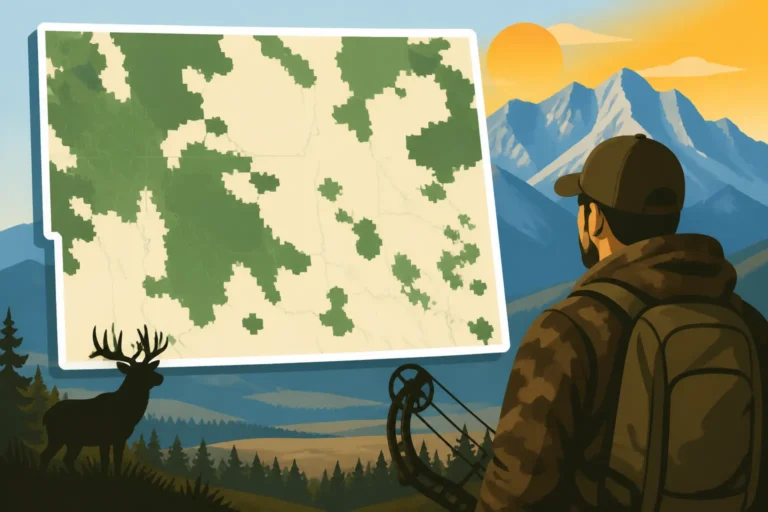
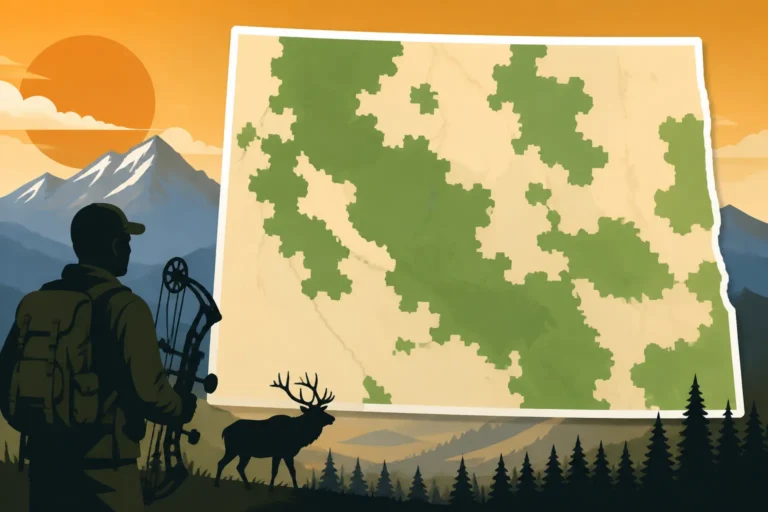
Imagine a giant chessboard laid across the landscape. That's essentially what checkerboard land looks like on a map. These patterns are a legacy of 19th-century land grants, primarily to railroads, to encourage westward expansion. The government granted alternating sections (one square mile each) of land to these companies, while retaining the sections in between. So, you end up with a public square, then a private square, then a public square, and so on, creating a patchwork that can be incredibly challenging to navigate.
From a hunter's perspective, this means you might be standing on a section of Bureau of Land Management (BLM) property, look across to what appears to be another adjacent BLM section, but between you and that next public parcel lies a private section. Often, these private sections don't have fences clearly delineating boundaries, especially in remote, open country. You're left guessing, or worse, knowing there's public land you simply can't reach without crossing private ground. It’s enough to make you throw your hands up and wonder if a hunt is even worth the effort when access is so ambiguous.
The Corner Crossing Conundrum
The checkerboard pattern creates a specific dilemma known as "corner crossing." This occurs when two parcels of public land meet at a corner, and they touch only at that single point, forming an intersection with four private parcels. If you're on public land, and you want to get to the public land directly across the corner, you physically have to cross that common corner point. The critical question became: does passing through the airspace directly over that corner, without touching the private ground below, constitute trespass?
For years, this question simmered, largely unanswered by definitive legal precedent. Hunters would sometimes build makeshift ladders (hence "stepladder") or find other ways to avoid touching the ground at the exact corner, hoping to avoid legal trouble. Yet, the legal waters remained murky, leading many hunters to simply avoid these areas altogether, effectively landlocking vast amounts of public acreage. This ambiguity created an environment of fear and uncertainty, discouraging responsible hunters from exploring what they believed was rightfully accessible public land. It was a problem that cried out for clarity.
The "Stepladder Case": A Game Changer for Access
This deeply entrenched ambiguity around corner crossing finally came to a head in a high-profile legal battle that would profoundly impact public land access, not just in Wyoming, but across the West.
Who Was Involved and What Happened?
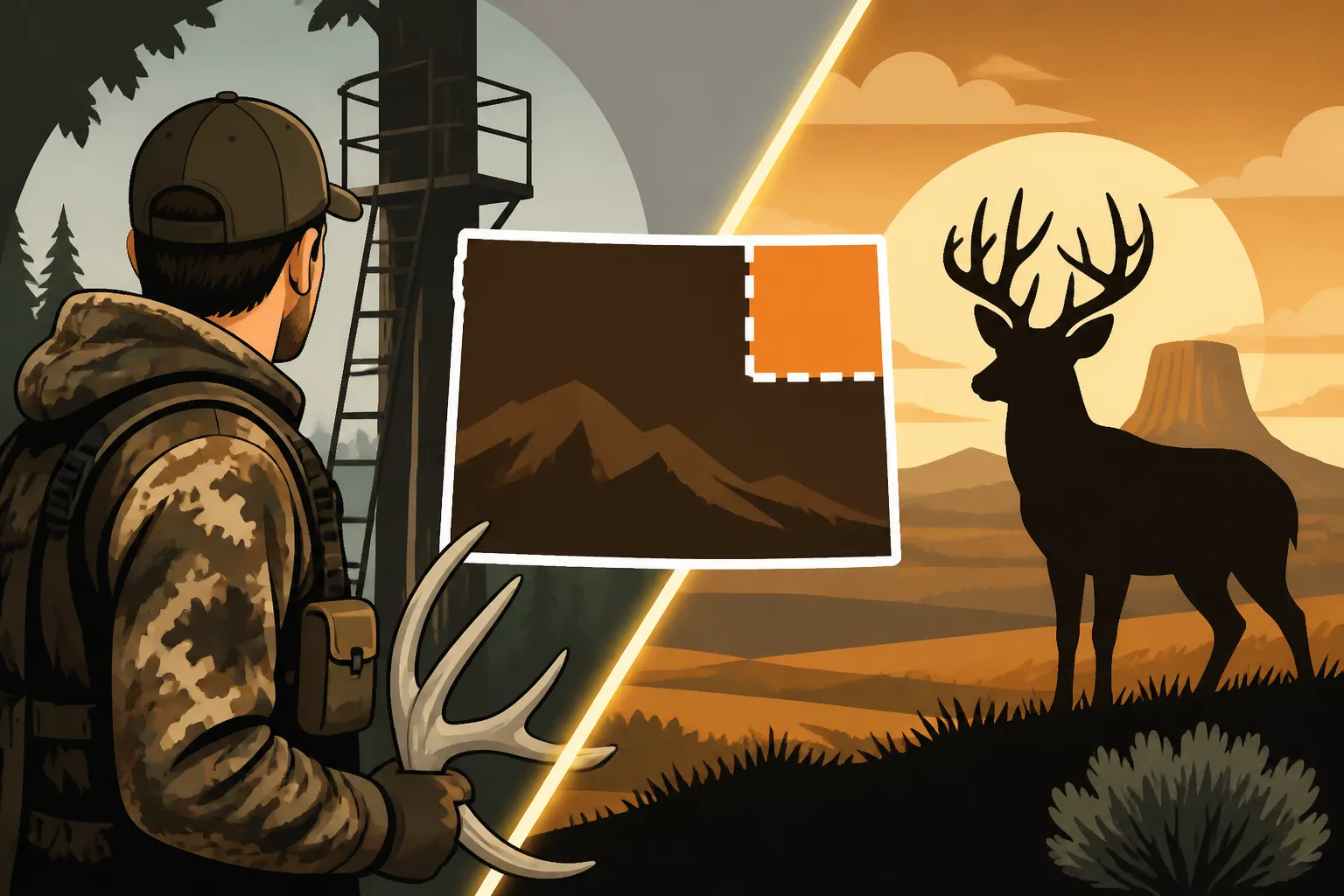
The case, often referred to simply as the "Stepladder Case," centered around four Missouri hunters: Brad Cape, Phillip Yeomans, John Slowensky, and Zach Smith. In the fall of 2020, these men were hunting elk in Carbon County, Wyoming. They accessed two sections of public land by literally stepping over the common corner point where the public lands intersected. Crucially, they did not touch any private ground as they moved from one public parcel to another. They used a homemade "stepladder" to traverse the corner, ensuring they only passed through the air above the private property.
Their actions, however, were observed by a ranch manager who worked for Fred Eshelman, a wealthy landowner whose private land made up the other two corners of the intersection. The ranch manager believed the hunters had trespassed, leading to the Carbon County Sheriff citing them for criminal trespass. This wasn't just a minor infraction; it was a challenge to a long-held, though often unspoken, interpretation of property rights versus public land access. The hunters were determined to fight the charges, understanding that the outcome could set a major precedent for future public land use. Their decision to stand their ground turned a local incident into a national access debate.
The Legal Battle: District Court to Appeals
The initial legal proceedings took place in Carbon County Circuit Court. The hunters argued that because they had not touched private ground, and only passed through the airspace directly above the corner, they had not committed a physical trespass. The judge in the Circuit Court, however, sided with the prosecution, finding the hunters guilty of trespass and imposing fines and hunting license suspensions. This initial verdict sent a chilling message to public land advocates and hunters everywhere: even "air trespass" could be considered illegal, effectively locking up millions of acres.
Undeterred, the hunters appealed the decision. They maintained that the definition of trespass required physical entry onto private land. This appeal elevated the case to a higher level, attracting national attention from hunting and conservation groups who saw the potential for a landmark ruling. The legal arguments revolved around the interpretation of Wyoming's trespass laws and the common law understanding of property rights, specifically the concept of "ad coelum" (ownership extending to the heavens). The stakes were incredibly high, as a definitive ruling either way would reshape the landscape of public land hunting for generations. The journey through the legal system was arduous, but the hunters believed in their cause.
The Tenth Circuit's Ruling and Its Implications
The case ultimately made its way to the Tenth Circuit Court of Appeals, where a pivotal decision was made that fundamentally altered the discussion around corner crossing.
What the Court Actually Said
On July 28, 2023, the Tenth Circuit Court of Appeals delivered a resounding victory for public land access. The court effectively ruled that corner crossing, by merely passing through the airspace above a private land corner without physically touching the private ground, does not constitute trespass under Wyoming law. The judges acknowledged the historical context of the checkerboard land pattern and the public's right to access federal lands. They clarified that for a trespass to occur, there must be a physical invasion of the property. Simply passing through the common airspace above a corner, when moving from one public parcel to an adjacent public parcel, was deemed permissible.
This ruling was a monumental victory, effectively affirming that millions of acres of previously inaccessible public land were, in fact, legally accessible. It validated the long-held belief of many hunters and public land advocates that the public should not be denied access to federal land simply because of an archaic land ownership pattern. The decision hinged on a strict interpretation of trespass law, emphasizing physical contact, and rejecting the notion that merely being above private land at a common corner constituted a violation. This ruling has been widely celebrated as a triumph for responsible public land use, setting a powerful precedent for other states with similar checkerboard land issues. It directly countered previous interpretations that left hunters feeling unfairly restricted.
What This Means for Hunters on the Ground
For hunters, the Tenth Circuit's ruling means that the vast expanses of public land that were once considered landlocked due to corner crossing are now, in theory, open for exploration. You no longer have to fear legal repercussions simply for traversing the airspace at a checkerboard corner, provided you do so without touching any private ground. This opens up entirely new hunting opportunities in areas that were previously off-limits, significantly expanding the accessible hunting grounds for species like elk, deer, and antelope. The decision effectively unlocked thousands of square miles that were previously out of reach.
However, this doesn't mean you can just wander wherever you please. The ruling is very specific to corner crossing where public lands meet. It does not grant you the right to walk across any portion of private land to reach public ground. That remains illegal trespass. The emphasis is still on extreme care and precision when navigating these corners. Many experienced hunters use advanced mapping tools like onX Hunt to precisely identify property boundaries and ensure they are staying within the legal framework. These apps can be invaluable for visually confirming your location and the exact intersection points, helping you plan your route meticulously to avoid any unintended trespass. Knowing How Wyoming's Checkerboard Land Pattern Came About can help you understand why these tools are so vital.
A key takeaway from the ruling is that there is no buffer zone around a corner post. You can pass directly over the corner point, as long as you do not touch private property. This means you might still see hunters utilizing stepladders or other methods to guarantee no contact with the ground. It’s about being absolutely certain you respect the letter of the law.
Here's a quick comparison of pre and post-Stepladder Case realities:
| Feature | Pre-Stepladder Case Interpretation | Post-Stepladder Case Ruling |
|---|---|---|
| Corner Crossing | Often considered trespass (physical or aerial) | Not trespass if only passing through airspace |
| Accessible Land | Millions of acres potentially landlocked | Millions of acres effectively unlocked |
| Hunter Risk | High risk of criminal trespass charges | Reduced risk for careful corner crossing |
| Mapping Importance | Crucial for identifying any private land contact | Crucial for precisely identifying public land corners |
| Legal Clarity | Ambiguous, leading to uncertainty | Significantly clarified by 10th Circuit |
Navigating Corner Crossing Responsibly
While the Stepladder Case was a huge win for public access, it doesn't mean we can abandon caution or our ethical responsibilities as hunters. Responsible navigation is more important than ever.
Respecting Private Property Boundaries
The core of ethical hunting and land use is respecting all property rights. While the court ruled that corner crossing (through airspace) isn't trespass, any actual physical entry onto private land, even a single step, without permission, absolutely still is. This means hunters must remain incredibly vigilant and disciplined. When approaching a corner, it's not a free-for-all to cut corners or assume proximity is permission. You must be able to verify your position and ensure you are only traversing the airspace at the precise point where the four sections meet.
This level of precision requires meticulous planning and careful execution in the field. It’s about being a good steward of the land and a respectful neighbor. If there's any doubt about your location, or if the terrain makes a clean corner crossing impossible without touching private ground, the responsible choice is always to find an alternative route or avoid the area. You can spend weeks Scouting a Wyoming Unit From Your Kitchen Table but nothing replaces real-time vigilance. The ruling has given us a right, but with that right comes an even greater responsibility to uphold the integrity of access for all.
Using Technology for Smart Access
In this new landscape, technology becomes an even more invaluable tool for hunters. Mapping applications like onX Hunt are almost indispensable. These apps provide detailed property ownership layers, showing public and private land boundaries with high accuracy. Before you even leave home, you can use onX Hunt to scout potential access points, identify checkerboard areas, and plan your route to ensure you're only traversing public ground or performing a legal corner cross. The ability to visualize the complex Wyoming Public Land Owner Map Explained on your phone or tablet is a game-changer.
When you're actually in the field, GPS functionality within apps like onX Hunt allows you to pinpoint your exact location relative to property lines. This helps immensely when you're at a corner, allowing you to carefully maneuver across the airspace without inadvertently stepping onto private land. You might even use another powerful tool like GoHunt for even more granular data on draw odds and unit breakdowns, which can complement your mapping efforts by identifying areas with higher success rates where this type of nuanced access might be beneficial.
However, a word of caution: while these apps are incredibly helpful, they are not infallible. GPS signals can be affected by terrain, weather, or device limitations. Always cross-reference with physical maps if possible, pay attention to physical markers like fences (even if they don't perfectly align with legal boundaries), and use common sense. The goal is to use these tools to aid your responsible navigation, not to replace your own judgment.
The Ongoing Debate and Future of Access
While the Stepladder Case settled a significant legal question, the broader debate about public land access in checkerboard areas continues. Some landowners still feel that even aerial corner crossing is an infringement on their rights, and future legal challenges or legislative efforts to modify trespass laws are always a possibility. This is why it's so important for hunters and public land advocates to stay informed and engaged. Organizations like Backcountry Hunters & Anglers and others are continuously working to protect and expand access, advocating for resolutions that benefit both public land users and private landowners.
The ruling has certainly inspired more discussions and even further legal action in other states, proving that the principles established in Wyoming have far-reaching implications. It is crucial for hunters to stay up-to-date on local regulations and potential changes. Access issues can be complex, and solutions often require ongoing dialogue and cooperation. The Stepladder Case was a massive leap forward, but the journey to fully secure public access in the West is an ongoing effort, requiring vigilance and advocacy from all who cherish these wild places. Understanding How Many Acres the Corner Crossing Ruling Opened gives you a sense of just how important this ongoing debate truly is.
Disclaimer
This article is for general informational purposes only and does not constitute professional advice. Laws, prices and regulations vary by location and change over time. Consult a qualified professional for guidance on your specific situation.