Medicine Bow Country in Southern Wyoming
There’s something truly captivating about Medicine Bow Country in Southern Wyoming, especially if you’re a hunter. But let’s be real, diving into a new hunting area, particularly one as vast and varied as the Medicine Bow National Forest, can feel incredibly overwhelming. You might be looking at maps, seeing a mix of high peaks, sprawling timber, and open sagebrush, and wondering where to even begin your planning for an elk, deer, or antelope hunt. This guide is here to break down the complexities, offer practical advice, and help you navigate the unique challenges and incredible opportunities that Medicine Bow offers to hunters.
Exploring the Medicine Bow National Forest: Your Gateway to Southern Wyoming Hunting
The Medicine Bow National Forest, often simply called "the Med Bow" by locals, isn't just a place on a map; it's a diverse ecosystem that transitions from high alpine peaks down into rolling sagebrush plains. It’s part of a larger federal land mosaic that includes the Sierra Madre Range and extends across southern Wyoming, offering a truly wild hunting experience. Many hunters come here seeking the solitude and challenge of a Western big game hunt, drawn by the promise of robust elk, mule deer, and even some shiras moose populations in the right areas. But knowing the lay of the land, what species thrive where, and how to effectively access it all is your first step.
Geography and Terrain: From Peaks to Plains
When you look at a map of the Medicine Bow, you're going to see a remarkable shift in elevation and vegetation. In the higher reaches, especially around Snowy Range Peak, you’ll find classic Rocky Mountain terrain: jagged granite, cirques, and dense stands of spruce and fir. This high country can hold elk during the archery and early rifle seasons, especially in the dark timber pockets and secluded basins. As you move to lower elevations, particularly on the eastern and western flanks of the range, the landscape softens into expansive sagebrush flats, aspen groves, and pine forests, often interspersed with private ranchland. This mix creates incredible edge habitat, attracting mule deer and, in the transition zones, even antelope.
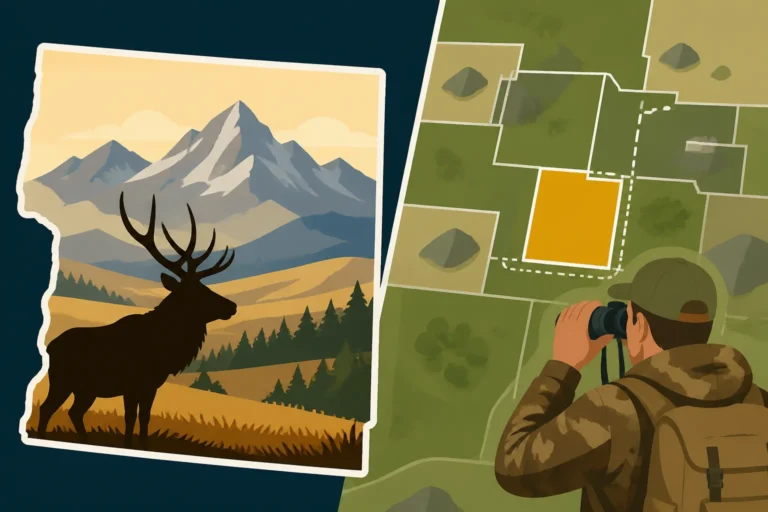
The sheer variety means that your hunting strategy will need to adapt dramatically depending on where you choose to focus your efforts. A high-country elk hunt might demand physical conditioning for steep climbs and navigating dense timber, while a mule deer hunt in the foothills could involve more glassing across open sage. Understanding these micro-climates and habitat types is crucial. For instance, those south-facing slopes might hold less snow longer, making them attractive to animals in colder periods, while north-facing slopes offer thermal cover and bedding in the summer and early fall. Utilizing a tool like onX Hunt can be incredibly beneficial here, allowing you to overlay topo maps with satellite imagery to identify these distinct terrain features and plan your routes accordingly.
Wildlife and Habitat: What Calls the Medicine Bow Home
The Medicine Bow National Forest is renowned for its big game opportunities, primarily elk and mule deer. Elk herds here are generally stable, though their distribution can be wide-ranging. They favor the timbered slopes and high mountain meadows during the summer, moving towards lower, more sheltered areas as winter approaches and snow depths increase. Mule deer are ubiquitous, found from the high country down into the sagebrush draws. You'll often find them utilizing the aspen pockets and pine stringers that break up the open country, providing cover and browse. Wyoming's Elk Herd Units and Winter Range gives a good overview of how these animals interact with the landscape.
Beyond elk and mule deer, you might also encounter black bears, particularly in the more timbered areas where berries and acorns are abundant. Moose, while far less common and generally limited to specific riparian zones and willow bottoms, do call parts of the Medicine Bow home, though securing a moose tag in Wyoming is a once-in-a-lifetime pursuit for most. Pronghorn antelope are typically found in the adjacent open sagebrush country that borders the national forest, making combination hunts a real possibility for those with the right tags. Small game, like snowshoe hares and various grouse species, also provide additional hunting opportunities for those looking to round out their experience. Each species requires a nuanced understanding of their preferred habitat within the broader Medicine Bow ecosystem.
Access Points and Infrastructure: Getting Into the Backcountry
Accessing the Medicine Bow National Forest is generally straightforward thanks to a good network of paved and gravel roads. US Highway 130 (Snowy Range Road) and Highway 230 are primary arteries that traverse or skirt the forest, providing access to numerous Forest Service roads. These roads lead to designated campgrounds, trailheads, and often into expansive sections of public land open to hunting. However, many of these roads, especially in the higher elevations, are seasonal and close with the first significant snowfall, usually by late October or early November. It's vital to check road conditions and closures before heading out, as getting stuck or finding your route blocked can derail a hunt.
Beyond vehicle access, countless trails crisscross the forest, ranging from well-maintained hiking trails to faint game trails. These are your pathways into the true backcountry, allowing you to escape the crowds and find more remote hunting grounds. Dispersed camping is often permitted in much of the national forest, offering flexibility for setting up base camps or spike camps closer to your hunting areas. It’s always a good idea to scout these access points beforehand, even if it’s just with a detailed map or a mapping app on your phone, to understand the terrain and potential obstacles. Remember, some areas within the Medicine Bow, particularly designated wilderness, have specific rules regarding motorized travel and group sizes, so always be aware of where you are on the map.
Key Big Game Species and Hunting Strategies in Medicine Bow
Medicine Bow offers diverse opportunities for hunters, with elk and mule deer being the primary draws. Each species, and each section of the forest, demands different approaches and strategies. Understanding the animals’ habits, their preferred terrain, and how they react to hunter pressure is paramount to success.
Elk Hunting: The Mountain Challenge
Hunting elk in the Medicine Bow National Forest is a quintessential Western experience, but it’s rarely easy. The elk here are smart, wary, and often inhabit rugged country. During the early archery seasons and the peak of the rut in September, you'll often find bulls bugling and cows moving in the higher elevations, utilizing the dense timber for cover and the open parks for feeding. This is when tactics like calling, both bugling and cow calling, can be highly effective. Patience, stealth, and a good understanding of Bugle and Cow Call Timing Through the Rut are critical during this period.
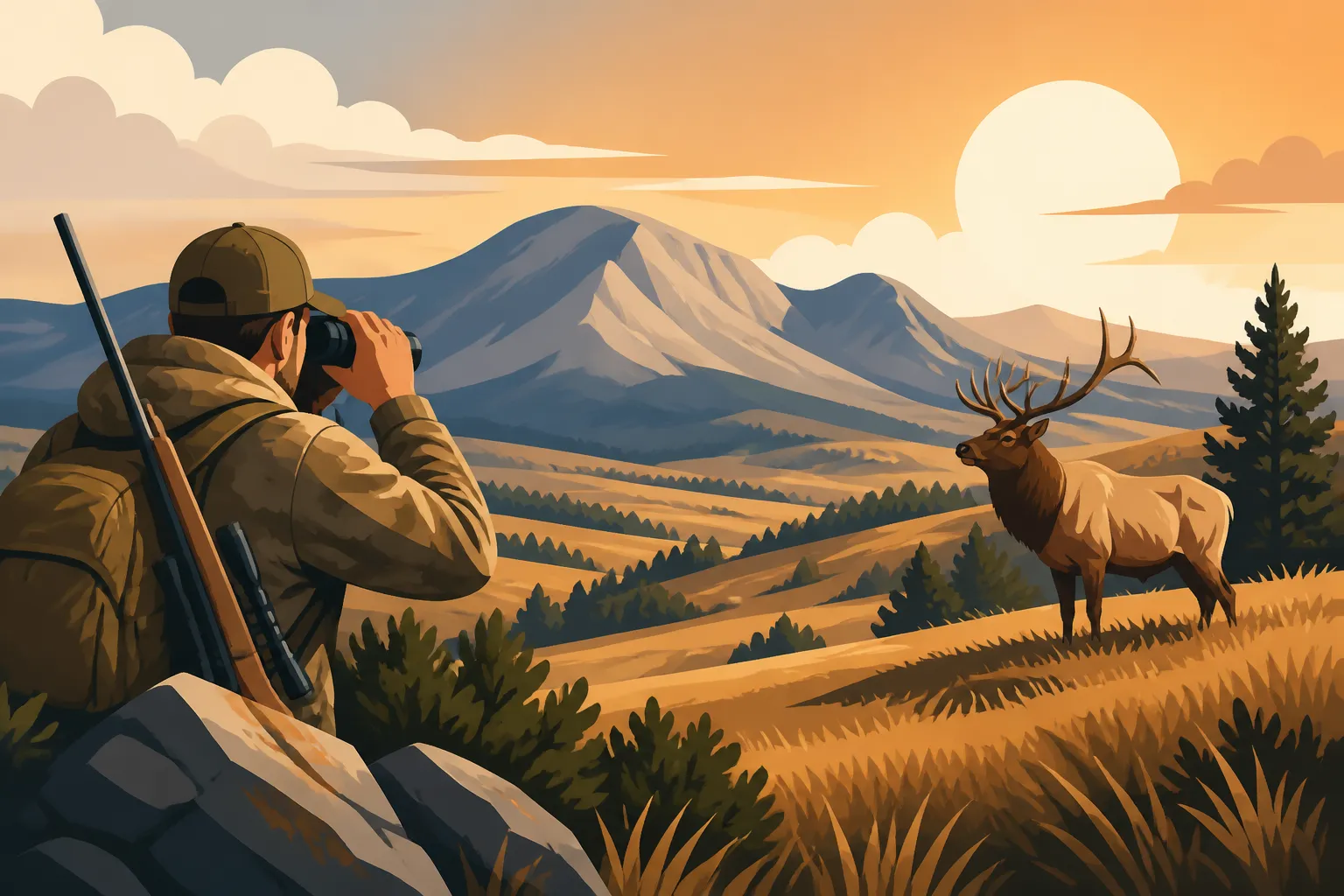
As rifle seasons open and hunter pressure increases, elk tend to move into the thickest cover they can find, often descending into deeper canyons or seeking refuge in the most remote timber pockets. This requires hunters to be willing to get off the beaten path, put in the miles, and often employ still-hunting or spot-and-stalk techniques. Glassing is still key, especially from high vantage points overlooking timbered hillsides at dawn and dusk. Later in the season, particularly with significant snowfall, elk might move towards lower-elevation winter range, sometimes moving onto private land. Hunters with public land tags need to be acutely aware of land boundaries and focus on corridors and transitions areas that remain publicly accessible.
Mule Deer Opportunities: High Country and Sagebrush Draws
The mule deer population in the Medicine Bow, like many parts of Wyoming, has seen its ups and downs, but the forest still offers excellent opportunities for both resident and nonresident hunters. You’ll find mule deer across the entire spectrum of the forest, from the high alpine basins where they summer, down to the sagebrush foothills and river bottoms where they winter. In the early archery and general seasons, glassing high country parks and timber edges is a productive strategy. Deer will often bed in timber during the day, emerging to feed in the open meadows at first and last light.
As the seasons progress and especially during the November rut, deer activity increases, and they become more visible. Hunters can focus on migratory routes and transition zones between summer and winter range. Finding areas with good forage, water, and cover is always a winning strategy. When hunting the more open sagebrush areas, especially on the fringes of the national forest, long-range glassing is essential. Glassing Wyoming Basins Before You Take a Step applies here, using quality optics to pick apart distant hillsides and draws. Once deer are spotted, a careful stalk, often using the topography to your advantage, becomes the next critical step.
Pronghorn and Other Game: Expanding Your Horizons
While the Medicine Bow National Forest itself is primarily timbered mountain country, its lower elevations and the surrounding lands offer prime habitat for pronghorn antelope. These magnificent animals thrive in the open sagebrush plains that often butt up against the forest boundaries. If you secure an antelope tag for a unit that overlaps with the lower fringes of the Medicine Bow or adjacent BLM lands, you can combine a deer or elk hunt with an antelope hunt. This is a common strategy for hunters wanting to maximize their experience.
Hunting pronghorn in this open country is a test of patience and stalking ability, as their incredible eyesight makes getting close a real challenge. Decoying can be effective during the rut, but often it comes down to How Far to Stalk a Bedded Pronghorn using every cutbank, dry wash, and rise in the terrain for cover. Beyond big game, Medicine Bow offers opportunities for smaller game. Grouse species, including dusky (blue) grouse and ruffed grouse, inhabit the timbered areas and can provide an exciting challenge for those willing to venture into the thick stuff. Keep an eye out for them along old logging roads or near water sources within the forest.
Navigating Public Access in Medicine Bow: Key to a Successful Hunt
Public land hunting in Wyoming is a cornerstone of the experience, and the Medicine Bow National Forest is a fantastic example of accessible federal lands. However, the checkerboard pattern of land ownership—especially where national forest abuts BLM, state, and private ground—can be a real headache. Understanding these boundaries and knowing the rules for different land types is absolutely critical.
National Forest vs. Surrounding Lands: A Patchwork Map
The Medicine Bow National Forest represents a huge chunk of public land, but it doesn't exist in a vacuum. It's surrounded by, and often interspersed with, Bureau of Land Management (BLM) lands, Wyoming State Trust Lands, and significant parcels of private property. Each of these land designations comes with its own set of rules and access considerations. BLM lands are generally open to hunting, much like national forests, but their terrain tends to be more open, often comprising sagebrush flats and rolling hills ideal for mule deer and antelope. State Trust Lands are also open to public hunting unless otherwise posted, but often require specific attention to access points.
The real challenge often arises where private land borders or even landlocks public parcels. It’s absolutely essential to know where you are at all times, and never assume that an open gate means open access. Trespassing, even accidentally, can lead to serious consequences. This is where modern mapping applications become indispensable. Using onX Public Land Layers in Wyoming is a game-changer for deciphering these complex land ownership patterns. These apps visually show you federal, state, and private boundaries, often with current landowner names, allowing you to confidently identify legal access points and avoid inadvertent trespass.
Motorized Vehicle Use and Wilderness Rules: Staying Within the Lines
The Medicine Bow National Forest has a comprehensive system of roads and trails, but not all are open to motorized vehicles. Many forest roads are designated for specific types of use (e.g., ATVs, motorcycles, full-sized vehicles), and some areas are completely closed to motorized traffic, especially during certain seasons to protect wildlife winter range or during wet periods to prevent road damage. Additionally, within the Medicine Bow National Forest, there are designated wilderness areas, such as the Huston Park Wilderness or the Savage Run Wilderness. These areas are managed under strict federal guidelines that prohibit any motorized or mechanized travel, including ATVs, e-bikes, and even mountain bikes.
Hunting in wilderness areas requires you to be completely self-sufficient, relying on foot travel or pack stock. This is where the guide rule often comes into play for nonresidents. Motorized Limits Inside Wyoming Wilderness highlights the importance of checking a Motor Vehicle Use Map (MVUM) for the specific ranger district you plan to hunt. These maps are available free of charge from Forest Service offices and online and are the definitive guide to legal travel. Ignoring these rules can not only result in fines but also damage sensitive habitats and disrupt wildlife. Respecting these regulations is key to preserving these wild places for future generations of hunters.
E-Scouting Tools and Physical Recon: Your Pre-Hunt Homework
Before you ever set foot in the Medicine Bow, or any hunting area for that matter, doing your homework is crucial. E-scouting has become an invaluable tool for modern hunters. Using platforms like GoHunt or onX Hunt, you can spend hours digitally exploring a unit: identifying potential bedding areas, glassing points, water sources, and access routes. You can mark waypoints, measure distances, and even estimate elevation changes, all from the comfort of your home. This helps you narrow down vast areas and focus your physical scouting efforts. E-Scouting a Unit Before the Season Opens outlines this process in detail, helping you leverage technology for a smarter hunt.
However, e-scouting can only take you so far. There's no substitute for boots-on-the-ground reconnaissance. If possible, a pre-season trip to your chosen area in the Medicine Bow is highly recommended. This allows you to verify access points, check road conditions, identify current game sign, and get a feel for the terrain that maps simply can't convey. You can see how dense the timber truly is, how steep a particular ridge actually climbs, and where animals are currently moving. Even a short scouting trip can drastically increase your confidence and knowledge of an area, turning theoretical plans into actionable strategies.
Challenges and Considerations for Medicine Bow Hunters
Every hunting area presents its unique set of challenges, and the Medicine Bow National Forest is no exception. While the rewards can be great, being prepared for the realities of hunting in this part of Wyoming will significantly increase your chances of a safe and successful trip.
Weather and Altitude: Prepare for Anything
Southern Wyoming weather, especially in the mountains, is notoriously unpredictable. You can experience all four seasons in a single day. A warm, sunny morning can quickly give way to a whiteout blizzard, even in early fall. Temperatures can swing wildly, and wind is almost a constant companion. Proper layering of clothing is not just advisable; it's essential. Packing rain gear, even if the forecast looks clear, is a non-negotiable. Being caught unprepared for a sudden cold front or heavy rain can quickly turn a memorable hunt into a miserable, or even dangerous, ordeal.
Altitude sickness is another real concern, particularly for hunters traveling from lower elevations. Many parts of the Medicine Bow National Forest sit above 8,000 feet, with some hunting areas pushing well over 10,000 feet. Symptoms can range from mild headaches and fatigue to more severe conditions. Acclimatization is key: arrive a day or two early if possible, stay hydrated, and avoid overexertion on your first day or two. Preparing for Altitude on a Wyoming Hunt offers excellent tips for minimizing the effects of high elevation. Your physical conditioning will be tested in this rugged environment, so start an exercise regimen well before your hunt.
Hunter Pressure and Solitude: Finding Your Own Space
The Medicine Bow National Forest is a popular hunting destination, especially for elk and mule deer. During opening weeks of general seasons, you can expect to see other hunters, particularly along easily accessible roads and trails. This hunter pressure can push game into thicker, more remote areas, making them harder to find. If solitude is a high priority, or if you're looking for less pressured animals, you'll need to be willing to work harder to get away from the crowds.
This often means packing into roadless areas, hiking deeper into the forest, or exploring lesser-known trail systems. Wilderness areas, by their nature, offer more solitude because motorized access is prohibited. Utilizing your e-scouting tools to identify areas with minimal road access or difficult terrain can help you pinpoint these quieter spots. Sometimes, simply hunting during the middle of the week instead of on weekends can also reduce encounters with other hunters. Embrace the challenge of finding your own space; the rewards of a truly wild experience are worth the effort.
Safety and Bear Awareness: Being Prepared for the Wild
While grizzly bears are not typically found in the Medicine Bow National Forest, black bears are present throughout the timbered areas. While generally shy, encounters are possible, especially if bears are attracted to improperly stored food or game carcasses. It's crucial to practice proper bear safety: carry bear spray and know how to use it, store food and scented items in bear-resistant containers or hung from a tree, and be vigilant while hiking.
Beyond bears, general backcountry safety is paramount. Let someone know your itinerary, carry a reliable communication device (satellite phone or inReach), and be prepared for emergencies. Wyoming’s landscape can be unforgiving. Accidents happen: a twisted ankle miles from the nearest road, a sudden change in weather, or an unexpected mechanical issue with your vehicle. Having a well-stocked first aid kit, extra food and water, navigation tools, and a survival mindset are all critical components of a safe hunt in Medicine Bow.
Permits, Regulations, and Local Knowledge: Your Comprehensive Checklist
Beyond the excitement of the hunt itself, navigating the administrative side – from understanding license types to adhering to regulations – is a critical part of hunting in Medicine Bow. Staying informed and knowing where to find current information will save you headaches and ensure a legal, ethical hunt.
General License vs. Limited Quota: Understanding the Draw
Wyoming operates on a draw system for most of its big game licenses, dividing them into "general" and "limited quota" types. General licenses allow you to hunt a broader region, typically a larger portion of the state, but with specific seasons and often more competition. Limited quota licenses are for specific hunt areas (units) and often offer better draw odds or access to higher quality animals, but they are much harder to draw. For elk, deer, and antelope in Medicine Bow Country, you’ll be looking at a mix of these. Wyoming General Licenses Against Limited Quota: Two Different Games details the differences.
Understanding which type of license you're applying for, and the specific hunt area it covers, is paramount. Many prime elk areas within the Medicine Bow are limited quota, requiring several preference points to draw, especially for nonresidents. However, some areas may have general license opportunities, particularly for cow elk. It's essential to consult the Wyoming Game and Fish Department's (WGFD) annual regulations and use resources like GoHunt to research draw odds and historical success rates for specific units before you apply. The application deadlines are strict, so mark your calendar!
Seasonal Closures and Restrictions: Keeping Current
Wyoming’s hunting regulations are dynamic and can include specific seasonal closures for various reasons. These often involve winter range closures for big game, designed to protect animals during critical periods of the year when they are most vulnerable. These closures might affect certain roads, trails, or even entire parcels of land within or adjacent to the Medicine Bow National Forest. Additionally, fire restrictions are common during dry periods, which can impact camping, campfires, and even smoking in certain areas. It's your responsibility to be aware of these.
Always check the most current WGFD regulations for your specific hunt area and season. These are published annually and are available on the WGFD website. Pay close attention to dates, weapon restrictions (archery, rifle, muzzleloader), and any specific rules for the unit you plan to hunt. Some areas might have antler point restrictions for deer or elk, or specific rules for taking antlerless animals. Seasonal Winter Range Closures for Big Game is a critical piece of information that can impact access to entire areas, so always look this up!
Local Resources and Biologist Insights: Tapping into Knowledge
One of the most valuable resources for any hunter is local knowledge. While online forums and mapping apps are great, talking to WGFD biologists, game wardens, or even local businesses (sporting goods stores, diners) in towns like Saratoga, Laramie, or Encampment can provide invaluable, up-to-date insights. These individuals often have a pulse on animal movements, recent weather impacts, and hunter success in different parts of the Medicine Bow.
WGFD personnel, in particular, can offer species-specific information, clarify regulations, and provide insights into herd health and distribution that you won't find anywhere else. Don't be afraid to make a phone call or stop by a regional office. They are there to help and want hunters to have a safe and ethical experience. Additionally, the WGFD website provides a wealth of information through its The Wyoming Hunt Planner, including harvest reports, herd unit objectives, and links to maps and regulations, which can significantly enhance your planning process.
Disclaimer
This article is for general informational purposes only and does not constitute professional advice. Laws, prices and regulations vary by location and change over time. Consult a qualified professional for guidance on your specific situation.