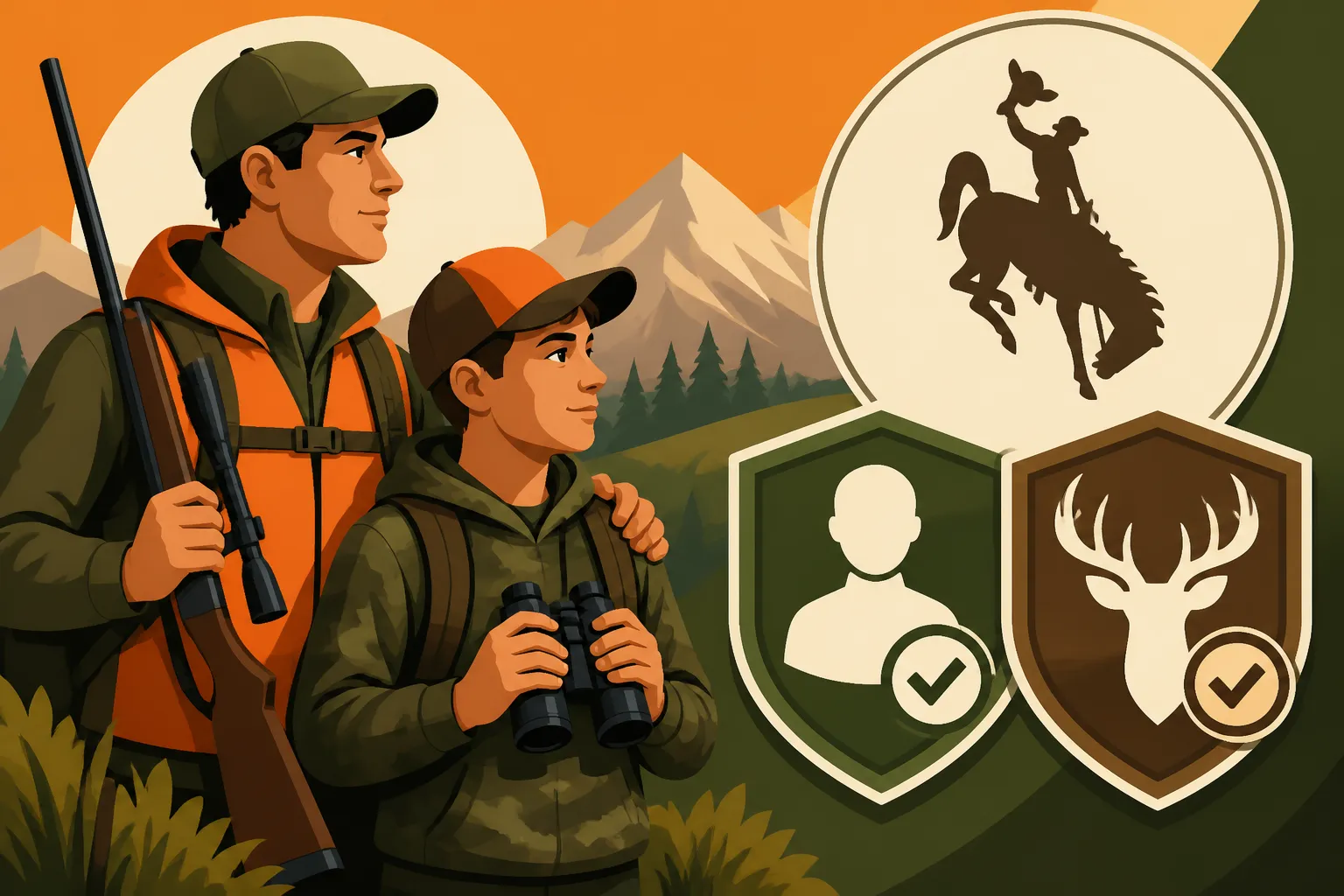
Mentor Requirements: Eighteen, Certified and Licensed
Navigating Wyoming's hunting regulations can feel like trying to track a mature bull elk through dense timber – a lot of twists, turns, and hidden details you can easily miss. One area that often leaves new hunters, or even seasoned veterans bringing along a mentee, scratching their heads is the specific set of rules for mentors. It’s not just about sharing your passion; it’s about understanding the legal obligations that come with guiding someone new in the field. This guide will meticulously break down everything you need to know about mentoring in Wyoming, from age and certification to on-the-ground supervision, ensuring both you and your mentee have a safe, legal, and truly memorable experience.
Understanding Wyoming's Mentor-Mentee Program
Wyoming's mentor-mentee program isn't just a bureaucratic hurdle; it's a foundational element designed to safely and ethically introduce new blood to the hunting tradition. The state recognizes the immense value of hands-on learning, but also the inherent risks and responsibilities involved in carrying a firearm or bow in the field. This program bridges that gap, allowing aspiring hunters to gain practical experience under the direct guidance of someone seasoned and certified, before they complete their own hunter education.
The Philosophy Behind Mentored Hunting
At its heart, mentored hunting in Wyoming is about continuity and safety. Imagine trying to learn to drive a car without ever sitting in the passenger seat with an experienced driver. You might read the manual, but the real-world nuances, the split-second decisions, and the instinctive reactions come from observation and practice with a guide. The same applies to hunting. New hunters, especially youth, benefit immensely from learning everything from firearm safety and shot placement to ethical considerations and game identification directly from an experienced individual. It’s about more than just pulling a trigger; it’s about understanding the land, the wildlife, and the responsibilities that come with being a hunter. This approach ensures that future generations are well-prepared and respectful stewards of Wyoming's rich hunting heritage.
Who Qualifies as a Mentee
So, who can actually be a mentee in Wyoming's program? Generally, a mentee is someone who has not yet completed their mandatory hunter education course. This often includes young hunters just starting out, but it can also apply to adults who are new to hunting and haven't yet fulfilled the certification requirement. The primary purpose is to provide these individuals with an opportunity to gain field experience and decide if hunting is for them, all under controlled conditions. It’s a fantastic pathway for those who might be on the fence, or for families eager to share the outdoor experience with children who are still a bit too young or haven't had the chance to take a course. However, it's crucial to remember that while they can hunt, the mentor holds the ultimate responsibility for ensuring all laws are followed and safety protocols are strictly adhered to. Mentored hunting provides a valuable entry point, but it's not a free pass around the rules; it's a structured learning environment.
Key Requirements for a Wyoming Hunting Mentor
Becoming a mentor in Wyoming isn't just about being a good shot or knowing the best spots. It comes with a distinct set of legal and ethical responsibilities. The state has put these requirements in place to ensure the safety of both the mentee and the general public, as well as to uphold the principles of ethical hunting. Disregarding these requirements could lead to significant penalties, so it’s vital to understand them fully before you head afield.
Age and Hunter Education Certification
One of the most fundamental requirements for anyone wanting to be a hunting mentor in Wyoming is their own age and hunter education status. To legally serve as a mentor, you must be at least eighteen years old. This isn't just an arbitrary number; it ensures that the person in charge has reached a level of maturity and legal responsibility generally associated with adulthood. Furthermore, you, the mentor, must have successfully completed a hunter education course and carry proof of that certification with you in the field. This means you understand the core principles of firearm safety, wildlife identification, ethics, and regulations. It’s a non-negotiable step to demonstrate your own competence and commitment to safe hunting practices. If you were born after 1965, Anyone Born After 1965 Needs Wyoming Hunter Education and carrying proof of certification is essential. Many hunters find platforms like GoHunt invaluable for double-checking the latest regulations and ensuring they're always in compliance, which is a great habit for any mentor.
Licensing Requirements for Mentors
Beyond age and hunter education, a Wyoming mentor must also possess the appropriate hunting license for the species being hunted. This isn't a "guide's license" in the traditional sense, but rather the standard resident or nonresident license and tag that any hunter would need to legally pursue game. For example, if you're mentoring someone on an elk hunt, you, as the mentor, must hold a valid Wyoming elk license and an accompanying tag. This ensures that you are legally authorized to be participating in the hunt and that the hunt remains within established harvest limits. It also means you're not just a bystander; you're an active participant, albeit one with the added responsibility of direct supervision. It’s a common misconception that a mentor only needs to supervise; in Wyoming, you must also be licensed to hunt the same game your mentee is pursuing. This dual requirement reinforces the idea that the mentor is fully engaged in and accountable for the hunting activity.
The Crucial "Direct Supervision" Rule
Perhaps the most critical, and often misunderstood, rule for mentors in Wyoming is the requirement for "direct supervision." This isn't a suggestion; it's a legal mandate that carries serious weight. Direct supervision means that the mentor must be in immediate proximity to the mentee, maintaining both sight and voice contact at all times while the mentee is hunting. You can't just drop your mentee off at a stand and pick them up later. You can't be glassing a ridge a mile away while they're still-hunting a draw. This means you're walking with them, sitting with them, and actively observing and instructing them throughout the hunt.
Think of it this way: if your mentee were to encounter an unexpected situation, like a quick shot opportunity, a safety concern with their firearm, or an ethical dilemma, you need to be right there to provide guidance or intervene instantly. This proximity is vital for teaching shot placement, identifying legal game, and most importantly, ensuring absolute safety. A mentee is relying on your experience, and "What Direct Supervision Means in the Field" is about your constant, active involvement, ensuring they learn correct practices from day one. This high level of engagement not only fosters safety but also deepens the learning experience for the mentee, turning every moment in the field into a teachable one.
Limitations and Exceptions to the Mentorship Rules
While the mentor program offers a wonderful avenue for new hunters, it's not without its specific limitations and exceptions. These nuances are important to understand, especially if you plan on taking multiple individuals out or have specific family dynamics in play. Wyoming has carefully crafted these rules to balance access with responsible hunting practices.
The One-Mentor, One-Mentee Rule
For most mentored hunting situations in Wyoming, there's a strict "one-mentor, one-mentee" ratio. This means that a single certified, licensed mentor can only supervise one uncertified mentee at a time. The logic here is straightforward: direct supervision is an intense responsibility that requires a mentor's undivided attention. Trying to oversee two or more mentees simultaneously significantly dilutes the level of supervision and increases potential safety risks. Imagine trying to teach two new drivers at once, each in their own car – it’s simply not feasible for optimal safety and instruction. This rule ensures that the mentor can focus entirely on the learning and safety of one individual, providing the best possible environment for skill development and adherence to all regulations. If you're planning a trip, keep this in mind; you might need more mentors than you initially anticipated if you have a group of new hunters.
Family Exemptions to the Mentee Limit
Recognizing the unique dynamics of family units, Wyoming does offer a specific exemption to the strict one-to-one mentee limit. Under what's known as The Family Exception to the Mentee Limit, an immediate family member who is a resident of Wyoming and meets the mentor requirements (age, certification, license) may supervise more than one mentee at a time. This exception is primarily designed for parents, grandparents, or guardians taking out their own children or grandchildren. The underlying assumption is that an immediate family member already has an established relationship, familiarity, and a strong vested interest in the safety and well-being of multiple family mentees.
However, even with this family exception, the core principle of direct supervision remains paramount. While you might be able to have two of your children as mentees, you are still required to maintain both sight and voice contact with all of them at all times. This isn't an excuse to spread out; it's an acknowledgment of family bonds while still emphasizing constant oversight. It’s a thoughtful balance that allows families to share the hunting experience more easily while still safeguarding against unsafe practices.
Specific Authorization Certificate for Mentored Hunts
Beyond simply meeting the mentor requirements, there's another crucial step involved in Wyoming's mentored hunting program: obtaining a Special Authorization Certificate. This isn't just an optional piece of paper; it's a mandatory document that legally validates the mentored hunt. Before hitting the field, the mentor must obtain this certificate from the Wyoming Game and Fish Department. It serves as official recognition of the mentored hunting relationship and confirms that the mentor understands and accepts their responsibilities.
The process typically involves submitting an application, which outlines who the mentor and mentee are, and acknowledging the rules of direct supervision and other requirements. This certificate effectively acts as a temporary authorization for the mentee to participate in a hunt without having completed their own hunter education. Without this certificate, the mentored hunt is not legal, and both the mentor and mentee could face penalties. It's an essential administrative step that ensures accountability and provides a clear record of participation in the program. Many hunters, even experienced ones using planning tools like GoHunt, often overlook this step, so it's vital to prioritize it before your hunt.
Practicalities of Mentoring in the Field
Being a mentor goes beyond just knowing the rules on paper; it's about applying them effectively and safely in the rugged, unpredictable environment of the Wyoming backcountry. The actual act of hunting presents its own set of challenges, and your role as a mentor is to navigate these while ensuring your mentee gains valuable, safe experience.
Preparing for a Successful Mentored Hunt
Preparation is key for any hunting trip, but it's doubly important when you're taking on the role of a mentor. Before you even set foot in the field, you need to cover several bases to ensure both safety and success. Firstly, ensure all gear is in proper working order. Is the firearm sighted in? Are the safety mechanisms functioning? Does the mentee understand how their weapon operates? These are basic but crucial checks. Secondly, communicate expectations clearly. Discuss shot opportunities, ethics, what to do if an animal is wounded, and the importance of patience. This is also a perfect time to practice handling a firearm or bow safely. Practice drawing, aiming, and dry-firing or safely releasing arrows. Consider using tools for E-Scouting a Unit Before the Season Opens to familiarize yourselves with the terrain, potential game movement, and access points. Platforms like GoHunt can be particularly useful here, providing detailed maps and public land overlays. Finally, ensure your mentee is dressed appropriately for Wyoming's often harsh conditions and understands the importance of staying hydrated and fed. A prepared mentor means a more confident mentee and a safer, more enjoyable hunt for everyone.
Legal Shooting Hours and Vehicle Rules
As a mentor, you are responsible for ensuring your mentee adheres to all hunting laws, including those often taken for granted by experienced hunters, such as Wyoming Legal Shooting Hours for Big Game and The Rules on Hunting From a Vehicle. Hunting outside legal hours or from a vehicle are common infractions that can lead to serious consequences. Legal shooting hours in Wyoming typically begin one half-hour before sunrise and extend to one half-hour after sunset. This precise window is crucial for ethical hunting and for ensuring good visibility for a clean shot. As a mentor, you need to be acutely aware of sunrise and sunset times each day and communicate these clearly to your mentee.
Similarly, hunting from a vehicle is generally prohibited. This includes shooting from a road, or even using a vehicle to actively pursue or "haze" game. The rule is designed to promote fair chase and prevent unethical practices. You must teach your mentee to exit the vehicle completely and move away from it before taking a shot. These might seem like minor details, but they are foundational to ethical hunting and are often points where new hunters, without careful guidance, might inadvertently break the law. Emphasize that patience and fair chase are far more rewarding than cutting corners.
Carrying Proof of Certification in the Field
While the excitement of the hunt can be all-consuming, never forget the importance of carrying the necessary documentation. As a mentor, you are legally required to have proof of your own hunter education certification on your person whenever you are mentoring a hunter. This could be your physical hunter education card or another form of documentation accepted by the Wyoming Game and Fish Department. It’s the concrete evidence that you have met the state's requirements to lead a mentored hunt.
In addition to your own proof of certification, you must also have your valid hunting license and any specific tags for the species you are pursuing. And don't forget that Special Authorization Certificate for Mentored Hunts that we discussed earlier – that needs to be with you too. Game wardens conduct checks in the field, and a simple oversight in carrying your paperwork can turn an otherwise legal and ethical hunt into a very unpleasant experience. Always perform a quick check of your wallet and pack before leaving camp or the trailhead, just like you would ensure you have your rifle and ammunition. Ensuring you are Carrying Proof of Certification in the Field is a small step that prevents big headaches and reinforces your commitment to being a responsible mentor.
Mentor Requirements Summary
To give you a quick overview of the key responsibilities, here's a table summarizing the essential mentor requirements in Wyoming:
| Requirement | Description | Why it's Important |
|---|---|---|
| Age | Must be at least 18 years old. | Ensures maturity and legal responsibility. |
| Hunter Education | Must have completed a certified hunter education course and carry proof. | Verifies knowledge of safety, ethics, and regulations. |
| Valid Hunting License | Must possess a valid Wyoming hunting license and tag for the species being hunted by the mentee. | Legal authorization to participate in the hunt and contribute to harvest limits. |
| Direct Supervision | Must maintain immediate sight and voice contact with the mentee at all times while the mentee is hunting. | Ensures instant intervention, guidance, and safety. |
| Mentee Ratio | Generally, one mentor per mentee. (Exception: Resident immediate family members may mentor more than one mentee with direct supervision). | Maintains focus and safety for individual instruction. |
| Special Authorization | Must obtain a Special Authorization Certificate from the Wyoming Game and Fish Department before the hunt. | Legally validates the mentored hunt and confirms mentor's understanding of responsibilities. |
Disclaimer
The information provided in this guide is for general informational purposes only and does not constitute legal advice. Hunting regulations in Wyoming can change, and it is the responsibility of every hunter and mentor to consult the most current Wyoming Game and Fish Department regulations prior to any hunting activity. Always confirm specific requirements and rules directly with the Wyoming Game and Fish Department or a qualified legal professional.