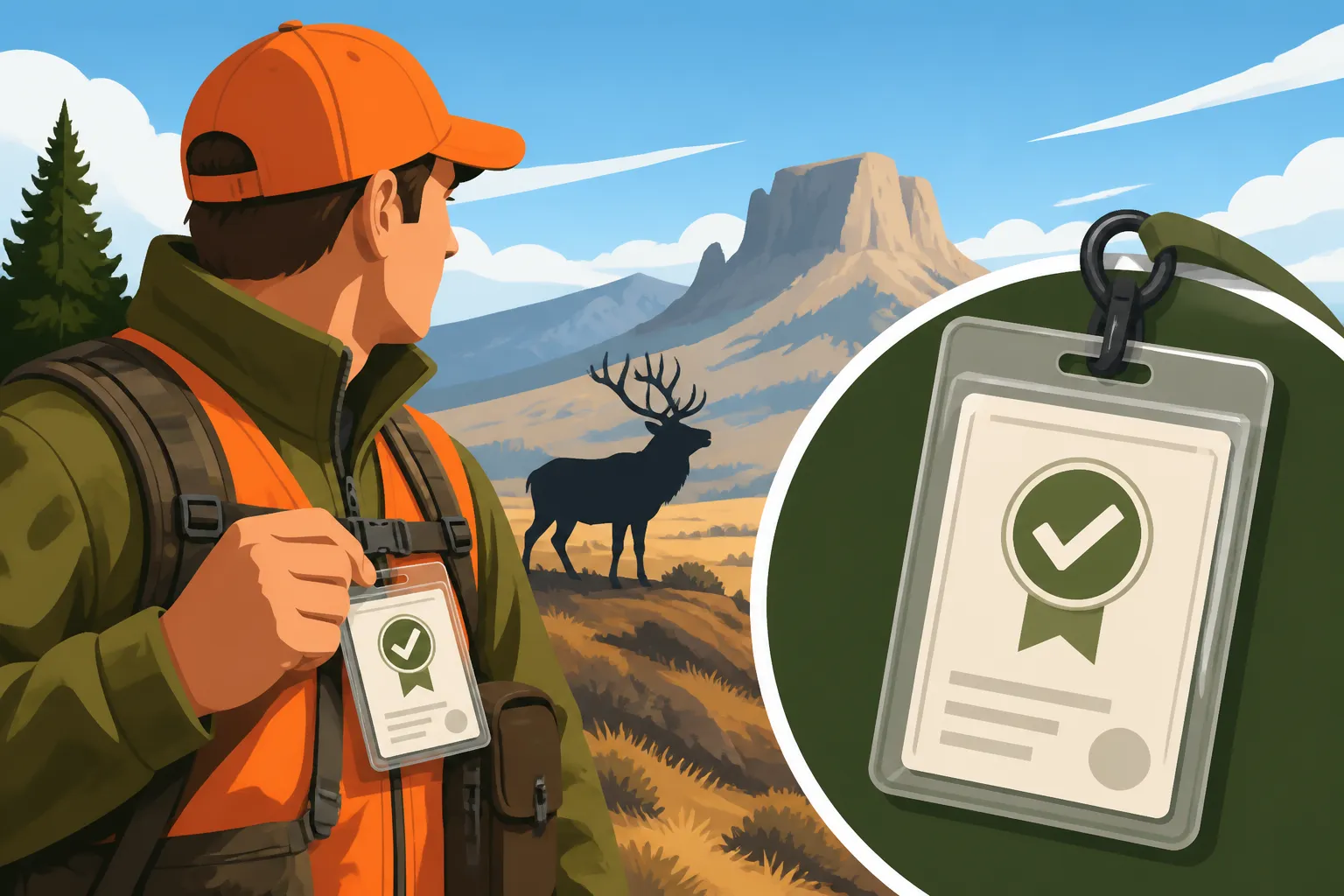
Carrying Proof of Certification in the Field
There's a quiet knot of anxiety many of us feel, even the most seasoned hunters, when we think about what absolutely must be on our person when we step into the vast wild of Wyoming. It’s not just your license and tags; it’s that little card, or the digital equivalent, proving you’ve completed your hunter education. Forgetting it, or having it disappear into the ether of a dead phone battery, can turn a fantastic day into a frustrating—and potentially costly—encounter with a game warden. This guide will clarify exactly what proof of hunter education certification you need to carry in the field in Wyoming, how to keep it safe, and what to do if it goes missing.
The Legal Requirement for Carrying Proof
Wyoming takes its hunter education requirements seriously, and for good reason. It's all about safety, conservation, and making sure everyone out there understands the rules of the game. But knowing you need hunter education is one thing; understanding what proof is legally acceptable and how to carry it is another challenge entirely.
Who Needs to Carry Proof
The core rule in Wyoming is pretty straightforward: if you were born on or after January 1, 1966, you are required to complete a hunter education course to hunt big game or trophy game. This cutoff date is crucial because it immediately tells you whether this requirement applies to you. For those born before this date, while hunter education is always a good idea, it's not legally mandated, and thus, carrying proof isn't either. However, for the rest of us, that certification is non-negotiable.
This requirement applies universally, meaning it doesn't matter if you're a lifelong Wyoming resident who grew up chasing mule deer in the Red Desert or a nonresident hunter who's traveled halfway across the country for a dream elk hunt. The state makes no distinction in this regard. If you fall within the birthdate window, you need to show proof. This often comes as a surprise to nonresident hunters who might assume their home state’s license or prior experience is enough, but Wyoming’s regulations are explicit. Ensuring you understand Anyone Born After 1965 Needs Wyoming Hunter Education is the first step in compliance. Moreover, it's essential to remember that Do Nonresidents Need Wyoming Hunter Education? is a resounding "yes" if their birth year falls within the specified range.
What Constitutes Valid Proof
So, you know you need hunter education, but what counts as "proof" in the eyes of a Wyoming game warden? The most common and widely accepted form is your official hunter education certification card issued by the Wyoming Game and Fish Department (WGFD) or an equivalent card from another state that Wyoming recognizes. This is usually a physical card, often resembling a driver's license, that you can keep in your wallet or hunting pack.
However, in this digital age, the WGFD also understands the convenience of electronic documentation. Many hunters now carry digital copies of their certification on their smartphones, whether it’s a photograph of the physical card, a PDF saved to their device, or accessed through an official state app. While these digital options are generally accepted, it's vital to have them readily accessible and to ensure your device is charged and functional. Imagine being miles deep in the backcountry with no cell service and a dead phone – suddenly, that digital proof is worthless. This is why having redundant forms of proof or ensuring offline access is highly recommended.
Understanding Wyoming's Hunter Education Card
For many of us, the hunter education card feels like a rite of passage, a tangible symbol of our commitment to safe and ethical hunting. But beyond its symbolic value, it's a critical legal document.
The Physical Hunter Education Card
The traditional physical hunter education card remains the gold standard for many hunters. It’s a small, usually laminated card that lists your name, date of birth, and the date you completed your hunter education course, along with the issuing agency. It’s designed to be easily carried, much like a driver’s license or another form of identification. The beauty of the physical card is its independence from technology – no battery life concerns, no signal issues, just a solid piece of plastic or paper proving your certification.
However, physical cards aren't indestructible. They can get lost in the shuffle of gear, become soaked and illegible in a sudden downpour, or simply wear out over time. It’s not uncommon to hear stories of cards disintegrating in a forgotten wallet pocket or falling out during a strenuous hike. This vulnerability is why many hunters take extra steps to protect their physical cards, perhaps laminating them further if they aren't already, or storing them in a small, waterproof pouch within their hunting pack. A small ziploc bag can go a long way in preserving your card against the elements.
Digital Proof and Online Verification
As technology becomes more integrated into every aspect of our lives, the world of hunting is no exception. Digital proof of hunter education is increasingly common and often accepted by wardens in the field. This can take several forms: a clear photo of your physical card stored on your phone, a PDF version downloaded from the Wyoming Game and Fish Department's online portal, or even through dedicated hunting apps.
The convenience of digital proof is undeniable. It's one less physical item to keep track of, and if you're already using your smartphone for mapping and communication, it's easy to access. Many hunters utilize advanced mapping applications like GoHunt, which can not only provide invaluable public land data and draw odds analysis but also serve as a centralized place to store important documents like your hunter education certificate (though always verify how securely personal documents are stored within third-party apps). The key challenge, as mentioned, is ensuring reliable access. You might have full bars on the highway, but deep in the Bighorn Mountains or the vast Red Desert, cell service can be non-existent. Always, always download your digital proof or take a screenshot of it before you head out, so it's accessible even without a signal. A dead phone battery is another common culprit for rendering digital proof useless. Consider carrying a portable power bank for your devices, especially on multi-day hunts.
| Type of Proof | Pros | Cons | Reliability in Field |
|---|---|---|---|
| Physical Card | Independent of technology, universally accepted | Can be lost, damaged by water/wear and tear, easily forgotten | High, if kept safe and dry |
| Digital Photo/PDF | Convenient, easy to carry on phone | Requires working phone, battery life, good signal (if not downloaded) | Moderate to High, if pre-downloaded and phone charged |
| State Online Record | Always current, accessible from anywhere with internet | Requires internet access, not always immediate in remote areas | Low in remote areas, High in areas with service |
| Hunting App (e.g., GoHunt) | Centralized info, often offline map capability | App compatibility, security of personal data, app reliance | Moderate to High, depending on offline functionality & storage |
Lost Cards and Replacements
Life happens. Cards get misplaced, wallets go missing, or that trusty hunting pack finally gives up the ghost, scattering its contents to the winds. A lost hunter education card doesn't mean your hunting season is over, but it does mean you need to take swift action to remedy the situation.
Steps to Replace a Lost Hunter Education Card
If you find yourself in the frustrating position of having a lost or damaged hunter education card, don't despair. The Wyoming Game and Fish Department has a process for replacement. The most efficient way to secure a new card is typically through their online portal. You'll usually need to log in to your account or provide personal identifying information to verify your completion of the course. Once verified, you can often request a duplicate card to be mailed to you.
The typical turnaround time for receiving a physical replacement card can vary, so it's best not to wait until the last minute if you know your card is missing. While you're waiting, a screenshot of your online record or a printed temporary certificate from the WGFD website might serve as interim proof, though you should always confirm the acceptability of such temporary documents with the department or a local game warden if you plan to hunt before your permanent card arrives. For more detailed instructions, make sure to check out our guide on Replacing a Hunter Education Card You Lost. Don't let a lost card derail your plans; proactive steps can get you back in the field quickly.
Reciprocity for Out-of-State Hunters
For those of us traveling to Wyoming from other states, the question of hunter education reciprocity is a big one. The good news is that Wyoming generally recognizes hunter education certificates issued by other states, provinces, and countries, provided they meet the minimum standards set by the International Hunter Education Association (IHEA-USA). This means if you completed a hunter education course in Montana, Colorado, or even Quebec, that certification is likely valid in Wyoming.
However, "likely valid" isn't the same as "definitely valid," and you absolutely need to carry that proof with you. When asked by a game warden, you'll present your out-of-state hunter education card as proof. It’s a good idea to double-check with the Wyoming Game and Fish Department beforehand if you have any doubts about your specific certificate’s eligibility. This reciprocity is a huge convenience, but it also means hunters need to be diligent about keeping their original documentation safe, even if it's from a different state. It saves a lot of hassle and validates the comprehensive training you've already undertaken. Understanding The Wyoming Hunter Education Birth Year Cutoff is also key, as the same age rules apply to all hunters, regardless of residency.
Practical Tips for Field Carry
When you're out in the field, whether it's for an early morning stalk or an all-day glassing session, the last thing you want to worry about is your documentation. Being prepared with your hunter education proof is about smart planning and redundant strategies.
Secure Storage Methods
Finding a secure yet accessible place for your hunter education card is paramount. Many hunters simply tuck it into their wallet alongside their driver's license, which is a common and usually effective strategy. However, wallets can be lost, left behind in the truck, or get soaked. A more robust approach might involve a small, waterproof document holder or a heavy-duty Ziploc bag tucked deep within your hunting pack. This protects against the elements and minimizes the chance of it falling out.
Consider creating redundancy. Take a clear photograph of your physical hunter education card and save it to your phone, but also save a PDF version to your cloud storage and download it to your device so it’s available offline. You can even email a copy to a trusted hunting partner or family member who might be able to access it in an emergency. If you're using a mapping or hunting analytics app like GoHunt, check if they offer a secure personal document storage feature. While not its primary function, integrating essential documents there can offer another layer of accessibility, especially since you're likely checking your maps frequently anyway. The goal is that no single point of failure (a lost card, a dead phone, no signal) leaves you without proof.
Being Prepared for an Encounter
It's a familiar scenario: you're walking back to the truck after a long day, and you see a Wyoming Game and Fish Department vehicle pull up. A friendly, but firm, game warden steps out and asks for your license, tags, and hunter education certification. This isn't an interrogation; it's part of their job to ensure everyone is hunting legally and safely. Your demeanor in this situation can make a big difference.
Always be polite, cooperative, and honest. Have your documents ready to present. If you have a physical card, hand it over. If you're relying on digital proof, explain that and be ready to quickly access it on your phone. If you genuinely forgot your card or your phone died, communicate that openly. While unintentional oversights might be met with understanding, a lack of documentation is still a violation. Consequences for not having valid proof can range from a warning to a citation and fine. In severe or repeat cases, it could even lead to temporary license revocation. These encounters are a vital part of enforcing wildlife laws and ensuring responsible hunting practices, so being prepared not only keeps you legal but also shows respect for the system.
Exceptions and Special Circumstances
While the general rule for hunter education proof is clear, Wyoming, like most states, has a few specific scenarios where the requirements differ. Knowing these can save you a headache and ensure you're always on the right side of the law.
Mentored Hunting Program
Wyoming offers a fantastic mentored hunting program, which allows individuals who haven't completed hunter education to gain invaluable experience in the field under the direct supervision of a certified mentor. This is a brilliant way to introduce new hunters, especially youth, to the traditions and responsibilities of hunting. Under this program, the mentee does not need to possess hunter education certification.
However, and this is a critical distinction, the mentor absolutely must be certified and carry proof of their own hunter education. The mentor must be at least 18 years old, possess a valid hunting license, and be hunter education certified. They are solely responsible for ensuring the mentee follows all hunting laws and practices safe firearm handling. This means if you're out with a mentee, a game warden will be asking you, the mentor, for your hunter education card. It's an important responsibility and one that requires you to be just as diligent about your documentation. For those interested in the specifics, our article on Mentor Requirements: Eighteen, Certified and Licensed provides a deeper dive into what it takes to guide a new hunter, and What Direct Supervision Means in the Field clarifies the practical aspects of this important role.
Age Exemptions and Prior Certification
As we touched upon earlier, individuals born before January 1, 1966, are completely exempt from Wyoming's hunter education requirement. If you fall into this category, you don't need to have proof of hunter education because the requirement simply doesn't apply to you. However, it's always wise to carry a valid photo ID (like a driver's license) that clearly shows your date of birth, so you can easily demonstrate your exemption if asked. It leaves no room for doubt or questioning.
Furthermore, Wyoming also recognizes equivalent certifications. For instance, if you've completed hunter education in another state or province that adheres to IHEA-USA standards, that certification is valid. Active military personnel often have specific exemptions or recognized training that can fulfill hunter education requirements. If you've been certified through a comparable program or have a valid hunting license from a previous year that implies hunter education (in states that require it), these can sometimes be used as proof. Always verify with the WGFD if you have a unique situation to ensure your specific documentation is acceptable, especially if your hunter education was completed in a way that differs from the standard state course or Online and Classroom Hunter Education Compared.
Why This Matters for a Safe and Legal Hunt
Beyond the immediate relief of avoiding a ticket, carrying proper proof of your hunter education is a cornerstone of responsible hunting in Wyoming. It's about more than just checking a box; it's about upholding the integrity of the sport and ensuring a positive experience for everyone.
Preventing Costly Violations
Nobody wants to face a fine or, worse, have their hunting trip cut short due to a preventable legal oversight. Not having your hunter education proof in the field, when required, is a violation of Wyoming state law. While a game warden might exercise discretion in certain circumstances, particularly if you can access your documentation digitally after the fact, it’s not a guarantee. The penalties for such violations can include significant fines, court costs, and potentially even the loss of hunting privileges, which for many of us, is far more painful than any monetary penalty.
Game wardens aren't out to ruin your hunt; they are dedicated professionals whose job is to protect Wyoming's wildlife resources and ensure public safety. They uphold regulations that are designed to promote ethical hunting practices and prevent accidents. By simply carrying your proof of certification, you demonstrate respect for their role and the laws they enforce, helping to foster a cooperative and positive relationship between hunters and law enforcement. This simple act can save you a lot of grief and money, allowing you to focus on the hunt itself.
Upholding Responsible Hunter Ethics
Having your hunter education card readily available is a small but significant part of being a responsible hunter. It signifies that you've invested the time to learn about firearm safety, wildlife identification, hunting ethics, and state regulations. It’s a visible commitment to doing things the right way. When you can quickly and easily present your proof, it contributes to a positive image of hunters in the eyes of the public and, crucially, in the eyes of wildlife management officials.
In a broader sense, every interaction hunters have in the field, including those with game wardens, shapes the public perception of our sport. By being prepared, knowledgeable, and compliant, we reinforce the idea that hunting is a legitimate, ethical, and well-regulated activity. This contributes to the long-term health and acceptance of hunting as a vital conservation tool. So, while it might seem like a minor detail, ensuring you're always carrying proof of your hunter education is a powerful statement about your commitment to responsible hunting and the future of Wyoming's rich outdoor heritage.
Disclaimer
The information provided in this guide is for general informational purposes only and does not constitute legal advice. While we strive to keep the information up-to-date and correct, hunting regulations can change. Always consult the official Wyoming Game and Fish Department regulations or contact the WGFD directly for the most current and accurate information before planning your hunt.