What Direct Supervision Means in the Field
It’s a scenario many of us have faced, especially when introducing new hunters, often our kids or grandkids, to the incredible experience of hunting in Wyoming: trying to understand what “direct supervision” truly means when you’re out in the vast, open country or dense timber. The regulations throw the term around, leaving many feeling a bit unsure about where the line is drawn, and no one wants to accidentally break the law or compromise safety. This guide is all about breaking down that often-vague concept, helping you understand what it looks like in practice, why it’s so important, and how to ensure you're always on the right side of the rules while fostering a safe and enriching experience for your mentee.
Unpacking "Direct Supervision" in Wyoming Hunting
When you’re taking a youth hunter, or anyone operating under a specific mentored permit, into the field in Wyoming, the concept of "direct supervision" isn't just a suggestion—it's a legal requirement. It's designed to ensure safety, promote ethical hunting, and pass on good practices to the next generation. But what does it truly mean beyond just being "nearby"?
The Legal Definition: What the Regulations Actually Say
The Wyoming Game and Fish Department regulations are pretty clear, at least in their wording: "direct supervision" means that the mentor must be "within sight and normal voice contact" of the mentored hunter. This isn't just a casual guideline; it's the foundation of legal compliance for mentored hunting opportunities in the state. For instance, if you're taking a young hunter out under a The Special Authorization Certificate for Mentored Hunts, this clause is paramount. The intent is to ensure that the mentor can immediately intervene if a dangerous situation arises, provide instruction, or confirm ethical shot placement. It underscores the mentor's full responsibility for the mentee's actions in the field.
Practical Interpretation: What It Means in Real-World Scenarios
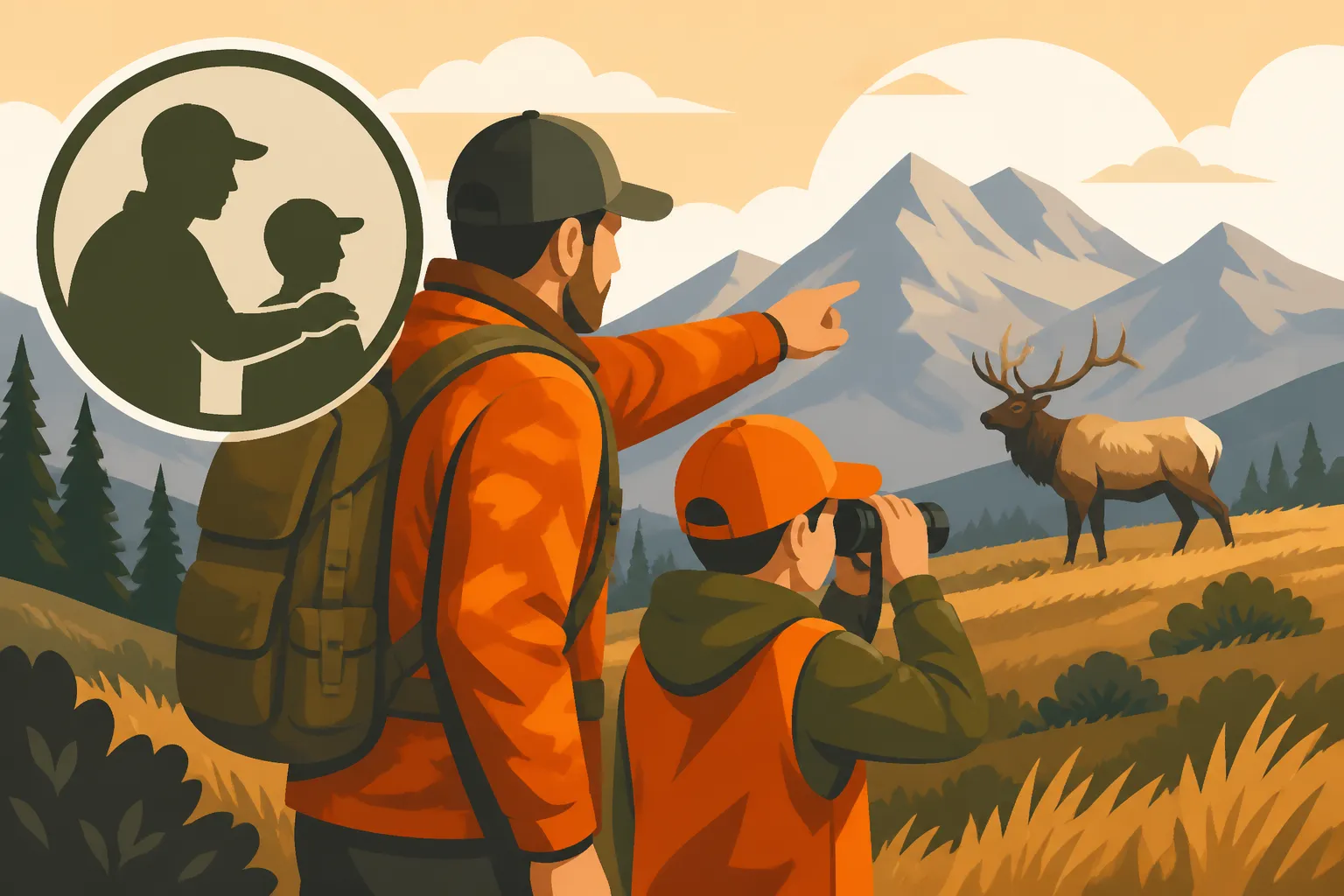
Now, the "within sight and normal voice contact" part can get tricky once you step out of the truck and into the vastness of Wyoming's hunting landscapes. "Normal voice contact" doesn't mean shouting across a canyon, and "within sight" isn't about glimpsing a hat bobbing a mile away with binoculars. It implies a distance where a natural conversation could take place without extraordinary effort, and where visual cues are clear enough to understand the mentee's immediate actions and surroundings. Imagine you're stalking pronghorn in a sagebrush flat or still hunting timber for mule deer; direct supervision means you are close enough to hear a whispered question, see the mentee shoulder their rifle, and watch their target through your own optics or even bare eyes. It means being actively engaged, not merely present in the same zip code. This distinction is crucial, especially when considering the sheer scale of public land out here, whether you're hunting BLM ground or a sprawling national forest like the Bridger-Teton National Forest.
Why Direct Supervision Matters Deeply
The rule about direct supervision isn't just arbitrary red tape from the Game and Fish Department. It's built on a foundation of safety, ethical hunting, and legal accountability, all designed to protect everyone involved and the integrity of the hunting tradition.
Safety First: Protecting New Hunters and the Public
Let's face it: hunting can be dangerous if not approached with the utmost care and respect. A new hunter, especially a young one, might not have the experience to recognize a safe shooting lane, identify their target clearly, or handle a firearm or bow responsibly under pressure. This is where the mentor becomes the immediate safety net. Being within sight and voice allows you to:
- Prevent Accidents: Intervene if a mentee points a firearm in an unsafe direction, tries to climb over an obstacle with a loaded weapon, or takes a shot at an animal that is too close to livestock or property.
- Ensure Positive Identification: Help the mentee confirm their target is indeed a legal game animal, and not something else, or that it meets specific antler point restrictions.
- Manage Equipment: Supervise proper loading, unloading, and carrying of firearms or bows, minimizing the risk of accidental discharge or injury.
This layer of immediate oversight is vital, not just for the mentee but for other hunters and the general public who might be in the vicinity.
Ethical Hunting Practices: Mentoring Responsible Hunters
Beyond pure safety, direct supervision is a cornerstone of teaching ethical hunting. It’s an opportunity to impart the nuances of responsible sportsmanship that simply can’t be learned from a textbook or an online course. When you’re right there with your mentee, you can:
- Teach Shot Placement: Guide them on where to aim for a quick, humane harvest, and explain why certain shots are unethical.
- Discuss Animal Behavior: Point out subtle cues in an animal's body language, helping the mentee understand game patterns and how to approach them respectfully.
- Instill Patience and Judgment: Emphasize that taking a shot isn't always the right move, and sometimes waiting for a better opportunity or passing on an animal is the most ethical choice. This kind of real-time, in-the-moment coaching is invaluable for developing a truly responsible hunter, something that simply won't happen if the mentor is out of earshot and vision.
Compliance and Avoiding Penalties: The Legal Ramifications
Ignoring the direct supervision rule isn't just a minor oversight; it's a violation of state law, and it carries consequences. Game wardens take these rules very seriously because they're directly tied to safety and ethical hunting. If you're found to be out of compliance, you could face fines, potentially lose your hunting privileges, and even have your mentee's tag revoked. This is particularly relevant if you're mentoring someone under Wyoming's specific rules, such as those covered in Youth Hunter Education Requirements Before Age Twelve.
A little preparation goes a long way. Before you even head out, review the specific regulations related to mentoring and Mentor Requirements: Eighteen, Certified and Licensed to ensure you and your mentee are properly authorized and informed. Nobody wants their dream hunt to end with a citation, especially when it's easily avoidable by understanding and adhering to the clear directives for direct supervision.
What Constitutes "Direct Supervision" in the Field
So, we’ve talked about what it is and why it matters, but let’s get down to the nitty-gritty: what does it look like when you’re actually out there, boots on the ground, trying to fill a tag in Wyoming? It comes down to a few key principles that ensure you’re meeting the spirit and the letter of the law.
Sight and Voice Contact: The Golden Rule
This is the absolute bedrock. As a mentor, you need to be able to see your mentee clearly and communicate with them effectively using a normal speaking voice. This isn't about being able to see a blur in the distance or yelling loud enough to startle every animal in the county. It means:
- Unobstructed View: You should have a clear, continuous view of your mentee. If they duck behind a ridge, enter dense timber, or drop into a deep draw where you can't see them, you are no longer in direct sight. This doesn't mean you have to be staring at them constantly, but if you look up, you should be able to locate them immediately.
- Conversational Distance: "Normal voice contact" implies a distance where you could comfortably carry on a conversation without raising your voice significantly. In a quiet, still morning in the high country, that might stretch a bit further than on a windy day, but the principle remains: you must be able to instruct, question, and receive responses clearly. This is particularly critical when a shot opportunity arises, and you need to verify target or provide last-minute coaching.
Proximity Matters: How Close is Close Enough?
There’s no hard and fast number like "20 yards," because terrain and conditions vary wildly. However, the intent is clear: you should be close enough to physically react if necessary. Consider these aspects:
- Immediate Intervention: Could you grab a rifle barrel if it's pointed unsafely? Could you physically pull a mentee back from a precarious edge? Your proximity should allow for immediate physical intervention if an emergency or unsafe situation demands it.
- Shared Experience: Being close also facilitates the shared learning experience. You're not just watching; you're experiencing the stalk, the wait, the shot opportunity with them. You can whisper advice, point out details, and share the excitement and lessons learned in real-time. This close proximity ensures that the mentee is truly being mentored, not just supervised from afar.
Communication and Immediate Intervention: More Than Just Being Nearby
It’s not enough to simply be within sight and voice; you must be attentive and ready to act.
- Active Engagement: This isn't the time to be engrossed in your phone or glassing a different ridge far away. Your primary focus must be on your mentee and their immediate surroundings.
- Pre-arranged Signals: Especially in situations where voice might be difficult (like strong winds or noisy terrain), establishing simple hand signals or other non-verbal cues beforehand can be incredibly helpful. Things like "stop," "danger," "animal left/right," or "safe shot."
- Immediate Assessment: When a game animal appears, you should be able to immediately assess the situation alongside your mentee: identify the animal, confirm it's legal, check the backdrop, and give the green light (or red light) for a shot. This rapid, shared decision-making process is the essence of effective direct supervision. A good tool for planning and executing these hunts, especially in terms of understanding terrain and potential blind spots, can be something like the GoHunt platform, which provides detailed mapping and public land overlays. It helps you visualize where you might lose line of sight.
Common Pitfalls and Misunderstandings
Even with the best intentions, it's easy to inadvertently fall short of direct supervision standards, especially given the dynamic nature of hunting in Wyoming. Knowing these common traps can help you avoid them.
Varying Terrain and Visibility: When "Sight" Becomes Challenging
Wyoming's diverse landscapes are beautiful, but they can quickly complicate the "within sight" rule.
- Rolling Hills and Draws: That small rise or shallow creek bed can completely hide a person who was just visible. What looks like an easy few hundred yards of open country can suddenly become a series of blind spots. Imagine hunting for mule deer in the sagebrush steppe of southern Wyoming; one moment you see your mentee clearly, the next they've dropped into a minor depression or behind a clump of tall sage, and they're gone from view.
- Dense Timber: Trying to maintain visual contact in thick conifer forests, common in areas like the Bighorn National Forest or the Medicine Bow National Forest, is notoriously difficult. Trees quickly obstruct views, making it challenging to know exactly what your mentee is doing or aiming at. A few steps into the pines, and your mentee can disappear entirely.
- Weather Conditions: Fog, heavy snow, or even just driving rain can severely reduce visibility, turning what was once clear sight into a murky guesswork. If you can't see them well enough to determine their actions, you're likely no longer providing direct supervision.
The "Just Around the Corner" Trap: Thinking You're Close Enough
It's tempting to think, "Oh, they're just over that little hill, I can still hear them," or "They're right behind that clump of trees, I know where they are." This is the "just around the corner" trap, and it's a common misstep.
- Out of Sight, Out of Mind (and Supervision): If you can't see them, you can't directly intervene. This is especially problematic in situations where a mentee might encounter an unexpected obstacle, slip, or have an animal suddenly appear.
- Voice Carries Differently: Sound carries unevenly across terrain. A voice that seems clear in one spot might be completely muffled or lost just a few yards further, particularly with wind, water noise, or other ambient sounds. "Voice contact" isn't about being able to sometimes hear a faint sound; it's about being able to communicate clearly and consistently.
Distractions and Overconfidence: When Focus Shifts
Even experienced mentors can fall victim to distractions or overconfidence.
- Spotting Your Own Game: It's natural to get excited if you spot a legal animal yourself, but if it takes your focus entirely off your mentee, you're no longer supervising directly. Your primary role as a mentor is to facilitate their hunt safely and legally.
- Technology Over-Reliance: While radios are great for communication, they are not a substitute for sight and voice contact. Relying solely on a radio for "supervision" doesn't meet the legal requirement. Similarly, looking at a hunting app like GoHunt for too long, instead of observing your mentee, can be a dangerous distraction.
- Assuming Competence: Even if your mentee is showing great promise and seems to be a quick learner, never assume they no longer need close supervision. Experience is built over time, and unexpected situations can arise for even the most careful new hunter. Stay vigilant until they've accumulated enough solo experience to hunt independently and legally.
Tips for Effective Mentoring and Supervision
Mentoring a new hunter is a truly rewarding experience, one of the best ways to pass on our passion for the outdoors. To ensure it's safe, legal, and truly effective, a bit of intentional planning and execution makes all the difference.
Pre-Hunt Planning and Communication: Setting Expectations
Before you ever step foot into the hunting grounds, lay the groundwork for success.
- Review the Rules Together: Don't just assume your mentee knows the regulations. Sit down and go over them specifically, focusing on topics like Wyoming's Minimum Age for Big Game and what exactly their license allows them to harvest. Talk about why the direct supervision rule exists – not as a punishment, but as a safety net.
- Establish Communication: Discuss how you'll communicate in the field. What are your agreed-upon hand signals if wind makes voice communication tough? What are the absolute "red light" signals for danger or an unsafe shot?
- Route Planning with Supervision in Mind: Use maps, whether paper or digital like GoHunt, to identify areas where maintaining sight and voice contact might be difficult due to terrain. Plan your approach to minimize these blind spots. If you know a particular draw is too deep, or a section of timber too thick, strategize how you’ll move through it together, or around it, to maintain that crucial connection.
- Practice, Practice, Practice: If it's a youth hunter, spend time practicing safe firearm or bow handling and shooting ethics in a controlled environment. This builds confidence and competence before the pressure of a real hunt. Discuss scenarios: "What if an animal appears suddenly here?" or "What's our plan if we get separated?"
Maintaining Constant Awareness: Staying Vigilant
Your role as a mentor is active, not passive. This means maintaining a heightened state of awareness throughout the hunt.
- Keep Eyes on the Mentee: While you'll also be scanning for game, a significant portion of your attention should be on your mentee. Watch their body language, their muzzle control, their movements. Are they becoming fatigued? Are they distracted?
- Anticipate and React: Try to think a few steps ahead. If your mentee is about to climb over a fence, remind them about firearm safety. If they're moving into an area with limited visibility, position yourself strategically to maintain contact.
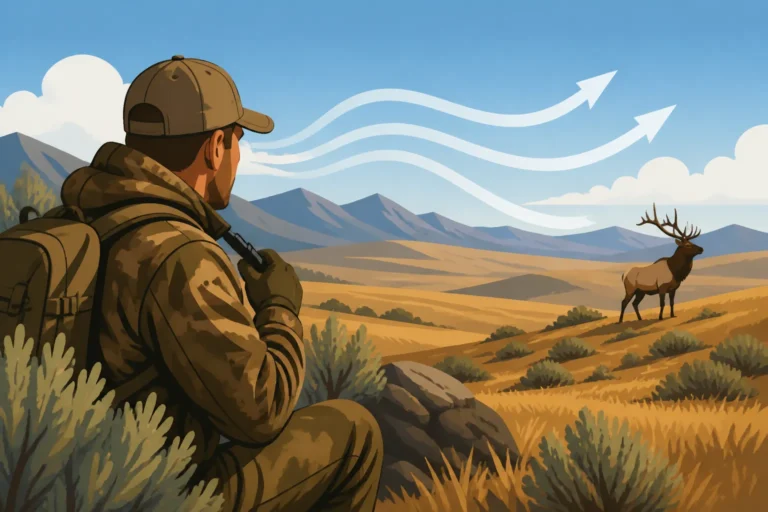
- Be a Teacher, Not Just a Watchdog: Use every opportunity to teach. Point out tracks, rubs, feeding signs, and discuss wind direction, terrain features, and animal behavior. This constant dialogue, facilitated by your close proximity, turns the hunt into a rich learning environment. This also means understanding things like Reading Wind on an Open-Country Stalk yourself, so you can teach it.
Using Technology Wisely (but not as a Replacement): Radios, GPS
Technology can be a helpful aid, but never a substitute for direct supervision.
- Two-Way Radios: These are excellent tools for communication if you briefly lose voice contact due to wind or a small dip in the terrain. They can help you quickly re-establish proximity or give a quick instruction. However, they do not replace the visual component of "direct supervision." You still need to be able to see your mentee.
- GPS and Mapping Apps: Tools like GoHunt are fantastic for navigation, understanding property boundaries, and locating your mentee's position relative to your own. They can help you prevent accidental separation and navigate challenging terrain. You can even use the sharing features to see each other's locations on a map, which is great for safety and coordination. But remember, seeing a dot on a screen doesn't mean you have "sight" of your mentee for supervisory purposes. Use them for planning and safety, but always prioritize direct visual and voice contact.
By diligently applying these principles, you'll not only adhere to Wyoming's regulations but also create a much safer, more educational, and ultimately more memorable hunting experience for your mentee.
| Aspect of Supervision | What it Means in Practice | Common Pitfall |
|---|---|---|
| Sight Contact | Mentor can clearly see the mentee's actions and immediate surroundings. | Mentee disappears behind terrain features (e.g., small hills, dense trees). |
| Voice Contact | Mentor can communicate with mentee using a normal speaking voice, and be heard clearly. | Yelling across a canyon; wind or noise drowning out communication. |
| Proximity | Close enough for immediate verbal instruction or physical intervention. | Mentor is too far to react quickly to an unsafe situation or missed opportunity. |
| Active Engagement | Mentor is focused on mentee's hunt, constantly teaching and guiding. | Mentor gets distracted by their own hunting, phone, or other elements. |
| Pre-planning | Discussing rules, communication, and terrain challenges before the hunt. | Assuming mentee knows the rules or that communication will be easy. |
Disclaimer
The information provided in this guide is for general informational purposes only and is not intended as legal advice. Hunting regulations can be complex and are subject to change. Always consult the most current Wyoming Game and Fish Department regulations or contact the department directly for the most accurate and up-to-date information before heading into the field.