How to Hunt an Elk Wallow in September
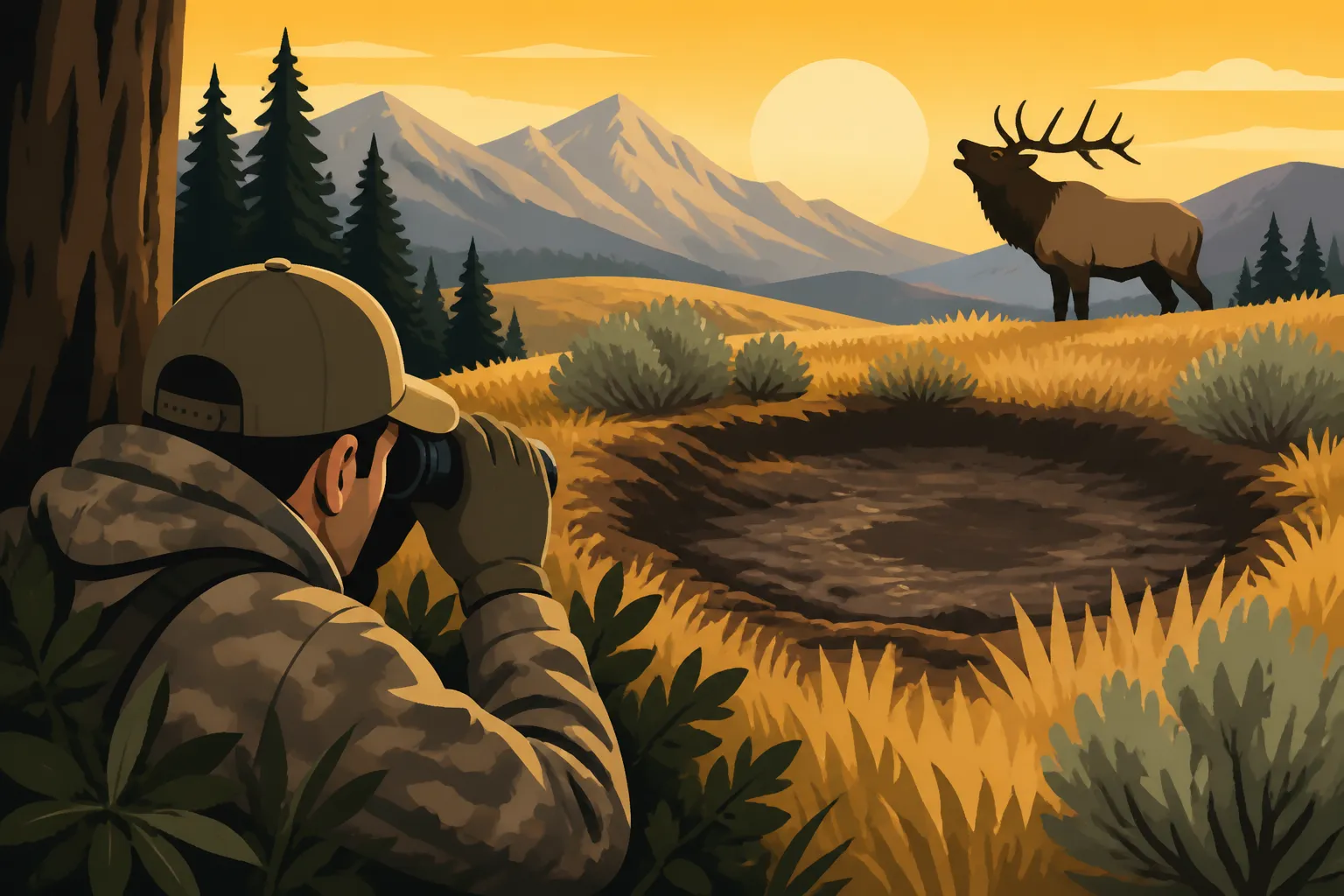
There’s nothing quite like the sound of a bull elk bugling through the crisp September air in Wyoming, but sometimes, those majestic creatures feel like ghosts. If you've been putting in the miles, calling till your lungs ache, and still coming up empty, you know the frustration. This guide is all about honing in on one of the most consistent hotspots for September elk: the wallow, and how to effectively hunt it to turn those near misses into success stories.
Understanding Elk Wallow Behavior in September
Elk wallows are much more than just muddy puddles; they're vital social hubs and sensory experiences for elk, especially as the rut kicks into high gear during September. If you can understand why and when elk use them, you're halfway to intercepting a bull.
Why Elk Use Wallows During the Rut
September in Wyoming means the elk rut is either just beginning or well underway, depending on the specific hunt area and elevation. Bulls, especially, become incredibly active, covering ground, rounding up cows, and constantly challenging rivals. This high-energy lifestyle comes with consequences: they get hot, itchy, and need to assert their dominance in any way possible.
Wallows offer a perfect solution to several of these challenges. First, they provide a much-needed cooling station. A big bull elk can generate a tremendous amount of heat, and rolling around in cool, wet mud helps regulate their body temperature, especially during warmer daytime hours or after a vigorous chase. Secondly, and perhaps most crucially for hunting, wallows are prime locations for scent marking. When a bull thrashes around in the mud, he's not just getting dirty; he's depositing his scent from his urine, glands, and even the natural oils on his body into the muck. This creates a potent olfactory advertisement to cows and a clear challenge to other bulls. It's like leaving a muddy, smelly business card saying, "I was here, I'm big, and I'm ready." For cow elk, the wallow can also offer relief from biting insects and a way to clean their hide, though their use during the rut is often more about visiting an area frequented by bulls.
Identifying Active Wallows and Fresh Sign
Finding a wallow is one thing; knowing if it’s currently being used by elk is another entirely. You're looking for evidence of recent activity, not just an old mud hole. Fresh wallows will usually have standing water or very wet, churned-up mud around the edges. Look for distinct elk tracks in the mud, especially large bull tracks, and pay close attention to the freshness of the prints. Sharp edges mean recent use, while crumbled or dry edges suggest older activity.
Perhaps the most telling sign of an active bull wallow is hair. Bulls will often rub their bodies on the muddy banks or even on nearby saplings after a good roll. You might find dark, coarse elk hair stuck to branches or embedded in the mud. The presence of fresh urine or strong, musky elk scent is also a dead giveaway. You'll know it when you smell it – a powerful, primal odor that instantly tells you an elk was there, and recently. Don't forget to look for broken branches or rubbed-out saplings nearby, indicating a bull has thrashed his antlers in a show of dominance.
When you're trying to locate potential wallows, especially in vast country, tools like GoHunt can be invaluable. Their mapping features allow you to e-scout for wet areas, depressions, or north-facing slopes that might hold moisture and attract elk. Coupled with your own boots-on-the-ground scouting, this can save you countless hours. Once you find a potential area, spend time Reading Fresh Elk Sign in Dark Timber or near water sources to confirm activity.
Strategizing Your Approach to a September Elk Wallow
Finding an active wallow is just the beginning. The next, and arguably most critical, step is figuring out how to approach and set up without alerting the keen senses of an elk. This requires meticulous planning and a deep understanding of the environment.
Wind Direction is Your Absolute Priority
I cannot stress this enough: wind direction is paramount when hunting elk, especially when you're targeting a specific location like a wallow. An elk’s nose is its primary defense. If your scent drifts into their zone, even if they don't see or hear you, your hunt is over. This is particularly challenging in the mountainous terrain common across Wyoming.
Thermals play a huge role here. In the morning, as the sun warms the earth, air currents typically rise, carrying scent uphill. As evening approaches and the air cools, the thermals reverse, carrying scent downhill. This means that if you're setting up for a morning hunt, you want to approach from below the wallow, ensuring your scent rises away from it. For an evening hunt, you'll want to be above the wallow, with your scent falling harmlessly away. Always carry a wind checker, like a small bottle of powder or a milkweed puff, and use it constantly. A slight shift in wind can betray your position instantly. Playing wind direction on an open sagebrush stalk for pronghorn is one thing, but with elk, especially in timbered areas, the wind can swirl unpredictably.
Let's say you've found a promising wallow on a north-facing slope, surrounded by dark timber. For an evening sit, you'd want to be set up on the ridge or slightly above the wallow, with the prevailing evening thermals carrying your scent downhill and away. Your approach would need to skirt the downwind side of the wallow until you could get into your setup position. This might mean taking a much longer, circuitous route to get there undetected, but it's absolutely worth the effort.
Setting Up for the Shot: Location and Concealment
Once you've factored in the wind, your next task is finding the perfect spot to set up. You need to be close enough for a clean shot, concealed from the elk's sharp eyes, and positioned for effective shooting lanes. For bowhunters, this usually means getting within 30-40 yards, often closer. You need to know How Close a Bowhunter Really Needs to Get for your personal effective range.
Consider what type of setup best suits the wallow and surrounding terrain.
- Tree Stand: If there are suitable trees nearby, a portable tree stand can provide excellent concealment and an elevated shooting angle, allowing your scent to dissipate above an approaching elk. This can be particularly effective if the wallow is nestled in dense timber.
- Ground Blind: A pop-up ground blind offers fantastic concealment, especially if it can be brushed in naturally. It's often easier to set up quickly and can be moved if the wind shifts slightly. However, your scent is closer to the ground, making wind management even more critical.
- Natural Cover: Often, the best option is to use natural terrain and vegetation. A thick clump of pines, a large rock, or a rise in the ground can provide all the cover you need. The key is to break up your human outline and remain motionless.
When choosing your exact spot, think about the elk’s most likely approach. Where are the game trails leading in? Is there thick cover where they might linger before stepping into the open? Also, consider the sun's position. You want the sun at your back or to your side, illuminating the wallow, but you don't want it reflecting off your optics or silhouetteing you against the sky. A clear shooting lane, free of branches or tall grass, directly to the wallow is essential. Practicing at varying distances and knowing your Realistic Archery Practice Distance for Big Game is crucial here.
Timing Your Sit for Peak Activity
Elk wallow use can be somewhat predictable, but also opportunistic. During September, prime times are generally early morning and late evening, mirroring their overall activity patterns. Bulls will often visit wallows shortly after dawn or just before dusk as they move between feeding and bedding areas.
However, don't rule out midday activity, especially during warmer spells. A hot, hard-running bull might seek relief in a wallow even in the middle of the day. If you're willing to commit to a long sit, especially on a warm, clear day, you might be rewarded with an unexpected encounter. Checking a weather forecast and observing local patterns can help. If temperatures are unusually high for the season, midday wallowing becomes more likely.
Patience is truly a virtue here. You might sit for hours, seeing nothing but squirrels, and then suddenly, a massive bull appears. The most important thing is to remain absolutely still, minimize movement, and be prepared for the moment of truth. Knowing Wyoming Elk Season Dates Are Set Hunt Area by Hunt Area is vital, as different areas will have varying rut intensity and thus wallow usage. For a deeper understanding of rut timing, research When the Elk Rut Actually Peaks Out West in your specific hunting unit.
Calling Tactics and Post-Shot Strategy Near a Wallow
Hunting a wallow isn't just about sitting and waiting; it's about being prepared for what happens when an elk shows up and knowing what to do afterward.
When and How to Call Near a Wallow
This is where many hunters make a mistake: overcalling. When you’re directly on an active wallow, the elk are often already in the immediate vicinity or will be arriving with intent. Aggressive bugling directly over a wallow can actually scare off an approaching bull or make him circle wide, trying to scent check the "new" bull.
My advice is to be minimal and subtle with your calling. If you haven't seen anything for a while and feel the urge to call, try a soft cow call. A few quiet mews or chirps can sometimes pique a bull's curiosity without putting him on high alert. If you hear a bull bugling in the distance, a soft, questioning bugle might be appropriate, but avoid anything that sounds like a challenge right from the wallow itself. You want to sound like a cow or a satellite bull just passing through, not the dominant bull currently occupying the prime real estate.
If you're using calling to locate elk initially, a loud, drawn-out Locator Bugles for Finding Bulls at Dawn can be effective, but do that before you settle into your wallow stand, not from it. Once you're positioned, let the wallow do the work, drawing the elk in with its natural scent.
Post-Shot Procedure and Retrieval Challenges
Congratulations, you've made the shot! Now the real work begins, and it's critical to handle this phase correctly to ensure a successful recovery.
The first rule of thumb is patience. Even if you saw the elk go down, give it time. For a marginal shot, this might mean 30 minutes to an hour or even more. For a good, solid hit, I still recommend waiting at least 15-20 minutes. Use this time to calm your nerves, replay the shot in your mind, and most importantly, mark the exact spot where the elk was standing when you shot, and the last place you saw it. Tie a piece of orange tape to a branch, use your GPS, or stack some rocks – anything to mark it clearly.
Once you begin tracking, go slowly. Look for blood, broken branches, disturbed leaves, or tracks. If the blood trail peters out, don't push on blindly. Back out, circle widely, and try to pick up the trail again. It's often a good idea to bring a partner to help with tracking and retrieval. If it's getting dark, mark your spot and come back at first light with fresh eyes. Finding Water Sources in Dry Hunting Country can sometimes lead you to a downed animal, as they often seek water when injured.
Retrieving an elk, especially a bull, is an immense task. Elk are massive animals, and getting them out of rough, steep country is a significant challenge. Plan your extraction route before you ever take the shot. Will you quarter it out and pack it? Do you have horses or a game cart? Be honest with yourself about your physical capabilities and prepare for the worst-case scenario. It's not uncommon for hunters to take multiple trips to pack out an elk from remote areas.
Signs of an Active Elk Wallow
| Sign | Description | Fresh/Old Indicator |
|---|---|---|
| Mud/Water Condition | Standing water, soupy, churned-up mud, or muddy banks. | Wet, dark, pliable mud = Fresh; Dry, cracked mud = Old. |
| Tracks | Clear hoof prints, especially large bull tracks, around the edges. | Sharp, well-defined edges = Fresh; Weathered, crumbled edges = Old. |
| Elk Hair | Strands of dark, coarse hair stuck to mud, branches, or surrounding vegetation. | Shiny, dark, and still pliable hair = Fresh; Faded, brittle hair = Old. |
| Urine/Scent | Strong, musky elk odor, or visible urine stains in the mud. | Potent, distinct odor = Fresh; Faint or no odor = Old. |
| Rubbed Vegetation | Scrapes on nearby trees or bushes, broken saplings from thrashing. | Freshly broken branches, sap still evident = Fresh; Dried, weathered breaks = Old. |
| Beds | Flattened areas in soft dirt or grass near the wallow. | Freshly matted grass, warm to touch = Fresh; Dry, flattened = Old. |
Disclaimer
Hunting in Wyoming carries inherent risks, and rules and regulations can change. This article is intended for informational purposes only and does not constitute legal advice. Always consult the most current Wyoming Game and Fish Department regulations and obtain all necessary licenses and permits before planning any hunt. Safety should always be your top priority.