How Long Goose Season Runs in Wyoming
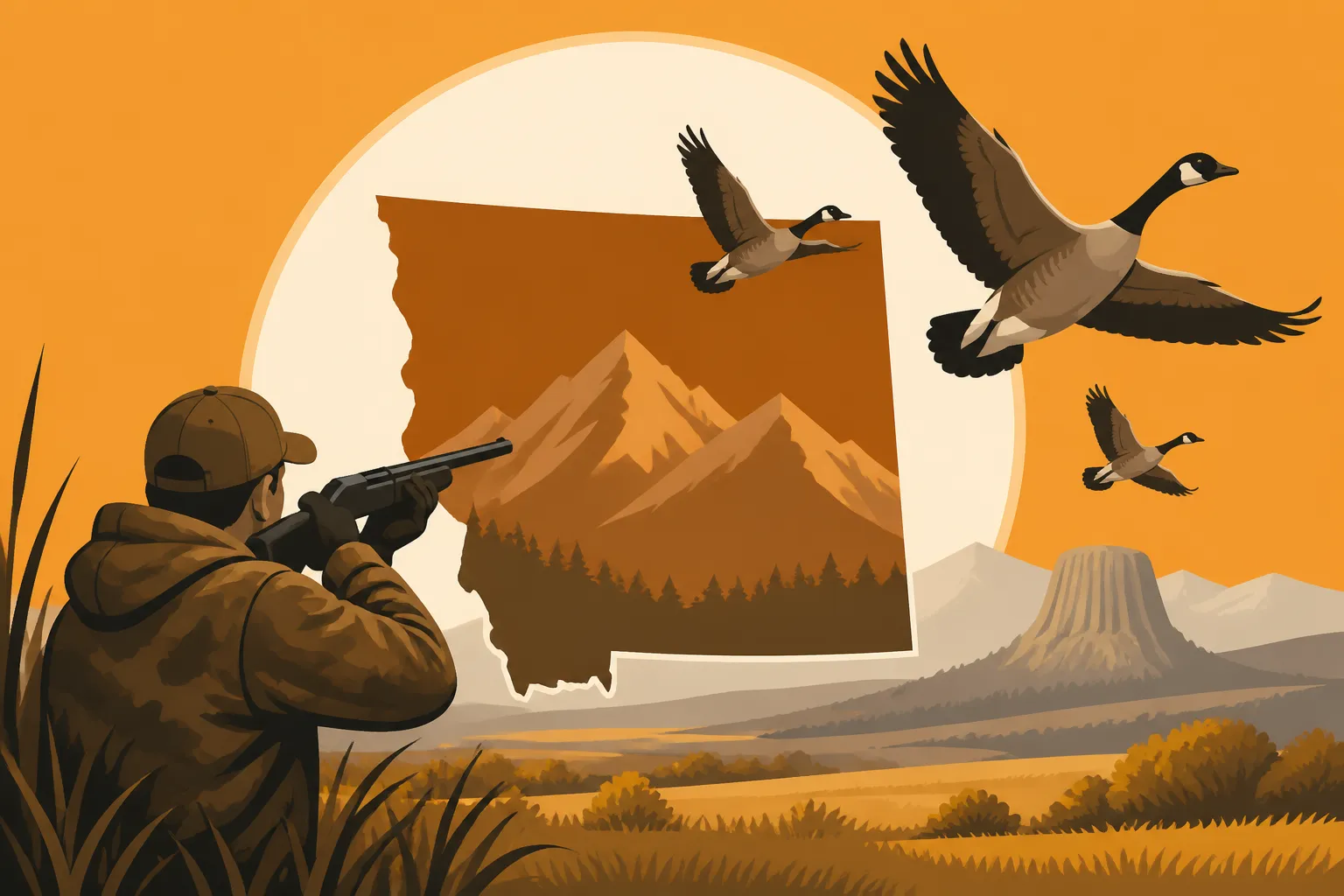
Trying to figure out the exact goose season dates in Wyoming can feel like navigating a maze, with different zones, federal regulations, and state specifics all playing a part. It's not as straightforward as just picking an opening day; you need to understand the nuances to ensure you're hunting legally and effectively. This guide is designed to cut through that confusion, giving you a clear picture of how long goose season runs in Wyoming, what to expect, and how to plan your hunts for maximum success.
Understanding Wyoming's Goose Hunting Framework
Wyoming’s goose hunting seasons are structured around two major migratory bird flyways: the Central Flyway and the Pacific Flyway. This division is critical because the season dates, bag limits, and even species-specific rules can vary significantly between them. The Wyoming Game and Fish Department (WGFD) works within federal guidelines set by the U.S. Fish and Wildlife Service to establish these seasons, aiming to provide ample hunting opportunity while conserving goose populations. It’s a delicate balance, and it means hunters need to pay close attention to which zone they plan to hunt in.
The Central Flyway Goose Seasons
For hunters focusing on the eastern and central parts of Wyoming, the Central Flyway dictates your goose hunting calendar. This flyway covers a vast area, stretching from Canada down to Texas, and Wyoming's portion sees a significant passage of geese, including Canada geese, light geese (snow, blue, and Ross's geese), and even some white-fronted geese. Typically, the season here is designed to capture both early-season local birds and later-season migrants. You'll often find a split season, with an early segment, a brief closure, and then a longer, more continuous late season that extends well into winter. This strategy allows hunters to target geese during different phases of their migration and breeding cycles. The bag limits for Canada geese in this zone are generally quite generous, often allowing for several birds per day, which is a real boon for those looking to fill their freezer or enjoy multiple hunting trips.
The Pacific Flyway Goose Seasons
If your hunting grounds are located in western Wyoming, you'll be operating under the Pacific Flyway regulations. This flyway follows the western edge of the continent, and while it might see fewer geese than the Central Flyway in Wyoming, it still offers fantastic hunting opportunities, particularly in areas like the Bear River drainage or near large reservoirs. The season dates here tend to mirror the Central Flyway's structure in terms of length, but the specific start and end dates will differ. Hunters in this zone will also find regulations specific to Canada geese, and often there's a separate, often more extended, season for light geese, giving you more days afield. Remember, understanding which flyway you're in isn't just a suggestion; it's a legal necessity. Websites like GoHunt offer excellent mapping tools that can help clarify these boundaries, ensuring you're always aligned with the correct regulations for your chosen area.
North Platte River Special Goose Zone
Wyoming adds another layer of complexity, but also opportunity, with the North Platte River Special Goose Zone. This zone, encompassing specific portions of the North Platte River drainage in southeastern Wyoming, often has unique season dates that differ from the broader Central Flyway. Why the special designation? The North Platte River serves as a critical wintering area and migration corridor for a large number of geese, and these specific regulations are designed to maximize hunting opportunities in this high-concentration area while managing harvest levels effectively. The season here is typically quite long, often extending late into January or even early February, providing some of the latest goose hunting in the state. Hunters in this area need to pay particular attention to the exact boundaries of this zone, as accidentally crossing into a general Central Flyway area could mean violating season dates. For detailed information, referring to the official WGFD regulations or using a resource like GoHunt can be invaluable.
Typical Season Lengths and Specific Dates
Goose season in Wyoming is far from a one-size-fits-all approach. Its duration is highly dependent on the flyway and specific zone you're hunting in, but generally, you can expect seasons to run anywhere from a few weeks for early segments to several months for the main winter seasons. It’s a long game, allowing for varied hunting experiences from the crisp days of fall to the bitter cold of deep winter.
General Season Dates for Central and Pacific Flyways
For the general goose seasons, Wyoming typically sees openers in late September or early October. These early seasons are often shorter, designed to harvest local populations before the major migration pushes through. After a brief intermission, the main goose season then kicks off, usually around late October or early November, and can run continuously all the way through late January. This structure means that if you're targeting geese in the Central Flyway, you might have an early-season window, and then a much longer, primary season. Similarly, the Pacific Flyway will have its own distinct sets of dates, usually with a similar overall duration, but shifted to align with the migration patterns in the western part of the state.
Here's a generalized look, but always check the current year's regulations as these dates change annually:
| Zone/Species | Early Season Start (Approx.) | Early Season End (Approx.) | Main Season Start (Approx.) | Main Season End (Approx.) |
|---|---|---|---|---|
| Central Flyway | Late Sept/Early Oct | Mid-Oct | Late Oct/Early Nov | Late Jan |
| Pacific Flyway | Late Sept/Early Oct | Mid-Oct | Late Oct/Early Nov | Late Jan |
| North Platte River Zone | (Often continuous) | – | Early Oct | Early Feb |
| Light Goose Conservation | Mid-Feb | Early Mar | Early Mar | Mid-Apr |
Note: These are approximations. Always consult the most current Wyoming Game and Fish Department migratory bird regulations for precise dates.
As you can see, the main seasons offer substantial hunting time. For instance, a main season running from early November to late January provides nearly three full months of opportunity. That's a lot of potential days in the field, whether you're chasing flocks from a decoy spread or trying to intercept them along a flight path. These extensive seasons allow hunters to experience different weather conditions and goose behaviors, from early-season aggression to the more wary, cold-weather patterns. Remember to also check the specific dates for "Wyoming's Duck Season Framework Explained" if you plan to hunt ducks concurrently, as their seasons can overlap but have different bag limits and rules.
Light Goose Conservation Order Seasons
Beyond the regular goose seasons, Wyoming also implements a Light Goose Conservation Order. This special season, which typically runs from mid-February through mid-April, is specifically for snow, blue, and Ross's geese. The intent behind this extended season is to help control the populations of these species, which have, in some areas, grown to unsustainable levels, impacting their arctic breeding grounds. What makes the Light Goose Conservation Order particularly appealing to hunters is its relaxed regulations. Often, there are no daily bag or possession limits, and hunters are permitted to use unplugged shotguns and electronic calls. This can lead to some incredibly action-packed hunting, though it often involves facing harsh late-winter conditions. It's a completely different experience from the regular season and offers a unique challenge, pushing the hunting season well beyond what many might expect.
Essential Licenses, Stamps, and Regulations
Before you even think about setting foot in a goose field, you need to make sure all your paperwork is in order. Wyoming, like all states, has a strict set of requirements for waterfowl hunting. Missing even one piece of identification or a required stamp can quickly turn a fun day afield into a frustrating encounter with a game warden.
Required Licenses and Stamps
Every goose hunter in Wyoming, resident or nonresident, needs a valid Wyoming game bird license. For residents, you can check "Wyoming Resident License Prices by Species" for the specific cost. Nonresidents will find their prices are higher, as discussed in "Wyoming Nonresident Tags Run $326 to $1,965," but the general game bird license is still a mandatory purchase. Beyond the state license, you'll also need a Wyoming Conservation Stamp. This stamp contributes directly to habitat improvement and access programs, and almost every hunter in the state needs one, as explained in "The Wyoming Conservation Stamp and Who Needs One." It's a small fee that makes a big difference for wildlife. Finally, and crucially for migratory birds, you must possess a current Federal Migratory Bird Hunting and Conservation Stamp, often called the "Duck Stamp." This stamp is a federal requirement for all waterfowl hunters 16 years of age and older. Without these three components, you are not legally equipped to hunt geese in Wyoming.
Daily Bag and Possession Limits
Understanding the bag and possession limits is paramount. These limits are set annually by the WGFD and are designed to manage harvest. For Canada geese, you might see a daily bag limit of several birds, with a possession limit typically three times the daily limit. Light geese, especially during the conservation order, often have no bag or possession limits, but this only applies to snow, blue, and Ross's geese. White-fronted geese usually have much more restrictive limits. These numbers can change based on population surveys and management objectives, so always consult the current year's regulations. It's easy to get caught up in the excitement of a productive hunt, but going over the limit is a serious offense. Keep a mental tally, or even a physical one, to ensure you stay within the legal bounds.
Legal Shooting Hours and Equipment Restrictions
Goose hunting in Wyoming, like other game bird hunting, adheres to specific legal shooting hours. Generally, these hours begin half an hour before sunrise and extend until sunset. This means those prime early morning and late evening flights are fair game. However, these times are strict, and you'll need to know your sunrise/sunset times precisely for your hunting location. This also applies to other game, as outlined in "Legal Shooting Hours and Vehicle Rules in Wyoming." When it comes to equipment, standard shotgun gauges (10, 12, 16, 20 gauge) are typical, but you must use non-toxic shot. Lead shot is strictly prohibited for all waterfowl hunting. Your shotgun also needs to be plugged to a maximum capacity of three shells (one in the chamber, two in the magazine), unless you are participating in the Light Goose Conservation Order where unplugged shotguns are generally allowed. Electronic calls are usually not permitted during the regular goose season, as discussed in rules like "Electronic Calls for Predators and Varmint Hunting," but they are allowed during the Light Goose Conservation Order, which is a key distinction that gives hunters an advantage during that specific season.
Hunter Education Requirements
For anyone born on or after January 1, 1966, completing a hunter education course is mandatory to hunt in Wyoming. This is a fundamental safety and ethics requirement. If you fall into this category, you'll need to carry proof of your certification in the field, as mentioned in "Carrying Proof of Certification in the Field." There are some nuances, such as exemptions for those under 12 who can hunt under the direct supervision of a certified mentor, as seen in "Hunter Education Requirements Before Age Twelve." However, for most adult hunters, this is a non-negotiable step. The course covers everything from firearm safety to wildlife identification and ethical hunting practices, ensuring you're a responsible participant in Wyoming's rich hunting tradition.
Maximizing Your Goose Hunting Opportunities in Wyoming
Knowing the season dates and regulations is just the first step. To truly make the most of Wyoming's goose hunting, you need to think about scouting, tactics, and how to adapt to the unpredictable nature of migratory birds. With such a long season, there are many variables, and successful hunters are often those who are prepared for anything.
Scouting for Productive Areas
Wyoming offers a lot of public land, but prime goose hunting often happens near agricultural fields, river bottoms, and large water bodies. Think about areas like "Waterfowl Along the North Platte River" or large reservoirs and lakes that provide roosting habitat. Scouting is absolutely critical. Before the season, drive around potential hunting areas, especially at dawn and dusk. Look for feeding patterns: where are geese landing to eat? Where are they loafing during the day? What are their flight lines between roosting water and feeding fields? Using mapping tools, like those offered by GoHunt, can help you identify public land access points adjacent to private agricultural fields where geese might be feeding. Remember, even if you can't hunt private land, knowing where the birds are coming from and going to can help you set up on accessible public ground along their flight path. Focus on details like the type of crop they're feeding on (corn, winter wheat, barley) and their preferred water sources.
Effective Hunting Tactics Across the Season
Goose hunting tactics evolve throughout the season. Early in the season, local geese might be less wary, responding well to smaller decoy spreads and less aggressive calling. As the season progresses and migrant birds arrive, they become much more educated. You'll likely need larger decoy spreads, often using full-body decoys to create a realistic-looking flock. Motion decoys, like flags or flyers, can also be incredibly effective at grabbing attention from high-flying birds. Your calling strategy will also need to adapt. Early birds might come in hard to simple honks, while seasoned migrants require more nuanced, conversational calling, including clucks, murmurs, and feeding calls. Concealment is always key; geese have incredible eyesight. Pit blinds, layout blinds, or natural cover brushed in effectively are essential. Cold weather late in the season can push birds to specific thermal covers or limited open water sources, changing their patterns significantly. Knowing how to read the birds and adjust your setup on the fly is a hallmark of a successful goose hunter.
Considerations for Different Goose Species
While Canada geese are often the primary target, remember the different species and their unique behaviors. Light geese (snow, blue, and Ross's) fly in massive, often chaotic, flocks. Their hunting often involves large spreads of white decoys and persistent, loud calling. White-fronted geese, or "specklebellies," are often considered a prize bird due to their unique calls and challenging nature. They tend to be warier and often prefer smaller, more realistic spreads. Their calls are distinct, and mastering the "speck" call can be incredibly rewarding. Understanding these differences, both in terms of behavior and legal limits, will make you a more versatile and successful goose hunter throughout the long Wyoming season. It’s not just about hunting "geese"; it’s about hunting specific types of geese, each with its own quirks and challenges.
Disclaimer
Please note that hunting regulations, season dates, and license requirements are subject to change annually by the Wyoming Game and Fish Department. This guide provides general information and approximate timelines. It is the hunter's responsibility to consult the most current official Wyoming Game and Fish Department regulations before planning or undertaking any hunting activity. Always prioritize safety and ethical hunting practices.