Wyoming’s 75/25 Draw Split Explained
It can feel like navigating a maze when you're trying to understand Wyoming's complex draw system for coveted hunting tags. Many of us have spent countless hours poring over regulations, only to feel more confused than when we started, wondering why some people seem to draw tags with low points while others with a substantial bank of points still come up empty-handed. This guide is going to pull back the curtain on Wyoming's unique 75/25 draw split, explaining exactly how it works and what it means for your application strategy.
Understanding the Basics of Wyoming's Draw System
Wyoming's hunting license draw system is definitely one of the more unique ones out there, and it’s a big reason why applying here can be both incredibly exciting and, at times, incredibly frustrating. Unlike some states where it's a pure lottery or solely point-based, Wyoming mixes things up with a split draw. This system is designed to give both long-time applicants with a lot of points and brand-new hopefuls a shot at success. It's not always easy to wrap your head around, especially when you're juggling applications for multiple species or trying to figure out if you should build points or go for a long-shot tag.
Why Wyoming Uses a Split Draw System
The core idea behind Wyoming's split draw, often referred to as the 75/25 split, is to balance opportunity. On one hand, you have hunters who have been faithfully applying for years, building up a significant number of preference points. They've invested time and money, and the system aims to reward that dedication by giving them a better chance at drawing a tag. On the other hand, Wyoming recognizes that hunting should be accessible to everyone, including those just starting out or those who haven't had the chance to accumulate many points. A pure preference point system can shut out new hunters for decades on highly sought-after units. By carving out a portion of the tags for a random draw, the state ensures that even a first-time applicant has a glimmer of hope, preventing a system where only those with max points ever stand a chance. It’s a delicate balance, and while it doesn't always feel fair to everyone, it's the mechanism that Wyoming has chosen to keep both dreams alive.
Preference Points: Your Investment in Future Hunts
Preference points in Wyoming are essentially an investment. They don't guarantee you a tag, but they significantly increase your odds in a specific portion of the draw. Think of them as a form of seniority. Each year you apply for a specific species and are unsuccessful, or if you apply for a point-only, you accrue one point for that species. These points then factor into the preference point portion of the draw in subsequent years. It's a system designed to reward persistence, acknowledging that many hunters have a dream hunt unit they're aiming for and are willing to wait. Without a solid understanding of how these points accumulate and how they influence the draw, it’s easy to feel left behind when results are posted. For many, managing these points is a critical part of their long-term Wyoming hunting strategy.
How the Preference Point System Works
Navigating the preference point system can feel like learning a new language, especially with all the nuances involved. But once you understand the basic mechanics, it becomes a powerful tool in planning your future hunts, particularly for those high-demand species and hunt areas that feel perpetually out of reach.
Accumulating Preference Points Annually
The most straightforward way to earn a preference point in Wyoming is to apply for a tag and be unsuccessful in the draw. If you put in for an elk tag, for example, and don't draw, you automatically receive one preference point for elk. Alternatively, if you're not quite ready to commit to a hunt but want to start building points, you can choose to apply for a "point only" during the application period. This option allows you to steadily accumulate points without having to pay for a full license fee upfront, only the application fee and the point fee. It’s a smart move for nonresidents who know they’ll want to hunt Wyoming in the future but might not have the funds or time for a trip this year. Remember, you can only accrue one point per species per year, so rushing through applications or missing deadlines can cost you valuable progress toward your goal. If you're wondering about the specifics, check out this guide on Buying Wyoming Preference Points Without Applying for a Tag.
Applying with Your Accumulated Points
When it comes time to apply, your accumulated preference points are tallied and factor into the preference point pool of the draw. This means that applicants with more points will be considered first in that specific pool. It’s not quite as simple as "highest points get the tag," but more like a tiered system where those with the most points get the first look at the available tags. For example, if there are 100 tags available in the preference point pool, the system will start with applicants holding the maximum number of points, allocating tags until that point tier is exhausted, then move to the next highest point tier, and so on. This is where researching draw odds becomes absolutely crucial, as it gives you an idea of the minimum points needed to reliably draw in a given unit. Tools like GoHunt's Insider service can be incredibly helpful here, as they break down these complex odds and show you how many points were needed for successful draws in previous years, helping you set realistic expectations and craft a solid application strategy.
Breaking Down the 75/25 Split
Now for the heart of the matter: how Wyoming actually divides up those precious tags. This 75/25 split is what truly makes the system unique, and understanding it is key to making informed application decisions.
The Preference Point Pool: 75% for Those Who Wait
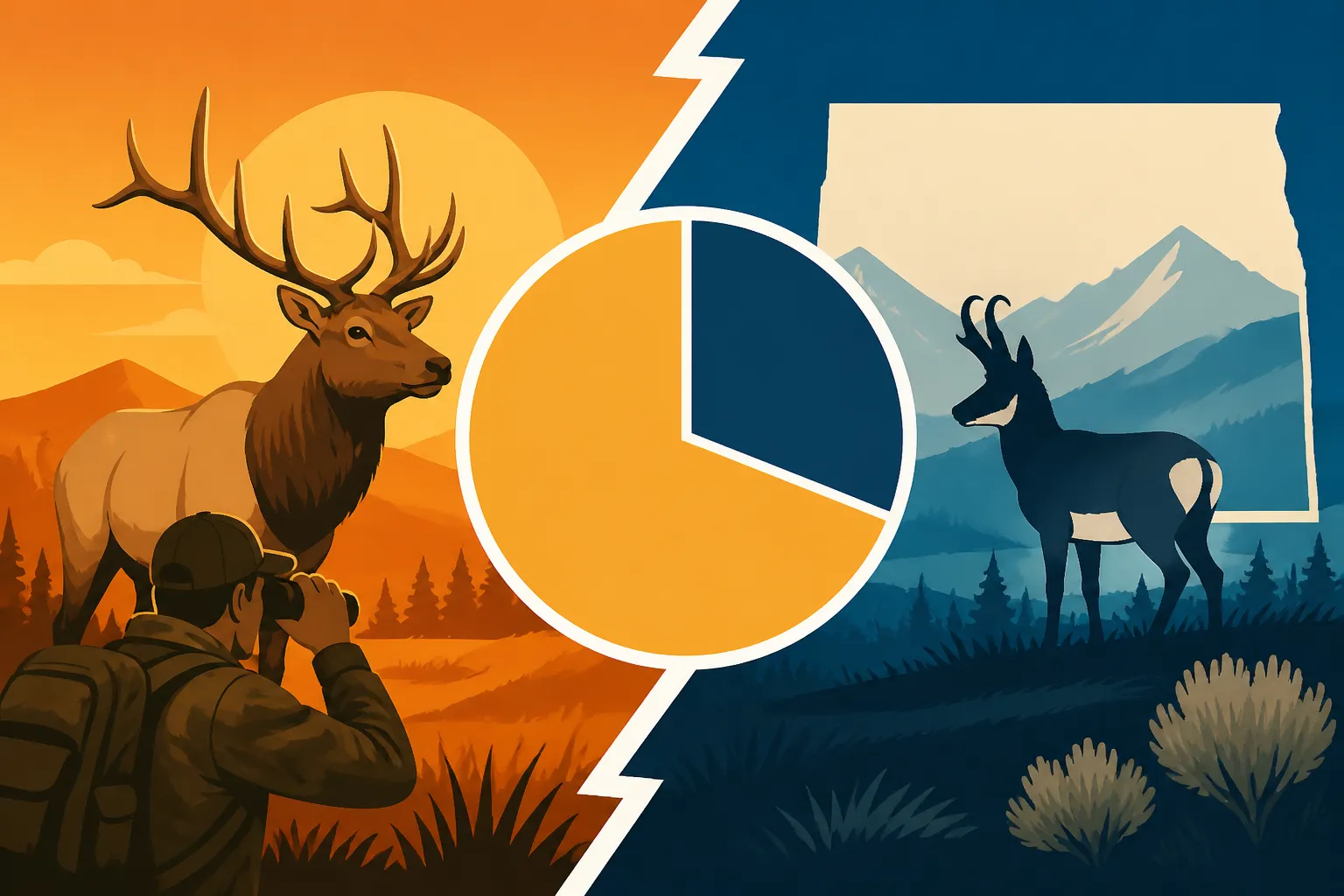
For most of Wyoming's nonresident big game draws, 75% of the available tags for a specific species and hunt area are allocated to the preference point pool. This is where all those years of patiently accumulating points really come into play. When the draw runs, the system first looks at all applicants who have applied with their preference points. It essentially ranks them by their point totals, from highest to lowest. Tags are then distributed starting with the applicants holding the most points. This continues down the list until 75% of the tags are gone or until all applicants in this pool have either drawn a tag or been exhausted.
For example, if a unit has 100 nonresident tags, 75 of those tags will go into this preference point pool. If you've been putting in for a trophy unit like Region G for mule deer for years and have accumulated a significant number of points, you'll have a much better chance of drawing one of those 75 tags than someone with fewer points. This is why you often hear stories of hunters waiting years, even decades, to draw a coveted tag in a prime area. It's a testament to the fact that this portion of the draw heavily favors those with a long-term commitment. However, it's important to remember that even with max points, drawing isn't always guaranteed, especially in extremely popular units where there might be more max-point applicants than available tags.
The Random Pool: 25% for Everyone Else
This is where the excitement—and sometimes frustration—for newer applicants comes in. The remaining 25% of the tags are thrown into a random draw pool. Crucially, all applicants who entered the draw for that species and unit, regardless of their preference point totals, are eligible for this random draw. It doesn't matter if you have zero points or twenty points; everyone has an equal chance at one of these tags. Using our previous example, if there are 100 nonresident tags, 25 of them will be allocated completely randomly.
This random pool is what gives new hunters, or those who simply choose to apply with zero points, a shot at drawing a tag without a long wait. It means that while building points is a smart long-term strategy for many, you always have a non-zero chance of drawing a tag right out of the gate. This can be especially appealing for hunters who want to experience a Wyoming hunt sooner rather than later, or for those who are targeting units that don't typically require a huge number of points to begin with. It also explains why you occasionally hear about someone drawing a fantastic tag on their very first try – they likely hit the lottery in the random 25% pool. Understanding Who the Wyoming Random Draw Favors can help you strategize if you're looking for that lucky break.
Nonresident Allocation vs. Resident Draw
It's also crucial to remember that this 75/25 split primarily applies to nonresident limited quota tags for species like elk, deer, and antelope. Residents, on the other hand, often participate in a separate draw that operates differently, sometimes with a 90/10 split or other unique allocations, particularly for once-in-a-lifetime species like bighorn sheep and moose. This distinction is vital because nonresident draw odds and strategies are entirely different from those for residents, due to the number of tags reserved for each group and the specific draw mechanics that apply. For example, Wyoming Nonresident Tags Run $326 to $1,965, which is a significant investment compared to resident tags, making draw strategy even more critical for out-of-state hunters.
The Impact of Point Creep on Draw Odds
If you've been following Wyoming's draw system for any length of time, you've undoubtedly heard the term "point creep." It’s a phenomenon that frustrates countless hunters and significantly impacts application strategies year after year.
What is Point Creep and How it Happens
Point creep is, quite simply, when the number of preference points required to draw a specific tag in a given unit steadily increases over time. It's a direct result of more applicants accumulating more points than there are available tags, year after year. Imagine a popular elk unit where, five years ago, you needed 8 points to draw a tag in the preference point pool. Fast forward to today, and now it might take 10 or 12 points. This happens because successful applicants "use up" their points, but the pool of unsuccessful applicants continues to grow, each adding another point to their tally. As more hunters gain points, the bar for drawing a tag in competitive units keeps rising. It’s a constant uphill battle for many, and it means that a number of points that was once a guarantee for a tag might now only get you a marginally better chance. This makes predicting future draw success incredibly challenging and is why many hunters feel like they’re always chasing the moving target of the next point total. You can dive deeper into Why Point Creep Keeps Outrunning Wyoming Applicants.
Units Most Affected by Point Creep
Unsurprisingly, point creep is most pronounced in the most desirable units. These are the areas renowned for trophy animals, pristine wilderness, or easily accessible public land that consistently produce high success rates. Think of areas known for big mule deer or specific elk units in the western mountains. When every hunter wants to hunt the same few units, the demand far outstrips the supply of tags, and point creep becomes an inevitable force. Conversely, units that are less popular, harder to access, or have lower success rates often experience less point creep, and sometimes even see a decrease in the points needed as hunters shift their focus. This is where diligent research and a willingness to explore less-pressured areas can pay off significantly. Understanding specific examples like Point Creep in Wyoming's Region G for elk can illustrate just how challenging it becomes to draw certain tags.
Managing Expectations in a Point Creep Environment
Given the reality of point creep, it's vital for hunters to manage their expectations. If you're entering the draw with zero or few points for a highly coveted unit, understand that your best chance is likely in the 25% random draw. While possible, it's not something to bank on. For those building points, regularly check the updated draw odds and adjust your strategy if necessary. It might mean shifting your target unit, accepting that you'll need to accumulate more points than you initially anticipated, or even considering a less desirable but more attainable tag in the interim. The landscape of draw odds is ever-changing, and staying informed is your best defense against disappointment. Remember, even with point creep, the dream hunt is still possible; it just often requires more patience and a more flexible approach to your application strategy.
Strategies for Navigating the Wyoming Draw
Understanding the draw system is one thing; putting it into practice effectively is another. With the 75/25 split and the ever-present point creep, a thoughtful strategy is paramount for maximizing your chances of drawing a Wyoming tag.
Long-Term Point Building vs. Short-Term Opportunity
This is the classic dilemma for many Wyoming applicants. Do you commit to the long haul, applying for a point-only each year, patiently building a high point total for a dream hunt in a top-tier unit? Or do you try to capitalize on short-term opportunities, applying for tags in units that might be more accessible with fewer points, hoping for a lucky draw in the 25% random pool, or targeting general tags?
Long-Term Point Building: If you're aiming for a premium, limited-quota unit that consistently requires maximum or near-maximum points (e.g., How Many Points It Takes to Draw Wyoming Elk in certain units), a long-term point building strategy is often your best bet. This involves consistently applying for a preference point each year until your point total aligns with the historic draw odds for your desired unit. This approach requires patience and foresight, as it could mean several years before you're truly competitive for those blue-ribbon tags. The benefit, however, is a much higher probability of drawing once you reach the top point tiers within the 75% preference pool.
Short-Term Opportunity: For hunters who want to get out into Wyoming sooner, focusing on short-term opportunities is a viable path. This could involve:
* Applying for units with lower point requirements: Many units don't require 10+ points, making them more accessible in the preference point pool after just a few years.
* Hoping for a random draw: Every application, regardless of points, has a shot at the 25% random pool. If you apply for a tough unit with zero points, this is your primary hope.
* Considering general tags: For species like elk, Wyoming offers general licenses in many areas. While these don't offer the same trophy potential as some limited-quota units, they provide a guaranteed hunt opportunity without navigating the limited-quota draw. Understanding Wyoming General Elk Licenses and Where They Work can open up immediate opportunities.
Many hunters employ a hybrid strategy, applying for points for their top-choice species while simultaneously applying for easier-to-draw tags or general licenses for other species to ensure they get to hunt annually.
Researching Draw Odds and Unit Statistics
This cannot be stressed enough: do your homework. Before you submit your application, spend considerable time researching past draw odds for every hunt area you're considering. The Wyoming Game and Fish Department publishes annual draw odds, and external services compile this data in user-friendly formats. Pay attention to:
- Preference points required: Look at the range of points that successfully drew a tag in the 75% pool. Did it take max points, or were tags drawn with fewer?
- Zero-point draw odds: This tells you the success rate for applicants with zero points, which is essentially the odds in the 25% random pool. It's a good indicator of how "lucky" you'd have to be.
- Success rates: Don't just look at drawing the tag, but also the hunter success rates and harvest statistics for the unit. A unit that's easy to draw but has a 5% success rate might not be worth the effort.
- Public land access: Utilize mapping tools to understand the percentage of public land in a unit. A high number of tags doesn't mean much if 90% of the unit is private land with no public access.
This research, combined with an understanding of current herd health reports and winter severity, will guide your application choices. Platforms like GoHunt provide incredibly detailed insights into draw odds, success rates, and unit analysis, helping you make data-driven decisions. They can show you not just what it cost in points last year, but often predict trends for the upcoming season, which is invaluable in a system with point creep. Knowing Checking Draw Odds Before You Apply is a cornerstone of any successful Wyoming application.
The Importance of Application Deadlines
Wyoming has several key application deadlines throughout the year, and missing them can set back your hunting plans significantly, either costing you a year's worth of points or a chance at a tag.
- Elk: Nonresident elk applications typically close in early February.
- Sheep, Goat, Moose, Bison: These highly coveted, once-in-a-lifetime tags usually have an April 30 deadline.
- Deer and Antelope: Nonresident deer and antelope applications close in early June.
It's critical to mark these dates on your calendar and apply well in advance. Don't wait until the last day, as technical glitches or unforeseen issues can prevent your application from being submitted. A missed deadline means no points accumulated for that year and no chance at a tag. Keep track of Wyoming's Four Application Deadlines, February Through June to ensure you're always on schedule.
| Species | Nonresident Application Deadline | Preference Point Cost (Nonresident) | Typical Draw Wait (High Demand Units) |
|---|---|---|---|
| Elk | Early February | $52 | 5-15+ years |
| Deer | Early June | $41 | 3-10+ years |
| Antelope | Early June | $31 | 1-5+ years |
| Bighorn Sheep | April 30 | N/A (Random only) | Decades (extremely low odds) |
| Moose | April 30 | N/A (Random only) | Decades (extremely low odds) |
| Mountain Goat | April 30 | N/A (Random only) | Decades (extremely low odds) |
Note: Preference point costs are approximate and subject to change. Sheep, Moose, and Mountain Goat are typically pure random draws for nonresidents with a 90/10 split, meaning no preference points are used for these once-in-a-lifetime tags.
Resources for Checking Draw Odds
Navigating the intricacies of Wyoming's draw can feel overwhelming, but thankfully, there are excellent resources available to help you make sense of it all and build a smart application strategy.
Wyoming Game and Fish Department Website
Your first and most authoritative stop should always be the official Wyoming Game and Fish Department (WGFD) website. They publish the annual hunting regulations, application deadlines, and, most importantly, the prior year's draw odds. These official results show exactly how many points it took to draw a tag in both the preference point and random pools for every hunt area and license type. While the raw data can be a bit dry and requires some interpretation, it's the fundamental source of truth. You'll find detailed tables that break down applicant numbers, successful draws, and the point totals associated with them. It's the best place to start understanding Wyoming Antelope Odds With Zero Preference Points or Points Needed for a Wyoming Mule Deer Tag for specific units.
Third-Party Draw Odds Services
For a more user-friendly and analytical approach, many hunters turn to third-party services that specialize in draw odds. These platforms take the raw data from WGFD and transform it into easily digestible formats, often with predictive tools and detailed unit analyses.
- GoHunt: This is a fantastic example of a service that goes above and beyond. GoHunt's Insider platform, for instance, offers advanced draw odds calculators, in-depth unit breakdowns, and tools that project future point requirements based on historical trends. They often provide expert analysis and articles discussing specific strategies for different species and units. Their mapping features integrate public and private land, wilderness boundaries, and even historical harvest data, giving you a holistic view of a hunt area. For a nonresident trying to maximize their investment and navigate complex draws like elk, GoHunt can be an indispensable tool, helping you see not just what happened last year, but what might happen next year based on current trends and applicant pools. It can truly help you grasp Wyoming's Elk Herd Units and Winter Range and pick an appropriate hunt area.
These services not only present the data clearly but often offer forums and communities where hunters can share information and experiences, providing an additional layer of insight that complements the official statistics. While these services typically come with a subscription fee, many serious Western hunters find the investment well worth it for the time saved and the clarity gained in planning their applications.
Interpreting Draw Odds Data Effectively
Simply looking at numbers isn't enough; you need to know how to interpret them. When reviewing draw odds, consider:
- Small sample sizes: If a unit only offers one or two nonresident tags, the draw odds can fluctuate wildly year to year. A "successful" draw with 0 points one year might not be indicative of a trend.
- Applicant pool changes: Popularity can shift quickly. A unit that was once easy to draw can become highly competitive if new information (e.g., a good winter, strong trophy reports) makes it more attractive to a large number of hunters.
- Your personal goals: Are you looking for any elk tag, or are you holding out for a trophy bull in a specific area? Your goals should dictate how you interpret the odds and whether you apply for a long shot or a more certain draw.
- The "Special" draw: Wyoming also has a "Special" draw for nonresidents, which costs more but usually has better odds. If you're wondering Is the Wyoming Special Draw Worth the Money?, checking the odds for both the regular and special draw is key.
By combining the official data with the enhanced analysis from services like GoHunt, you can develop a robust application strategy that gives you the best possible chance to draw a Wyoming tag, whether you're building points for a future dream hunt or trying to get lucky in the random draw this season.
Disclaimer
Please be aware that hunting regulations, seasons, and draw mechanics in Wyoming are subject to change by the Wyoming Game and Fish Department. While this guide aims to provide accurate and up-to-date information, it is crucial for all hunters to consult the official WGFD regulations and application handbooks for the current year before applying for any licenses or planning a hunt. This content is for informational purposes only and does not constitute legal advice or a guarantee of drawing a hunting license.