Can You Transfer a Wyoming Preference Point?
It’s a scenario many of us face: life throws a curveball. Maybe a big move, an unexpected family commitment, or even an injury puts your hunting plans on hold, and suddenly those hard-earned Wyoming preference points you’ve been banking feel like they’re just sitting there. You might find yourself wondering if you can just transfer them to a buddy, a spouse, or even one of your kids to help them out. It’s a completely natural thought, but unfortunately, when it comes to Wyoming, the answer is a firm "no." This guide will break down why Wyoming's preference points are non-transferable, what that truly means for you, and how you can still make the most of your point investment.
The Harsh Reality: Wyoming's Non-Transferable Preference Point System
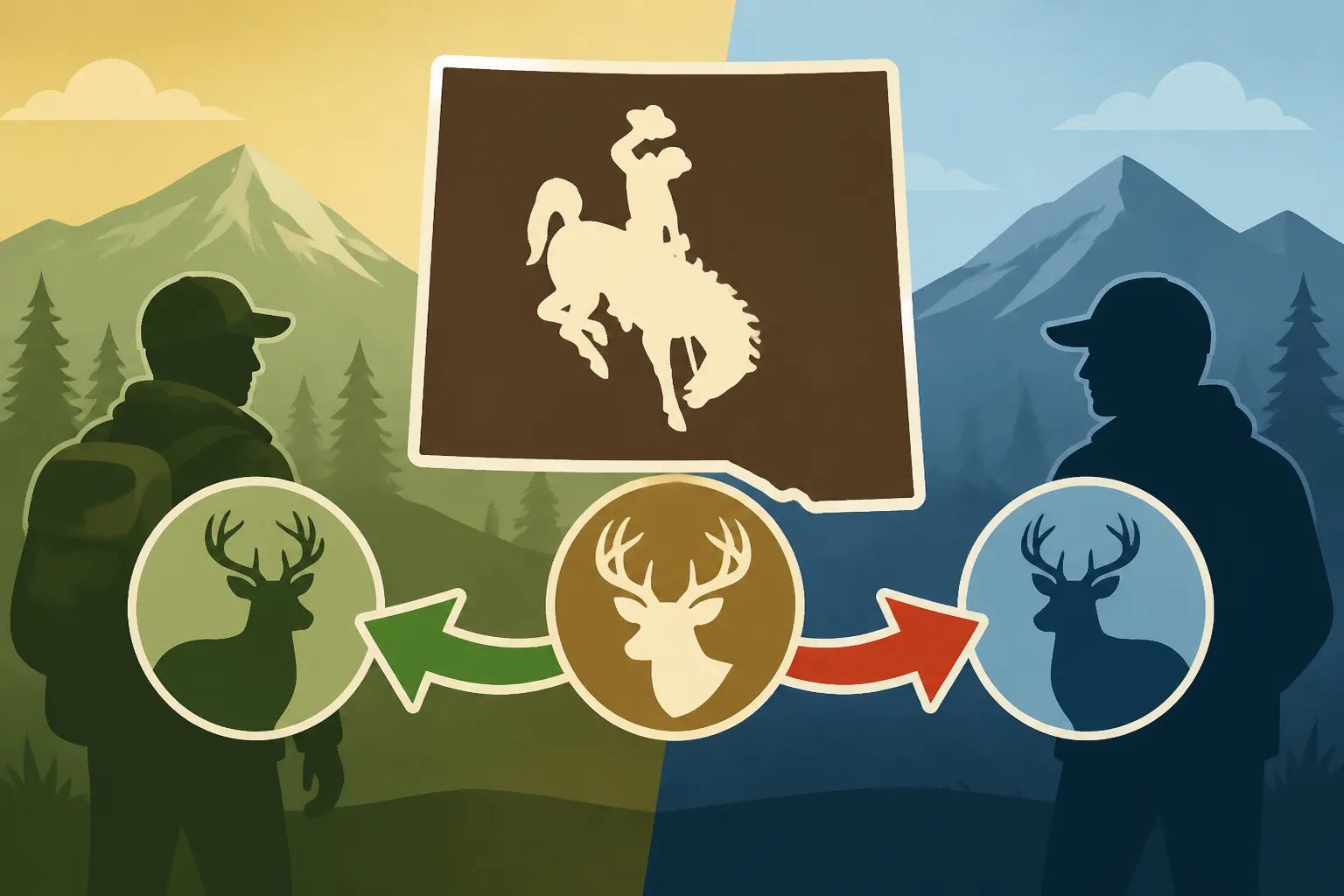
Let's get straight to it: Wyoming preference points are personal. They are meticulously tied to your individual hunter profile, and there’s simply no mechanism to transfer them to another person. This often comes as a shock, especially to those hoping to pass on points to a younger generation or help a friend draw a coveted tag. You can't sell them, you can't gift them, and you certainly can't swap them. Your points are yours, and yours alone, for better or worse.
Why Points Remain Individual Assets
This might seem a bit rigid, but there’s a deliberate reason behind it. The Wyoming Game and Fish Department designs its draw systems, including preference points, to be equitable and to reward individual persistence. If points could be transferred, it could open the door to a secondary market where points are bought and sold, potentially giving an unfair advantage to those with deeper pockets. The system is meant to ensure that the hunter who has consistently applied and accumulated points is the one who eventually reaps the benefit of those points in the draw. It's about personal investment in the system, not a transferable commodity.
Think about it from the state's perspective: if a hunter could transfer five or ten years' worth of points to someone else, it would fundamentally change the fairness of the draw. It would circumvent the very intention of a preference point system, which is to give long-term applicants a progressively better chance over time. This policy helps maintain the integrity of the draw and ensures that everyone, in theory, earns their spot through their own application history.
No Loopholes, Even for Family
It’s heartbreaking, we know, especially when you envision helping a son, daughter, or grandchild draw their first dream tag. You might have years of points, and they’re just starting their journey. Many hunters hold onto the hope that there might be a family exception, a special circumstance for passing points down to direct relatives. However, Wyoming law makes no such provisions. Whether it's a spouse, a child, or a close friend, the rules are uniform: points are non-transferable.
This means that while you can certainly guide and mentor younger hunters, and perhaps even share a camp, their draw odds will always be based on their own individual point accumulation. It reinforces the idea that each hunter builds their own legacy within the draw system. While it might feel frustrating in the short term, it maintains a level playing field for everyone aspiring to hunt Wyoming’s incredible big game.
Why Wyoming Points Are Personal and What That Means for You
The non-transferable nature of Wyoming's preference points is deeply rooted in the philosophy of the draw system itself. These points are an acknowledgment of your continued interest and investment in hunting a particular species within the state. They're designed to give you a statistical leg up in the future, not to be a tradable asset.
Rewarding Individual Persistence
Every time you apply for a license or choose to buy a preference point only, you’re adding to your personal tally. This accumulation is intended to reward your individual persistence. As the number of points you have grows, your chances of drawing a desirable tag in the limited quota draw increase significantly. This is especially true for highly sought-after units or species like elk and mule deer, where competition can be fierce. Your points are a testament to your long-term commitment to hunting Wyoming, and the system is designed to benefit you directly for that commitment.
The state's draw system, specifically for nonresidents, uses a 75/25 split for many species. This means that 75% of the available tags in a given hunt area are allocated to the highest point holders, while the remaining 25% are distributed through a random lottery. Your preference points are your key to that 75% pool. The more points you have, the higher your priority in that specific drawing. This structure directly incentivizes individual accumulation, as it's the primary way to improve your odds for many of the state's premier hunts. You can learn more about how this works by checking out how Wyoming Splits Every Draw 75 Percent Points and 25 Percent Random.
Understanding Point Creep and Your Investment
You've likely heard the term "point creep." It’s a frustrating reality where the minimum number of points required to draw a coveted tag slowly increases year after year, as more and more hunters accumulate points. In units with intense demand, it can feel like you’re always chasing the moving target. For instance, what might have taken 5 points to draw a few years ago could now require 8 or 9. Your personal preference points are your primary defense against this phenomenon. Each point you add helps you keep pace, or even get ahead, of the curve.
Because points are so crucial to navigating point creep, their individual nature becomes even more pronounced. They represent your unique investment in potentially drawing a high-quality tag. Losing them, or wishing you could transfer them, really underscores how valuable they are to your personal hunting strategy. Resources like GoHunt are invaluable for understanding point trends and predicting what it might take to draw a specific tag in the coming years. Their Insider tools can help you analyze draw odds by hunt area and see exactly where you stand.
Navigating Your Points When Plans Change: Alternatives and Considerations
So, if you can’t transfer your points, what can you do if your hunting plans hit a snag or change dramatically? All is not lost. You have a few strategic options to consider, each with its own pros and cons. The key is understanding how Wyoming's system works and making informed choices that align with your long-term hunting goals.
Continuing to Accumulate Points
Even if you can't hunt Wyoming for a year or two, one of the most common and often wisest strategies is to simply continue purchasing a preference point during the application period. You don’t have to apply for a license; you can just buy the point. This keeps your point tally growing and ensures that when you are ready to hunt again, you'll be in an even stronger position. For nonresidents, an elk preference point costs $52, deer $41, and antelope $31. It’s a relatively small investment to protect years of accumulated value and maintain your place in line.
The beauty of this approach is that Wyoming's preference points, unlike some other states, don't expire if you just miss a single year. You only start to lose your accumulated points if you fail to apply for a license or purchase a point for five consecutive years. This grace period gives you a lot of flexibility. So, if life gets in the way for a year or two, you can keep adding points, and your existing points will be safe. Make sure you know When the Wyoming Point-Only Window Opens each year to ensure you don't miss the deadline. This method is all about playing the long game and ensuring that your past investment isn't wasted. If you want more details, you can explore Buying Wyoming Preference Points Without Applying for a Tag.
Strategic Application for Different Species or Areas
Another option, if you have points for a specific species but your circumstances mean you can't commit to a challenging hunt, is to apply for a different, potentially easier-to-draw tag. Perhaps you've been banking elk points for a trophy bull hunt, but now a less physically demanding cow elk tag in a general unit would be a better fit. Or maybe your deer points could be used for an antlerless deer tag in an area with high success rates, rather than holding out for a monster mule deer buck.
This can be a great way to still get out and hunt Wyoming, maintain your connection to the landscape, and put your points to use, even if it's not the "dream" hunt you initially envisioned. It also ensures you continue participating in the draw and gaining experience. Before making such a decision, it's highly recommended to consult the Wyoming Game and Fish Department's current regulations and draw odds, which you can often find compiled on platforms like GoHunt, to understand what tags might be within reach for your current point level.
Understanding What Happens to Unused Points
It’s important to clarify what happens if you simply decide not to apply or buy a point. As mentioned, your points don't vanish after one missed year. Wyoming allows you to miss up to four consecutive years of applying or purchasing a point before your accumulated points are purged from the system. On the fifth consecutive year of no activity, your points are zeroed out. This is a crucial detail, as it means you have some leeway if you truly need to step away from the draw for a bit.
However, letting them lapse entirely should always be a last resort. Those points represent years of patiently waiting and a significant advantage in future draws. It's often worth the minimal cost to buy a point each year, even if you’re unsure about hunting in the immediate future, just to preserve that investment. Consider the cumulative effort it takes to build a significant point total, and how devastating it would be to lose them all.
| Action | Impact on Preference Points |
|---|---|
| Transfer to another person | Not allowed. Points are individual. |
| Apply for a license (successful) | Points are used/burned for that species in that year. You start accumulating new points from zero for that species next year. |
| Apply for a license (unsuccessful) | You receive one additional preference point for that species. |
| Purchase a preference point only | You receive one additional preference point for that species. Your existing points are maintained. |
| Miss one year (no application/no point) | No new point gained. Existing points are maintained. |
| Miss five consecutive years (no activity) | All accumulated preference points for that species are purged from your record. |
Planning Ahead to Avoid Future Frustration
The best way to navigate the non-transferable nature of Wyoming preference points is to plan carefully from the outset. While life is unpredictable, having a long-term strategy for your hunting applications can save a lot of heartache down the road.
Long-Term Strategy and Family Planning
When you start applying for Wyoming points, view it as a long-term commitment to your personal hunting future. If you have children or other family members who might want to hunt Wyoming in the future, encourage them to start building their own point portfolio as soon as they are eligible. Wyoming's Minimum Age for Big Game is usually 12 for big game, depending on the species and mentoring rules, so it's never too early to start them on the path of point accumulation. Even just purchasing a point each year will give them a significant advantage when they're older and ready to seriously hunt.
This strategy ensures that each individual has their own draw equity, rather than relying on a transfer system that doesn't exist. It might mean a few years of spending a small amount on preference points for each family member, but it builds individual opportunity for everyone. This way, when a child is ready for their first elk or deer hunt, they'll have their own solid foundation of points to lean on.
Utilizing Resources for Informed Decisions
Never underestimate the power of good information. Before you commit to applying for points, or if you’re trying to decide how to manage your existing points, dive deep into the draw odds and regulations. Websites like GoHunt's Insider service provide incredible data and analysis, showing you historical draw odds, point requirements, and unit-specific information. This kind of intel can help you make strategic decisions, whether that's deciding which species to build points for, understanding How Many Points It Takes to Draw Wyoming Elk, or choosing which hunt areas offer the best chance of success with your current point total.
Understanding Wyoming Draw Odds Broken Down by Hunt Area is essential for making smart decisions about your points. With careful research, you can make sure your point investment is working as hard as possible for you. The Wyoming Game and Fish Department also publishes detailed annual regulations and draw statistics, which are vital resources. Always cross-reference multiple sources and make sure you're looking at the most current data.
Don't Miss Those Deadlines
Finally, a crucial part of any point strategy is simply not missing the deadlines. If you intend to either apply for a license or purchase a preference point only, you need to mark those dates on your calendar! The Wyoming application deadlines vary by species, with elk typically in early February, and deer and antelope in late May/early June. However, the point-only purchase window usually opens later in the year, often from July to November. Missing The Last Day to Buy a Wyoming Point means you don't gain a point for that year, and if you miss it for five consecutive years, you lose everything.
Set reminders, double-check the Wyoming Game and Fish Department website, and consider using application services or calendar apps that notify you of upcoming deadlines. It's a small administrative task that can protect years of effort and ensure your dream of a Wyoming hunt remains within reach. Your preference points are a long-term investment in your hunting future, and managing them wisely is key to eventually drawing that coveted tag.
Disclaimer
Please note that hunting regulations, including those concerning preference points and draw systems, can change. While every effort has been made to provide accurate and up-to-date information, it is the hunter's responsibility to consult the official Wyoming Game and Fish Department regulations annually before applying or hunting. This guide is for informational purposes only and should not be considered legal advice.