Food Storage Rules in Grizzly Country
Heading out into Wyoming's wild, untamed backcountry is the dream for many hunters, but it comes with a unique set of responsibilities, especially when you're in grizzly country. The last thing any of us wants is a close encounter with a bear that’s drawn to camp by an easy meal, creating a dangerous situation for both the animal and ourselves. This guide will walk you through the essential food storage rules and best practices in Wyoming's grizzly country, ensuring your hunt is safe, responsible, and compliant with regulations.
Why Food Storage in Grizzly Country Is Non-Negotiable
When you venture into Wyoming's vast landscapes, particularly in the western and northwestern portions of the state, you're entering grizzly bear habitat. These magnificent creatures are a vital part of the ecosystem, but they are also incredibly powerful and opportunistic. Improper food storage isn't just a minor oversight; it's a direct invitation for a dangerous encounter that could have devastating consequences. The rules aren't there to make your life harder; they're there to protect you, protect the bears, and preserve the wildness of these areas for everyone.
Understanding the Threat: The Grizzly's Sense of Smell
Imagine a bloodhound, then multiply its olfactory capabilities by about seven. That's closer to what a grizzly bear's nose can do. They can detect the scent of food from miles away, even buried under snow or tucked away inside a tent. This incredible sense of smell means that anything with an odor – from the elk jerky in your pack to the toothpaste in your dopp kit – is a potential attractant. A bear doesn't care if it's "just" your dinner; it cares that it smells like calories. This innate ability to sniff out food is why even seemingly minor lapses in storage can escalate into serious issues, drawing bears into human-occupied areas where they learn to associate people with food.
Moreover, grizzlies are incredibly intelligent and have long memories. Once a bear learns that humans mean easy food, it's a hard habit to break. This conditioning can lead to bears becoming aggressive towards people in their search for food, often resulting in the bear having to be removed or, in worst-case scenarios, euthanized. This is a tragedy for the bear and a loss for the ecosystem, all stemming from human carelessness. As responsible hunters and outdoor enthusiasts, we have a duty to prevent this kind of negative conditioning by meticulously managing all attractants in our camps.
The Legal Mandate and Ethical Imperative
In many designated grizzly bear management areas within Wyoming, proper food storage isn't just a suggestion; it's a legal requirement. Federal land agencies like the Forest Service and the Bureau of Land Management (BLM), as well as the Wyoming Game and Fish Department, have specific regulations in place. These rules often stipulate how food, garbage, and other attractants must be stored, usually requiring bear-resistant containers or proper hanging techniques. Ignoring these regulations can lead to hefty fines, confiscation of property, and even criminal charges, depending on the severity of the infraction.
Beyond the legal aspect, there's a strong ethical imperative. As visitors to these wild places, we have a responsibility to minimize our impact and ensure the safety of wildlife. A fed bear is a dead bear, as the saying goes, and no hunter wants to be responsible for conditioning a grizzly to human food, leading to its demise. Our actions in the backcountry directly affect the survival and behavior of these animals. By adhering to strict food storage protocols, we demonstrate respect for the wildlife and the wilderness experience we all seek. It's about being a good steward of the land and its inhabitants, understanding that we are guests in their home.
The Core Principles of Bear-Resistant Food Storage
When it comes to keeping bears out of your provisions, there are fundamental principles that guide all effective strategies. These aren't just arbitrary rules; they're based on decades of bear biology and human safety research. Understanding and implementing these core principles is crucial for anyone planning to hunt, camp, or even just hike through Wyoming's grizzly country. It requires a mindful approach to everything you bring and how you manage it in the field.
Approved Containers and Storage Methods
The cornerstone of bear-resistant food storage revolves around physical barriers that a bear cannot access. The most common and effective solution is the use of certified bear-resistant containers. These are usually hard-sided, lockable containers designed to withstand a bear's impressive strength and ingenuity. Many national forests and wilderness areas in Wyoming specifically require the use of these containers, especially for overnight stays. Before you head out, always check the specific regulations for your hunt area. Products from brands like BearVault or Counter Assault are popular choices, and you can often rent them from outdoor retailers or even some ranger stations.
| Storage Method | Description | Pros | Cons |
|---|---|---|---|
| Bear Canister | Hard-sided, locking container designed to be bear-resistant. | Very effective, often required. | Heavy, bulky, limited capacity. |
| Bear Bag (Hung) | Food hung from a tree branch, typically 10-12 feet high and 4-6 feet from the trunk. | Lightweight, good capacity for large groups if done right. | Requires specific trees, can be challenging to execute correctly, not always bear-proof against persistent grizzlies. |
| Electric Bear Fence | Portable electric fence system to enclose camp or food cache. | Highly effective deterrent, good for larger camps/meat. | Heavy, requires batteries, setup time, can be expensive. |
| Vehicle/Hard-Sided | Storing food inside a locked, hard-sided vehicle or certified bear-resistant cooler in a vehicle. | Secure if vehicle is not accessible to bears, convenient. | Only works if car camping; not for backcountry. |
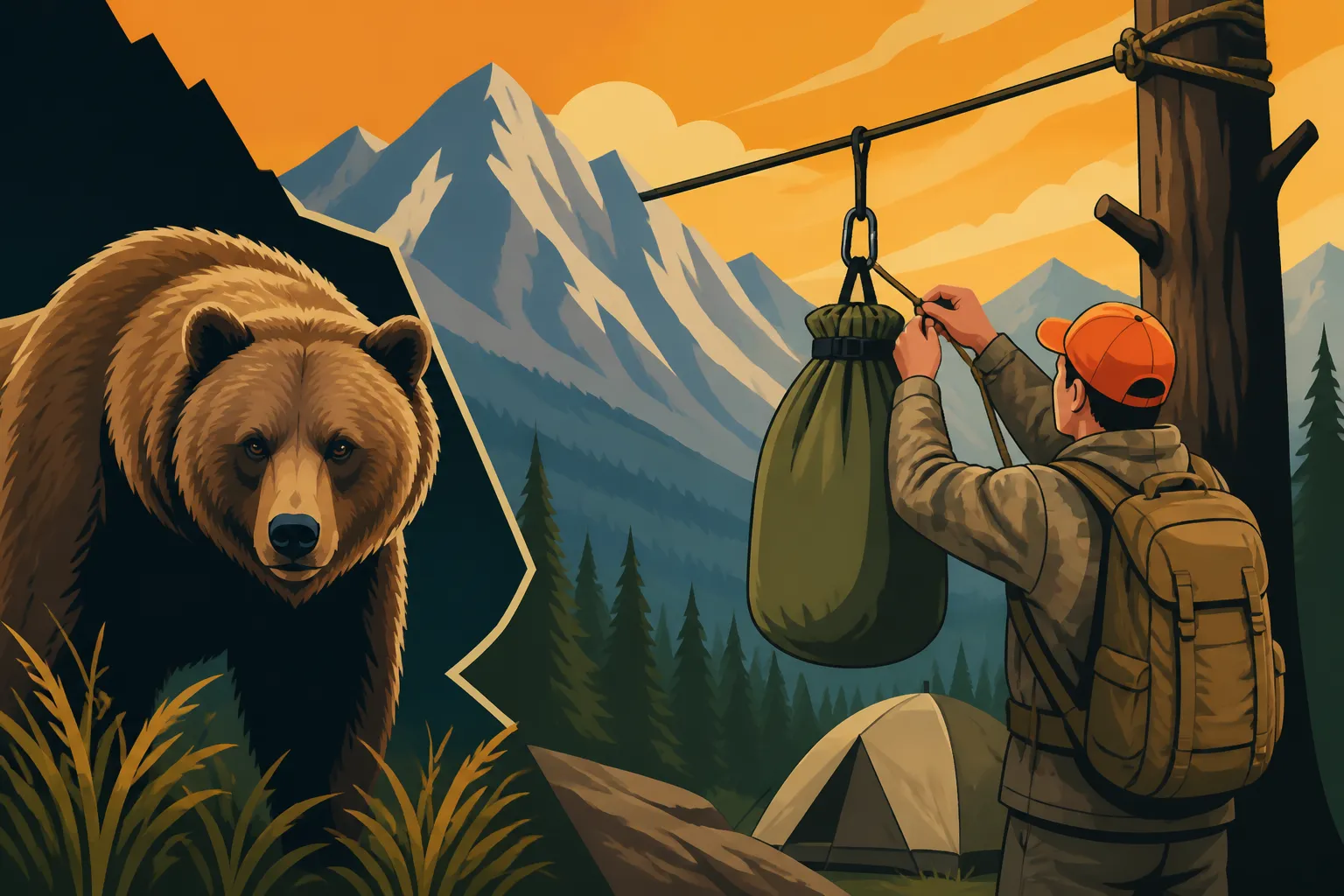
When using bear canisters, ensure they are properly sealed and placed on the ground, away from your tent and any water sources. Never place them near a cliff edge where a bear could knock them off, or in a stream where they could float away. If you're using a bear bag, the "PCT method" (Pacific Crest Trail method) or similar techniques are recommended. This involves hanging your food bag high in a tree, suspended between two branches or over a single branch, ensuring it's at least 10-12 feet off the ground and 4-6 feet away from the trunk and any adjacent branches. This is a skill that takes practice to do effectively, especially with heavy hunting provisions.
Separating Food, Scent, and Sleep
This principle, often summarized as the "triangle" of bear safety, is absolutely vital: never sleep where you store your food, and never cook where you sleep or store your food. The idea is to create a scent-free sleeping area that minimizes the chances of a bear investigating your tent. Your sleeping area, your cooking area, and your food storage area should form a triangle, each point ideally at least 100 yards (about 300 feet) from the others. This separation ensures that even if a bear is drawn to the scent of your cooking or food, it won't be drawn directly to where you're sleeping.
This means all food, cooking gear, garbage, toiletries (even chapstick and deodorant!), and anything with a scent needs to be stored properly, away from your tent. Don't even keep the clothes you cooked in near your sleeping bag. Change into "sleep clothes" that haven't absorbed any cooking odors. When you're How to Plan a DIY Public Land Hunt in Wyoming, this level of detail might seem extreme, but it's exactly what's needed to stay safe. Remember, a grizzly's nose is its primary tool for finding food, and any lingering scent in your tent or on your gear could be enough to pique its curiosity.
Managing Game Meat in Bear Country
For hunters, food storage rules extend beyond your personal rations to include game meat. Once you've successfully harvested an animal, proper meat handling and storage become paramount, especially if you're in an area known for grizzlies like the Hunting the Shoshone in Northwest Wyoming or the Bridger-Teton National Forest. The scent of fresh blood and entrails is a powerful attractant for bears. The goal is to cool the meat quickly and get it into a secure location as soon as possible.
If you're packing out quarters, ensure they are in game bags and hung at least 10-12 feet off the ground and 4-6 feet from any tree trunk, ideally away from your camp or on a separate trip from your main camp. Some hunters use portable electric fences to protect a meat cache. These fences, while an investment, provide a strong deterrent and can offer peace of mind when you need to leave meat overnight to retrieve later. Always quarter your animal and get the meat cooled as quickly as possible. Don't drag a whole carcass back to camp. If you must leave the gut pile, do so away from trails and water sources, and spray it with bear spray to deter scavengers, though this is only a temporary measure. Being prepared for this aspect of the hunt, including having extra game bags and ropes, is crucial when you're in bear country.
Practical Strategies for Backcountry Camps
Having the right gear is only half the battle; knowing how to use it effectively and consistently is what truly makes a difference. Backcountry hunting often means minimalist setups and long days, but cutting corners on bear safety is never worth the risk. Developing good habits and practicing these strategies before your hunt can make all the difference when you're deep in the wilderness.
Hanging Food: The Traditional Method
Hanging food, when done correctly, is a time-honored method for securing provisions from bears. The key is to get your food bag high enough and far enough from the tree trunk and any climbable branches that a bear cannot reach it. This typically requires a sturdy branch at least 15 feet off the ground, a good throw bag, and a strong rope. You want to make sure the lowest part of your food bag is at least 10-12 feet off the ground, and at least 4-6 feet away from the trunk. This means finding the right tree and the right branch can sometimes be a challenge, especially in dense timber or areas with limited suitable trees.
A common mistake is hanging food too low, too close to the trunk, or using a branch that's too weak. Bears are incredibly adept climbers and will test any perceived weakness in your setup. If you can reach your bag while standing on the ground, so can a bear. If the branch sags under the weight, or a bear can shake it loose, it's not good enough. Some hunters even use two ropes, suspending the bag between two trees, making it even harder for a bear to access. Always remember to retrieve your food and re-hang it whenever you leave camp for extended periods, even for a day hunt, as a curious bear might wander through. It's a chore, yes, but it's a critical component of Bear Safety Practices in an Outfitter Camp and any DIY hunt.
Bear Canisters and Their Use
Bear canisters have become increasingly popular, and in many Wilderness Rules Every Wyoming Nonresident Should Know areas, they are mandated. These rugged, cylindrical containers are designed to be impenetrable by bears, using secure locking mechanisms. They eliminate the need for finding a suitable tree or mastering complex rope techniques, offering a simpler, more reliable solution for storing food. While they add weight and bulk to your pack, the peace of mind they provide is often worth it.
When using a bear canister, always ensure it is latched correctly. Place it on flat, solid ground away from your tent and at least 100 yards from your sleeping area. Avoid placing it near water sources where it could be washed away, or on ledges where it could be rolled off. Bears are notorious for playing with and testing these canisters, often rolling them around, so choose a spot where it won't easily disappear. Some hunters will tie a brightly colored ribbon to their canister to make it easier to spot if a bear moves it, especially in low light. Remember, all scented items go in the canister, not just food. This includes toothpaste, sunscreen, insect repellent, and any trash.
Dealing with Waste and Scent Attractants
It's not just your primary food supply that needs attention; all attractants must be meticulously managed. This includes garbage, cooking odors, and even personal hygiene products. Every scrap of food waste, including uneaten crumbs, orange peels, and coffee grounds, must be packed out in a bear-resistant manner or stored in your bear canister. Never bury or burn food waste; it simply attracts animals and can lead to habituation. This is a common issue when hunters are deep in the Wyoming's National Forests: Bridger-Teton, Shoshone, Bighorn, Medicine Bow, where proper waste disposal can feel like an extra burden.
When cooking, try to cook downwind from your camp and food storage, using low-odor foods if possible. Clean all cooking utensils immediately after use and store them with your food, not near your tent. Even the water you use to rinse dishes should be strained for food particles and then broadcast widely, away from camp and water sources, to dilute any lingering scents. Your personal hygiene items – toothpaste, deodorant, hand sanitizer, lotions – all have scents that can attract bears. Store them in a separate scent-proof bag inside your bear canister or hung with your food bag. The goal is to minimize any scent that might pique a bear's interest, whether it's the overpowering aroma of bacon or the subtle hint of minty toothpaste.
What to Do If Rules Aren't Followed (And What Could Happen)
Even with the best intentions, mistakes can happen. But in grizzly country, neglecting proper food storage rules carries significant risks for both humans and wildlife. Understanding the potential consequences and knowing how to react if an incident occurs is crucial for responsible hunting and recreation in Wyoming's wild places. It's not just about avoiding a fine; it's about avoiding a life-threatening situation.
The Consequences of Improper Storage
The immediate consequence of improper food storage is, of course, a bear gaining access to your food. This might seem like a minor inconvenience – a lost meal, a damaged pack – but it's far more serious. When a bear gets a reward from human sources, it begins to associate humans with food, a process called "food conditioning." A food-conditioned bear is a dangerous bear because it loses its natural fear of people and will actively seek out human camps. This increases the risk of aggressive encounters, injury, or even death for humans. For the bear, this usually means relocation or, sadly, euthanasia by wildlife authorities because it has become a threat to public safety.
Beyond the threat to life and limb, there are legal repercussions. Federal and state wildlife agencies take food storage regulations seriously. If you're found to be in violation, you could face substantial fines. For example, in certain National Parks or Wilderness Areas, fines can range from hundreds to thousands of dollars. Repeated offenses or situations leading to a bear encounter might even result in a ban from the area or more severe legal action. Imagine traveling all the way to Wyoming for a dream hunt, only to have your trip cut short by a ranger citing you for unsecured food, or worse, having your equipment confiscated. It's a scenario no one wants to experience.
Encountering a Food-Conditioned Bear
Encountering any bear in the wild is a serious event, but a food-conditioned bear presents a heightened risk. These bears may be bolder, more persistent, and less intimidated by human presence. If you encounter a bear that is actively trying to access your camp or food, it's critical to act decisively and follow established bear safety protocols. First and foremost, never run. Stand your ground, make yourself look as large as possible, and speak in a loud, firm voice. Try to deter the bear by making noise and shouting, but avoid screaming or making high-pitched sounds that can signal distress or mimic prey.
Have your bear spray readily accessible and know how to use it. If the bear continues to approach or acts aggressively, deploy your bear spray when it is within a safe distance (usually 25-30 feet). The goal is to create a defensive cloud of spray that the bear will run into, irritating its eyes and respiratory system, and hopefully deterring it without causing permanent harm. If you're using a firearm, be aware that shooting a bear, especially a grizzly, is a last resort and may only be done in self-defense of human life. You must be absolutely certain of the threat. Always be aware of your surroundings, especially when retrieving water or scouting new areas. Identifying the difference between a black bear and a grizzly, as discussed in Telling a Grizzly From a Black Bear and Identifying a Cinnamon Bear in the Field, is also crucial as defensive actions can vary slightly depending on the species.
Reporting Incidents and Preventing Future Problems
If a bear successfully accesses your food or if you have a dangerous encounter, it is absolutely critical to report the incident to the appropriate authorities immediately. This means contacting the Wyoming Game and Fish Department, the Forest Service, or the BLM, depending on where you are. Even if you're embarrassed about a lapse in your food storage, reporting helps wildlife managers track bear activity, identify potential problem bears, and implement measures to protect both humans and animals. Failing to report an incident could lead to a bear becoming further habituated to human food, increasing the risk for future visitors.
After an incident, take time to re-evaluate your food storage practices. What went wrong? Was the food hung correctly? Was the canister latched? Were all scented items secured? Learn from the experience and reinforce proper habits for your next trip. Education is also key: share your knowledge with fellow hunters and outdoor enthusiasts. Many resources are available, including detailed guides from the Wyoming Game and Fish Department and organizations like GoHunt and BookYourHunt, which often have sections dedicated to bear country safety. By taking these rules seriously, reporting problems, and continually educating ourselves and others, we can all contribute to a safer, more sustainable hunting experience in Wyoming's grizzly country. Remember, every decision you make regarding food storage has an impact, and being diligent protects not just you, but the wildlife that makes Wyoming so special.
Disclaimer
This article is for general informational purposes only and does not constitute professional advice. Laws, prices and regulations vary by location and change over time. Consult a qualified professional for guidance on your specific situation.