Predator Hunt Add-Ons Worth Booking
You've just wrapped up a thrilling week chasing elk through the Bighorns or tracking mule deer across the Red Desert, and maybe you filled your tag early, or perhaps you've got a couple of extra days before heading home. Either way, the thought of just packing up and leaving can feel a little anticlimactic, especially after all the effort, expense, and anticipation that goes into a Wyoming big game hunt. This guide is all about exploring those exciting "add-on" opportunities, specifically predator hunts, that can extend your adventure, sharpen your skills, and let you experience a different side of Wyoming's wild country.
Why Consider a Predator Hunt Add-On?
Let's be honest, planning a hunt in Wyoming, especially for non-residents, is a significant undertaking. You've invested time, money, and maybe years of preference points into drawing that coveted tag. So, when your primary big game hunt wraps up, whether it's successful or not, it feels natural to want to squeeze every last drop of experience out of your trip. That's where predator hunt add-ons really shine. They're not just about filling time; they're about enhancing your entire experience and often offering a completely different kind of challenge.
Maximizing Your Investment and Time
Think about it: you've traveled a long way, your gear is already set up, and you're in prime hunting country. Your big game tag might be for a specific season, but many predator seasons are open year-round or for extended periods, providing a flexible way to keep hunting. If you punch your elk tag on day two of a seven-day hunt, what do you do with the remaining five days? You could sightsee, sure, but for many of us, the call of the hunt is strong. A predator add-on gives you more "trigger time" or "archery time" in the field, keeping your skills sharp and feeding that primal drive to be out there. It’s an efficient use of your resources, ensuring that your travel, lodging, and preparation costs are spread across more actual hunting days. It’s about getting the most bang for your buck from your entire Wyoming adventure, transforming potential downtime into productive, exciting hunting.
Consider the satisfaction of having not just a filled deer tag, but also a successful coyote hunt under your belt. It adds another layer to your story, another memory to cherish. Plus, these hunts can often be done during midday lulls in big game activity, or even in the evenings, meaning they don't necessarily interfere with your primary hunt. It's truly about optimizing every moment you have in Wyoming's incredible wilderness.
Contributing to Conservation and Land Management
Beyond the personal thrill, participating in predator hunts actually serves a valuable ecological purpose, especially in a state like Wyoming. Predator populations, particularly coyotes, can have a significant impact on local big game herds, especially the vulnerable young. For instance, a high coyote population can put immense pressure on fawn deer and antelope, or elk calves, affecting recruitment into the herd. By participating in ethical predator hunting, you're directly contributing to balancing these ecosystems.
Many landowners, particularly ranchers who deal with livestock depredation, are very appreciative of hunters who help manage predator numbers on their property. This can even be a way to build relationships and potentially gain future access to private land. Unlike big game hunting, which is heavily regulated with specific quotas and draw systems, predator hunting often has more liberal rules, reflecting the need for active management. It's a tangible way to give back to the wildlife resources you cherish, ensuring healthier big game populations for everyone. It’s a win-win: you get an exciting hunt, and the ecosystem benefits from your efforts.
Common Predator Add-Ons and What to Expect
When it comes to extending your Wyoming hunting trip with a predator add-on, you've got a few exciting options, each offering a distinct challenge and experience. The most common and accessible are coyotes and foxes, with bobcats being a bit more specialized, and mountain lions sitting in a league of their own. Understanding what each entails will help you decide if it's the right fit for your trip.
Coyote Hunting
Coyote hunting is by far the most popular and accessible predator add-on in Wyoming, and for good reason. These intelligent canines are found throughout the state, from the open sagebrush flats to the timbered foothills. They offer an incredibly dynamic and challenging hunt, relying heavily on calling techniques. Hunters often use both hand calls and electronic calls to mimic distress sounds of prey animals or the howls of other coyotes, luring them into range. The rush of seeing a coyote streaking across the landscape towards your call is truly exhilarating.
Another common method is spotting and stalking, especially in open country where you can glass vast areas. Hunting Coyotes in Wyoming Year Round is a huge draw, meaning you can often integrate it seamlessly into your big game trip regardless of the season. Bag limits are typically generous, if they exist at all, giving you ample opportunity. For gear, a good rifle sighted in for open country, binoculars, and effective camouflage are key. Many outfitters offer coyote hunting as a dedicated service or a flexible add-on, often including expert callers and knowledge of local hotspots. Remember, Electronic Calls for Predators and Varmint Hunting are generally allowed for coyotes in Wyoming, giving you a distinct advantage.
Bobcat and Fox Hunting
If you're looking for a more elusive and highly prized quarry, bobcats and foxes make for an incredibly rewarding add-on. These animals are often sought after for their beautiful pelts, which can be tanned as a unique trophy. However, hunting them presents a different set of challenges compared to coyotes. Bobcats, for instance, are notoriously shy and primarily nocturnal, making them a tougher target. They often require specialized calling techniques that mimic specific prey animals or even small cat fights to pique their interest.
Foxes, while still wary, can be found in similar habitats to coyotes, though they often prefer areas with more cover. Their seasons tend to be more restrictive than coyotes, typically falling during the colder months when their fur is prime. It's absolutely critical to check the current Wyoming regulations for specific season dates, bag limits, and, most importantly, pelt sealing requirements for bobcats and foxes. Wyoming often requires you to present the pelt to a Game and Fish representative for sealing within a certain timeframe after harvest, especially for bobcats. Missing this step can lead to significant issues. Knowing the local rules for Bobcat Season and Pelt Tag Rules is paramount. These hunts often demand more patience and specialized knowledge, which is where a reputable outfitter can be invaluable, especially if you're new to pursuing these species.
Mountain Lion Hunting
Now, mountain lion hunting as an "add-on" is a bit different. While it's a predator hunt, it's rarely a casual tack-on to a deer or elk trip. Mountain lion hunting in Wyoming is a highly specialized, physically demanding, and often expensive endeavor that typically requires a dedicated trip and the assistance of experienced guides with trained hounds. This isn't usually something you decide to do on a whim with a couple of free afternoons.
That said, some outfitters who run big game hunts in prime mountain lion country might offer it as an option if conditions are absolutely perfect (fresh snow for tracking) and you're prepared for the significant additional cost and commitment. Mountain lions are managed under a quota system in specific Mountain Lion Quotas by Hunt Area, and these quotas can close early in the season if met. This means even if you have a tag, the season might close unexpectedly. A successful mountain lion hunt with hounds, as detailed in Hunting Mountain Lions Behind a Pack of Hounds, is an experience of a lifetime, involving tracking fresh sign, releasing dogs, and often a strenuous pursuit through rugged terrain. It requires a dedicated license separate from your general hunting license. If a mountain lion hunt is even a remote possibility for your trip, it must be discussed and planned meticulously with your outfitter well in advance. Don't expect to just show up and add it on.
Logistics and Planning Your Predator Add-On
Successfully adding a predator hunt to your Wyoming big game trip requires a bit of foresight and coordination. You can't just assume it's an option or that the regulations are the same as what you're used to back home. Proper planning ensures a smooth, legal, and enjoyable experience. This is where leaning on your outfitter, or doing thorough research through resources like GoHunt, really pays off.
Licensing and Regulations
This is probably the most critical step. Unlike big game, which has very clear and specific licensing, predator licenses can be a bit more nuanced. For species like coyotes and foxes, residents often don't need a specific license beyond a general hunting license or even none at all, depending on the exact classification. However, for non-residents, it's a different story. You will almost certainly need a small game license, or in some cases, a general hunting license that covers furbearers and predators. The Wyoming Conservation Stamp and Who Needs One is almost always required regardless of the species you pursue.
Bobcats, and especially mountain lions, usually require specific, dedicated licenses that might be quota-based or draw-only. You absolutely cannot assume that because you have a deer tag, you're legal to hunt a bobcat. Always, always check the current Wyoming Game & Fish regulations directly. These are usually available online or through your outfitter. Pay close attention to season dates, legal hunting hours, weapon restrictions (some areas might have archery-only rules, for example), and any carcass tagging or pelt sealing requirements. A great resource for this is GoHunt, which provides detailed regulatory breakdowns by state and species, helping you navigate the specifics. Make sure you're clear on Where the Current Wyoming Regulations Are Posted before you even set foot in the field.
Working with Your Outfitter
The success of a predator add-on, particularly if you're a non-resident, often hinges on your outfitter. It's vital to discuss your interest in a predator hunt before you even book your primary big game hunt. Don't wait until you're already in camp. Ask Questions to Ask a Wyoming Outfitter like: "Do you offer predator add-ons?" "Which species?" "What's the additional cost?" "What does it include?" Some outfitters specialize in big game and don't have the gear, knowledge, or time for predators. Others might include a basic coyote hunt in their package if you finish early, while some will offer it as a dedicated, paid extra.
Understand that even if an outfitter offers it, their primary focus will be your big game hunt. If conditions aren't right, or their guides are tied up, the predator hunt might not happen. Be realistic with your expectations. If a predator hunt is a high priority for you, consider using a platform like BookYourHunt to specifically search for outfitters who highlight predator hunting as a core offering or a robust add-on. This way, you can filter for outfitters who are well-equipped and experienced in this area, rather than just hoping your big game outfitter can accommodate it. While The Average Cost of a Guided Wyoming Elk Hunt gives you a baseline for a primary trip, expect separate fees for predator add-ons, which can range from a few hundred dollars for a basic coyote day to thousands for a dedicated mountain lion pursuit.
Gear and Preparation
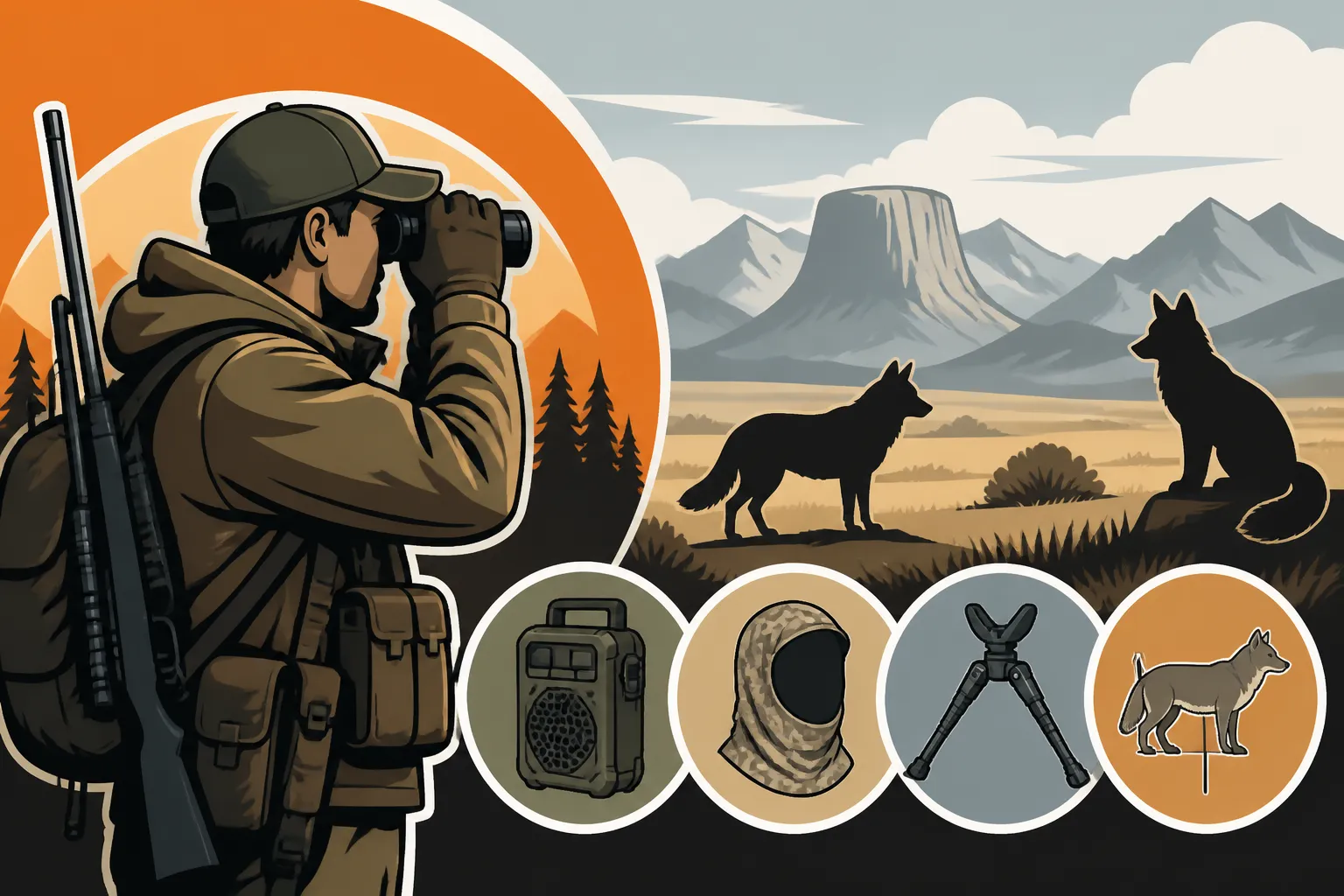
You've got your big game rifle or bow, your optics, and your hunting clothes. That's a great start for a predator add-on, but there are usually a few specific additions or considerations. For coyote and fox hunting, a good set of electronic calls (or hand calls, if you're skilled) is invaluable. Modern electronic callers come pre-programmed with a vast array of sounds, from rabbit distress to pup howls. While your big game rifle might work, a flatter-shooting rifle, perhaps in a smaller caliber like a .223 or .22-250, can be advantageous for the often longer shots on smaller targets. Ensure your rifle has a Rifle Zero Distance for Open Country Shooting that suits these conditions.
Optics are critical for spotting incoming predators from a distance. High-quality binoculars and maybe even a spotting scope will help you identify animals against the vast Wyoming landscape. Remember, Optics Power for Wyoming's Long Sightlines is key when you're glassing for coyotes. Camouflage should be effective for the environment you're in, and scent control is just as important as it is for big game – predators have keen noses! If you're going after bobcats or foxes, consider bringing a shooting stick or bipod, as getting stable for a shot when they unexpectedly appear can be challenging. For mountain lion, it's less about your gear and more about the outfitter's dogs and specialized tracking equipment, but your physical fitness will be paramount.
Comparison of Common Predator Add-Ons
To help you visualize the differences and choose the right add-on for your hunt, here's a quick comparison:
| Predator Species | Typical Hunting Methods | Key Considerations | License Needed (Generally) |
|---|---|---|---|
| Coyote | Calling (electronic/hand), spot & stalk, ambush | Most common, year-round seasons (often), high populations, electronic calls permitted, great for skill building. | Non-resident: Small Game or General Hunting License + Conservation Stamp. Resident: Often no specific license beyond Conservation Stamp. |
| Fox | Calling (hand/electronic), tracking | More elusive than coyotes, specific seasons (often winter for prime fur), smaller bag limits, pelt sealing may be required. | Non-resident: Small Game or General Hunting License + Conservation Stamp. Resident: Often no specific license beyond Conservation Stamp. |
| Bobcat | Calling (specialized), tracking, hounds (rarely as add-on) | Nocturnal, very challenging, specific seasons (winter), strict quotas, pelt sealing always required. Often requires a dedicated pursuit. | Non-resident: Specific Bobcat License (often draw), Small Game, or General Hunting License + Conservation Stamp. Resident: Bobcat License + Conservation Stamp. |
| Mountain Lion | Hounds, tracking | Highly specialized, very expensive, strict quotas, guide almost always required for non-residents in wilderness, significant physical demand. | Non-resident: Specific Mountain Lion License (often draw) + Conservation Stamp. Resident: Mountain Lion License + Conservation Stamp. |
Keep in mind that while Hunting Solo Against Hiring a Guide is an option for certain species or if you're a resident with extensive knowledge, for non-residents, and especially for mountain lion, going with a reputable outfitter is highly recommended. They possess the local knowledge, equipment, and permits to make your add-on hunt successful and legal.
Disclaimer
This article is for general informational purposes only and does not constitute professional advice. Laws, prices and regulations vary by location and change over time. Consult a qualified professional for guidance on your specific situation.