Bear Safety Practices in an Outfitter Camp
Heading into Wyoming's vast wilderness for a hunt is an experience unlike any other, full of excitement and anticipation. But that thrill can quickly be overshadowed by a gnawing worry, especially for those venturing into areas known to be bear country. The thought of a sudden encounter, particularly while in camp, can keep even seasoned hunters on edge. This guide aims to alleviate some of that anxiety by detailing comprehensive bear safety practices crucial for anyone staying in an outfitter camp, helping you understand how to minimize risks and react appropriately if a bear decides to pay an unwelcome visit.
Understanding Bear Country in Wyoming
Wyoming is home to both black bears and grizzly bears, and knowing the difference, and where they typically roam, is your first line of defense. It's not just about avoiding them; it's about understanding their behavior and habitat to inform your safety practices.
Identifying Grizzly and Black Bears
Mistaking a black bear for a grizzly, or vice versa, can have serious consequences, as their typical reactions to human encounters can differ significantly. While color alone is not a reliable indicator (black bears can be cinnamon, brown, or even blonde, and grizzlies can be quite dark), there are key physical characteristics to look for.
Grizzly bears, generally found in the Greater Yellowstone Ecosystem and its surrounding ranges like the Wind River and Absaroka Mountains, tend to have a prominent shoulder hump, a dish-shaped face, and long claws. That shoulder hump is made of muscle, giving them incredible digging power. They're often larger and more powerfully built than black bears. Their ears are typically smaller and rounder in proportion to their heads. Black bears, on the other hand, usually lack a shoulder hump, have a straight facial profile, shorter, curved claws more suited for climbing trees, and larger, more pointed ears. They are generally smaller than grizzlies, though a big black bear can certainly be intimidating. Knowing these subtle differences, even if only to confirm a sighting from a safe distance, is vital for proper decision-making. You'll want to remember these cues when you're out glassing a basin or even just walking to the outhouse at night.
Where Bears Are Most Prevalent
While black bears are distributed across nearly all of Wyoming's forested and mountainous regions, you'll find grizzlies concentrated primarily in the northwestern part of the state. This includes the national forests within and bordering Yellowstone and Grand Teton National Parks, such as the Bridger-Teton, Shoshone, and parts of the Bighorn National Forest. If your hunt takes you into these areas, particularly for species like elk or moose, you are absolutely in prime grizzly country. Even if you're hunting deer in the eastern part of the state, it's still possible to encounter black bears, so bear safety is not exclusive to specific regions. Checking current bear activity reports for your specific Wyoming Elk Hunt Unit Boundaries or Wyoming Deer Hunt Area 1 beforehand is always a smart move.
Outfitters who operate in these regions are usually well-versed in local bear activity and have established protocols to protect their clients and livestock. When you're researching potential outfitters, platforms like BookYourHunt often include information or client reviews that touch on the outfitter's experience in managing wildlife encounters, which can be a valuable indicator of their preparedness.
Essential Bear Safety Protocols in Camp
An outfitter camp is often a temporary home, and while it might feel safe and cozy, it's still very much in bear territory. Implementing strict safety protocols, especially regarding attractants, is non-negotiable.
Proper Food Storage and Management
This is arguably the most critical aspect of bear safety in any camp. Bears, especially grizzlies, have an incredible sense of smell and are constantly seeking high-calorie food sources. Any food or scented item left unsecured is an open invitation. In an outfitter camp, you're not usually responsible for the main food stores, but it's vital to follow the outfitter's guidelines to the letter.
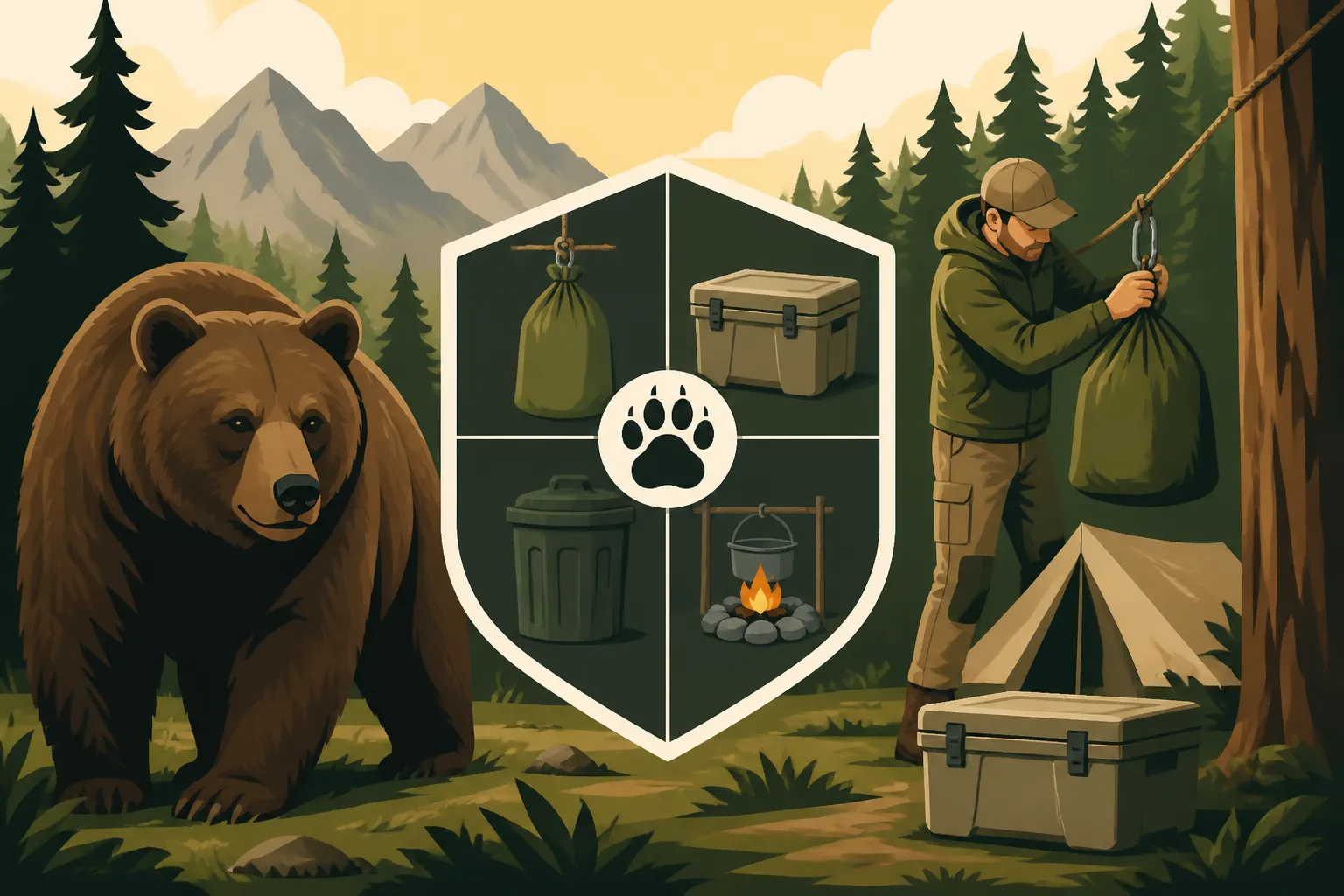
Typically, this means all food, cooking gear, and anything with a scent (even toiletries like toothpaste or deodorant) must be stored in bear-resistant containers, hung from a bear pole, or placed in designated electric-fenced areas far away from sleeping quarters. Your outfitter will have established a "scent cone" management plan, understanding that wind carries odors far and wide. This means cooking areas are often strategically placed downwind from sleeping tents. Never bring food into your sleeping tent, not even a granola bar or chewing gum. Even the smallest scent can draw a curious bear, and you do not want to become part of a bear's investigation for food. Always pack out any trash or store it in designated bear-resistant containers provided by the outfitter. If you're on a self-supported trip or spike camp away from the main outfitter camp, remember these same rules apply: all food and scented items must be cached safely, usually 100 yards or more from your tent, hung from a tree branch or in a bear canister. You can find more specific guidance on Food Storage Rules in Grizzly Country to prepare for these situations.
Camp Layout and Awareness
A well-planned outfitter camp takes bear safety into account right from the start. Sleeping tents are usually positioned well away from cooking areas, food storage, and game processing zones. This separation creates a buffer, reducing the likelihood of a bear approaching your tent while looking for food.
However, even with a smart layout, individual awareness is key. Always be mindful of your surroundings, especially during dawn, dusk, and throughout the night when bears are most active. Before you step out of your tent for any reason, particularly in the dark, make noise. A simple "Hey bear!" or clapping your hands can often deter a curious animal that might be too close for comfort. Pay attention to fresh bear sign—tracks, scat, or overturned rocks—around the camp perimeter. Your guides will be scouting for this regularly, but an extra set of eyes is always helpful. Always travel in groups, even for short walks to the water source or latrine, and carry bear spray if possible.
Dealing with Attractants Beyond Food
It’s easy to focus solely on food, but bears are attracted to a wide array of scents. Scented toiletries, like toothpaste, deodorant, sunscreen, and bug spray, are just as appealing to a bear as your dinner leftovers. Store them with your food, in bear-resistant containers. The same goes for any garbage, no matter how small. Even clothes that have absorbed cooking odors or game blood should be stored securely away from your sleeping area or changed out before bed.
Another major attractant in a hunting camp is game meat itself. If a successful harvest means bringing meat back to camp, your outfitter will have specific protocols for handling and storing it. This might involve setting up a separate game pole or electric fence away from the main camp, especially if it’s a larger animal like an elk. Never leave game meat unattended or unsecured. A bear that finds an easy meal will remember that spot and likely return.
| Attractant Category | Examples | Storage Protocol in Camp | Risk Level |
|---|---|---|---|
| Food Items | Cooked meals, snacks, coffee, energy bars, pet food | Bear-resistant containers, hung on bear poles, electric fence, 100+ yards from sleeping area | High |
| Scented Toiletries | Toothpaste, soap, deodorant, bug spray, sunscreen | Bear-resistant containers, stored with food | Medium-High |
| Garbage | Food wrappers, used tissues, leftover scraps, cans | Bear-resistant containers or pack out immediately | High |
| Game Meat/Blood | Freshly harvested game, bloody clothing, hides | Separate electric fence, hung far from camp, processed quickly | Very High |
| Cooking Gear | Pots, pans, utensils, stoves (with residual food odors) | Cleaned thoroughly, stored with food/scented items | Medium |
Deterrents and Encounter Procedures
Even with the best preventative measures, encounters can happen. Being prepared with deterrents and knowing how to react can make all the difference.
Carrying Bear Spray and Knowing How to Use It
Bear spray is a highly effective, non-lethal deterrent against aggressive bears, and it's something every hunter in bear country should carry. It's not a suggestion; it's a critical piece of safety gear. Make sure it's readily accessible – not buried in your pack, but on your hip or chest rig, where you can deploy it within seconds.
Before your hunt, familiarize yourself with how to use it. Practice drawing it and removing the safety clip (without spraying, of course!). Know its effective range and how wind can affect its deployment. Always check the expiration date. While firearms can be used in self-defense, bear spray is often more effective at deterring an attacking bear and typically does less harm to the animal. It creates a deterrent cloud, buying you time to retreat. Remember, the goal is to stop the charge, not necessarily to harm the bear. Guides often carry their own bear spray, but you should have yours too.
What to Do During a Bear Encounter
How you react depends on the bear species and its behavior. The key is to avoid surprising a bear and to understand its intentions.
- If you see a bear at a distance: Make noise to let it know you're there. Give it plenty of space to leave. Avoid eye contact, back away slowly, and speak calmly. Never run, as this can trigger a chase response.
- For a black bear: If a black bear approaches out of curiosity or to test you, make yourself look as large as possible, make aggressive noises, and stand your ground. Throw rocks or sticks. If it attacks, fight back vigorously.
- For a grizzly bear: If a grizzly charges in a defensive manner (e.g., bluff charges, huffing, jaw popping – indicating it's protecting cubs or a food source), your best bet is to stand your ground, use bear spray if it gets close, and if contact is made, play dead. Lie on your stomach, cover your neck and head with your hands and arms, and spread your legs to make it harder for the bear to flip you over. Remain still until you are sure the bear has left. If a grizzly appears to be predatory (following you, approaching silently, or attacking at night), fight back vigorously. This distinction between defensive and predatory grizzly attacks is crucial, though they are rare.
Your outfitter will go over these scenarios, but it's your responsibility to internalize them. Tools like GoHunt and other online resources can offer valuable insights into specific bear activity patterns in the hunt areas you might be exploring.
Outfitter's Role in Bear Safety and Emergency Planning
A reputable outfitter will make bear safety a cornerstone of their operations. They will brief every client upon arrival, outlining camp rules, bear activity in the area, and emergency procedures. Their guides are often highly experienced in bear country, trained in first aid, and carry communication devices for emergencies.
Outfitters are responsible for setting up camps that minimize risk, maintaining proper food storage, and providing secure areas for game meat. They'll likely conduct daily checks for bear sign around camp and adjust protocols as needed. In the event of a serious bear encounter or injury, they will have an emergency plan in place, including communication methods, medical supplies, and evacuation strategies. This level of preparedness is invaluable, and it’s one of the primary reasons many hunters choose to go with a guide in areas with high bear populations. Always ask your prospective outfitter about their specific Bear Safety Practices in an Outfitter Camp when booking your hunt.
Disclaimer
This article is for general informational purposes only and does not constitute professional advice. Laws, prices and regulations vary by location and change over time. Consult a qualified professional for guidance on your specific situation.