Printing Your Wyoming License After the Draw
The adrenaline of seeing "successful" next to your name after the grueling Wyoming draw period is a feeling unlike any other, but that joy can quickly turn to a mild panic when you realize you still need to get that precious document from the screen into your hand. Navigating online systems can be a headache, and nobody wants to miss a crucial detail that could jeopardize their hunt. This guide is here to walk you through the entire process of printing your Wyoming hunting license after the draw, ensuring you're fully prepared and legal for your adventure.
The Excitement and the Next Steps After a Successful Draw
That moment when the draw results finally hit is something most Western hunters live for. You've put in the time, built your points, and crossed your fingers, and now it's paid off. But don't let the excitement overshadow the practicalities. Getting your license printed correctly and understanding all its components is just as vital as drawing the tag itself. It’s not just a piece of paper; it’s your legal authorization to pursue game in the Cowboy State, and often comes with critical carcass coupons that need to be handled carefully.
Many seasoned hunters, myself included, will often re-check their results on the Wyoming Game & Fish Department's Electronic Licensing System (ELS) portal, sometimes even after getting an email notification, just to make absolutely certain. It’s part of the pre-hunt ritual, and honestly, it’s a good habit. You’ve likely already familiarized yourself with How to Check Your Wyoming Draw Results Online, but after confirming your success, the real work of preparing your physical documentation begins. Don't forget that if you were unsuccessful, the period for Wyoming's Leftover License Window in Late June might be your next opportunity, but for now, let's focus on those drawn tags.
Verifying Your Draw and Hunt Area Details
Before you even think about hitting the print button, take a deep breath and thoroughly review the details of your successful draw. This might seem obvious, but rushing can lead to overlooking critical information. You’ll want to confirm the species, license type (like a Type 1 Elk or a Type 6 Doe/Fawn tag), and, most importantly, the specific hunt area number. Each hunt area in Wyoming has unique regulations and season dates, and knowing exactly where you’re permitted to hunt is non-negotiable.
Pay close attention to any dates or special conditions listed alongside your successful draw. Sometimes, a license might come with specific weapon restrictions or season phases that are critical to understand. For instance, an archery license will have different dates than a rifle license, even for the same hunt area. Resources like GoHunt are fantastic for double-checking these specifics against the official regulations, offering an extra layer of confidence. You've worked too hard to draw this tag to make a mistake on the details now.
Navigating the Wyoming Game & Fish Licensing System Online
Once you've celebrated your success and meticulously verified the details, it's time to actually access your license. The Wyoming Game & Fish Department (WGFD) manages all licensing through its Electronic Licensing System (ELS). If you're new to the system, or just haven't used it in a while, it's pretty user-friendly, but a few pointers can save you some frustration. Remember, having your login credentials readily available is key, as is a stable internet connection – nobody wants a dropped connection right before the final print.
If you haven't already, you'll need an account. If not, setting one up is usually straightforward, and you can learn all about Setting Up a Wyoming ELS Account beforehand. The system is designed to keep all your hunting and fishing records in one place, making it easier to manage applications, preference points, and drawn licenses. It's truly a one-stop shop for everything related to your outdoor pursuits in Wyoming.
Accessing Your Drawn Licenses
After logging into your ELS account, you'll typically navigate to a section titled "My Licenses" or "My Purchased Licenses." Here, you should see a list of all current and past licenses associated with your account. Your recently drawn license will be prominently displayed. Don't be surprised if you see multiple entries if you applied for various species or different license types in the same draw period. Each successful draw will have its own entry, ready for you to take action.
When you click on the specific license you intend to print, the system will usually present you with an option to "Print License" or "Download License." It's always a good idea to download a copy to your computer first, saving it as a PDF. This way, you have a digital backup in case your printed copy gets lost or damaged, or if you need to print additional copies later. This digital file is your insurance policy against the unforeseen, especially if you're hunting in remote areas without internet access or a printer. Think of it as your digital wallet for your Wyoming tags.
Technical Glitches and Troubleshooting Tips
Let's be real, technology isn't always perfect, especially when a surge of excited hunters is trying to access the system all at once. If you encounter issues like slow loading times, error messages, or a blank screen, don't panic. First, try clearing your browser's cache and cookies, or switch to a different web browser. Sometimes, a simple refresh can solve the problem. If you're still stuck, ensure your internet connection is strong and stable. A dropped Wi-Fi signal can interrupt the download or printing process, leading to incomplete or corrupted files.
If the problem persists, wait a little while and try again. High traffic volume immediately after draw results are posted can sometimes overload the system. The WGFD website usually provides updates on known issues, so check their official news or social media channels. If all else fails, their customer service line is there to help, but patience is often your best tool when dealing with peak online traffic. Having gone through this myself, I've learned that a little patience and persistence can usually overcome most technical hurdles.
Your License in Hand: Printing and Verification Steps
You've successfully accessed your license and probably even downloaded the PDF. Now comes the moment of truth: getting that physical document. While it might seem straightforward, there are a few key considerations to ensure your printed license is legally compliant and ready for the field. This isn't just about ink on paper; it's about making sure every critical detail, including those all-important carcass coupons, is crisp, clear, and ready to be used.
The Importance of Printing Quality
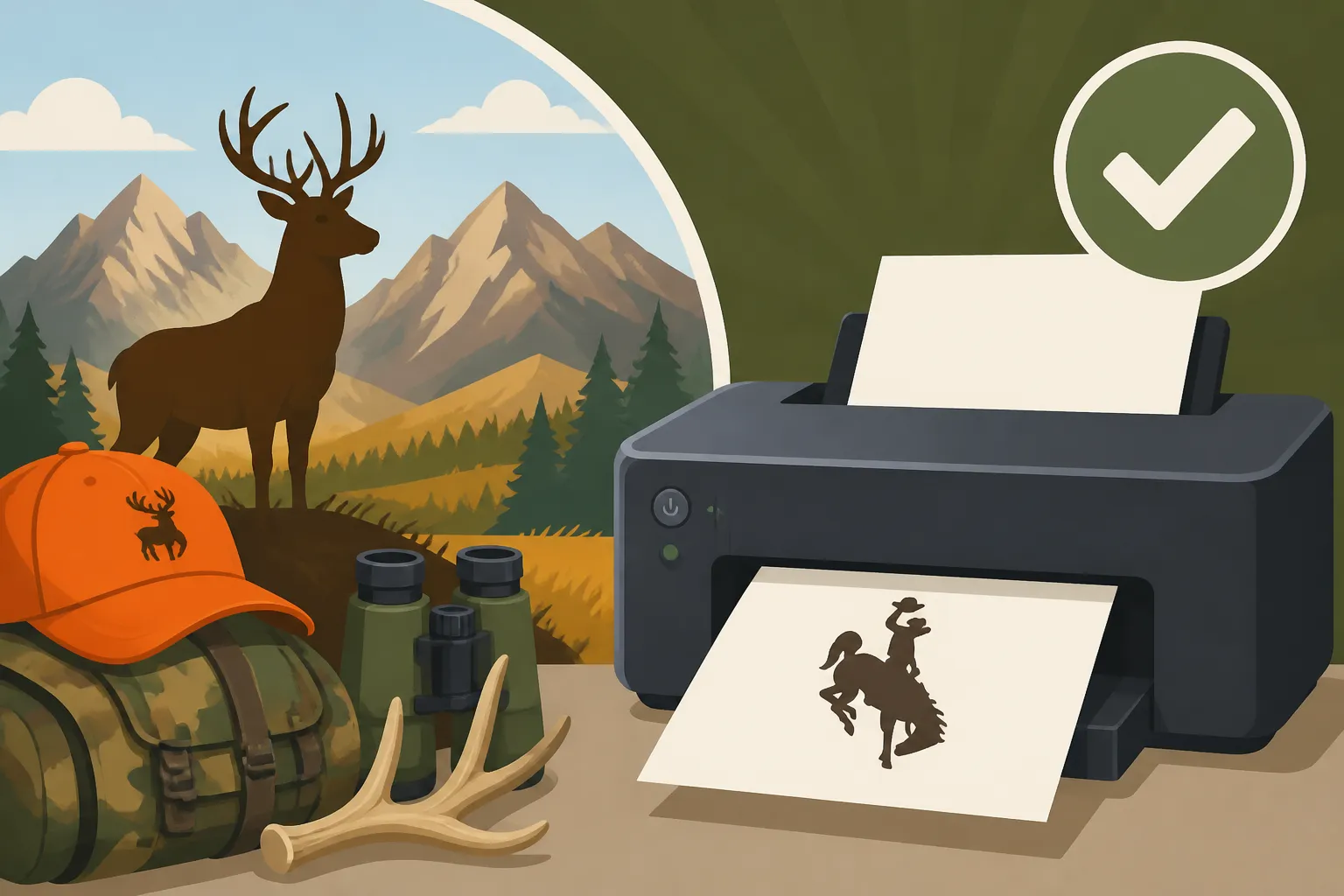
When printing your license, quality matters. The WGFD requires that your license, including all attached carcass coupons, be printed on standard white paper (8.5 x 11 inches) and be clearly legible. Use a printer with fresh ink or toner to avoid faint or smudged text. Any information that is unreadable, especially dates, hunt area numbers, or your personal identification details, could cause issues with game wardens in the field. This is not the time to be frugal with your printer ink!
Your license often comes as a multi-page document within the PDF. Ensure you print all pages, as the carcass coupons are typically on separate pages or sections that need to be detached correctly once an animal is harvested. I usually print several copies just to be safe – one for my wallet, one for my pack, and one to leave at camp. Losing a license in the field is a nightmare you definitely want to avoid.
Attaching Carcass Coupons and Tagging Rules
Wyoming’s licensing system includes perforated carcass coupons that you'll need to physically attach to your animal immediately after harvest. These coupons are legally required and must be properly filled out and securely affixed to the carcass. Each species and license type will have specific coupons designed for it. Make sure you fully understand Wyoming Carcass Coupon and Tagging Rules before you step foot in the field. A common mistake is to overlook these, so pay close attention during the printing process.
When you print, ensure the perforations or designated cut lines for these coupons are visible and that no critical information is cut off. Once printed, carefully separate the coupons. Some hunters laminate their main license, but never laminate the carcass coupons as they need to be filled out with a pen and then attached to the animal. A zip-top bag or a small, waterproof pouch is an excellent way to protect your license and coupons from the elements while in the field.
The table below outlines key elements to verify on your printed license and carcass coupons:
| Document Section | What to Verify | Why It's Important |
|---|---|---|
| Personal Information | Name, Address, Date of Birth | Must match your ID for legal compliance. |
| License Type | Species (Elk, Deer), Type (1, 6, 9), Weapon | Confirms what you're authorized to hunt and with what method. |
| Hunt Area Number | Specific numeric designation (e.g., Area 7, 21) | Defines your legal hunting boundaries. Referencing Reading a Wyoming Hunt Area Number can help. |
| Season Dates | Start and End Dates for Your Area/Weapon | Critical for staying legal within open seasons. |
| Carcass Coupons | All coupons printed, legible, intact | Essential for tagging harvested game immediately. |
| Conservation Stamp | Present and Valid | Required for most hunters and often printed with the license. |
| Signatures | Your signature, if required | Some licenses require a signature to be valid. |
Beyond the Printout: Field Prep and What to Carry
Getting your license printed is a huge step, but your preparation doesn't end there. Proper field prep, especially regarding your documentation, is crucial for a smooth and legal hunt. It’s about more than just having the paper; it’s about having it accessible, protected, and coupled with all other necessary permits. This final stage ensures you’re not just ready to hunt, but ready to handle all the administrative aspects that come with a successful trip.
Protecting Your Documents in the Field
Wyoming weather can be notoriously unpredictable. From sudden downpours to high winds and snow, your paper documents are vulnerable. Investing in waterproof document holders, heavy-duty Ziploc bags, or even dedicated license wallets designed for hunters is a smart move. Keep your main license and particularly those carcass coupons protected from moisture and tearing. Imagine the frustration of harvesting an animal only to find your tag ruined by rain!
It's also a good practice to carry a backup method for documenting your kill, even if it's just a sturdy pen and a small notepad, in case of extreme tag damage. While you still need the physical tag, being able to accurately record the information if a tag gets too wet to write on can be helpful when communicating with a game warden.
Other Essential Documents to Carry
Your hunting license isn't the only piece of paper you might need in the field. Don't forget your state-issued identification (driver's license or ID card). If you were born after January 1, 1966, you'll also need proof of hunter education. Make sure you have Proving Your Hunter Education Out in the Field covered. For those hunting with a mentor under a special authorization certificate, that document is also a must-have.
Consider carrying a copy of the current year's hunting regulations for your specific hunt area. While most of us rely on digital copies these days, having a physical booklet can be invaluable when you're off-grid and need to quickly clarify a regulation, such as specific Wyoming Legal Shooting Hours for Big Game or antler point restrictions. Outfitters and guides often provide clients with these, but it’s wise to have your own. For comprehensive planning, many find resources from organizations like GoHunt invaluable, providing detailed unit information that complements the official regulations.
Double-Checking Regulations for Your Specific Hunt Area
Every hunt area in Wyoming has its own set of rules, dates, and sometimes even unique weapon restrictions. For example, some areas might have specific seasons for archery only, while others might allow modern firearms throughout. You might also encounter areas with specific restrictions like those related to Hunting a Wyoming Mountain Lion Quota That Can Close Early, which requires careful monitoring of closures. Before you head out, make a final check of the specific regulations for your drawn hunt area on the WGFD website.
This often means diving into the detailed pages for your specific species and unit, found within the annual hunting regulations. Don't assume that what applies to one area will apply to yours. A little extra time spent verifying these details can prevent a costly mistake in the field and ensure your hunt is as enjoyable and stress-free as possible.
Disclaimer
The information provided in this guide is for general informational purposes only and is not intended as legal advice. Hunting regulations in Wyoming can change frequently. Always consult the official Wyoming Game & Fish Department regulations, circulars, and website for the most current and accurate information before planning and executing your hunt. It is the hunter's responsibility to know and follow all applicable laws and regulations.