The Whitetail Ground Around South Newcastle
Hunting whitetails in Wyoming often feels like searching for a needle in a haystack, especially when most of the conversation is dominated by mule deer and vast, open landscapes. But if you know where to look, pockets of excellent whitetail hunting exist, and the area around South Newcastle, deep in eastern Wyoming, is one such gem. This guide will walk you through understanding the unique whitetail habitat in this region, the challenges of accessing it, and effective strategies for punching your whitetail tag in this often-overlooked corner of the Cowboy State.
Unraveling Whitetail Habitat Around South Newcastle
When most folks picture Wyoming hunting, they imagine sweeping sagebrush plains and rugged mountains, prime country for mule deer, elk, and antelope. Whitetails, however, prefer a different kind of terrain: dense cover, water, and agricultural fields. This preference makes eastern Wyoming, particularly around South Newcastle in Crook County, a surprisingly strong contender for whitetail hunters.
The River Bottom Advantage
The key to understanding whitetail presence near South Newcastle lies in its river systems. The Cheyenne River and its tributaries, winding through the landscape, create lush riparian corridors that are a magnet for whitetail deer. These river bottoms provide everything a whitetail needs:
- Thick Cover: Willows, cottonwoods, and various shrubs grow in abundance along the water's edge, offering excellent bedding areas and escape routes. Unlike the more exposed mule deer, whitetails thrive in dense, tangled habitats where they can disappear in an instant.
- Consistent Water: Naturally, being along a river guarantees a reliable water source, which is critical for all wildlife, but especially for deer that tend to stick to a smaller home range than their migratory mule deer cousins.
- Food Sources: Adjacent to these river systems, you'll often find agricultural fields – alfalfa, corn, and winter wheat – which provide a high-calorie diet for whitetails, allowing them to put on significant body mass and grow impressive antlers. This combination of cover, water, and food creates an ideal environment. You can read more about these specific areas in Hunting the Whitetail River Bottoms of Eastern Wyoming.
Distinguishing Deer in the Field
It might sound obvious, but for hunters accustomed to mule deer, identifying a whitetail in the field can sometimes be tricky, especially if you're only catching glimpses through thick brush. Around South Newcastle, you'll encounter both species, and knowing the difference is crucial for legal harvest and managing expectations.
Mule deer have large, "mule-like" ears, a narrow, rope-like white tail with a black tip, and typically "fork" their antlers in a non-typical pattern. They also have a distinctive bounding gait, often called a "pronk" or "stot," where all four feet push off the ground simultaneously. Whitetails, on the other hand, have smaller ears, a broad, flag-like tail that they often raise when alarmed (showing the white underside), and their antlers usually grow in points off a main beam. Their escape involves a more traditional run, sometimes with explosive bursts of speed through dense cover. The physical differences are clear once you know what to look for, but in a fleeting moment, familiarity with both is your best friend. A good resource for this is Telling a Whitetail From a Mule Deer.
Navigating Access to Whitetail Country
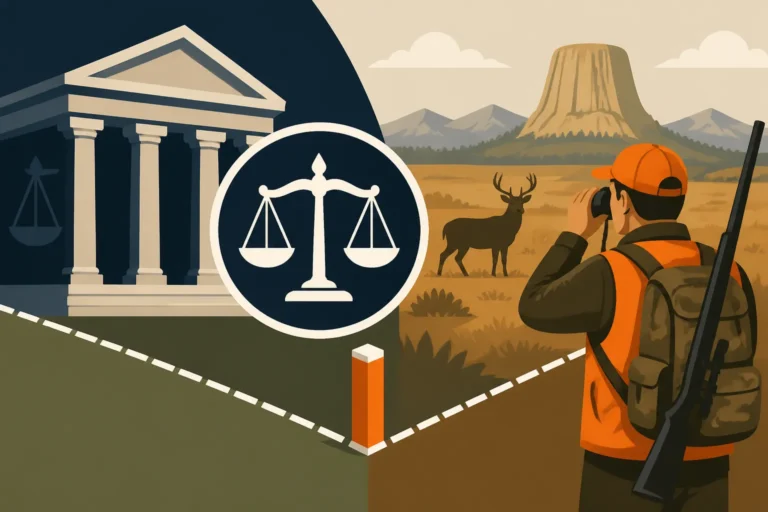
Perhaps the biggest hurdle for hunters targeting whitetails around South Newcastle, or anywhere in eastern Wyoming for that matter, is the sheer dominance of private land. While the state boasts vast expanses of public ground, the most productive whitetail habitat, often tied to river bottoms and agricultural zones, is largely privately owned.
The Private Land Predicament
Eastern Wyoming's landscape evolved differently than the checkerboard or vast federal lands of the west. Historically, the fertile river bottoms and arable plains were settled and privatized early on for ranching and farming. This means that many of the prime whitetail areas along the Cheyenne River or its smaller feeder creeks fall squarely on private property. For a hunter arriving in the region, the sight of "No Trespassing" signs can be disheartening, as the lush riverine corridors often appear inaccessible. This reality is a common frustration for hunters, as outlined in Why Eastern Wyoming Is Mostly Private Ground.
Securing access to private land usually means one of two things: either you know a landowner personally and have built a relationship over time, or you're paying a trespass fee or booking a hunt with an outfitter who has secured hunting rights. Cold-calling ranchers or knocking on doors can sometimes work, but it requires politeness, a clear understanding of what you're asking for, and a willingness to accept "no." Always be respectful of their property and operations; remember, they're running a business, and hunting is often secondary.
Leveraging Public Access Programs
Despite the private land challenges, opportunities for public access do exist. Wyoming has several programs and types of public land that can provide a foot in the door for whitetail hunters near South Newcastle.
Hunter Management Areas (HMAs) and Walk-In Areas (WIAs)
The Wyoming Game and Fish Department (WGFD) works with private landowners to open up hundreds of thousands of acres to public hunting through its Access Yes program. These lands are designated as either Hunter Management Areas (HMAs) or Walk-In Areas (WIAs).
- Walk-In Areas (WIAs): These are parcels of private land, sometimes mixed with public land, where no permission is required from the landowner. You simply walk in and hunt according to the specific rules posted for that WIA.
- Hunter Management Areas (HMAs): These areas typically require you to obtain a permission slip, usually online, from the WGFD before you hunt. This system helps manage pressure and ensures landowners aren't overwhelmed. The specific rules (e.g., weapon restrictions, antler point minimums, seasonal closures) vary greatly by HMA, so always check the individual HMA's rules before you go.
For whitetail hunters around South Newcastle, it's vital to scour the WGFD's Access Yes map for Crook County. These programs can often provide access to those coveted river bottoms or adjacent cover that holds whitetails. It's not uncommon to find a WIA or HMA that encompasses a small stretch of riparian habitat, offering a fantastic opportunity if you put in the homework. More information on these programs can be found in Access Yes Opens Private Wyoming Ground to Public Hunters and Hunter Management Areas Do Need One.
State Trust Land and BLM Parcels
While less common right along the immediate river bottoms, there are parcels of State Trust Land and Bureau of Land Management (BLM) ground scattered throughout Crook County, including areas near South Newcastle. These lands are generally open to public hunting, but they often require careful map reading to ensure legal access. State Trust Lands, in particular, often exist in smaller, isolated blocks, and you must confirm legal access to them, as some might be landlocked by private property without a public easement.
Using mapping tools like onX Hunt is invaluable here. You can overlay public/private land boundaries and identify potential access points. Look for state or BLM parcels that butt up against county roads or other public ground. These could offer walk-in opportunities into whitetail habitat, even if it's not the primary river corridor. You can explore this further in Wyoming State Trust Land Hunting.
Effective Whitetail Hunting Strategies Near South Newcastle
Once you've identified potential whitetail habitat and secured access, the real work of hunting begins. Whitetail hunting in eastern Wyoming, particularly around South Newcastle, requires a blend of patience, stealth, and a keen understanding of deer behavior in agricultural and riparian settings.
Scouting and E-Scouting
Effective scouting is the foundation of any successful whitetail hunt. Given the nature of the terrain around South Newcastle, a combination of e-scouting and boots-on-the-ground reconnaissance is best.
E-Scouting: Before you even leave your house, pull up your favorite mapping application like onX Hunt. Look for:
- Green Corridors: Follow the river and creek drainages. These green lines on the map indicate tree cover and ideal whitetail habitat.
- Crop Fields: Identify agricultural fields adjacent to these green corridors. Note crop types if possible, as deer preferences can vary.
- Access Points: Pin potential public access roads or Access Yes areas. Look for pinch points, funnels, and natural travel corridors between cover and food sources.
- Topographic Features: While eastern Wyoming isn't mountainous, subtle changes in elevation, draws, or timbered ridges can serve as travel routes or bedding areas.
This kind of pre-hunt planning can save you countless hours of aimless wandering once you're in the field. GoHunt's Insider platform also offers unit data that can help you understand success rates and draw odds for Deer Hunt Area 1, which covers much of this region. More on this here: E-Scouting a Unit Before the Season Opens.
Boots-on-the-Ground: Once you're there, walk the fringes of timber blocks, along creek bottoms, and near agricultural fields. Look for:
- Tracks and Trails: Heavy deer trails leading from bedding cover to feeding areas are prime locations for ambush points.
- Rub Lines and Scrapes: During the pre-rut and rut, these are clear indicators of buck activity. Follow rub lines to understand how a buck is moving through his territory.
- Bedding Areas: Look for dense thickets or tall grass with flattened areas where deer have rested.
- Water Sources: Puddles, seepages, and the main river itself are key.
Stand Hunting and Still Hunting
Given the dense cover and the tendency for whitetails to utilize smaller home ranges, two primary strategies stand out for success:
Stand Hunting: This involves setting up a tree stand or ground blind in a strategic location and waiting for deer to come to you. Ideal spots include:
- Travel Corridors: A choke point between a bedding area and a food source, or along a well-used trail.
- Field Edges: Overlooking a corn or alfalfa field at dawn or dusk when deer are moving to feed.
- Funnel Points: Where natural terrain or cover forces deer to move through a narrow strip.
Wind direction is paramount for stand hunting. Always set up so your scent is blowing away from where you expect deer to approach. You might only get one chance, so make it count.
Still Hunting: This highly active method involves moving slowly and deliberately through whitetail habitat, pausing frequently to scan for deer. It's particularly effective in dense river bottoms or timbered areas where visibility is limited, forcing you to sneak up on deer.
- Slow Pace: Move at a snail's pace, taking only a few steps before stopping for several minutes.
- Utilize Cover: Use trees, bushes, and terrain to break up your silhouette.
- Wind and Sun: Always hunt into the wind. If possible, keep the sun at your back to minimize glare for you and maximize it for the deer.
- Listen: Pay attention to sounds – a distant twig snap, the rustle of leaves, a deer blowing.
This method requires extreme patience and a keen eye, as you're often trying to spot a motionless deer before it spots you.
Understanding the Rut and Timing
The whitetail rut is a magical time for hunters, and knowing when it typically peaks in eastern Wyoming can significantly boost your odds. While exact dates can vary slightly year to year based on weather and deer health, the peak whitetail rut in this region generally falls in mid-November.
- Early November (Pre-Rut): Bucks are actively scraping and rubbing, starting to cruise for does. They are often more predictable, sticking to core areas and primary travel routes. This is a great time to hunt pinch points and field edges.
- Mid-November (Peak Rut): This is when chasing and breeding activity is highest. Bucks are less cautious and can be found almost anywhere, sometimes even out in the open during the day. Calling (rattling, grunting) can be highly effective during this phase.
- Late November (Post-Rut): Breeding slows down, and bucks begin to focus heavily on feeding to recover lost weight. They may still be cruising, but often revert to more nocturnal patterns or stick closer to dense cover.
Planning your hunt around the peak rut can be the difference between seeing a few deer and having multiple encounters with cruising bucks. You can find more detail on this in When Whitetail Rut Dates Fall on the Plains.
Key Considerations and Resources
Hunting the whitetail ground around South Newcastle, like any hunt, comes with its own set of responsibilities and needs. Being prepared and informed ensures a safer, more enjoyable, and legal experience.
Regulations and Hunter Education
Before you even think about stepping into the field, you absolutely must be familiar with Wyoming's hunting regulations. The state's game and fish department publishes annual regulations booklets that detail everything from license requirements to legal shooting hours, weapon restrictions, and tagging procedures. Specific to South Newcastle, you'll likely be hunting in Deer Hunt Area 1. Always confirm the current regulations for your specific hunt area, as rules can change from year to year. Wyoming Legal Shooting Hours for Big Game is a good place to start for one specific regulation.
A crucial point for many hunters is the hunter education requirement. In Wyoming, anyone born after January 1, 1965, must complete a hunter education course. This applies to both residents and non-residents. Make sure your certification is current and that you carry proof of completion with you in the field. Anyone Born After 1965 Needs Wyoming Hunter Education provides more context on this rule.
Essential Gear for Whitetail Hunting
While the gear list for hunting can be extensive, here are some essentials particularly relevant for whitetail hunting around South Newcastle:
| Item | Purpose | Notes |
|---|---|---|
| Mapping Software | Identifying land boundaries, topo features, access points. | onX Hunt is highly recommended for its public/private land layers and ability to mark waypoints. GoHunt also offers robust tools. |
| Optics | Binoculars for scanning cover, rangefinder for shot placement. | Quality binoculars (8x or 10x) are indispensable. A rangefinder is crucial, especially in varying terrain or across agricultural fields. |
| Appropriate Clothing | Camouflage for concealment, layers for warmth. | Dress in layers for variable eastern Wyoming weather. Good quality camo is important for breaking up your silhouette in dense cover. Consider blaze orange requirements if hunting during rifle season. |
| Weapon & Ammo | Rifle, bow, or muzzleloader, with appropriate ammunition. | Ensure your weapon is sighted in and that you are proficient with it. Always carry more ammo than you think you'll need. |
| Game Processing Kit | Field dressing tools, game bags. | A sharp knife, gutting gloves, and quality game bags are essential for proper field dressing and meat care, especially if you're a long walk from your vehicle. |
| First Aid & Survival | Basic first aid kit, fire starter, headlamp, signaling device. | Always be prepared for unexpected situations. Even relatively tame terrain can hide hazards. |
| Treestand/Blind | For elevated or concealed ambush hunting. | If stand hunting, ensure your stand is safe, properly installed, and you use a safety harness. A ground blind can be effective in areas with good natural concealment. |
Respecting Landowners and the Land
This cannot be stressed enough, especially in areas dominated by private land like around South Newcastle. Whether you're hunting an HMA, a piece of State Trust Land, or fortunate enough to get private permission, always treat the land and its owners with the utmost respect.
- Leave No Trace: Pack out everything you pack in. Don't litter.
- Close Gates: If you open a gate, close it. Livestock can be a significant issue for ranchers if gates are left open.
- Stay on Designated Routes: If given specific instructions for vehicle use, adhere to them. Avoid creating new tracks.
- Report Violations: If you see illegal activity or poaching, report it to the WGFD. Protecting the resource benefits everyone.
Building a reputation as a responsible and ethical hunter is vital, not just for your own future opportunities, but for the future of hunting access for everyone in Wyoming.
Hunting whitetails around South Newcastle offers a different kind of Wyoming adventure. It demands diligence in scouting, careful navigation of land access, and a strategic approach tailored to the whitetail's preferred habitat. But for those willing to put in the effort, the rewards can be significant, offering a unique big game experience in the heart of the Cowboy State.
Disclaimer
This article is for general informational purposes only and does not constitute professional advice. Laws, prices and regulations vary by location and change over time. Consult a qualified professional for guidance on your specific situation.