Which States the Corner Crossing Ruling Covers
The ongoing debate around corner crossing has caused a lot of headaches and confusion for hunters trying to navigate the intricate tapestry of land ownership, especially out West. For years, accessing public land checker-boarded by private parcels has been a significant point of contention, leaving many hunters feeling frustrated and uncertain about where they can legally put their boots. This guide aims to clear up some of that confusion, explaining the landmark corner crossing ruling and, crucially, which states are directly impacted by this legal precedent.
Understanding the Corner Crossing Controversy
Before we dive into the specifics of the ruling, let's establish what "corner crossing" actually means. Imagine a landscape where public land sections (think of them as squares on a chessboard) touch at their corners. Between these public squares are private land sections. For decades, hunters and outdoor enthusiasts faced a legal gray area: could they step from one piece of public land to another by traversing only the air above the common corner point, without ever touching the private land below? Or was even this brief aerial passage considered trespass? This wasn't just a theoretical problem; it literally dictated whether hunters could access vast tracts of otherwise unreachable public ground.
The core of the controversy lay in differing interpretations of land access and trespass laws. Landowners often argued that their private property extended infinitely upwards and downwards from their corner posts, making any corner crossing – even aerial – an invasion of their rights. Hunters, on the other hand, contended that public land users had a right to access public land, and that a brief, non-impactful traverse of an airspace corner should not constitute trespass, particularly when no physical contact with private ground occurred. This legal ambiguity created a significant barrier, landlocking millions of acres of public land in the West, as hunters feared fines or even arrest if they tried to navigate these challenging ownership patterns. How Wyoming's Checkerboard Land Pattern Came About offers a deeper look into the historical roots of this complex land ownership.
The Problem of Landlocked Public Land
The "checkerboard" land pattern, particularly prevalent in many Western states, is a direct result of historical land grants, primarily to railroads, in the 19th century. These grants often alternated sections of land – one square mile to the railroad, one square mile to the public domain – creating a literal checkerboard. While a hunter might legally own or have access to one public square, getting to another adjacent public square often required traversing a corner where private lands met. Without the ability to corner cross, these public parcels often became "landlocked," accessible only if a hunter could secure permission from the intervening private landowner, which was often impossible or cost-prohibitive.
This lack of guaranteed access stifled hunting opportunities, making it incredibly difficult for public land hunters to explore vast expanses of prime habitat. Imagine spending hours e-scouting with tools like onX Hunt, identifying promising elk or deer country, only to realize that the most direct or even only route to that public land involved a corner crossing. The uncertainty alone was enough to deter many. This wasn't just about inconvenience; it was about equitable access to public resources, a foundational principle for many outdoor recreationists.
The Landmark Wyoming Case and Its Immediate Impact
The situation came to a head in Wyoming, culminating in a significant federal court decision. The case, United States v. Ramsey, involved four Missouri hunters who were cited for criminal trespass after using a ladder to step over the common corner point of two parcels of private land to access public land, without ever touching the private ground. The legal battle that ensued drew national attention, as the outcome would set a precedent for public land access across much of the American West.
The federal district court in Wyoming initially ruled in favor of the hunters, stating that they had not committed trespass because they had only passed through the air above the corner. This decision was then appealed to the Tenth Circuit Court of Appeals, which ultimately affirmed the lower court's decision in a ruling that reverberated through the hunting and land management communities. The Tenth Circuit concluded that the act of "corner crossing" as performed by the hunters—moving from public land to public land via the airspace above a common corner, without physically contacting private property—does not constitute trespass under Wyoming state law. This was a monumental win for public land access advocates.
The Tenth Circuit's Decision and Its Reasoning
The Tenth Circuit's ruling was a deeply considered legal opinion that carefully examined property rights and common law principles. The court acknowledged the historical precedent of property owners having rights to the airspace above their land. However, it also recognized the unique "checkerboard" land patterns in the West and the public's right to access public lands. The court differentiated between physically entering private property and merely passing through the air at a corner that is also shared by public land. The critical point was that the hunters did not "enter" the private land in a way that interfered with the landowner's use or enjoyment of their property.
This ruling provided much-needed clarity, affirming that simply stepping over a corner, without touching private ground, is not trespass. It effectively "unlocked" millions of acres of public land that were previously considered inaccessible due to corner crossing concerns. This decision means that hunters in Wyoming can now confidently use this method of access, provided they understand and adhere to the strict interpretation of the ruling—no touching private land, no damage, no interference. The Stepladder Case That Started Corner Crossing provides a comprehensive account of this pivotal legal battle.
Why There Is No Buffer at a Corner Post
One of the key takeaways from the Wyoming ruling, and a common point of misunderstanding, is that there is no buffer zone around a corner post. Some landowners or previous interpretations might have suggested that any proximity to a corner, or even being in the general vicinity, constituted trespass. However, the court's decision clarified that as long as a hunter remains in the airspace directly above the public land sections and does not physically touch or intrude upon the private land, they are within their legal rights.
This means hunters don't need to worry about an imaginary "buffer" extending out from a survey pin. The boundary is precise. If you're on public land, you can approach the corner of that public land, and if another piece of public land is directly across that corner, you can traverse the airspace between them, even if private land also meets at that exact corner. Tools like onX Hunt are incredibly valuable here, as they allow hunters to visualize these property lines with remarkable accuracy, helping them stay on the right side of the law. However, it's always critical to remember that digital maps are aids, not ultimate legal documents. Can You Rely on onX for a Boundary? explores the nuances of using mapping applications for precise boundary identification.
States Where Corner Crossing Is Now Recognized
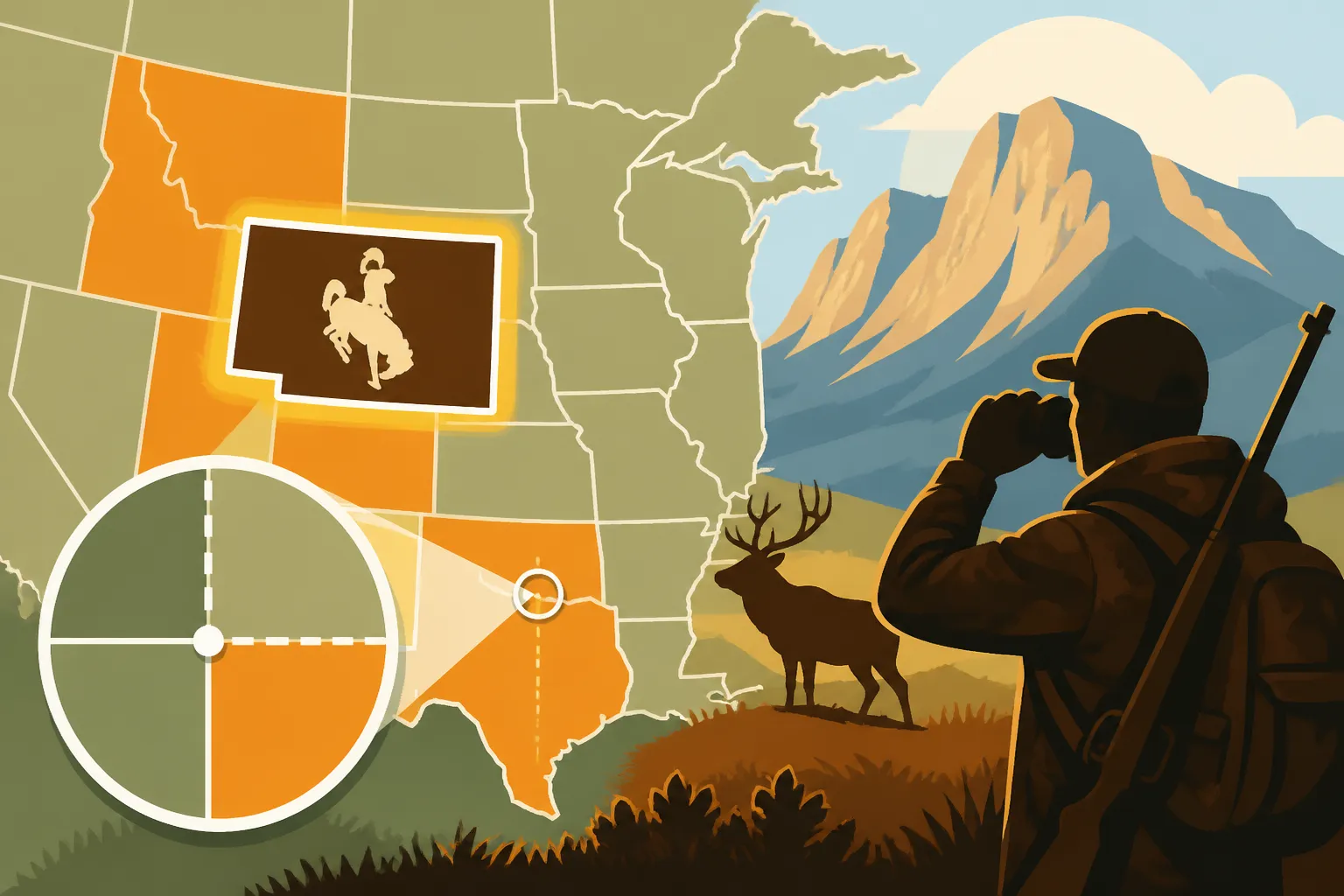
This is the big question for many hunters: does the Wyoming ruling apply everywhere? The answer is both straightforward and nuanced. The corner crossing ruling was handed down by the Tenth Circuit Court of Appeals. Federal Circuit Courts have jurisdiction over specific geographic areas. The Tenth Circuit encompasses six states: Wyoming, Colorado, Kansas, New Mexico, Oklahoma, and Utah. Therefore, the precedent set by the Ramsey decision directly applies to these six states.
This means that within Wyoming, Colorado, Kansas, New Mexico, Oklahoma, and Utah, the act of corner crossing public land via the airspace, without touching private property, is generally considered legal. This is a significant development, as it opens up substantial hunting opportunities in areas that were previously inaccessible or fraught with legal risk. For hunters planning trips to any of these states, understanding this ruling is paramount for ethical and legal access.
The Geographic Scope of the Tenth Circuit
The Tenth Circuit's jurisdiction is specific. It does not automatically extend to other Western states like Montana, Idaho, Nevada, Arizona, California, Oregon, or Washington, which fall under different federal circuit courts (primarily the Ninth Circuit, or the Eighth Circuit for states further east). In those other states, the legal status of corner crossing remains less clear, or might be governed by different state-specific interpretations and precedents.
This doesn't mean corner crossing is definitively illegal in those other states, but rather that the Wyoming ruling does not directly provide a federal precedent there. Hunters in states outside the Tenth Circuit should exercise extreme caution, research local and state laws diligently, and, when in doubt, avoid corner crossing until a similar legal precedent is established in their specific jurisdiction, or explicit state law permits it. For those researching multi-state opportunities, resources like GoHunt can be invaluable for understanding the specific land access regulations relevant to each state and unit.
Here's a quick overview of the states directly impacted:
| State | Federal Circuit | Corner Crossing Legal Status (Post-Ramsey Ruling) | Notes |
|---|---|---|---|
| Wyoming | Tenth Circuit | Legal (if only airspace traversed) | Origin of the landmark ruling, direct applicability. Whether Corner Crossing Is Legal in Wyoming |
| Colorado | Tenth Circuit | Legal (if only airspace traversed) | Direct applicability of the Tenth Circuit's precedent. |
| Kansas | Tenth Circuit | Legal (if only airspace traversed) | Direct applicability of the Tenth Circuit's precedent. |
| New Mexico | Tenth Circuit | Legal (if only airspace traversed) | Direct applicability of the Tenth Circuit's precedent. |
| Oklahoma | Tenth Circuit | Legal (if only airspace traversed) | Direct applicability of the Tenth Circuit's precedent. |
| Utah | Tenth Circuit | Legal (if only airspace traversed) | Direct applicability of the Tenth Circuit's precedent. |
| Montana | Ninth Circuit | Undetermined/State-specific | Not directly covered by the Tenth Circuit ruling. Exercise caution. |
| Idaho | Ninth Circuit | Undetermined/State-specific | Not directly covered by the Tenth Circuit ruling. Exercise caution. |
| Nevada | Ninth Circuit | Undetermined/State-specific | Not directly covered by the Tenth Circuit ruling. Exercise caution. |
| Arizona | Ninth Circuit | Undetermined/State-specific | Not directly covered by the Tenth Circuit ruling. Exercise caution. |
Practical Considerations for Hunters Beyond Wyoming
While the Tenth Circuit ruling is a game-changer for access in the covered states, hunters still have a responsibility to understand the nuances and be prepared. This isn't a free pass to ignore property boundaries or landowner rights. It's about exercising a specific right in a specific way. The fundamental principle is still that you cannot physically trespass on private land.
This means precision is key. Relying solely on your eyesight to determine if you're touching private ground at a corner is risky. Modern mapping technologies and careful planning are essential. Always carry and understand official maps, and cross-reference them with digital mapping tools.
Using Technology for Precise Navigation
Tools like onX Hunt have become indispensable for hunters navigating complex land ownership. These apps provide detailed layers showing public and private property boundaries, often down to the individual parcel. For corner crossing, the ability to zoom in and see precisely where public and private corners meet is invaluable. You can see the distinct lines and ensure that your path, however brief, remains within the public airspace and avoids any private ground.
However, remember that technology is an aid, not a legal guarantee. Always ensure your mapping app is updated, understand how to interpret its layers, and be prepared to cross-reference with physical maps if needed. Some hunters even bring small, collapsible tripods or extendable poles to help visualize the exact corner point, ensuring their feet never touch private soil during the traverse. This careful planning, perhaps while E-Scouting a Unit Before the Season Opens from home, is vital.
Respecting Landowners and Their Property
Even with the legality of corner crossing affirmed in these six states, maintaining a respectful and ethical approach to land access is crucial. The ruling does not grant hunters the right to damage private property, harass livestock, leave gates open, or create any disturbance on adjacent private lands. The spirit of the ruling is about access, not antagonistic behavior.
Always remember that public and private lands often share common resources, such as water or forage, and respectful coexistence benefits everyone. If a corner crossing involves walking through tall grass or dense brush, consider ways to minimize your impact. Be discreet, be quiet, and leave no trace. Positive interactions, or at least neutral ones, help ensure that this hard-won access remains available for future generations of hunters. If there's an alternative route, even if it's longer, sometimes choosing that route to avoid potential conflict is the better ethical choice.
What the Ruling Doesn't Cover
It's equally important to understand what the Tenth Circuit ruling doesn't cover. It does not allow you to:
- Physically step onto private land. The entire premise of the ruling is that you only traverse the airspace directly above the corner.
- Cut fences or damage property. Any action that harms private property is trespass and potentially vandalism.
- Walk along private land boundaries. This ruling is specifically about the corner intersection, not about walking fences or property lines on private land to get to another public parcel.
- Drive across private land. Vehicle access usually requires a dedicated easement or explicit permission.
- Apply to states outside the Tenth Circuit. As discussed, other states have their own laws and precedents.
Always carry your hunting license and any necessary permits, and be prepared to explain your actions respectfully if approached by a landowner or law enforcement. Being informed and polite goes a long way. Understanding where Wyoming's Huntable Public Land Actually Sits is a critical first step for any hunter in the state. For other states in the Tenth Circuit, research similar public land resources.
Disclaimer
This article is for general informational purposes only and does not constitute professional advice. Laws, prices and regulations vary by location and change over time. Consult a qualified professional for guidance on your specific situation.