Hunting the Country Around Inyan Kara
Hunting the country around Inyan Kara can feel like stepping into a wild, untamed corner of Wyoming, full of promise but also potential pitfalls. Many hunters get excited by the thought of chasing game in such an iconic and historical landscape, only to find themselves frustrated by fragmented land ownership, tricky terrain, and a mix of species that require different strategies. This guide is here to untangle those complexities, helping you understand the unique hunting opportunities, access challenges, and successful strategies for pursuing game in the fascinating Inyan Kara region.
Decoding the Inyan Kara Hunting Landscape
When you hear "Inyan Kara," it's easy to picture the lone, distinctive mountain peak rising out of the Black Hills. But for hunters, "Inyan Kara country" encompasses a much broader, diverse, and often challenging landscape in northeastern Wyoming. This area, nestled in Crook County, offers a unique blend of high plains, timbered hills, and brushy draws that can hold a surprising variety of game. It's not the vast, sweeping sagebrush of central Wyoming, nor the towering, rugged peaks of the west. Instead, it’s a mosaic that demands adaptability and a keen eye for detail.
Geographic Overview and Unique Features
The Inyan Kara area is part of the Wyoming Black Hills, a distinct ecological region that often feels different from the rest of the state. You'll find a mix of ponderosa pine forests, rolling grasslands, and steep, rocky breaks. The peak itself, Inyan Kara Mountain, stands as a prominent landmark, but the surrounding terrain is what truly defines the hunting experience. Imagine deep canyons carved by seasonal creeks, interspersed with open meadows and dense timber pockets. These varied features create diverse habitats, but also present navigational challenges. Hunters often find themselves working through thick brush and climbing unexpected elevation changes, a far cry from the open-country glassing typical of much of Wyoming. Understanding What Deer Hunt Area 1 Covers is a good first step, as Inyan Kara falls within this broader region.
The streams and drainages here are often lined with deciduous trees like cottonwoods and aspens, providing critical cover and forage, especially for whitetail deer. The soils vary, from rich bottomland to rocky, exposed hillsides, influencing what grows where and, consequently, where game animals prefer to spend their time. It’s a place where you can be still-hunting dark timber one moment and peering into a wide-open grassland the next, making it an exciting, albeit demanding, area to hunt.
Vegetation and Water Sources
The vegetation around Inyan Kara is a primary driver of game distribution. Ponderosa pine forests dominate the higher elevations and steeper slopes, offering thermal cover and bedding areas, particularly in colder months. Within these forests, you'll find various understory plants like serviceberry, mountain mahogany, and various forbs that provide essential browse for deer. As you move into the lower, more rolling areas, the landscape transitions to mixed-grass prairies, interspersed with dense pockets of brush – think chokecherry, buffaloberry, and rose bushes – often found in the draws and along creek beds.
Water sources, while not as abundant as in some mountain ranges, are critical here. Seasonal creeks, stock ponds, and natural springs provide lifeblood to the ecosystem. During dry periods, knowing the reliable water sources can be the key to locating game. Animals will often concentrate near these vital points, especially during late summer and early fall before more widespread moisture arrives. This diverse mix of cover, forage, and water makes Inyan Kara a unique hunting destination, but it also means you need to adapt your strategies to the specific habitat you find yourself in.
Target Species and Their Habitat in the Inyan Kara Region
The Inyan Kara country, being a transitional zone between the plains and the Black Hills, supports a fascinating mix of big game. You're not just looking for one type of deer; you might find both, along with antelope and even some bears or lions. This diversity is part of the appeal, but it also means your scouting and approach need to be nuanced.
Mule Deer and Whitetail Dynamics
This is where Inyan Kara truly shines for deer hunters. You have the rare opportunity to pursue both mule deer and whitetail in the same general area, sometimes even in the same hunt unit. Mule deer tend to favor the more open, rolling terrain, especially the rocky, pine-covered ridges and canyon breaks where they can use their keen eyesight and incredible hearing to their advantage. They'll often be found higher up, or in the more rugged, broken country that provides escape routes. If you're looking for that iconic high-country mule deer experience, focus on glassing the timbered slopes and rimrocks. Tactics like Still Hunting Timber for Bedded Mule Deer become crucial here.
Whitetail, on the other hand, are masters of the thick cover. They'll gravitate towards the dense brush and riparian zones along the creeks and river bottoms. The draws and coulees choked with brush provide them with excellent concealment, and they often won't move far from these havens. Hunting whitetail here often involves still-hunting slowly through these thickets, watching for movement, or setting up on pinch points and travel corridors, especially during the rut. The country around South Newcastle, a short drive from Inyan Kara, is renowned for its whitetail, and the habitat similarities mean many of those strategies apply here too. Understanding Hunting the Whitetail River Bottoms of Eastern Wyoming will definitely give you an edge.
Pronghorn Opportunities
While Inyan Kara is known for its timbered hills, the surrounding lower elevation grasslands still offer excellent opportunities for pronghorn. These speedsters of the plains will be found in the more open areas, often where the pine forests give way to sagebrush and grass. They thrive in areas with good visibility, where they can spot predators from a distance. Hunting pronghorn in this transition zone can be particularly rewarding because you might find them in smaller, more secluded pockets of open ground compared to the vast expanses further west.
Spot and stalk is the name of the game for pronghorn, and it requires patience and a good understanding of terrain. Using draws, hills, and even small rises to break up your silhouette is essential for getting within range. Knowing How Far to Stalk a Bedded Pronghorn will be vital here, as their eyesight is legendary. Scouting for good herds in the flatter areas bordering the timber is a smart strategy.
Other Game: Black Bear, Mountain Lion, and Upland Birds
Beyond the big three, Inyan Kara can offer chances at black bear and mountain lion, though these are more specialized hunts. Black bears will be found in the denser timbered areas, particularly where there are good berry crops in the fall. Mountain lions are elusive, following deer and elk populations, and often requiring hounds to locate. Always check the specific regulations and quotas for these species, as they can be quite different from deer or antelope.
For those interested in upland birds, the diverse habitat can hold grouse species (sharp-tailed and ruffed) in the mixed timber and prairie edges, and pheasants in the agricultural areas adjacent to the wilder lands. Again, habitat is king – seek out specific cover types for each bird.
Public vs. Private Land Access: Navigating the Inyan Kara Maze
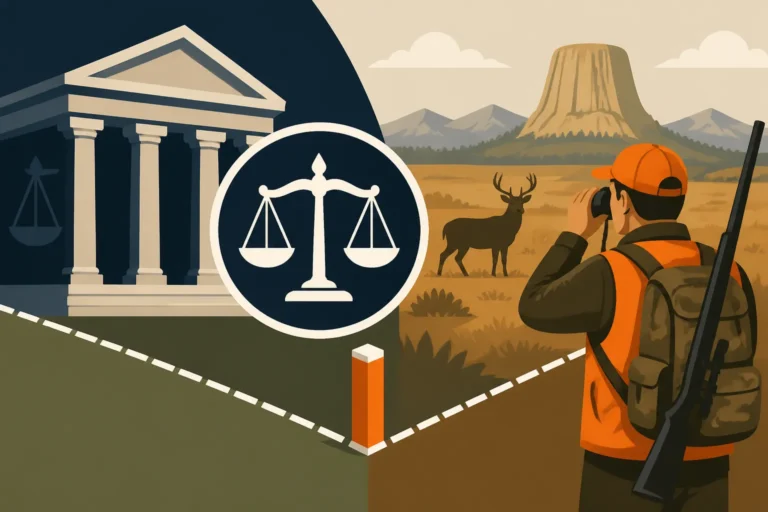
One of the biggest frustrations for hunters in the Inyan Kara area, and indeed much of eastern Wyoming, is the complex patchwork of public and private land. It's not uncommon to find small sections of Bureau of Land Management (BLM) or National Forest ground completely surrounded by private ranches, creating a real access headache. This checkerboard pattern can make planning a hunt feel like solving a puzzle, and it's where careful preparation and the right tools become absolutely indispensable.
Understanding the Land Ownership Puzzle
Eastern Wyoming, including the Inyan Kara region, has a much higher percentage of private land compared to the mountainous western side of the state. This means that while public land exists, it's often fragmented and landlocked. You might spot promising hunting ground on a map, only to realize it's inaccessible without crossing private property. This isn't just an inconvenience; it can be a legal minefield if you're not careful. Trespassing, even accidentally, can lead to fines, loss of hunting privileges, and a generally miserable experience. The frustration is real when you see game just beyond a fence line on what looks like a public section, but getting there is impossible. Understanding Where Wyoming's Public Land Is Concentrated can provide helpful context, but always verify specific parcels in the Inyan Kara vicinity.
Furthermore, there are various types of private land: deeded ranch land, state trust land (which often requires specific permission or is part of a Hunter Management Area), and smaller private parcels. Each comes with its own set of rules and access considerations. Simply seeing a "public land" designation on a general map isn't enough; you need to verify how to legally reach that public ground.
Tools for Navigating Boundaries
This is where modern technology becomes your best friend. A reliable mapping application like onX Hunt is absolutely crucial for hunting around Inyan Kara. It allows you to clearly see property lines, landowner names, and public land designations right on your phone or GPS device. This takes much of the guesswork out of navigating the land mosaic. With onX Hunt, you can identify legal access points, whether that's a public road, an adjacent piece of public ground, or even an Access Yes Walk-in Area. You can drop waypoints, track your movement, and ensure you're always aware of where you stand relative to private property. This tool is invaluable for preventing accidental trespassing and maximizing your time on accessible ground. Can You Rely on onX for a Boundary? is a question many hunters ask, and while it's an incredibly powerful tool, always respect marked boundaries and posted signs in the field.
Another important layer to consider is the GoHunt mapping system, which provides similar detailed land ownership information, often with additional data overlays for draw odds, historical harvest data, and unit boundaries. Combining these resources gives you a robust understanding of the landscape before you even set foot in the field.
Securing Permission on Private Parcels
Given the prevalence of private land, seeking permission from landowners is often the best way to expand your hunting opportunities around Inyan Kara. This requires respect, patience, and good communication. Start early, well before the season opens, and be prepared for "no" answers. Many landowners are inundated with requests, but a polite, well-prepared approach can sometimes open doors. Offer to help with chores, respect their property, and always follow any rules they set.
Some private lands participate in the Wyoming Game and Fish Department's Access Yes program, which includes Walk-in Areas (WIAs) and Hunter Management Areas (HMAs). WIAs typically don't require pre-permission, while HMAs usually require a free online permission slip that you print out. These programs are fantastic resources for gaining access to private ground that might otherwise be off-limits. Always check the current year's Access Yes map and regulations before heading out.
| Land Type | Key Characteristics | Access Requirements |
|---|---|---|
| BLM Land | Federal public land, often scattered and fragmented | Generally open to hunting, verify access |
| National Forest | Federal public land, more timbered areas | Generally open to hunting, verify access |
| State Trust Land | State-owned land managed for revenue | Usually requires a specific permit or WGFD permission |
| Private Ranch | Privately owned, fenced properties | Requires explicit landowner permission |
| Access Yes WIA | Private land enrolled in WGFD program | Open access during designated seasons |
| Access Yes HMA | Private land enrolled in WGFD program | Requires free online permission slip |
Strategic Scouting and Hunt Planning for Inyan Kara
Hunting successfully in the Inyan Kara region isn't just about showing up with your rifle or bow; it's about meticulous planning and understanding the nuances of this unique country. From leveraging digital tools to getting boots on the ground, every step contributes to a more effective and rewarding hunt. The goal is to minimize surprises and maximize your chances once the season opens.
Leveraging Digital Resources
Before you ever leave your living room, you can gather an incredible amount of information. Websites like GoHunt and onX Hunt are indispensable for e-scouting. With GoHunt, you can dive into detailed draw odds for various units, review harvest statistics, and get an overview of general hunting conditions. This kind of data allows you to focus your efforts on units with better odds or a history of producing the type of animal you're after. You can analyze terrain features, identify potential bedding areas, feeding zones, and water sources from satellite imagery, looking for those subtle changes in vegetation or elevation that might hold game. E-Scouting a Unit Before the Season Opens is a skill worth developing for any western hunt, and particularly for complex areas like Inyan Kara.
onX Hunt complements this by providing hyper-detailed property boundaries, topography, and various map layers. You can identify public land parcels, locate isolated sections, and plan your entry and exit routes while staying off private ground. Use the 3D terrain feature to visualize elevation changes and find hidden draws or benches that might serve as natural travel corridors. Mark potential glassing points, bedding areas, and water sources as waypoints. This digital reconnaissance allows you to narrow down vast areas into manageable sections, making your on-the-ground scouting much more efficient. Many hunters find that Using onX Public Land Layers in Wyoming drastically improves their confidence in navigating unfamiliar terrain.
On-the-Ground Preparation
While digital tools are powerful, there's no substitute for actual boots-on-the-ground scouting. If you can visit the Inyan Kara area before the season, even for a weekend, you'll gain invaluable insight. Walk the drainages you identified online, check for fresh sign, and verify access points. Pay attention to how the wind typically blows in different canyons and draws; reading wind on an open-country stalk, or even in broken timber, is paramount for success. Look for rubs, scrapes, and bedding areas. Identify pinch points where game funnel between different habitat types, like where a timbered ridge meets an open meadow.
During your scouting trips, carry your binoculars and spotting scope, just as you would on a hunt. Practice identifying features and ranges. This also gives you a chance to acclimate to the terrain and understand the physical demands of hunting this particular area. You might find that what looked like a gentle slope on a map is actually a steep, rocky climb. And remember, seasonal changes profoundly affect game behavior and location. Early season might find deer higher up, while the rut could pull them into lower, denser cover.
Reading the Landscape and Game Behavior
Successful hunting in Inyan Kara comes down to truly understanding how game uses the diverse landscape. Whitetail will gravitate towards the thick riparian zones and brushy draws for security, especially when pressured. They often won't travel far from these areas unless forced. Mule deer, on the other hand, might be found higher up on the pine-covered ridges, using their eyesight to detect danger, but they'll also drop into draws for water and forage. Knowing The Red Desert Mule Deer Migration Explained gives insight into the massive movements of some herds, though Inyan Kara deer are more localized.
Antelope will stick to the open grasslands, so if you're targeting them, focus your efforts on the flatter, less timbered parts of the unit. Their incredible eyesight means you need to be extra cautious with your approach, using every bit of available cover. Understanding the seasonal patterns – when the rut kicks in for deer, when water sources might dry up – is also critical. Animals will shift their patterns based on forage availability, hunting pressure, and weather. By combining thorough digital scouting with real-world observation, you can develop a comprehensive hunt plan that accounts for the specific challenges and opportunities Inyan Kara offers.
Disclaimer
This article is for general informational purposes only and does not constitute professional advice. Laws, prices and regulations vary by location and change over time. Consult a qualified professional for guidance on your specific situation.