Why Carbon County Produces Big Mule Deer
Hunting mule deer in Wyoming is a dream for many, but the reality can often feel like chasing ghosts across vast, empty landscapes. You've heard the whispers about certain areas, the "big buck" units, and Carbon County often comes up in those conversations. It's not just a myth; there are very real reasons why this expansive, rugged piece of Wyoming consistently produces some truly exceptional mule deer. This guide will dive deep into what makes Carbon County a premier destination for those seeking a trophy buck, from its unique habitat to the strategic approaches that can lead to success.
The Unique Landscape of Carbon County for Mule Deer
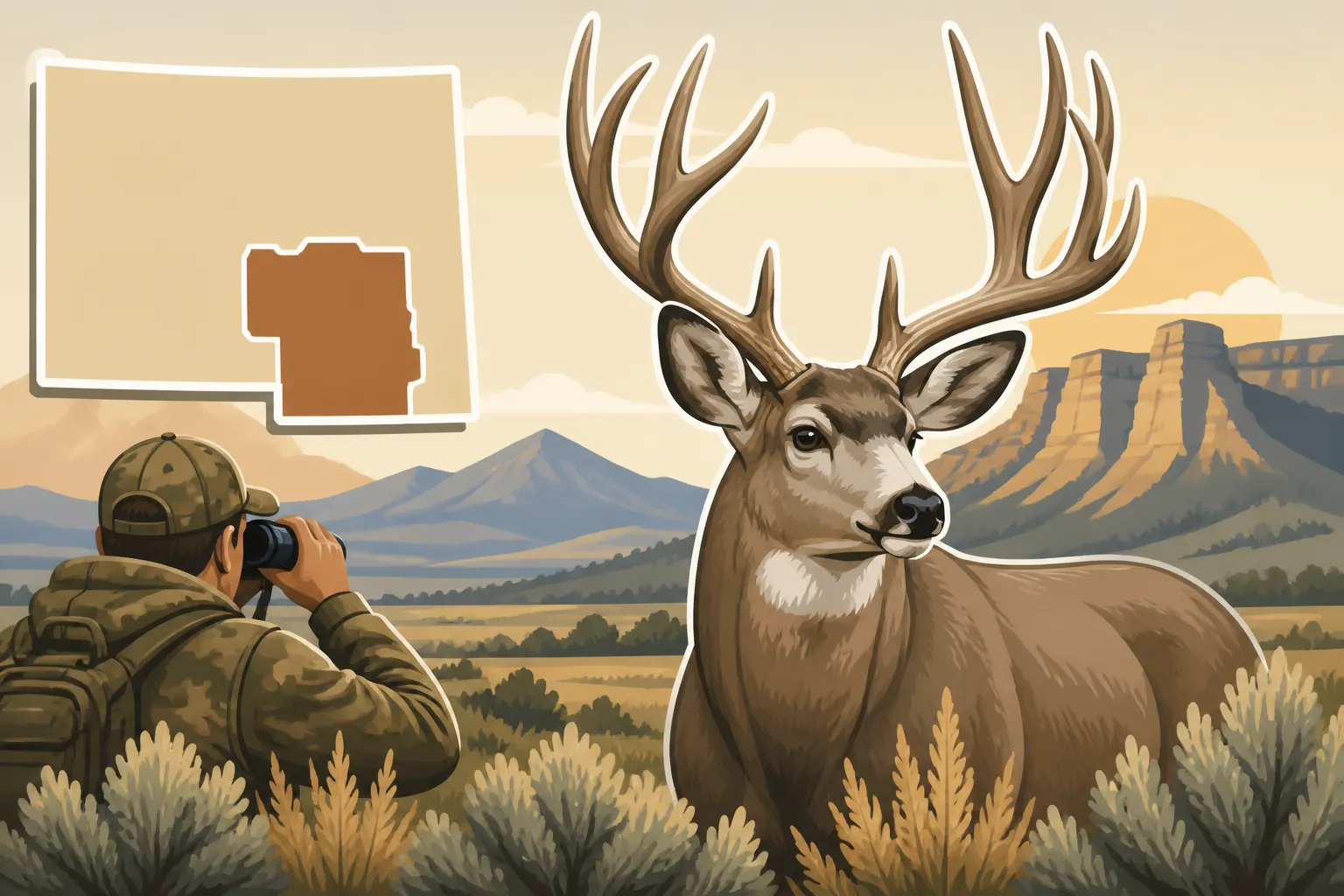
Carbon County, Wyoming, isn't just a dot on a map; it's a massive, diverse ecosystem spanning millions of acres, much of it public land. This isn't your typical timber hunt, nor is it purely wide-open prairie. It's a fascinating blend of sagebrush flats, broken rimrock, aspens pockets, and higher elevation timbered slopes that create an ideal environment for mule deer to thrive, grow old, and pack on significant antler mass. When you look at the sheer scale and variety of terrain, it's easy to see why deer can truly disappear and mature here.
Expansive Habitat and Diverse Terrain
One of the biggest contributors to Carbon County's reputation for big mule deer is simply the space. We're talking about huge tracts of land, often characterized by the "checkerboard" pattern of public and private ownership that can be tricky to navigate but offers vast, unpressured areas if you know how to access them. These sprawling habitats mean deer aren't constantly pushed or confined to small pockets. They have room to roam, to escape pressure, and to find solitude, which is crucial for older bucks that become increasingly wary. The terrain itself ranges from the high, snow-dusted peaks of the Sierra Madre and Medicine Bow Mountains in the south to the vast, sage-covered plains of the Red Desert in the north. This diverse elevation provides a complex mosaic of cover and foraging opportunities throughout the year, allowing deer to follow seasonal food sources and escape harsh weather.
Imagine standing on a high point in the Ferris Mountains, glassing an entire basin. What you see isn't uniform; it's a patchwork of dark timber on north-facing slopes, transitioning into aspen groves, then rugged draws choked with bitterbrush, eventually opening into endless sage flats. This varied topography offers everything a mule deer needs: thermal cover in timber, security cover in deep draws and rimrock, and open areas for feeding. It’s this intricate blend that allows bucks to find sanctuaries where they can avoid human contact for much of their lives, making them harder to find but giving them the chance to reach impressive sizes.
Nutritional Forage and Water Sources
You can have all the space in the world, but without quality food and water, deer won't grow big. Carbon County, despite its arid reputation in some areas, boasts surprisingly rich forage and reliable water sources that fuel antler growth. The high desert regions are often underestimated; they're home to a wide variety of browse species like sagebrush, bitterbrush, and serviceberry, which are high in protein and essential nutrients. As you move into higher elevations, you find lush mountain meadows, aspen stands, and conifer forests that provide different, equally important, dietary components throughout the spring and summer.
Water, of course, is a critical factor, especially in an often-dry landscape. While obvious rivers like the North Platte cut through parts of the county, there are countless smaller springs, seeps, stock tanks, and intermittent creeks scattered across the landscape. Even seemingly barren areas often hold hidden water pockets that deer key into. Knowing how to locate these vital water sources, especially in the early season, can be a game-changer for finding where deer are concentrated. Programs like Using onX Public Land Layers in Wyoming can be invaluable for identifying these features from your home computer before you even set foot in the field, helping you narrow down vast areas. This combination of abundant, nutritious forage and consistent water allows bucks to maximize their antler development year after year.
Genetics, Age Structure, and Low Pressure
It’s not just about what they eat; it’s also about who they are and how long they get to live. Carbon County offers a trifecta of strong genetics, an age structure that favors older bucks, and relatively lower hunting pressure in many areas, all contributing to its reputation for producing big mule deer. It's a place where a buck has a real chance to grow old and become truly magnificent.
The Role of Genetics in Antler Growth
While habitat and nutrition are paramount, you can't discount the role of genetics. Carbon County's mule deer herds appear to possess a strong genetic predisposition for impressive antler growth. Over generations, the bucks in these areas have consistently shown the potential to develop wide, heavy, and many-pointed racks. This isn't to say every buck will be a monster, but the potential for it is certainly there. It's a testament to the overall health and lineage of these particular herds.
These genetic traits are nurtured by the environment. When deer with good genetics have consistent access to high-quality forage and minimal stress, those genetic blueprints for large antlers can fully express themselves. It’s a delicate balance; even the best genetics can't overcome poor nutrition or chronic stress. But in Carbon County, these elements often align, giving those genetically superior bucks the best chance to grow into truly remarkable specimens. This is part of the allure: knowing that the buck you're glassing might have been born with the inherent ability to carry a truly massive rack.
Age Class and Survival Rates
To grow a big rack, a mule deer buck needs to live long enough to do it. Unlike some areas with intense hunter pressure or severe winters, many parts of Carbon County seem to maintain a healthier age structure, meaning more bucks survive past their younger years. A buck typically doesn't reach its peak antler potential until it's 5, 6, or even 7 years old. If hunting pressure is too high, or if harsh conditions decimate younger age classes, those older, trophy-caliber bucks simply aren't there. What the 2022-23 Winter Did to Wyoming Mule Deer highlights how quickly these dynamics can change, but Carbon County has shown resilience.
The vastness and ruggedness of the terrain act as natural buffers. Deep canyons, dense timber pockets, and remote basins provide refuge where older bucks can ride out hunting seasons largely undisturbed. Even when a buck is pressured in one area, it has ample opportunity to relocate to another, less-accessible sanctuary. This allows more bucks to reach maturity, which in turn leads to a higher probability of encountering those truly large, impressive animals. It's a cycle: older bucks breed, passing on their genes, and their offspring, in turn, have the chance to mature.
Lower Hunter Pressure and Remote Access
Let's be honest, hunting is a competition, and fewer hunters often mean better hunting. While Carbon County is no secret, many of its prime areas receive less pressure than some of Wyoming's more accessible units. This is often due to the sheer size of the county and the challenges associated with accessing some of its most remote public lands. Hunters who are willing to hike further, pack in deeper, or navigate difficult roads often find themselves in areas with significantly fewer people.
Consider a deep backcountry hunt, requiring a multi-mile hike or even a horseback pack trip. These endeavors naturally filter out a large percentage of hunters, leaving those who are dedicated and prepared to explore the untouched corners. Even with popular tools like onX Hunt that make public land navigation easier, many hunters still stick to areas with easier road access. This means that if you're willing to put in the effort, you can often find solitude and, more importantly, bucks that haven't been relentlessly pursued since opening day. This reduced pressure allows bucks to maintain more natural patterns, making them less skittish and often more predictable.
Strategic Hunting Approaches for Carbon County Mule Deer
Success in Carbon County, especially for big mule deer, rarely happens by accident. It demands preparation, specific tactics, and a deep understanding of the landscape. This isn't a place for casual hunting; it's a destination for dedicated mule deer enthusiasts ready to put in the work.
Scouting Techniques for Success
Before you even step foot in Carbon County, your success starts at home. E-scouting is absolutely vital for such a massive and complex area. Using satellite imagery, topo maps, and public land overlays is not just helpful; it's non-negotiable. Tools like GoHunt's insider information and onX Hunt are indispensable for identifying potential bedding areas, feeding zones, water sources, and, critically, access points to public land. Look for broken country, north-facing slopes with timber for bedding, and areas where different habitat types converge. Pay close attention to features that funnel deer, like saddles, draws, and pinch points between private and public ground. E-Scouting a Unit Before the Season Opens can save you days, even weeks, of unproductive boots-on-the-ground scouting.
Once you arrive, pre-season scouting is about confirming your e-scouting observations and learning the rhythm of the land. This might mean driving endless miles of dirt roads, glassing from high points, or hiking into specific drainages to look for sign. Focus on areas that offer both cover and forage, especially those away from roads. Look for tracks, scat, rub lines, and old beds. The more time you spend simply observing the landscape and deer patterns before the season, the higher your chances of knowing exactly where to be when opening day arrives. Understand that "scouting" here means covering immense distances, often with your optics.
Glassing and Stalking in Open Country
Carbon County is largely a glassing game. Your binoculars and spotting scope are your most important tools. Forget still hunting through dense timber; here, you're climbing to high points and spending hours, sometimes entire days, systematically dissecting the landscape for antlers, ears, or even just a flicker of movement. This takes patience and a disciplined approach. Grid Glassing a Basin Without Missing Bucks is a technique you'll want to master. Set up your tripod and optics, pick a section of country, and methodically scan every inch of it before moving to the next.
Once you spot a buck, especially a big one, the real challenge begins: the stalk. Mule deer in open country have incredible eyesight and are acutely aware of their surroundings. This means using every bit of terrain to your advantage—draws, ridges, isolated patches of sage, even the sparse rock formations. Wind direction is critical; never let it blow your scent towards the deer. You might have to make huge detours, crawling on your hands and knees for hundreds of yards to stay out of sight. Remember that How Close a Bowhunter Really Needs to Get is different from a rifle hunter, but stealth remains paramount. Patience during the stalk is key; rushing it almost guarantees failure.
Here's a quick overview of key factors for big bucks in Carbon County:
| Factor | Contribution to Big Mule Deer | How It Manifests in Carbon County |
|---|---|---|
| Habitat Size | Provides room for deer to escape pressure. | Millions of acres, vast public land tracts. |
| Terrain Diversity | Offers varied cover and forage year-round. | Mountains, sage flats, rimrock, timber, aspens. |
| Forage Quality | Fuels antler growth and overall health. | Diverse browse (sage, bitterbrush), lush meadows. |
| Water Availability | Essential for deer survival, especially in arid zones. | Numerous springs, seeps, stock tanks, rivers. |
| Genetics | Predisposition for larger antler size. | Historically strong genetics in local herds. |
| Age Structure | Allows bucks to reach peak antler maturity. | Less pressure in remote areas permits older bucks. |
| Hunter Pressure | Lower pressure reduces stress, increases survival. | Challenging access limits hunter numbers in some units. |
| Remote Access | Creates natural sanctuaries for mature bucks. | Requires effort (hike/pack in) to reach prime spots. |
Understanding Draw Odds and Tag Strategies
Even with the best preparation, you can't hunt Carbon County if you don't draw a tag. Understanding the draw odds and developing a smart tag strategy is crucial, especially for nonresident hunters. Wyoming's preference point system means that drawing a high-demand, trophy mule deer tag in Carbon County can take several years of accumulating points. However, there are also general season tags and certain limited-quota units that might have slightly better odds, often in areas that require more effort to hunt. Familiarize yourself with how to navigate the Wyoming General Licenses Against Limited Quota: Two Different Games.
For those aiming for specific trophy units, buying a preference point annually, even if you don't apply for a tag, is a smart long-term play. This is where resources like GoHunt's draw odds data and application strategy tools become invaluable. They can help you analyze past draw results, understand point creep, and make informed decisions about where to apply. Some hunters opt for easier-to-draw general tags in Carbon County, knowing that with enough effort and scouting, a good buck can still be found. Others play the long game, banking points for several years to secure a coveted, high-demand limited quota tag. Understanding Points Needed for a Wyoming Mule Deer Tag is a critical first step.
Key Considerations for Your Carbon County Hunt
Hunting Carbon County is an incredible adventure, but it comes with its own set of practical challenges and considerations. Being prepared for these realities will greatly enhance your experience and chances of success.
Access Challenges and Public/Private Land Navigation
One of the biggest hurdles for hunters in Carbon County is navigating the complex land ownership patterns. The infamous "checkerboard" system, a legacy of railroad grants, means public and private lands are often interspersed in a mile-by-mile grid. While recent court rulings like those around corner crossing have clarified some aspects of access, it's still absolutely essential to know precisely where you are at all times. How Many Acres the Corner Crossing Ruling Opened has helped, but caution is still advised.
This is where digital mapping apps like onX Hunt become not just useful, but almost mandatory. They provide real-time GPS tracking on detailed maps showing public and private land boundaries, landowner names, and even different types of public land like BLM or State Trust Land. This allows you to legally access public ground, avoid trespassing, and make the most of your hunting time. Always carry physical maps as a backup, and understand how to read them without relying solely on electronics. Getting permission to cross private land to access landlocked public parcels is another strategy, but it requires advance planning and respectful communication with landowners. Don't assume anything.
Weather, Gear, and Physical Preparation
Wyoming weather is notoriously unpredictable, especially in a county as geographically diverse as Carbon. You can experience all four seasons in a single day, or even within a few hours. Early season hunts might bring scorching heat and dust, while late season can mean blizzards, deep snow, and bitter cold. Being prepared for anything is not just a cliché; it's a necessity. Pack layers, waterproof outer shells, quality insulated boots, and a robust sleeping system if you're camping. A sudden storm can turn a pleasant hunt into a survival situation very quickly.
Beyond weather, the sheer physical demands of hunting big country cannot be overstated. You'll be walking miles, often at elevation, carrying optics, a rifle, and potentially a heavy pack. Physical Conditioning for a Mountain Hunt isn't just for elk hunters; it applies to mule deer too. Start a fitness regimen months before your hunt, focusing on cardio, leg strength, and carrying a weighted pack. Nothing ruins a hunt faster than being physically unprepared, or worse, getting injured miles from the nearest road. Ensure your gear is reliable, lightweight, and suited for rugged use. This includes a quality backpack, dependable optics, and navigation tools.
Disclaimer
This article is for general informational purposes only and does not constitute professional advice. Laws, prices and regulations vary by location and change over time. Consult a qualified professional for guidance on your specific situation.