Physical Conditioning for a Mountain Hunt
The majestic mountains and vast, open spaces of Wyoming offer some of the most incredible hunting experiences imaginable, but let's be honest, they're not for the faint of heart or the unprepared. Many hunters dream of a high-country elk hunt or chasing mule deer through steep canyons, only to arrive and find themselves utterly gassed on the first uphill climb. This guide is all about helping you understand the physical demands of a mountain hunt and, more importantly, how to condition your body to meet those challenges head-on, ensuring a safer, more enjoyable, and ultimately more successful adventure.
Why Mountain Hunting Demands More from Your Body
When you picture hunting in Wyoming's mountains, you might envision a serene landscape, glassing for game. While that's certainly part of it, the reality often involves relentless physical exertion that pushes even fit individuals to their limits. It’s a different beast than flatland hunting, requiring a specialized approach to physical preparation.
The Relentless Terrain and Altitude Sickness
Imagine scaling a hillside that feels like a never-ending staircase, with loose shale underfoot and thick timber snatching at your pack. This isn't just a walk in the park. Mountain terrain in places like the Bridger-Teton National Forest or parts of the Bighorn Mountains means constant ascents and descents, often over uneven ground covered in rocks, downed timber, or slick mud. Every step demands balance, core strength, and leg power, and it's a constant, grinding effort. The cumulative fatigue from navigating such terrain day after day can be astounding.
Beyond the physical obstacles, there's the invisible challenge of altitude. Many prime hunting areas in Wyoming sit at elevations where the air is noticeably thinner—think 7,000 to 10,000 feet, or even higher. For someone coming from sea level, this decreased oxygen can trigger altitude sickness, manifesting as headaches, nausea, dizziness, and extreme fatigue. Even if you don't experience full-blown sickness, the reduced oxygen means your muscles simply can't work as hard, and your recovery time is significantly longer. It's a real wake-up call for many hunters who are otherwise in good shape but haven't trained specifically for elevation. Preparing for Altitude on a Wyoming Hunt is a critical piece of the puzzle that often gets overlooked.
Carrying Heavy Loads Over Long Distances
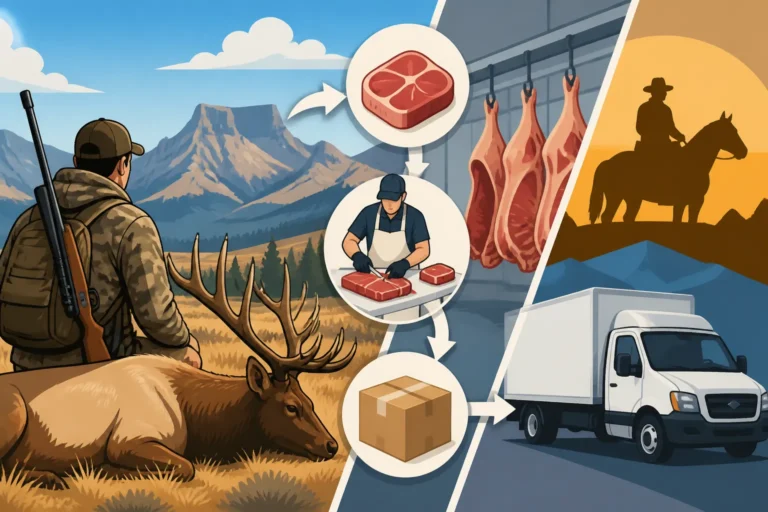
One of the most profound differences in mountain hunting is what happens after you successfully harvest an animal. Let's say you've put in the miles, made a clean shot on a bull elk, and now it's time to get that meat off the mountain. A mature bull elk can easily weigh 600-800 pounds, and a mule deer buck isn't much lighter at 200-300 pounds. You're not just dragging it to your truck; you're often quartering it out and making multiple trips, each load weighing 50-100 pounds or more, over that same relentless terrain you just hiked in on.
Even if you're lucky enough to use horses or an outfitter with pack animals, you'll still be carrying your own hunting gear—rifle or bow, optics, water, food, emergency supplies, and perhaps a small tent. This pack alone can easily be 30-50 pounds. Imagine hiking uphill for miles, often cross-country, with that kind of weight on your back. It demands immense strength in your legs, core, and back, as well as incredible endurance. Without proper conditioning, a successful kill can quickly turn into an agonizing, potentially unsafe, ordeal. Getting your gear sorted, including understanding The Gear List Your Outfitter Will Send, is just the first step; being strong enough to carry it is the next.
Building Your Mountain Hunting Fitness Plan
Preparing for a mountain hunt isn't about looking good in a mirror; it's about building functional strength and endurance that will serve you when it truly matters. This means focusing on a diverse training regimen that mimics the physical challenges you'll face.
Cardiovascular Endurance: The Engine for the Mountains
Your cardiovascular system is the engine that will power you up those steep slopes and keep you going hour after hour. Without a strong aerobic base, you'll be huffing and puffing constantly, burning out quickly, and your decision-making will suffer. Activities that get your heart rate up and sustain it are paramount. Think of long, vigorous hikes—especially with a weighted pack—trail running, cycling (road or mountain), and stair climbing or using an incline treadmill. The goal is to build your body's ability to deliver oxygen to your working muscles efficiently.
Start slow and build up. If you're new to this, begin with brisk walks and gradually increase distance, speed, and incorporate inclines. As you progress, add a backpack with weight, slowly increasing the load. Aim for workouts that last at least an hour, mimicking the sustained effort of a hunting day. Cycling is fantastic for building leg endurance without the impact, and stair climbers can be brutal but effective for replicating uphill climbs. These are the foundations that will allow you to read Reading Wind on an Open-Country Stalk while still catching your breath.
Strength Training: Preparing for the Pack-Out
While cardio is key for movement, strength training is crucial for navigating tough terrain, carrying your pack, and especially for the inevitable pack-out. Your legs, core, and back are the workhorses of a mountain hunter. You need powerful legs for ascents and descents, a strong core for stability and balance on uneven ground, and a resilient back to prevent injury from heavy loads.
Incorporate exercises like squats, lunges (forward, reverse, and lateral), deadlifts (or Romanian deadlifts), step-ups onto a box or bench, and farmer's carries. Farmer's carries, where you walk with heavy weights in each hand, are incredibly effective for building grip strength, core stability, and overall body resilience, directly translating to carrying quarters of meat. Don't forget your upper body, either; pull-ups, rows, and overhead presses will help with everything from climbing over downed trees to recovering from a stumble. Your goal isn't necessarily massive bulk, but functional, durable strength.
Integrating Uphill Hiking with a Pack
This is arguably the most specific and vital component of your training. Nothing—and I mean nothing—prepares you for a mountain hunt like hiking uphill with a weighted pack. This isn't just about cardio; it builds the specific muscle endurance, balance, and mental toughness needed for the hunt. Start with your actual hunting pack, loaded with 20-30 pounds, and find the steepest hills or staircases you can. Gradually increase the weight in your pack and the duration of your climbs.
Aim to do these "rucking" sessions at least once a week, building up to 2-3 hours with significant weight. If you're looking at a serious backcountry trip, practice with 50-60 pounds in your pack. This will simulate carrying your gear in, and then potentially double that weight on the way out. It also lets you break in your boots, identify any hotspots, and get accustomed to how your pack carries. When you’re planning your hunt, use resources like GoHunt to look at topographic maps of your desired unit; visualizing the elevation changes can help you tailor your rucking to similar grades and distances. Understanding Terrain That Hides an Approach becomes much easier when you've already traversed similar landscapes in training.
Practical Training Regimen and Mindset
A successful conditioning plan isn't just about what exercises you do; it's about how you structure your training, what you put into your body, and the mental fortitude you cultivate.
A Phased Approach to Training
You can't go from zero to mountain hunter in a week. A truly effective conditioning plan should span several months, ideally starting 4-6 months before your hunt date. Break your training into phases:
- Base Building (Months 4-6 out): Focus on general cardiovascular fitness (running, cycling, swimming) and foundational strength (full-body weightlifting). This is about improving overall fitness levels.
- Strength and Endurance (Months 2-3 out): Intensify your strength training, focusing on compound movements. Increase the frequency and duration of your rucking sessions, adding more weight and elevation. This is where you really start to mimic hunt-specific demands.
- Sport-Specific and Acclimatization (Month 1 out): Focus heavily on rucking and long hikes. If possible, spend time at higher elevations if you're able to. This is also a good time to ensure your gear, especially your boots and pack, are dialed in.
- Tapering (Last 1-2 weeks): Reduce the intensity and volume of your workouts. Focus on light activity, stretching, and rest. You want to arrive at your hunt refreshed and strong, not burned out or injured.
A typical weekly schedule might look like this during peak training:
- Monday: Full-body strength (heavy squats, deadlifts, presses)
- Tuesday: Interval cardio (trail running or intense cycling)
- Wednesday: Active recovery or light cardio
- Thursday: Full-body strength (lighter, more explosive movements, core work)
- Friday: Rest
- Saturday: Long ruck/hike with heavy pack (2-4 hours)
- Sunday: Moderate cardio (cycling or swimming)
Platforms like BookYourHunt might help you find outfitters who also offer conditioning advice or even pre-hunt programs, but the core work starts at home.
Nutrition, Hydration, and Rest
Your body is a machine, and like any machine, it needs proper fuel and maintenance. Neglecting nutrition, hydration, and rest can completely derail even the most dedicated training program. Focus on a balanced diet rich in lean proteins for muscle repair, complex carbohydrates for sustained energy, and healthy fats. Avoid processed foods and excessive sugars.
Hydration is critical, both in your training and especially during the hunt itself. Start hydrating well before your hunt, and continue consistently throughout the day. Dehydration at altitude can exacerbate symptoms of altitude sickness and severely impair performance. Finally, don't underestimate the power of rest. Your muscles grow and repair during recovery. Aim for 7-9 hours of quality sleep each night, and incorporate rest days into your training schedule. Pushing too hard without adequate recovery is a fast track to injury and burnout.
Mental Toughness and Realistic Expectations
Hunting in the mountains is as much a mental game as it is a physical one. There will be moments of extreme discomfort, frustration, and exhaustion. Your feet will hurt, your muscles will ache, and the weather might turn foul. Developing mental toughness—the ability to push through these challenges—is paramount. Visualize yourself succeeding, but also acknowledge that it will be hard. Be prepared for setbacks and have a resilient attitude.
Set realistic expectations for your physical performance. Don't expect to be sprinting up mountains like a bighorn sheep on day one. Understand that even with excellent training, the altitude will slow you down. Pace yourself, listen to your body, and don't be afraid to take breaks. A realistic mindset, combined with thorough physical preparation, will make your mountain hunting experience much more enjoyable and safe. Wyoming Sets Bow Draw Weight at 40 Pounds, 50 for Elk and other regulations aside, getting that animal in range requires a calm mind and a body that can deliver when the moment comes.
Common Pitfalls and How to Avoid Them
Even with the best intentions, hunters often fall into common traps when preparing for a mountain hunt. Being aware of these can help you sidestep them and arrive in Wyoming fully prepared.
Underestimating the Impact of Altitude
This is perhaps the biggest pitfall for hunters coming from lower elevations. Many physically fit individuals assume their cardio fitness will translate perfectly to high altitude. While a strong cardiovascular base is a huge advantage, it doesn't entirely negate the effects of thinner air. Symptoms of altitude sickness can range from mild annoyance to debilitating illness, and in severe cases, it can be life-threatening.
To avoid this, try to arrive in your hunting area a day or two early, if feasible. This allows your body some time to begin acclimatizing. During these initial days, keep your activity light, stay well-hydrated, and avoid alcohol. Listen carefully to your body for any signs of headache, nausea, or unusual fatigue. Pacing yourself on the first day or two of the hunt, especially on steep climbs, is also crucial. Slowly easing into the physical demands gives your body a better chance to adjust.
Neglecting Foot and Ankle Conditioning
Your feet and ankles are your primary interface with the mountain, and they take an absolute pounding. Many hunters focus on their big muscle groups but forget about the smaller, stabilizing muscles in their feet and ankles. Walking over uneven, rocky, or slippery terrain places immense stress on these joints. A twisted ankle can end a hunt in an instant and create a dangerous situation in the backcountry.
Beyond strengthening your legs, incorporate specific exercises for foot and ankle stability. Balance exercises, like standing on one leg or using a wobble board, can be highly effective. Walking on varied, uneven surfaces during your training (think trails, gravel, or even just your lawn) rather than always on pavement will also help prepare your feet and ankles. Invest in high-quality, broken-in hunting boots that provide excellent ankle support, and make sure you've logged plenty of miles in them before your hunt. Your boots are a critical piece of gear, and painful feet will ruin your hunt faster than almost anything else.
Cramming Training at the Last Minute
The "I'll just get in shape next month" mentality is a recipe for disaster on a mountain hunt. Trying to cram all your conditioning into the last few weeks before your trip is unlikely to yield significant results and greatly increases your risk of injury or burnout. Your body needs time to adapt, strengthen, and build endurance. A sudden increase in intense physical activity can lead to pulled muscles, joint pain, shin splints, or severe fatigue that leaves you drained before your hunt even begins.
The key to effective conditioning is consistency and a gradual progression. Start your training months in advance, following a structured plan that slowly increases in intensity and volume. This allows your body to safely build the necessary fitness without overstressing it. Think of it as a marathon, not a sprint. A steady, disciplined approach will ensure you arrive in Wyoming feeling strong, confident, and ready to tackle whatever the mountains throw your way. If you're utilizing services like BookYourHunt or GoHunt for finding areas or booking trips, factor in your physical preparation window before you even look at dates.
| Training Activity | Primary Benefit | How It Helps Mountain Hunting |
|---|---|---|
| Uphill Rucking/Hiking | Cardiovascular, Leg Strength | Directly simulates hiking with a pack over varied terrain |
| Stair Climber/Incline Treadmill | Cardiovascular, Leg Endurance | Builds stamina for sustained ascents, minimal impact |
| Squats & Lunges | Leg Strength, Power, Stability | Essential for climbing, descending, and carrying weight |
| Deadlifts | Posterior Chain, Core, Grip | Critical for lifting heavy loads (e.g., quarters of meat) |
| Farmer's Carries | Grip, Core Stability, Whole Body | Translates directly to carrying heavy, awkward items |
| Trail Running | Cardiovascular, Ankle Stability | Builds dynamic endurance and proprioception on uneven ground |
| Cycling | Cardiovascular, Leg Endurance | Low-impact cardio, great for building stamina without joint stress |
| Balance Exercises | Ankle Strength, Core Stability | Prevents stumbles and twists on rocky, uneven surfaces |
Disclaimer
This article is for general informational purposes only and does not constitute professional advice. Laws, prices and regulations vary by location and change over time. Consult a qualified professional for guidance on your specific situation.