Why Hunter Management Areas Require One
Navigating Wyoming's vast and breathtaking landscapes for hunting is an absolute dream for many of us, but let's be honest, figuring out all the different access rules can feel like trying to solve a puzzle while a trophy elk is bugling just out of sight. You've heard about "public land," but then you run into terms like "Walk-In Areas" and "Hunter Management Areas," and suddenly it's not so clear. Specifically, you might be scratching your head, wondering why a permission slip is suddenly required for a Hunter Management Area when other public lands seem to be wide open. This guide is here to clear up that confusion, explaining the crucial role these permission slips play in Wyoming's unique access programs.
Understanding Wyoming's Public Access Puzzle Pieces
Wyoming is a hunter's paradise, a state defined by its wide-open spaces, towering mountains, and endless sagebrush flats. The sheer amount of public land here—whether it's Bureau of Land Management (BLM) ground, National Forest, or State Trust Land—is incredible. Yet, as glorious as that sounds, accessing it effectively can be a complex endeavor, especially for folks who aren't familiar with the nuances of Western land ownership. It’s easy to feel a little overwhelmed by the checkerboard patterns on a map, the private land boundaries, and the myriad of rules that seem to change depending on whether you're looking at a WIA or an HMA.
The Landscape of Opportunity and Confusion
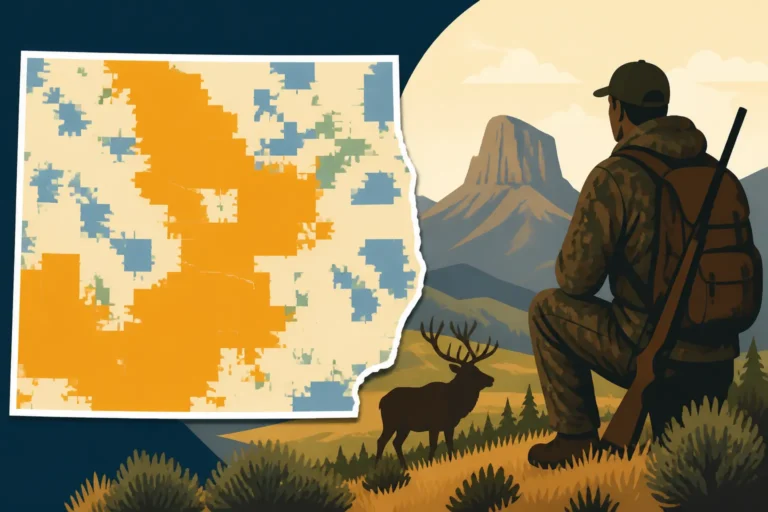
Imagine you're meticulously planning your hunt, pouring over maps, marking potential glassing spots and travel corridors. You see vast swaths of green (Forest Service) and yellow (BLM) on your onX Hunt app, and your heart races with anticipation. Then you notice smaller, often isolated, parcels that are clearly marked as public, but they're surrounded entirely by private ground. This "landlocked" public land is a common frustration, and it's one of the reasons programs like HMAs exist. Wyoming's landscape isn't just about federal land; it's a tapestry woven with private ranches, state lands, and various access agreements that each come with their own set of guidelines. Getting lost in these details is totally understandable, but learning the ropes can unlock incredible opportunities.
This intricate blend of ownership means that while much of Wyoming is indeed public, simply assuming all public land is accessible in the same way can lead to problems. You might find a promising looking parcel on your map, only to realize the only way to reach it requires crossing private ground, which can lead to uncomfortable situations if you haven't secured proper permission. That's where specific programs come in, designed to bridge these access gaps and provide more clarity for hunters. Knowing the difference between them is not just about avoiding a ticket; it's about respecting the land, the wildlife, and the landowners who make so much of this hunting possible.
Walk-In Areas WIAs: Simpler, But Still Special
Before we dive deep into HMAs, let's quickly touch on Walk-In Areas (WIAs) because they often get confused with HMAs. WIAs are also part of Wyoming's Access Yes program, designed to provide public hunting and fishing access to private lands and landlocked public lands. The key difference you'll often notice with WIAs is that they typically operate on a simpler, more open model. For many WIAs, all you need to do is consult the official Wyoming Game and Fish Department (WGFD) regulations, confirm the specific WIA is open for the species you're hunting, and then, well, walk in.
The beauty of WIAs is their straightforwardness. They're often clearly marked, and once you've done your homework on species, season dates, and any specific WIA-level rules (like no motorized vehicles beyond a certain point or specific parking areas), you’re generally good to go without any additional steps. You might find information about them in the WGFD's hunt planner or on their interactive maps. While they require diligence in reading the regulations, the barrier to entry is usually quite low. This "open door" policy makes them incredibly popular, offering fantastic opportunities, especially for those pursuing antelope or upland birds on the prairie. You can often find details by searching for Finding Walk-In Area Maps by County on the WGFD website.
Hunter Management Areas HMAs: The "Why" Behind the Permission Slip
Now, let's talk about Hunter Management Areas (HMAs), the focus of our discussion. HMAs are a distinct and incredibly valuable component of Wyoming's Access Yes program, but they operate with a slightly different philosophy and, crucially, require a permission slip. This isn't just bureaucratic red tape; it's a fundamental part of how these areas function and why they're so successful in providing unique hunting opportunities on private land.
A Partnership Built on Private Land Access
At their heart, Hunter Management Areas are a testament to cooperation between private landowners and the Wyoming Game and Fish Department (WGFD). Unlike some federal public lands, HMAs are predominantly comprised of private land, or at least private land that provides access to otherwise landlocked public parcels. The WGFD brokers agreements with private landowners to open up their property for public hunting. In return for opening their gates, landowners receive certain considerations, and the requirement of a permission slip is a cornerstone of this arrangement.
Think of it this way: these ranchers and private citizens are doing a massive service for the hunting community by allowing access to their valuable property. They're often running cattle, managing hay fields, or simply living their lives on that land. The permission slip acts as a formal agreement, a token of respect, and a tool for the WGFD to fulfill its end of the partnership. Without the ability to manage and monitor access, many landowners simply wouldn't be willing to participate in the program, and we'd lose access to thousands of acres of prime hunting ground. This private-public partnership is what truly expands opportunities beyond what mere federal and state land can offer. You can learn more about the umbrella program by looking into How Wyoming's Access Yes Program Works.
Managing Pressure and Preserving Opportunity
One of the primary reasons HMAs require a permission slip is to manage hunter pressure effectively. Imagine a highly sought-after area, rich with mule deer or antelope, that suddenly becomes entirely open to unlimited public access. What do you think would happen? It would be swarmed. Overcrowding not only diminishes the quality of the hunting experience for everyone involved, but it can also quickly sour landowners on the entire Access Yes program. They might see their gates left open, fences cut, or livestock disturbed, leading them to withdraw their land from public access.
The permission slip allows the WGFD to control the number of hunters on a specific HMA at any given time. This might mean issuing a limited number of daily permits, requiring online reservations, or having specific check-in/check-out procedures. By doing so, they ensure that the hunting experience remains enjoyable and sustainable, and that the landowner's generosity isn't abused. This management of pressure is crucial for maintaining wildlife populations, reducing stress on the animals, and ensuring that future generations of hunters will still have these incredible opportunities. It’s about balance: balancing hunter demand with landowner concerns and wildlife needs.
Data Collection for Better Management
Beyond managing hunter numbers, the permission slip system provides invaluable data for both the WGFD and participating landowners. When you obtain a permission slip, you're usually providing some basic information about yourself, the species you intend to hunt, and sometimes even a report on your success (or lack thereof). This data is gold for wildlife management. The WGFD can track how many hunters are using a particular HMA, their harvest rates, the effort expended, and other critical metrics.
This information helps biologists and game wardens make informed decisions about future regulations, herd management objectives, and the overall health of the HMA program. For example, if data shows an HMA is consistently experiencing very high hunter numbers but low success rates for a particular species, it might indicate a need to adjust access numbers or assess wildlife populations in that area. For landowners, it gives them a clearer picture of who is on their land and when, providing a layer of accountability and understanding that fosters trust in the program. You might even find that some HMAs focus on specific species like those found in Hunting the Whitetail River Bottoms of Eastern Wyoming, making the data even more precise for management.
Respecting the Landowner's Investment
Ultimately, the permission slip is a tangible demonstration of respect for the private landowner. These individuals are making a significant contribution to Wyoming's hunting heritage by allowing access to their property. This isn't just a casual gesture; it's often a calculated decision that impacts their daily operations, their privacy, and their peace of mind. By requiring a formal permission slip, the WGFD is validating the landowner's investment and trust in the Access Yes program.
The slip serves as proof that you, as a hunter, have acknowledged the specific rules and expectations of that particular HMA. It implies a commitment to responsible behavior, ethical hunting practices, and leaving the land as you found it – or better. This respect is what keeps these programs alive and thriving. Without it, the private-public partnerships would quickly dissolve, and we'd all lose out on thousands of acres of incredible hunting opportunity. When you're out there, remember that you're not just hunting public land; you're often a guest on someone's ranch, and that permission slip is your polite introduction.
Navigating the HMA Permission Slip Process
So, you've decided to explore a Hunter Management Area for your next hunt. That's fantastic! Knowing why the permission slip exists makes the process a lot less frustrating. Now, let's walk through how you actually get that slip and what you need to keep in mind.
How to Obtain Your HMA Permission Slip
The good news is that obtaining an HMA permission slip is usually a straightforward online process, primarily managed through the Wyoming Game and Fish Department (WGFD) website. Here’s a general rundown of the steps:
- Start with the WGFD Website: The official WGFD website is your first and most reliable stop. Look for the "Access Yes" program section, and then specifically the "Hunter Management Areas" link. This is Where Game and Fish Posts Access Area Maps and all HMA-specific rules reside.
- Identify the HMA: Use the WGFD interactive maps or lists to find the specific HMA you're interested in. You can filter by species, season, and location. Tools like GoHunt and onX Hunt can also help you visualize the HMA boundaries and land ownership patterns, giving you a better understanding of the area before you dive into the WGFD portal.
- Read the Specific Rules: Every HMA has its own unique set of rules, dates, and access protocols. Some might be open for the entire season with a general online permission slip, while others might have daily quotas, specific entry/exit points, or even require you to call a local game warden or landowner number beforehand. Always read these details carefully. Don't skip this step!
- Obtain the Permission Slip: Once you've selected an HMA, the website will guide you through the process of obtaining your permission slip. This often involves agreeing to the HMA rules, providing your contact information, and sometimes specifying your hunting dates. You'll then typically print out this slip to carry with you in the field. Some HMAs might require you to complete a mandatory hunter harvest survey or check-in form as part of the process.
This process ensures that hunter numbers can be regulated, and that you have all the necessary information to hunt legally and respectfully within that HMA. It’s also crucial for data collection, helping the WGFD manage the resource better.
Critical Information to Know Before You Go
Before you lace up your boots and head out, there are a few things you absolutely must verify for your chosen HMA:
- Season Dates and Species: Just because an HMA is open, doesn't mean it's open for your species or during your specific hunt dates. Double-check the HMA's listed seasons against your tag's legal dates. For example, an HMA might be open for archery antelope in August but close for rifle hunters until October.
- Allowed Weapon Types: Some HMAs might have restrictions on weapon types, especially if they are adjacent to residences or agricultural areas. Always confirm if your firearm, bow, or muzzleloader is permitted.
- Access Points and Parking: Many HMAs have designated parking areas and entry points. Do not assume you can drive or walk in from just anywhere. Respecting these designated points is paramount to maintaining landowner relations. Look for clear instructions on the WGFD HMA map or description.
- Motorized Vehicle Restrictions: Most HMAs will have strict rules about where you can drive, if at all, beyond the main access points. Expect to do a lot of walking or even horseback riding. Reading a Motor Vehicle Use Map is often a good skill to have for any public land, but especially HMAs.
- Check-In/Check-Out Requirements: Some HMAs might require you to physically check in upon arrival and check out when you leave, or report your harvest. This is vital for managing hunter numbers and collecting real-time data.
- Contact Information: Keep the WGFD regional office number or the specific HMA contact number (if provided) handy in case of emergencies or questions in the field.
Being prepared with this knowledge not only keeps you legal but also helps ensure a smooth and enjoyable hunt, respecting the efforts of everyone involved in making these areas accessible.
The Importance of Adherence and Accountability
Let's be blunt: if you fail to follow the rules of a Hunter Management Area, including having your required permission slip, you're jeopardizing not just your hunt, but the entire HMA program. Game wardens actively patrol these areas, and they will check for valid permission slips. Getting caught without one can result in fines, loss of hunting privileges, and even confiscation of your harvest. It's simply not worth the risk.
But beyond the legal repercussions, there's a larger ethical component. Every rule broken, every gate left open, every piece of trash left behind erodes the trust between landowners and the WGFD, and by extension, the hunting community. Landowners have every right to withdraw their land from the Access Yes program if they experience repeated problems. This means fewer opportunities for all of us in the future. As hunters, we have a collective responsibility to be good stewards of the land and respectful guests on private property. Your adherence to HMA rules is a direct contribution to preserving hunting access for years to come.
The Broader Impact of HMAs on Wyoming Hunting
Hunter Management Areas aren't just isolated parcels of land; they represent a significant and forward-thinking approach to wildlife management and public access in a state with a unique land ownership mosaic. Their impact ripples far beyond the immediate hunting season.
Expanding Public Access Through Cooperation
Wyoming is famous for its vast public lands, but HMAs truly shine in their ability to unlock even more hunting opportunities. Many of the most productive wildlife areas in Wyoming exist on or are surrounded by private land. Without cooperative programs like HMAs, these areas would be completely off-limits to the average hunter. These areas specifically target species that thrive on mixed private and public lands, such as mule deer, antelope, and sometimes even elk that migrate through ranchlands.
By leveraging the goodwill and cooperation of private landowners, the WGFD can strategically open up key areas, mitigating the effects of landlocked public parcels and creating contiguous hunting units that might otherwise be fragmented. This means more square miles for you to explore, more chances to find that buck or bull, and a broader distribution of hunting pressure across the landscape. The growth and success of the HMA program directly translate into more diverse and plentiful hunting experiences for resident and non-resident hunters alike.
Sustaining the Future of Hunting in Wyoming
The HMA program is more than just about getting hunters into the field today; it's about sustaining the future of hunting in Wyoming. As populations grow and land use changes, the pressure on wildlife and habitat increases. Programs that foster cooperation between private citizens and state agencies are absolutely critical for long-term conservation.
The data collected from HMA permission slips helps the WGFD make informed decisions that benefit wildlife populations. By understanding hunter use and harvest, they can adjust quotas, manage herd health, and ensure sustainable hunting practices. Furthermore, by maintaining positive relationships with landowners, the HMA program creates a legacy of access that can endure for generations. It showcases how different stakeholders can work together to achieve common goals: healthy wildlife populations, protected habitat, and robust hunting opportunities. Every time you responsibly use an HMA, you're contributing to this vital effort and helping to secure the future of our hunting heritage in the Cowboy State. This proactive approach ensures that when you're looking at things like The Wyoming Elk Population Estimate Explained or The Wyoming Pronghorn Population Estimate Explained, the numbers reflect a healthy, well-managed resource.
Hunter Management Areas vs. Walk-In Areas
To help clarify the differences we've discussed, here's a quick comparison between Hunter Management Areas (HMAs) and Walk-In Areas (WIAs) under Wyoming's Access Yes program.
| Feature | Hunter Management Areas (HMAs) | Walk-In Areas (WIAs) |
|---|---|---|
| Primary Goal | Regulated public access, often on private land, with specific management objectives. | Generally simpler public access on private land or landlocked public land. |
| Permission Slip | REQUIRED. Typically obtained online through WGFD. | Generally NOT REQUIRED beyond standard hunting license. |
| Access Management | Actively managed for hunter numbers, dates, and sometimes specific zones. | Typically open for general access during specified seasons. |
| Data Collection | Crucial for WGFD; hunter harvest reports or check-in/out may be mandatory. | Less emphasis on individual hunter data; general harvest data collected statewide. |
| Landowner Role | Direct involvement in agreements, specific rules, and often contact/oversight. | Landowner agrees to general public access, less direct individual oversight. |
| Flexibility | Rules can be very specific to the HMA, varying widely. | More standardized rules, primarily based on statewide regs and WIA-specific conditions. |
| Examples | HMAs often manage for specific species or to mitigate high pressure on desirable lands. | Many WIAs provide access for general deer, antelope, or upland bird hunting. |
| Finding Info | WGFD "Hunter Management Areas" portal; interactive maps with HMA-specific details. | WGFD "Walk-In Areas" portal; interactive maps with WIA-specific details. |
This table should give you a clear visual breakdown of why HMAs require that extra step and how they differ from WIAs. Remember, both programs are fantastic resources, but understanding their individual requirements is key to a successful and legal hunt.
Disclaimer
This article is for general informational purposes only and does not constitute professional advice. Laws, prices and regulations vary by location and change over time. Consult a qualified professional for guidance on your specific situation.