The Six States Corner Crossing Now Covers
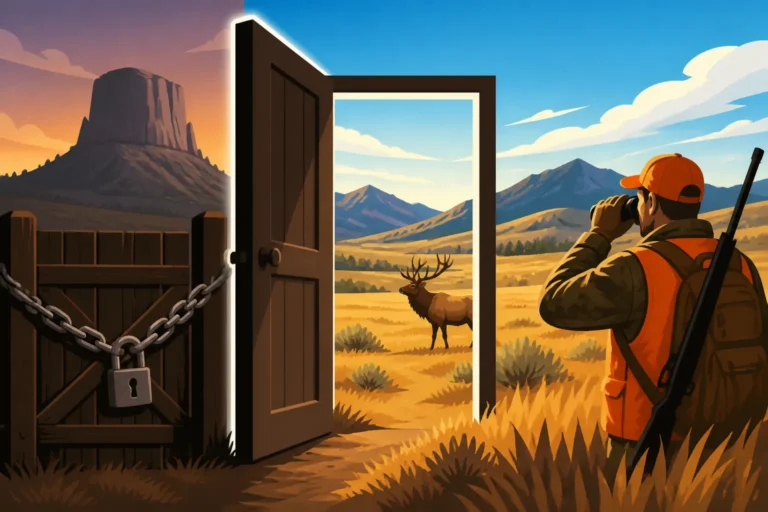
The frustration of looking at a detailed map, seeing public land, but realizing it's completely surrounded by private parcels is a reality many western hunters have faced for generations. It feels like a cruel trick, doesn't it? All that wild country, but no legal way to put your boots on it without risking trespass. Thankfully, a recent legal decision has clarified one crucial aspect of this dilemma: corner crossing. This guide will dive deep into what corner crossing means, how a landmark court case reshaped access, and why this is a game-changer for public land hunters in Wyoming and five other Western states.
Unraveling the Mystery of Corner Crossing in the West
For decades, public land hunters have stared at maps, tracing lines of ownership, only to hit a wall. The concept of corner crossing, while seemingly straightforward, has been a legal quagmire, leaving many unsure of their rights and often too nervous to test the boundaries. Let's peel back the layers and understand why this issue has caused so much contention and what it actually entails.
The Frustration of Checkerboard Land
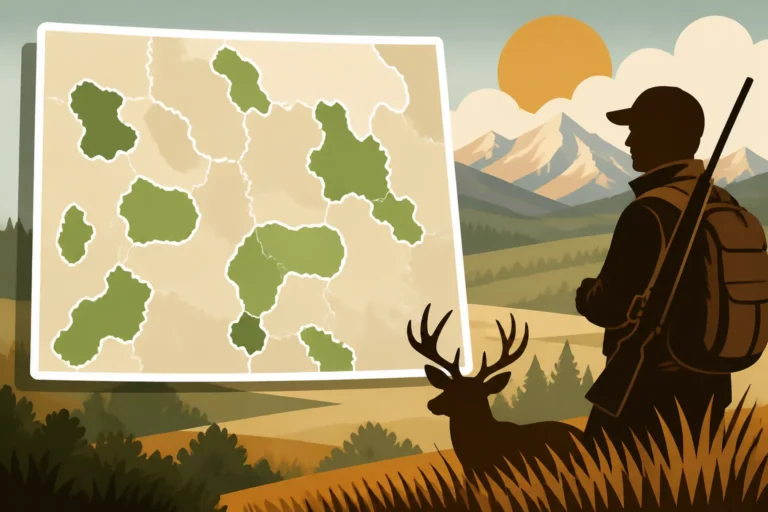
Imagine looking at a chessboard stretched across thousands of acres of sagebrush and mountains. That's essentially what a "checkerboard" land pattern looks like on a hunting map. This pattern originated from 19th-century railroad grants, where alternate sections of land were granted to railroad companies to encourage development, leaving the intervening sections as public domain. The result? A confusing mosaic of public and private squares, often creating parcels of public land that are entirely "landlocked" by private holdings.
This setup is incredibly frustrating for public land hunters. You can see a perfectly good elk or deer unit on your map, designated as public, but there's no public road, no adjacent public land, and no navigable waterway to get you there. It feels like the land is taunting you, a vast expanse of opportunity that's just out of reach. Many a seasoned hunter has thrown their hands up, convinced these parcels are simply inaccessible, choosing instead to focus on areas with clearer access, even if they're more crowded.
The core of the issue boils down to property rights and the definition of trespass. Landowners argue that stepping from one piece of public land over a shared corner, even without touching the ground, still constitutes an invasion of their airspace or "super-adjacent" property rights. Hunters, conversely, contend that if they never physically touch private ground and move directly from public parcel to public parcel, they haven't committed trespass. This fundamental disagreement has simmered for generations, creating a gray area that has stifled access and often led to confrontations in the field.
Defining Corner Crossing
So, what exactly is corner crossing in the context of this legal clarification? It's the act of moving from one piece of public land to another piece of public land at their common corner, where those corners also meet with two pieces of private land, without touching the private property itself. Picture four squares meeting at a single point. Two are public, two are private. You are moving from one public square to another, crossing over that single corner point.
The critical distinction here is the physical act of moving. You're not walking across a private field, traversing a private road, or stepping onto private land to retrieve game. You are strictly navigating the shared corner, often by stepping over it using a portable stool or by careful foot placement, ensuring no part of your body or gear makes contact with the private ground below. It's about traversing the airspace above the corner, rather than walking on the land.
This might sound like a technicality, but it's a profound one. For decades, many landowners and even some legal interpretations held that passing through the "airspace" directly above their property, even at a corner, was still an act of trespass. The recent court decision specifically tackled this, differentiating between actual physical trespass on the ground and merely passing through the air at a shared corner. It essentially means that if you can move from public to public at a corner without touching private dirt, you haven't committed a crime.
The Landmark Tenth Circuit Ruling and Its Broad Impact
The concept of corner crossing has been debated for a long time, but it wasn't until a specific case involving four elk hunters in Wyoming that the issue was truly brought to a head in the federal courts. This wasn't just a minor squabble; it was a significant legal challenge that ultimately changed the landscape of public land access for millions of acres across the American West.
The Initial Dispute and Court Cases
The story began with four hunters who, in 2021, used a ladder to step from one piece of public land to another, over the corner of a private ranch, the Elk Mountain Ranch owned by Fred Eshelman. They intentionally avoided touching private ground while crossing. Ranch owner, a wealthy North Carolina pharmaceutical executive, took issue with this, alleging trespass, and surveillance footage of the crossings was captured. The hunters were cited and initially found guilty of criminal trespass by a Carbon County circuit court judge in Wyoming, facing fines and potential jail time.
This local ruling sent shockwaves through the hunting and public land advocacy communities. It reinforced the long-held belief for many that any passage over a private corner, even in the air, was illegal. However, the hunters, supported by various public land access groups, appealed the decision, arguing that the specific language of the law only prohibited walking on private land, not passing through the unowned air above a common corner. They argued that if they never touched the ground, there was no trespass. This legal battle wasn't just about four hunters; it was about defining the extent of private property rights versus public access rights in the vast checkerboard landscape of the West.
The case escalated, and while the criminal charges were eventually dropped on appeal, the ranch owner then filed a civil suit against the hunters in federal court, seeking millions in damages for civil trespass. This move signaled a determination to set a clear precedent, one way or the other. This federal civil case became the ultimate battleground, forcing a higher court to definitively interpret what "trespass" meant at a corner where public and private lands meet. The stakes were incredibly high, not just for the individuals involved, but for the future of public land access.
The Tenth Circuit's Decision
The monumental turning point came with the Tenth Circuit Court of Appeals' decision. In a powerful and unambiguous ruling, the court found in favor of the hunters. The core of their decision rested on the interpretation of the 1885 Unlawful Inclosures Act, which states that no person "shall, by force, threats, intimidation, or by any fencing or inclosure of land not his own, obstruct or prevent any person from peaceably entering upon or establishing a settlement or residence on any tract of public land." The court determined that passing through the airspace at a corner where public and private lands meet, without physically touching the private ground, does not constitute trespass.
Crucially, the Tenth Circuit emphasized that the landowners only have rights to the surface of their property, and unless a hunter physically steps onto or touches the private land, they are not trespassing. This decision effectively dismantled the argument that the "super-adjacent airspace" at a corner, directly above private property, was also off-limits. It affirmed that public lands, even if they appear landlocked on a map, are indeed accessible via corner crossing, provided the hunter adheres strictly to the "no physical contact" rule. The Tenth Circuit Decided About Corner Crossing with significant implications.
This ruling was a massive victory for public land access advocates. It clarified a murky legal area that had long been a point of contention and a deterrent for many hunters. It essentially established that if you can move from one piece of public land to another at a shared corner without touching private ground, you are acting within your legal rights. This doesn't mean you can climb over fences, cut wires, or retrieve game from private land. It specifically addresses the act of physically moving over the corner point itself. Why There Is No Buffer at a Corner Post is directly related to this decision, as the court found no legal basis for a "buffer" zone.
The Six States Where Corner Crossing Now Applies
The Tenth Circuit Court of Appeals ruling wasn't just a win for hunters in Wyoming; it set a precedent that applies across the entire jurisdiction of the Tenth Circuit. This means the legal clarification around corner crossing impacts a significant portion of the Western United States, opening up new access possibilities in a vast and diverse landscape. Understanding which states fall under this jurisdiction is key for any public land hunter.
Understanding the Tenth Circuit's Jurisdiction
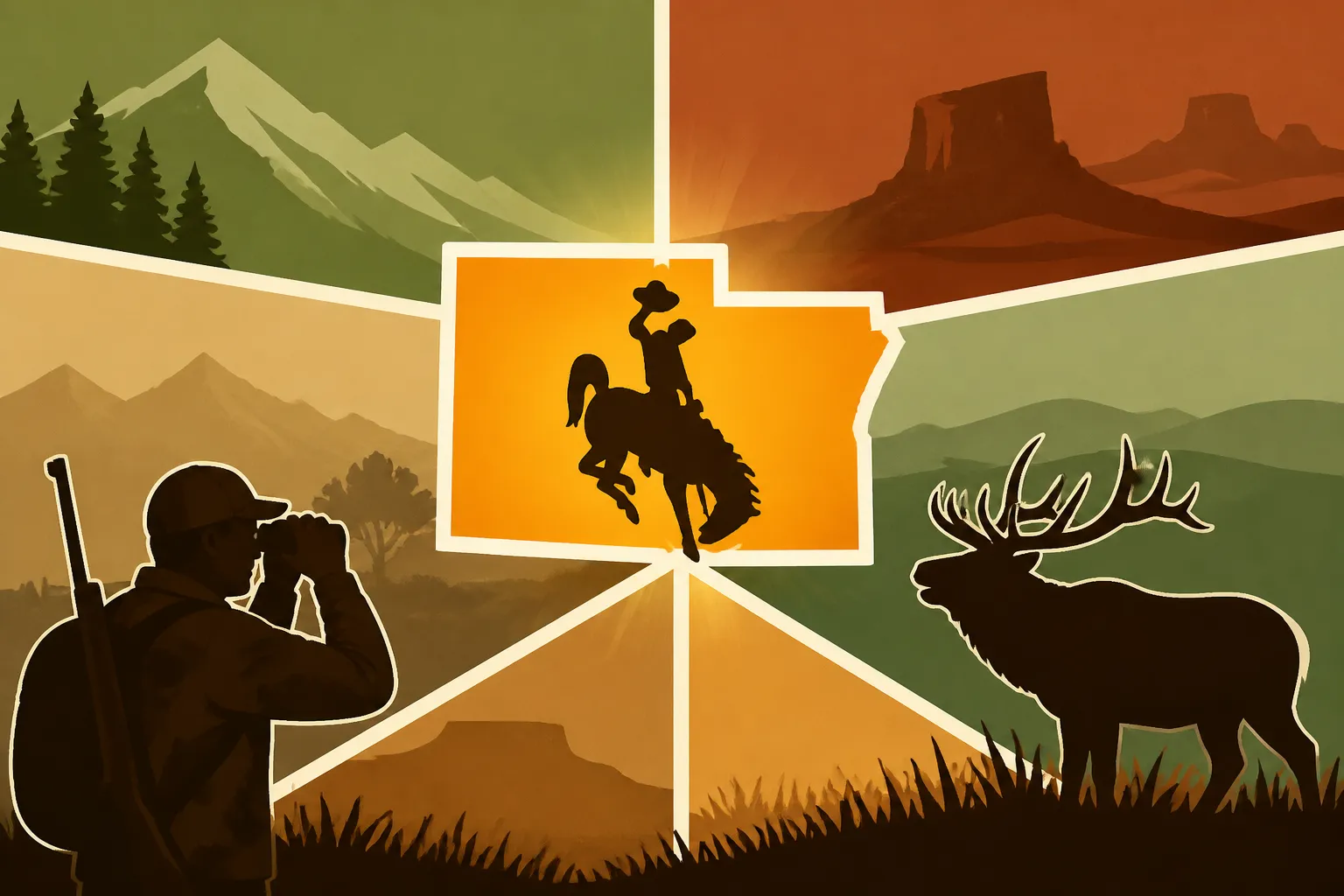
The Tenth Circuit Court of Appeals has jurisdiction over federal cases originating in six specific states: Wyoming, Colorado, Kansas, New Mexico, Oklahoma, and Utah. This means that the ruling on corner crossing, having been decided by this circuit court, now serves as binding precedent for all federal courts within these six states. While state laws can vary and might interpret trespass differently in certain contexts, the federal precedent regarding this specific type of corner crossing provides a powerful shield against civil trespass claims in federal court, and by extension, strongly influences state-level legal interpretations as well.
It's important to recognize that this ruling does not automatically apply to other states outside the Tenth Circuit, such as Montana, Idaho, Arizona, or Nevada, which fall under different federal appellate circuits. In those states, the legality of corner crossing might still be ambiguous, or state laws might specifically prohibit it. Therefore, hunters need to be diligent about understanding the specific legal landscape in any state they plan to hunt. However, for those looking at the vast public lands within the six Tenth Circuit states, this decision provides a much-needed layer of legal clarity and assurance.
This widespread application means that hunters from Cheyenne to Santa Fe, and from Denver to Salt Lake City, can now approach landlocked public parcels with greater confidence. It's not a carte blanche to disrespect private property, but rather a focused clarification on a very specific type of access. For states like Kansas and Oklahoma, which have less federal public land compared to their mountainous neighbors, the impact might be on smaller, isolated parcels, but for states like Wyoming, Colorado, New Mexico, and Utah, with extensive federal holdings and prevalent checkerboard patterns, the implications are profound.
Specific Nuances in Wyoming
In Wyoming, the impact of the corner crossing ruling is particularly significant, as the state is home to immense tracts of public land, much of which is caught in the checkerboard pattern. With BLM Holds 27,860 Square Miles of Wyoming and a substantial amount of National Forest, a large percentage of the state's land base is federal. This means countless sections of prime hunting ground for elk, mule deer, and antelope, previously considered practically unreachable, are now legally accessible via corner crossing.
For a Wyoming hunter targeting a trophy mule deer buck in a remote basin, or an elk herd tucked away in a difficult-to-reach patch of timber, this decision can literally open new doors. Consider a scenario where a general season elk tag holder is scouting an area in central Wyoming. On their onX Hunt app, they identify several promising public land sections, rich with sign, but realize they are all surrounded by private ranches, with access only at the shared corner points. Before the ruling, they might have simply written those areas off. Now, with careful planning and the right approach, those sections become a viable option.
This legal shift doesn't just benefit non-residents but also Wyoming residents who have long grappled with the same access issues. It levels the playing field somewhat, ensuring that legal public land truly remains public and accessible, rather than effectively privatized by surrounding landowners. The state's unique land history, particularly How Wyoming's Checkerboard Land Pattern Came About, makes this ruling incredibly relevant to expanding hunting opportunities across its vast and diverse landscapes.
Practical Applications and Hunter Responsibilities
While the Tenth Circuit ruling on corner crossing is a monumental victory for public land access, it's not an invitation for reckless behavior or disrespect towards private property. Hunters have a critical responsibility to understand the nuances of this decision, apply it ethically, and continue to be stewards of both the land and the hunting tradition. This means being prepared, being respectful, and being a good ambassador.
Executing a Corner Cross Safely and Legally
Successfully executing a corner cross requires meticulous planning and careful execution. First and foremost, you absolutely need reliable mapping technology. Tools like onX Hunt, BaseMap, or even detailed BLM paper maps are indispensable for identifying these corner access points and confirming land ownership. Always verify the four corners meet at a single point, ensuring you're not mistakenly attempting to cross a boundary line that isn't a true corner. Can You Rely on onX for a Boundary? is a critical read, as while these apps are powerful, they are not always the definitive legal word on boundaries. Always have a backup plan and exercise caution.
When you arrive at the corner, the golden rule is simple: do not touch private ground. This often means employing a small, portable stool, step ladder, or even using a carefully placed log or rock to step from one public parcel, over the corner point, to the next public parcel, all while remaining in the public airspace. It's about precision and intentionality. Take your time, ensure your pack, rifle, or bow doesn't swing out and contact private property. This meticulous approach is what maintains the legality of your crossing and upholds the spirit of the court's decision. If you encounter a fence, you must still cross it legally, typically by stepping over it where it meets the corner, again without touching private land or damaging the fence.
Beyond the physical act, always carry a copy of your hunting license, tags, and ideally, some basic information about the corner crossing ruling. While the legal precedent is set, individual landowners or even local law enforcement might not be fully up to speed. Being able to calmly explain your actions and reference the ruling, if needed, can diffuse potential conflicts. Remember, the goal is access, not confrontation.
Respecting Landowners and Avoiding Conflicts
Even with the legal clarity on corner crossing, the underlying tension between public access and private property rights remains. It's absolutely crucial for hunters to approach these situations with the utmost respect for landowners. The fact that you can legally cross a corner doesn't mean you should be antagonistic or disrespectful. Many rural landowners view their property, even the corners, as sacred, and generations of hunters have often been perceived negatively due to the actions of a few.
Therefore, when engaging in corner crossing, operate with a "leave no trace" mentality. Don't leave trash, don't damage fences (even if they're on public land, many are used by ranchers for livestock control), and certainly don't engage in any activity that could be perceived as poaching or trespassing beyond the corner point. Any game harvested on the accessible public land must be retrieved entirely on public land or via another legal access point; retrieving game from private land, even if it's just a few feet over the property line, is still trespass and illegal.
If you encounter a landowner or ranch hand while corner crossing, be polite, explain your actions clearly, and reiterate your commitment to staying on public land. Even better, consider attempting to gain permission for alternative access. Getting Permission to Cross Private Ground is often the best solution for maintaining good relationships and securing future access. Building bridges, not burning them, is paramount for the long-term health of public access. The goal is to prove that hunters are responsible, ethical outdoorsmen who respect private property, even while exercising their legal rights to public lands.
Essential Tools for Navigating Public and Private Boundaries
In today's hunting world, technology has become an indispensable partner, especially when it comes to navigating the complex patchwork of public and private land. While traditional methods still hold value, digital mapping tools have revolutionized how hunters approach access, particularly in areas affected by corner crossing. These tools aren't just convenient; they're essential for staying legal and maximizing your time in the field.
The Indispensable Role of Mapping Apps
Hunting apps like onX Hunt and BaseMap have become game-changers for identifying and understanding land ownership. These platforms provide detailed public/private land ownership overlays that clearly show federal lands (BLM, National Forest, State Trust Land) and private parcels, often color-coded for easy identification. This visual clarity is absolutely critical when planning a corner cross. You can zoom in with incredible detail, pinpointing the exact location where four corners meet, ensuring that you're only traversing the legal airspace.
Beyond simply showing property lines, these apps offer a suite of features that enhance hunter safety and effectiveness. GPS tracking allows you to see your exact location in real-time relative to property boundaries, preventing accidental trespass. You can drop waypoints to mark your intended crossing point, or to note potential obstacles or game sign. Another crucial feature is the ability to download maps for offline use. In remote areas of Wyoming, cell service is often nonexistent, so having pre-downloaded maps ensures you can navigate safely and legally, even miles from the nearest signal tower.
For a hunter scouting a new unit, an app like onX Hunt allows for detailed e-scouting from home, identifying potential corner crossing opportunities before even setting foot in the field. You can measure distances, analyze topography, and even identify hidden draws or natural features that could aid your approach to a corner. This level of preparation not only maximizes your hunting time but also gives you the confidence to execute complex access strategies like corner crossing legally and effectively. Using these tools, hunters can feel more empowered to pursue game on previously difficult-to-reach public lands.
Beyond the App: Traditional Maps and Due Diligence
While digital mapping apps are powerful, they shouldn't be your sole reliance. A sturdy, waterproof paper map of your hunt area is still an invaluable backup, especially if your phone battery dies or the screen gets damaged. Traditional maps, such as those from the BLM or Forest Service, can provide a broader overview of the landscape, including trails, water sources, and topography that might not be immediately apparent on a small screen. Cross-referencing digital and physical maps is always a smart strategy.
Furthermore, thorough due diligence extends beyond just maps. Before heading out, researching the specific hunt area and its regulations is paramount. Resources like the Wyoming Game and Fish Department's official website, which might feature The Wyoming Public Land Owner Map Explained sections or access programs, can provide additional layers of information. Consulting hunting forums or online communities on platforms like GoHunt can offer insights from other hunters who have experience with specific areas or corner crossing scenarios.
Understanding the history and local context of an area can also be beneficial. For instance, knowing How Wyoming's Checkerboard Land Pattern Came About provides a deeper appreciation for the access challenges and the significance of the corner crossing ruling. Being well-informed about all aspects of your hunt, from legal access points to local customs, makes you a more responsible and successful hunter. It's about combining cutting-edge technology with good old-fashioned preparation and respect for the land and its people.
Expanding Your Access Opportunities Beyond Corner Crossing
While corner crossing has opened up incredible new avenues for public land hunters, it's just one piece of the larger access puzzle in the American West. Wyoming, in particular, offers a variety of programs and historical access methods that can further expand your hunting grounds. A truly prepared hunter understands and utilizes every legal tool at their disposal to gain entry to the backcountry.
Wyoming's Access Yes Program
One of the shining examples of proactive access creation in Wyoming is the Access Yes program. This innovative initiative, run by the Wyoming Game and Fish Department, works to secure public hunting and fishing access to private lands and landlocked public lands. Ranchers who enroll in the program receive financial incentives, and in return, they open their private lands or allow passage across their property to access isolated public parcels.
The Access Yes program designates areas as either "Walk-In Areas" (WIAs) or "Hunter Management Areas" (HMAs). WIAs typically require no prior permission and are open to the public during designated seasons, often marked with distinctive yellow signs. HMAs, on the other hand, usually require hunters to obtain a free permission slip from the Game and Fish Department, often available online, to manage hunter numbers and ensure landowner participation. How Wyoming's Access Yes Program Works details the program's operations and benefits.
These programs are invaluable, offering hundreds of thousands of acres of additional hunting ground each year. They provide guaranteed, legal access, often to excellent habitat that might otherwise be unavailable. Always check the Game and Fish website for current Access Yes maps and regulations before heading into the field, as areas and rules can change annually. Leveraging Access Yes, alongside opportunities like corner crossing, dramatically increases your chances of finding unpressured game.
Navigable Waters and Other Legal Access Points
Beyond the land-based access points, don't overlook the power of navigable waterways. In Wyoming, if a river or stream is deemed "navigable" by legal standards, the public generally has the right to float or walk in the streambed, even if it flows through private property. This can provide a unique way to reach otherwise inaccessible public lands or to float through stretches of private ground to hunt public banks. Navigable Water Access for Wyoming Hunters is a topic worth researching if you're considering this method. Be aware that specific rules apply, such as typically staying within the ordinary high-water mark, and accessing or exiting from private land without permission is still trespass.
Additionally, always remember the more traditional and straightforward methods of public land access. This includes Reaching Wyoming Public Land by Public Road, utilizing designated public easements, or simply walking in from adjacent public ground. Many public land parcels, even those that seem remote, can be accessed by these conventional means. Thoroughly studying your maps with tools like onX Hunt will reveal all possible entry points.
The key to successful public land hunting in Wyoming is to embrace a multi-faceted approach to access. No single method is a silver bullet, but by combining the legal right of corner crossing with proactive programs like Access Yes, the historical right of navigable waterways, and traditional public roads and trails, hunters can unlock a vast amount of the state's incredible hunting potential. It's about being informed, prepared, and ethical in your pursuit of wild game across this magnificent landscape.
Disclaimer
This article is for general informational purposes only and does not constitute professional advice. Laws, prices and regulations vary by location and change over time. Consult a qualified professional for guidance on your specific situation.