Floating In on Wyoming’s Navigable Water
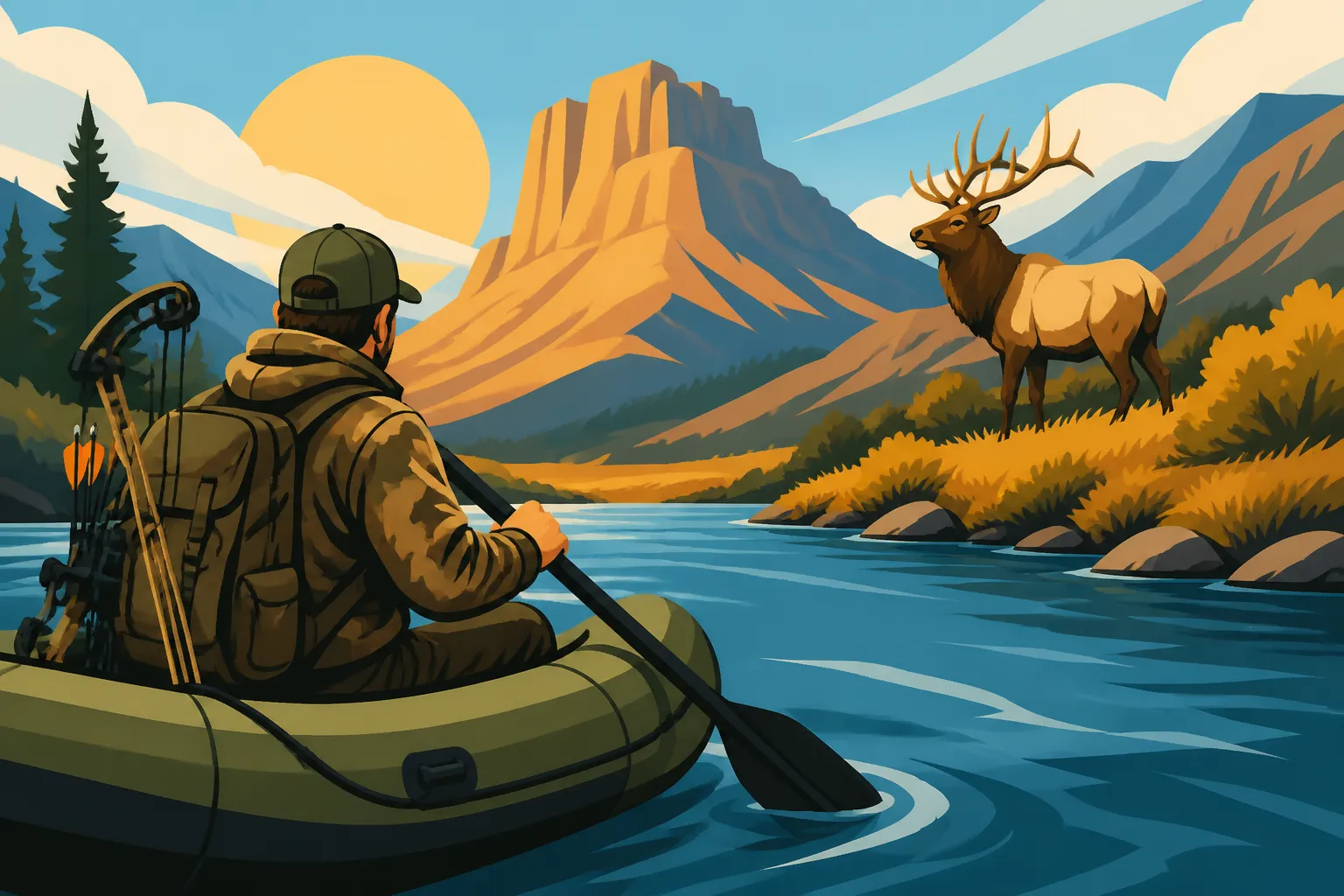
It's a frustrating reality for many hunters, especially those new to the Cowboy State or venturing off the beaten path: you spot a promising stretch of public land on your map, only to realize it's completely surrounded by private ground. No roads in, no trails crossing. It feels like a punch to the gut, doesn't it? But what about the rivers, those ribbons of blue winding through the landscape? Can you float in on a kayak or raft and hunt that landlocked public parcel? This guide will dive deep into the complexities of using Wyoming's waterways for hunting access, exploring the legal nuances and practical considerations so you can approach these situations with confidence and stay on the right side of the law.
The Promise and Peril of River Access in Wyoming
The idea of floating down a tranquil river, slipping silently past private ranches, and stepping out onto prime, untouched public hunting ground is incredibly appealing. It’s the kind of adventure that stirs the soul of any hunter looking for a true wilderness experience. Wyoming, with its vast stretches of public land and numerous rivers, certainly paints a picturesque scene for such an endeavor. Yet, the reality of "navigable water" and public access isn't as simple as launching a canoe where the map shows public land and floating wherever the current takes you.
Many hunters assume that if a river is wide enough to float, it’s fair game for public passage, including shoreline access. This common misconception can lead to serious trouble, including trespassing charges. The legal definition of navigability in Wyoming, and indeed in many western states, is often rooted in historical commercial use rather than modern recreational activity. This distinction is critical and often misunderstood, creating a complex landscape for those hoping to use waterways as entry points to hunting areas.
The desire to access otherwise inaccessible public lands is strong, and understandably so. These areas often see less hunting pressure, holding the promise of older, bigger game. However, the legal framework around river access is designed to protect both public rights and private property, and a misstep can quickly turn a dream hunt into a legal nightmare. Understanding these rules is not just about avoiding fines; it's about respecting the land, the landowners, and the hunting heritage we all share.
What "Navigable" Truly Means in Wyoming
When it comes to public access, the term "navigable water" isn't about whether your kayak or raft can physically float down a stream. In Wyoming, the legal definition of navigability generally harks back to statehood and whether a waterway was used or susceptible to use for commercial purposes at that time. Think log drives, steamboats, or commercial barges – not necessarily a modern-day drift boat for fishing or a packraft for hunting. This historical context is often the deciding factor in court cases and land disputes.
This concept is crucial because if a river was not deemed navigable at the time of statehood, the streambed and its banks under private land often belong to the adjacent landowner, even if water flows over it. This means that while you might be able to float over private property on a non-navigable stream without physically touching the streambed, stepping out onto the bank, mooring your vessel, or even touching bottom can be considered trespassing. It creates a very narrow, technical pathway for access that requires extreme care and knowledge.
The legal landscape surrounding navigable waterways in Wyoming has seen its share of debates and even court challenges. These cases often highlight the tension between the public's desire for access and private property rights. Because of this complexity, relying on simple visual assessment or assumptions about navigability is a recipe for trouble. Always operate with the understanding that if a waterway is surrounded by private land, and has not been specifically declared publicly navigable, you must assume the streambed and banks are private property.
Key Distinctions: Public vs. Private River Bottoms
The ownership of the streambed is the cornerstone of understanding river access. On rivers deemed historically navigable, the streambed below the ordinary high water mark is typically considered public land, even if the surrounding uplands are private. This public ownership usually grants the right of public passage for boats and, often, the ability to wade or anchor within the high-water marks. However, these publicly navigable rivers are fewer than many people realize.
For the vast majority of smaller streams and rivers that flow through private land in Wyoming, the streambed and banks are owned by the adjacent landowners. In these situations, your right to be on the water is severely limited. You might be able to float over the water itself, as water generally belongs to the state, but you cannot legally touch the streambed, wade, anchor, or step out onto the bank if it’s private property. This makes hunting from these non-navigable streams extremely challenging, as you can't exit your craft to stalk game or retrieve a downed animal without risking a trespass charge.
Consider a scenario where you've identified a landlocked piece of public land accessible only by a small creek. If that creek is deemed non-navigable, floating it becomes a high-stakes gamble. You would effectively be floating through a tunnel of private property, with no legal right to interact with the land around you. If your float trip involves getting out of your boat for any reason – to portage around a logjam, scout a bank, or retrieve an animal – you could easily find yourself in a difficult situation. This is where understanding the true nature of the waterway becomes paramount.
Where to Find Navigability Information
Pinpointing which specific rivers or stretches of rivers are legally considered navigable for public access can be surprisingly difficult. There isn't always a definitive, comprehensive, and easily accessible list that covers every single waterway in the state. Instead, navigability is often determined on a case-by-case basis, sometimes through historical records or even court rulings. This ambiguity is precisely why extreme caution is advised.
Your best first step is to consult the Wyoming Game and Fish Department (WGFD) regulations and informational materials. While they might not declare every stream as navigable or non-navigable, they often provide guidance on public access points and clarify common misconceptions. Additionally, specific river access points on larger, well-known rivers (like portions of the North Platte or Green River) are often clearly designated as public. You'll want to review maps that specifically mark public access points, rather than assuming general navigability.
Tools like onX Hunt are incredibly valuable here. They overlay public and private land boundaries directly onto maps, allowing you to visualize land ownership around waterways. While onX is not the final legal word on navigability, it is an indispensable tool for understanding adjacent land ownership. If you see a waterway flowing entirely through private property, it should raise a significant red flag about your ability to access that riverbed or bank. Always use mapping apps in conjunction with official state regulations to make informed decisions. Using onX Public Land Layers in Wyoming can help you visualize these complex boundaries.
Preparing for a Float Hunt: Planning and Gear
If you've identified a stretch of water that is legally navigable and provides access to public hunting ground, careful planning is absolutely essential. A float hunt is not like driving to a trailhead. You're committing to a journey where your vessel is your primary mode of transport and your lifeline. This requires meticulous preparation, from scouting the water itself to ensuring you have the right gear for both the float and the hunt.
First and foremost, scouting the waterway is critical. What are the water levels like? Are there rapids, logjams, or other hazards that could capsize your boat or create an impassable barrier? Checking USGS streamflow gauges can provide real-time data on water levels, but nothing beats an on-the-ground visual inspection or talking to locals who have floated that specific stretch. Remember, an impassable obstacle on a non-navigable river could force you onto private land for a portage, leading to a trespass violation.
Beyond the water, you need to think about your ingress and egress. Where will you launch, and more importantly, where will you take out? If your take-out point is on private land, you'll need explicit permission from the landowner well in advance. Having a clear plan for vehicle shuttles, especially if you’re floating a significant distance, is also vital. Leaving a vehicle unattended at a remote launch or take-out point for an extended period also carries its own risks, so consider security measures.
Essential Gear for the Water and the Hunt
A float hunt means merging your hunting gear with your river gear, and every item needs to serve a purpose and be protected from the elements. For the float itself, you'll need a suitable craft – a sturdy raft, a durable canoe, or a rugged kayak, depending on the river and the gear you're bringing. Ensure it has enough capacity for you, your hunting gear, camp supplies, and potentially an animal if you’re successful.
Dry bags are your best friend. Absolutely everything that cannot get wet – your sleeping bag, extra clothes, food, electronics, and especially your firearm or bow – must be stowed in high-quality, waterproof dry bags. Consider using multiple layers of protection for critical items. Having a repair kit for your raft or kayak is also a smart move, along with a first-aid kit that's adequately stocked for both river accidents and backcountry hunting injuries.
For the hunt itself, don't forget your optics, navigation tools (like a reliable GPS unit with detailed maps, ideally with an onX Hunt subscription), and your chosen weapon. You’ll need a way to secure your weapon in the boat to prevent loss overboard or damage. If you're successful, you'll also need game bags, a good knife, and a plan for packing out meat, which might involve multiple trips back to your boat. Physical Conditioning for a Mountain Hunt is still relevant, as floating might just get you to the hunting ground, but the real work begins when you step ashore.
Mapping and Exit Strategies
Detailed mapping is arguably the most important preparation you can do. Go beyond basic online maps and invest in dedicated hunting and topographic maps. Services like onX Hunt and GoHunt can provide invaluable layers showing public and private land boundaries, potential access roads, and topographic features that might affect your float or your hunt. These tools can help you identify landlocked public parcels and visualize the journey along a waterway.
Your exit strategy needs to be as robust as your entry plan. What happens if weather turns bad, you have an accident, or you get an animal down far from your planned take-out? Having contingency plans for early exits, emergency extraction, and communication is non-negotiable. This includes carrying a satellite communication device, as cell service is often nonexistent in remote river corridors. Inform someone of your float plan, including expected launch and take-out times, and check-in points.
It’s also wise to consider what the terrain looks like after you get off the river. Is it steep, rocky canyon country? Or open, sagebrush flats? Your hunting strategy will be heavily influenced by the landscape you gain access to. Don't assume that just because you can float in, the hunting will be easy once you're on shore. Understanding the land and its challenges is just as important as understanding the water. This also involves checking for Seasonal Winter Range Closures for Big Game that might restrict access even on public land.
On the Water: Etiquette, Boundaries, and Safety
Once you're on the water, whether it's a calm stretch or a challenging rapid, your responsibilities extend beyond just navigation. You're a representative of the hunting community, and your actions reflect on all of us. This means adhering to strict etiquette, constantly being aware of property boundaries, and prioritizing safety above all else.
Treating private land with utmost respect is paramount. Even if you're on a legally navigable river, the land directly adjacent to the water, above the high-water mark, is likely private property. That means no stepping out, no picnicking on the bank, no tying off to private trees, and no retrieving dropped items from private ground without explicit permission. Keep your noise levels down, especially when passing active ranches or homes. Your goal is to be invisible and leave no trace, maintaining good relations between hunters and landowners.
Safety on the water cannot be overstated. Always wear a life jacket, even on seemingly calm stretches. Water conditions can change rapidly, and an unexpected obstacle or swift current can turn a relaxing float into a dangerous situation. Be aware of weather forecasts, particularly for sudden thunderstorms or high winds that can make river travel hazardous. Inform someone of your float plan and anticipated return time, and carry a reliable method of communication for emergencies.
Navigating Property Lines While Afloat
Understanding property lines becomes even more critical when you're floating. While onX Hunt is an invaluable tool for visualizing these boundaries on your phone, remember that GPS can have a margin of error, especially in deep canyons or under heavy tree cover. Always give private property a wide berth. If there's any doubt, assume it's private and do not touch it.
This vigilance extends to everything. If you see a logjam or obstacle that requires portaging, and the banks are clearly marked as private, you are in a precarious situation. Unless you have prior permission, attempting to portage on private land would be trespassing. This is why thorough scouting of the waterway is so important – to identify such obstacles before you launch. If you encounter an unexpected, un-portagable obstacle on private land, you may be forced to turn back.
Another aspect of property awareness involves game retrieval. If you successfully harvest an animal and it drops on private land, even if you shot it from public water or public land across the river, you absolutely cannot retrieve it without permission. This is a common and often painful lesson for hunters. Knowing the rules around Retrieving Game From Private Land in Wyoming is vital, as it could mean abandoning an animal if you cannot secure permission.
Minimizing Impact and Practicing Leave No Trace
As hunters, we are stewards of the land, and practicing Leave No Trace principles is fundamental, especially in remote float-in hunting scenarios. Everything you bring in, you must pack out – and then some. This includes all trash, food scraps, and even human waste if you are in sensitive areas or on an extended trip. Portable toilet systems are often a requirement for multi-day river trips.
Be mindful of your campfire impacts. Use established fire rings where available, or carry a fire pan to ensure no trace is left on the ground. Never cut live trees for firewood. When camping, choose durable surfaces away from water sources and minimize your footprint. The goal is that no one should be able to tell you were there after you've departed.
Remember that floating gives you unique access, and with that comes a greater responsibility to preserve the pristine nature of these areas. Avoid disturbing wildlife unnecessarily while floating, and maintain a quiet, respectful presence. Your actions ensure that these float-in opportunities remain available for future generations of hunters and outdoors enthusiasts.
The Realities of Hunting from the Water
While floating in can open up new hunting opportunities, it also introduces its own set of challenges and limitations. It's not always the easy button to accessing prime, unpressured game. Hunting from a boat itself is often restricted, and the act of hunting after a float can be physically demanding and logistically complex.
Wyoming generally prohibits shooting from a vehicle, and a boat is usually considered a vehicle for these purposes, especially when under power or motion. This means you typically cannot shoot an animal while actively floating down the river. You must be on stable ground, outside of your craft, to legally take a shot. This requires careful planning for where and when you will exit your boat to hunt, and where you will legally be able to do so on public land.
Furthermore, the type of hunting you can realistically do after floating in might be limited. If you've floated into a steep canyon, your hunting might be confined to the riparian zone or climbing difficult terrain. If you're on wide-open sagebrush country, you might be very visible after exiting your boat. The expectation of untouched, unpressured game needs to be balanced with the logistical difficulties of the terrain and the fact that an animal could be anywhere, not necessarily right by the river.
Logistics of Game Retrieval and Transport
Successfully harvesting an animal after floating in brings an entirely new layer of logistical challenges. Unlike roadside hunting where you can load a whole animal into a truck, a float hunt means you'll need to break down the animal into packable pieces, often quartering it, and then transport those quarters back to your boat. This is physically demanding work, especially if you're alone or your hunting partner is focused on navigation.
Getting meat, cape, and antlers back into your raft or kayak without contaminating it or exceeding your boat's capacity requires careful planning. You’ll need heavy-duty game bags and potentially specialized equipment like a game cart if the terrain allows, or simply brute force if it doesn't. Keeping the meat cool during transport, especially if your float out will take several hours or days, is another critical consideration. Ice, if you can bring it, will be a luxury.
If you're hunting elk or moose, the sheer volume and weight of the meat can quickly overwhelm a smaller boat. You might need to make multiple trips or utilize a larger raft specifically designed for heavy loads. This is where the initial planning around your vessel's capacity becomes critical. A well-placed shot and a quick retrieval are ideal, but you must be prepared for the worst-case scenario: a long drag through rough country to get your harvest back to the water.
Planning for the Unpredictable
The backcountry, especially when combined with water travel, is inherently unpredictable. Weather can change drastically, gear can break, and unforeseen obstacles can appear. This is why a robust plan for contingencies is not just a good idea, but a necessity. What if your boat gets a major tear? What if a sudden storm swells the river to dangerous levels? What if you or your hunting partner sustains an injury?
Carry extra food and water, even if you anticipate filtering water from the river. Bring multiple ways to start a fire. Have backup navigation (a physical compass and map are essential, even with GPS). Consider a satellite messenger or phone for emergency communication, as mentioned earlier. Having a designated emergency contact who knows your exact itinerary and when to expect to hear from you is crucial. Wilderness First Aid on a Guided Hunt applies just as much to DIY float hunts; consider taking a course.
Embrace the mindset that things will go wrong, and mentally prepare for how you will adapt. A successful float hunt isn't just about bagging an animal; it's about safely and responsibly navigating the challenges and coming out with a story to tell, regardless of the outcome. This realistic outlook will help you make better decisions when faced with unexpected situations.
Essential Tools for Navigating Water Access
Successfully planning and executing a float hunt in Wyoming requires more than just a boat and a rifle; it demands a suite of modern tools combined with traditional outdoor skills. The right resources can make the difference between a successful, legal hunt and a frustrating, or even dangerous, misadventure.
At the top of the list for any hunter considering river access are mapping applications. onX Hunt has become an indispensable tool for public land hunters, and it’s particularly powerful for visualizing land ownership along waterways. With its colored overlays distinguishing public, private, and state lands, you can clearly see where private property begins and ends. This is absolutely critical for understanding where you can legally step ashore or anchor your boat. The Wyoming Public Land Owner Map Explained is essentially what onX is bringing to your fingertips.
Beyond mapping, staying informed about regulations and conditions is key. Websites for the Wyoming Game and Fish Department are your official source for all hunting regulations, season dates, and specific rules that might apply to certain areas or methods. River flow data from sources like the USGS can inform you of current water levels and conditions, which directly impacts the safety and feasibility of your float.
Leveraging Digital Mapping for Waterways
Digital mapping apps like onX Hunt have revolutionized how hunters approach access. Before you even leave home, you can "scout" your float route virtually, identifying stretches of public water that flow through private land, pinpointing public launch and take-out points, and finding landlocked public parcels you might be able to access. You can drop waypoints for potential camp spots, hunting areas, or hazards.
When you're actually on the water, having onX Hunt on your phone or tablet (downloaded for offline use!) can provide real-time assurance of your location relative to property boundaries. This is especially helpful if you're on a meandering river where it's hard to tell exactly where you are. You can use it to confirm that you’re still within public streambed limits or that you’re about to float past a particularly sensitive stretch of private property. Using onX Public Land Layers in Wyoming isn't just a suggestion, it's almost a requirement for confident navigation of these complex areas.
However, remember that these tools are aids, not absolute legal declarations. Always cross-reference what you see on a digital map with official state information and understand that while a property line might appear to run right to the water's edge on a map, the legal definition of "navigable" for that specific waterway might still make the streambed public. Err on the side of caution.
Researching Regulations and River Conditions
Beyond maps, diligent research into current regulations is non-negotiable. Hunting regulations, including those related to firearm use, hunting from vehicles (including boats), and tagging requirements, are updated regularly. You need to know the specific rules for the hunt area you intend to access by water. Don't assume that just because you can float in, all hunting methods are fair game.
River conditions, particularly water levels and flow rates, profoundly impact a float hunt. Too low, and you might drag your boat for miles, potentially touching private streambed. Too high, and the current can become dangerously swift, creating hazards like strainers or hydraulics. Websites like GoHunt might offer resources for researching general area information, but specific, real-time river flow data from official government sources is critical for safety.
Talk to local experts, river outfitters, or WGFD biologists if possible. They might have invaluable insights into specific river stretches, potential hazards, and common access issues. Their on-the-ground experience can complement your map-based research and help you avoid common pitfalls, giving you a more realistic picture of what to expect from your float-in hunting adventure.
| Feature | Legally Navigable Water (Wyoming) | Non-Navigable Water (Wyoming) |
|---|---|---|
| Streambed Ownership | Typically Public (below ordinary high water mark) | Typically Private (owned by adjacent landowner) |
| Floating Rights | Generally Permitted for Public Passage | Public passage generally permitted over water, but not on streambed/banks if privately owned |
| Bank/Shore Access | Prohibited if adjacent land is private (above high water mark) | Prohibited if adjacent land is private |
| Anchoring/Wading | Generally Permitted within public streambed boundaries | Prohibited if streambed is private |
| Hunting from Boat | Generally Prohibited (considered a vehicle) | Generally Prohibited (considered a vehicle) |
| Game Retrieval | If game falls on public land, retrieve. If on private, require permission. | If game falls on public land, retrieve. If on private, require permission. |
| Common Misconception | If a boat floats, it's public access | If water flows, it's public access |
Disclaimer: This article is for general informational purposes only and does not constitute professional advice. Laws, prices and regulations vary by location and change over time. Consult a qualified professional for guidance on your specific situation.