Motorized Limits Inside Wyoming Wilderness
Heading into Wyoming's vast, wild country for a hunt is a dream for many, but the excitement can quickly turn to frustration when you try to figure out where you can and cannot take your vehicle. It’s a common scenario: you’ve spent hours e-scouting, pinpointed a promising drainage deep in the backcountry, only to realize later that it falls within a designated wilderness area. Suddenly, your plans for a quick ATV ride to camp or a dusty two-track approach are completely out the window. This guide aims to clear up the confusion surrounding motorized limits inside Wyoming's wilderness, helping you understand the rules, why they exist, and how to plan a successful hunt where engines are a no-go.
Understanding Wyoming's Wilderness Designation
Wyoming is home to some of the most spectacular wilderness in the Lower 48, from the rugged peaks of the Wind River Range to the remote Absaroka-Beartooth. These areas are truly special, set aside specifically by Congress to preserve their wild, undeveloped character. When you step into a wilderness area, you're entering a landscape where nature is intended to dominate, where human impact is minimal, and where the experience of solitude and challenge takes center stage. This designation isn't just a suggestion; it's a legal framework that dictates everything from land use to the very tools you can employ.
The Legal Framework of Wilderness Areas
The Wilderness Act of 1964 established the National Wilderness Preservation System, a network of protected federal lands where natural processes are allowed to unfold with minimal human interference. In Wyoming, a significant portion of our national forests, like the Bridger-Teton, Shoshone, Bighorn, and Medicine Bow, contain these designated wilderness areas. This act defines wilderness as "an area where the earth and its community of life are untrammeled by man, where man himself is a visitor who does not remain." That last part is key – you are a visitor, and the land's wildness takes precedence. This means that unlike other public lands, such as much of the BLM Holds 27,860 Square Miles of Wyoming, wilderness comes with very specific and strict limitations on development and use, especially concerning anything with an engine.
These regulations aren't arbitrary; they are the backbone of protecting these unique landscapes. For hunters, this translates into a fundamentally different approach to accessing and traversing the terrain. The intent is to keep these areas primitive, offering a raw, challenging experience that contrasts sharply with hunting areas accessible by roads and trails. Ignoring these rules isn't just a minor infraction; it's a direct violation of federal law and the spirit of wilderness preservation, with serious consequences for hunters and the future of these special places.
The Ethos of Untrammeled Land
The term "untrammeled" is central to understanding wilderness. It means untouched, unburdened, unhindered by human activity. This goes beyond just roads and buildings; it extends to the sounds, sights, and even the pace of human intrusion. When you consider the roar of an ATV or the drone of a drone, these mechanical intrusions fundamentally alter the "untrammeled" character of a place. The goal is to provide a place for personal challenge, introspection, and a deeper connection to nature, unmarred by modern conveniences.
For the hunter, this means embracing a more primitive style of pursuit. It's about earning your access, relying on your own two feet or the strength of a good horse, and adapting to the land on its terms. This ethos is what draws many to wilderness hunting in the first place—the chance to truly disconnect, to test skills against wild animals in their purest habitat, and to experience solitude rarely found elsewhere. It's a commitment to a different kind of hunt, one that honors the wildness of the landscape above all else.
The Hard Truth: Motorized Travel is Prohibited
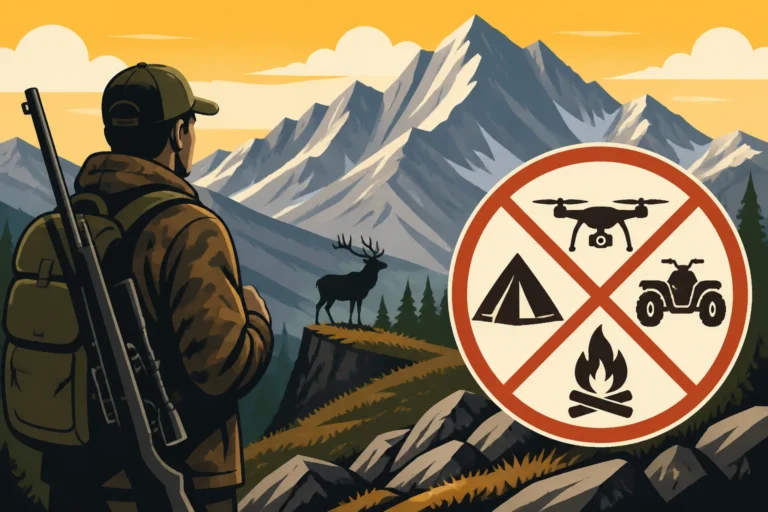
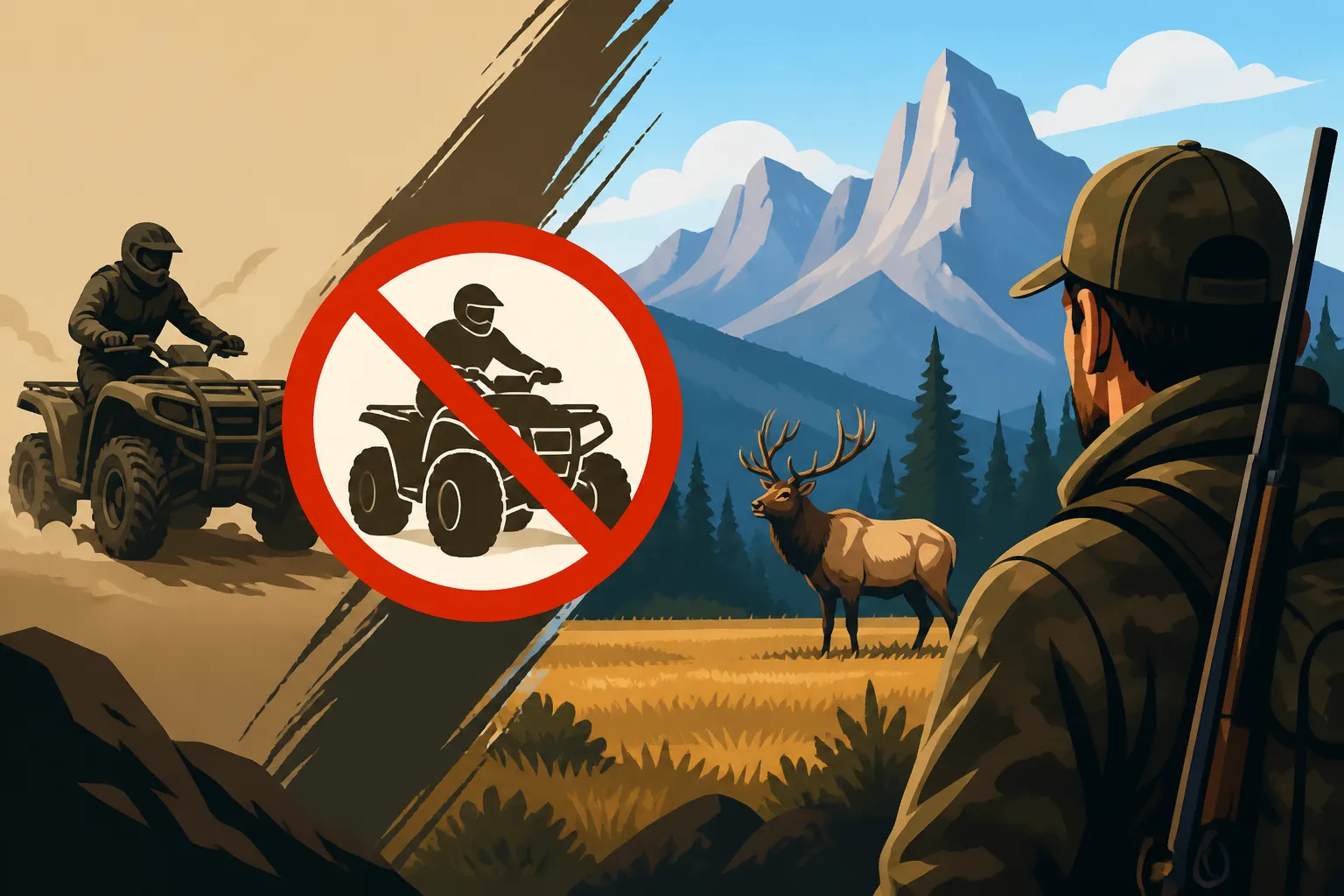
Let's get straight to it: when you're in a designated wilderness area in Wyoming, any form of motorized transport is strictly forbidden. This isn't a gray area; it's a black-and-white rule. No ATVs, no dirt bikes, no e-bikes, no motorized snowmobiles, no drones, and definitely no vehicles of any kind. This applies to all users, all the time, regardless of the season or the specific purpose of your visit. It's the most fundamental restriction you'll encounter in these special places, and it's absolutely critical for hunters to understand and adhere to.
This rule can be a tough pill to swallow for hunters accustomed to using vehicles for quicker access or to haul out game. It means saying goodbye to those tempting two-track roads that seem to disappear into the heart of a great hunting spot if they enter wilderness. You need to scout thoroughly and plan your approach with the full understanding that the moment you cross into wilderness, your motor has to be off and staying off. This hard-line stance is what truly sets wilderness areas apart from other public lands where Reading a Motor Vehicle Use Map can show you designated routes.
What "Motorized" Actually Means
The definition of "motorized" in wilderness areas is comprehensive. It encompasses anything powered by an engine, whether gasoline, electric, or any other fuel source. This includes, but isn't limited to:
- All-Terrain Vehicles (ATVs) and Utility Task Vehicles (UTVs): These are perhaps the most commonly misunderstood. No matter how small or quiet, they are forbidden.
- Motorcycles and Dirt Bikes: Even if a trail looks perfect for off-road riding, if it's in wilderness, it's off-limits.
- Electric Bicycles (E-Bikes): This is a newer point of confusion. Despite their quiet nature and pedal-assist features, e-bikes are still considered motorized vehicles under wilderness regulations.
- Snowmobiles: While they can offer incredible winter access in some areas, snowmobiles are prohibited in wilderness areas during any season.
- Drones: Unmanned Aerial Vehicles (UAVs) or drones, whether for scouting, photography, or retrieval, are also explicitly banned due to their motorized nature and impact on solitude and wildlife.
This exhaustive definition underscores the commitment to preserving a truly primitive environment. It means that even seemingly minor technological advancements are excluded if they rely on a motor. The idea is to rely on human or animal power alone, a concept that is becoming increasingly rare in our modern world.
The Impact on Your Hunting Strategy
The prohibition on motorized travel fundamentally reshapes every aspect of your hunting strategy in wilderness. Forget quick trips in and out for supplies or game retrieval; everything becomes a multi-day, physical endeavor. Your camp needs to be self-sufficient for the duration, and every ounce you bring in must be packed out.
Consider a bull elk hunt in the Bridger-Teton Wilderness. Without the ability to use an ATV to haul quarters back to the truck, you're looking at multiple grueling trips on foot, or relying on horses or mules. This significantly impacts how far you can comfortably hunt from your camp, your physical conditioning requirements, and your gear choices. Lightweight equipment becomes paramount, and the ability to bone out an animal efficiently is a critical skill. It also means that a Physical Conditioning for a Mountain Hunt isn't just a good idea, it's a necessity, especially when you factor in carrying heavy loads at high elevations.
Navigating the Boundaries: Identifying Wilderness Areas
One of the biggest challenges for hunters, even seasoned ones, is knowing exactly where wilderness boundaries lie. These aren't always marked by a grand entrance sign. Often, they're subtle, a line on a map that you might cross without realizing it. Misunderstanding these boundaries can lead to unintentional violations, which no ethical hunter wants. The responsibility to know where you are at all times rests squarely on your shoulders.
This means putting in the time beforehand, long before you ever set foot in the field. Relying solely on a vague memory of a map or a quick glance at a pamphlet just won't cut it. You need definitive information and tools to ensure you stay on the right side of the line, keeping your hunt legal and respectful of the wilderness designation.
Relying on Maps and Technology
Modern mapping technology has made identifying wilderness boundaries much more accessible, but it still requires diligence. Tools like onX Hunt and GoHunt are invaluable resources. These apps typically have layers that clearly delineate wilderness areas, often color-coded, making it easy to see where they begin and end. You can download these maps for offline use, which is critical in remote areas where cell service is non-existent.
Before you leave home, spend considerable time on your computer or tablet, pouring over these maps. Identify all potential access points, note where roads or trails end and wilderness begins, and mark these points clearly. Think about your planned routes and make sure they don't inadvertently cross into prohibited zones. While these digital tools are excellent, always carry a physical map and compass as a backup. Batteries die, and technology can fail, but a good old-fashioned map always works. Using onX Public Land Layers in Wyoming is a game-changer for this type of planning, allowing you to see exactly where you stand.
On-the-Ground Signage and Physical Barriers
While technology helps immensely, keep your eyes peeled for physical indicators in the field. Many wilderness boundaries, especially along major access points, will have signage. Look for official signs from the U.S. Forest Service or the Bureau of Land Management indicating "Wilderness Boundary" or "Motorized Vehicles Prohibited." These signs might be on posts, trees, or fences.
However, don't rely solely on signage. In vast, remote areas, signs can be sparse, weathered, or even vandalized. Natural features like ridge lines, drainages, or specific timber breaks might also define a boundary. The best practice is to cross-reference your GPS and map with any physical markers you encounter. If you see a faded sign, don't dismiss it; assume it's accurate until proven otherwise with your mapping tools. When in doubt, always err on the side of caution and assume you are approaching or within a wilderness area, particularly if the terrain itself begins to feel more remote and untrammeled.
Beyond Engines: Other Restrictions to Consider
While the motorized vehicle ban is the most prominent rule, it's important to understand that wilderness designation often brings other restrictions that can impact your hunting trip. The philosophy of keeping the land "untrammeled" extends beyond engines to other forms of mechanical transport and certain types of equipment that can diminish the primitive experience or impact the environment. It's not just about the roar of an engine; it's also about minimizing human infrastructure and technological advantage.
These additional rules reinforce the core purpose of wilderness: to create an environment where human presence is temporary and leaves no lasting mark. For hunters, this means a careful consideration of all your gear and methods, ensuring they align with the spirit and letter of wilderness regulations. It's a call to simplify, to rely more on traditional skills, and to embrace the challenges that come with a less technologically aided hunt.
Bicycles and Carts: Are They Allowed?
This is another common point of confusion. Many hunters wonder if bicycles, even un-motorized ones, or game carts are permitted. The general rule in federally designated wilderness areas is that no mechanical transport is allowed. This includes bicycles, game carts, wagons, wheelbarrows, and even unicycles. The thinking is that these devices, while not motorized, still facilitate travel or transport in a way that is considered "mechanical" and therefore contrary to the primitive nature of wilderness.
This can be a significant logistical hurdle, especially when considering game retrieval. If you harvest an elk deep in a wilderness area, you won't be able to simply load it onto a game cart and wheel it out. Instead, you'll need to physically pack out all the meat, head, and hide on your back, or use traditional pack stock like horses or mules. This makes Pack Stock Rules Inside Wilderness Areas a critical piece of information for many serious backcountry hunters. It's a reminder that every piece of gear you bring needs to be evaluated against the "no mechanical transport" rule.
Wheelchairs and Accessibility Exceptions
While the rules against mechanical transport are strict, there are specific, federally mandated exceptions for people with disabilities using wheelchairs. The Wilderness Act explicitly states that a "wheelchair" is not considered a "mechanical device" or "motorized vehicle" when used by a person with a disability. This ensures that individuals with mobility impairments can still experience and enjoy wilderness areas.
However, it’s important to note that this exception applies specifically to wheelchairs, which includes manual and power wheelchairs. It does not extend to other off-road mobility devices that are not primarily designed for persons with disabilities or that fundamentally alter the character of the wilderness. If you have questions about specific adaptive equipment, it’s always best to check directly with the local National Forest or BLM office responsible for the wilderness area you plan to visit, to ensure compliance and avoid any misunderstandings.
Planning Your Hunt: Logistics Without Motors
So, you've accepted the challenge of hunting in Wyoming's wilderness. Now comes the nitty-gritty: how do you actually make it work? Planning a wilderness hunt is a significantly different beast than a hunt with road access. It requires meticulous attention to detail, a serious assessment of your physical capabilities, and a deep understanding of backcountry logistics. You're not just planning a hunt; you're planning an expedition.
The absence of motors means a reliance on self-sufficiency and raw effort. This is where the true adventure begins for many, but it's also where poor planning can quickly turn a dream hunt into a miserable, or even dangerous, ordeal. Every decision, from the food you pack to the route you choose, must be made with the understanding that resupply or quick exits are not an option.
Packing In with Stock or Foot Power
Your primary modes of transport into and out of Wyoming's wilderness will be your own two feet or reliable pack stock.
Foot Power (Backpacking): This is the most common approach for self-sufficient hunters. It demands lightweight gear, efficient packing, and excellent physical conditioning. You'll carry everything you need on your back, and that includes the weight of water, food, shelter, and hunting equipment. When it comes time to pack out meat, you'll either make multiple trips or bring a large, comfortable pack frame designed for heavy loads. Backpacking offers ultimate flexibility and stealth but limits the amount of gear and meat you can move at once. It’s also often the only option when the terrain is too rugged for stock. Learning how to effectively bone out an animal in the field and pack it efficiently is a skill worth mastering.
Pack Stock (Horses or Mules): For many, pack strings are the traditional and preferred method for wilderness hunting. Horses and mules can carry significantly more weight than a human, making it feasible to bring more comfortable camp gear, more food, and most importantly, pack out an entire animal in one or two trips. However, using pack stock introduces its own set of complexities: feeding and caring for the animals, managing them in unfamiliar terrain, and dealing with potential issues like spooking or injuries. If you’re not experienced with stock, you’ll likely need to hire a licensed outfitter or guide who specializes in Wilderness Pack Trips Built for Hunters or consider a drop camp scenario where stock is used for the pack-in/pack-out but you hunt independently. Remember that The Wilderness Guide Requirement for Wyoming Nonresidents may apply if you're hunting certain species in designated wilderness areas without a resident companion.
Choosing Your Camp and Access Points
Selecting your camp location and planning your access points are critical. Since you can't drive into wilderness, your camp will be either directly accessible by foot/stock from the wilderness boundary, or deep within the wilderness itself.
Camps near the Boundary: Many hunters choose to set up a base camp just outside the wilderness boundary, where they can still utilize vehicles for gear drop-off and easier game retrieval, then hike or ride stock into the wilderness for day hunts. This offers a good compromise, but it means longer daily commutes to and from prime hunting areas and limits how deep you can realistically penetrate. Always be mindful of seasonal Road Closures Across Wyoming Public Land that might impact access to these boundary points.
Deep Wilderness Camps: For the truly immersive experience, a deep wilderness camp is the way to go. This involves packing everything in on your back or with stock, often multiple miles from the nearest road. These camps offer unparalleled solitude and proximity to untouched hunting grounds. However, they demand absolute self-sufficiency and make game retrieval even more challenging. You need to be prepared for all weather conditions, potential emergencies, and the physical demands of living and hunting far from any modern support. When E-Scouting a Unit Before the Season Opens, pay close attention to water sources, potential shelter, and escape routes in case of extreme weather.
The "Why" Behind the Rules: Preservation and Experience
It's easy to get frustrated by the restrictions in wilderness areas, especially when they feel like they're making your hunt harder. But understanding the core reasons why these rules are in place can shift your perspective from annoyance to appreciation. These regulations aren't designed to punish hunters; they're designed to protect something incredibly valuable and to preserve a unique type of experience for everyone, including future generations of hunters.
Think of it as a long-term investment. By accepting these limitations, we contribute to the health of the land, the well-being of its wildlife, and the authenticity of the wild experience. It's a trade-off that, for many, is deeply worth it, offering a quality of engagement with nature that modern conveniences simply cannot replicate.
Protecting Wildlife and Ecosystems
The primary reason for restricting motorized vehicles in wilderness is the protection of wildlife and their habitats. Engines, even quiet ones, introduce noise and disturbance that can stress animals, alter their natural behavior patterns, and displace them from critical feeding or breeding grounds. The constant presence of vehicles can also lead to habitat degradation through erosion, trail widening, and the introduction of invasive species.
Wilderness areas serve as crucial refuges where animals can exist largely undisturbed by human technology. This is especially vital for species sensitive to disturbance or those that require vast, unbroken tracts of habitat. By keeping motors out, these areas can remain true sanctuaries, allowing elk, deer, moose, and countless other species to thrive in a more natural state. For hunters, this translates to healthier, more robust animal populations and a more genuine encounter with truly wild game. The presence of Wyoming Elk, the Feedgrounds and the Disease Question outside of wilderness areas also highlights the importance of keeping some areas as undisturbed as possible for overall herd health.
Preserving the Primitive Hunting Experience
Beyond ecological preservation, the motorized limits are also about safeguarding the experience of wilderness. The goal is to provide opportunities for solitude, challenge, and a primitive form of recreation that relies on personal skill and effort rather than technology. Imagine being deep in the backcountry, hearing nothing but the wind in the pines, a distant bugle, or the crunch of leaves under your boots. That profound quiet and sense of isolation are what many seek in a wilderness hunt.
Motorized vehicles, by their very nature, shatter that solitude. They bring the sounds and distractions of the modern world into places meant to be free of them. For the hunter, this means a chance to truly earn their harvest, to pit their tracking, stalking, and physical endurance against the wild, unassisted by engines. It fosters a deeper appreciation for the land and the animal, creating memories forged through sweat and grit, not horsepower. It allows for hunts that echo those of our ancestors, a truly profound connection to the landscape.
Here's a quick overview of how motorized use differs across various public land designations:
| Land Designation | Motorized Vehicle Use | Key Characteristics |
|---|---|---|
| Wilderness Area | Strictly Prohibited | Designated by Congress. No motorized vehicles, no mechanical transport (bikes, carts), minimal human infrastructure. Focus on primitive, untrammeled experience, solitude, and ecological preservation. |
| National Forest (General Use) | Allowed on designated roads and trails only. | Managed by the U.S. Forest Service. Often allows various forms of recreation including hunting. Motor Vehicle Use Maps (MVUMs) specify legal routes. Dispersed camping typically allowed. |
| BLM Land (General Use) | Allowed on designated roads and trails; some open areas. | Managed by the Bureau of Land Management. Often allows more dispersed vehicle use than National Forests, but restrictions vary by field office and specific area. Check local travel management plans and maps. Dispersed camping common. |
| State Trust Land | Varies greatly; check specific regulations. | Managed by the State of Wyoming. Often has specific rules for vehicle access, sometimes limited to established roads. May require Wyoming State Trust Land Hunting permission or specific licenses. |
| National Parks | Paved roads only; strictly prohibited off-road. | Managed by the National Park Service. Hunting generally prohibited (with rare exceptions like Grand Teton). Strict vehicle rules to protect natural resources and visitor experience. |
Ultimately, understanding and respecting the motorized limits in Wyoming's wilderness areas isn't just about following rules; it's about embracing a specific kind of hunting challenge and contributing to the conservation of truly wild places. It's a commitment to a richer, more profound outdoor experience, one where the roar of an engine is replaced by the quiet pulse of the wild.
Disclaimer
This article is for general informational purposes only and does not constitute professional advice. Laws, prices and regulations vary by location and change over time. Consult a qualified professional for guidance on your specific situation.