Camping on National Forest Land While Hunting
When you dream of hunting in Wyoming, you probably picture sweeping sagebrush flats, towering mountain ranges, and crisp autumn air, but the reality of turning that dream into a successful hunt often hinges on the nitty-gritty logistics. One of the biggest questions I hear from fellow hunters, especially those coming from out of state, is "Where can I legally and practically set up camp on public land?" It can feel like a maze trying to figure out where you can pitch a tent, park your rig, and truly immerse yourself in the wild. This guide is all about helping you navigate the rules and find those perfect, legal campsites within Wyoming's incredible National Forests while you're out chasing game.
Understanding National Forest Camping Regulations for Hunters
Hunting in Wyoming's National Forests offers an unparalleled experience, a chance to really disconnect and live off the land, even if just for a week. But with that freedom comes a responsibility to understand and abide by the rules. It’s not simply a free-for-all, and knowing the nuances can save you a headache, or even a hefty fine, especially when you're already focused on the hunt.
Dispersed Camping: The Freedom and the Rules
Dispersed camping is often the holy grail for hunters—it's camping outside of developed campgrounds, typically without amenities like water, toilets, or picnic tables. It’s about finding your own slice of heaven in the wilderness. The beauty of it is the solitude and the ability to set up closer to your hunting grounds, giving you a head start on those early morning stalks. However, this freedom is governed by some pretty important guidelines. Generally, you need to be a certain distance from developed recreation sites, water sources (like streams, rivers, and lakes), and maintained roads. The idea is to protect fragile ecosystems and ensure access for others. Most forests require you to be at least 100-200 feet from any water source and often a similar distance from roads.
Beyond location, "Leave No Trace" principles are paramount. This means packing out everything you pack in, including all trash and food scraps. It also means properly disposing of human waste by burying it at least 6-8 inches deep and 200 feet from water, camp, or trails. Fire safety is another huge concern, especially in dry Western states. Always check current fire restrictions before even thinking about building a campfire. Often, during hunting seasons, conditions are dry, and only gas stoves or contained fires in designated rings are allowed, or even a complete fire ban might be in effect. Knowing these rules ensures you can enjoy your camp without inadvertently damaging the environment or causing a wildfire.
Designated Campgrounds Versus Dispersed Sites
While dispersed camping offers solitude, sometimes a designated campground actually makes more sense for a hunting trip, especially if you're bringing a larger camp setup, have a family, or are hunting an area with limited dispersed opportunities. Developed campgrounds typically offer amenities like vault toilets, potable water (sometimes), and picnic tables. They’re often accessible by paved or well-maintained gravel roads, making vehicle access much easier. However, they come with a few trade-offs: less privacy, more noise, and sometimes a fee.
For hunters, the choice really depends on your style and the area you're hunting. If your hunting unit is easily accessed from a main road and has a campground nearby, it can be a convenient base camp. You might appreciate having fresh water on tap and a guaranteed spot, especially if you're returning late after a tough day. However, if your plan involves deep backcountry hunting, a dispersed site that allows you to be closer to remote trailheads or actual game habitat is usually the better call. Just remember, developed campgrounds often fill up fast, particularly on weekends during popular seasons, so booking well in advance through recreation.gov can be a smart move if that's your preferred option.
Finding Your Ideal Camp Spot on Wyoming's National Forests
The vastness of Wyoming's National Forests, like the Bridger-Teton National Forest Hunting in Wyoming or the Shoshone National Forest, can be intimidating when you're trying to pinpoint a legal and effective campsite. It’s easy to feel lost in a sea of green on a map. But with the right tools and a little know-how, you can scout out fantastic spots long before your boots hit the dirt.
Leveraging Maps and Digital Tools (onX Hunt, GoHunt)
In today's hunting world, digital mapping tools are absolutely indispensable. Forget the days of fumbling with giant paper maps and a compass, though those skills are still vital backups! Platforms like onX Hunt have revolutionized how we find and navigate public land. With onX Hunt, you can overlay National Forest boundaries, private land parcels, roads, trails, and even topographical features right on your phone or tablet. This allows you to quickly identify areas within National Forest land that are accessible and away from private property. You can zoom in to see contours, potential flat spots for a tent, and even measure distances from roads or water sources to ensure you're compliant with dispersed camping rules. Many hunters use it to identify potential camp locations close to prime hunting terrain, allowing for quick morning access to their chosen spots.
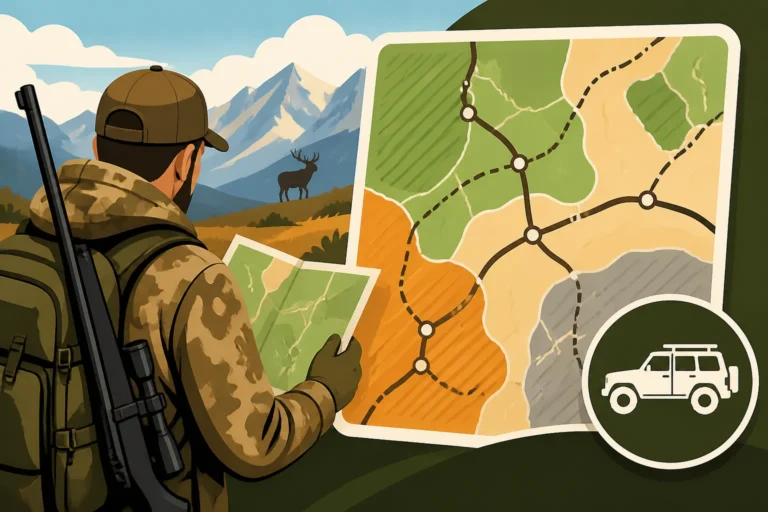
Another powerful resource for planning is GoHunt. While it's more focused on draw odds and unit analysis, it also provides incredibly detailed information on hunt units, including breakdowns of public and private land access, and sometimes even specific recommendations for regions or types of terrain. Using GoHunt in conjunction with onX Hunt allows you to not only pick a promising hunt unit but also to visualize access points and potential camping areas within that unit. Furthermore, don't overlook official Motor Vehicle Use Maps (MVUMs). These maps, often available for free from National Forest ranger districts or online, are the definitive guide to where you can legally drive, park, and camp along roads in the forest. They delineate open roads, seasonally closed roads, and trails, which is crucial for understanding vehicle access to your potential campsites and hunting areas. Reading a Motor Vehicle Use Map is a skill every hunter needs.
Scouting from Afar and On the Ground
E-scouting is your best friend when planning a Wyoming hunt, especially for selecting camp spots. Before you ever leave home, you can spend hours poring over satellite imagery on tools like Google Earth or your preferred hunting app. Look for flat areas near game trails, benches, or saddles that offer some cover from the wind but still provide relatively easy access. Identify natural features like ridgelines, drainages, or timbered areas that could offer shelter or a water source (remembering the distance rules!). You can essentially "walk" the terrain virtually, dropping pins on promising locations for later investigation. This process can help you eliminate countless unsuitable areas, saving valuable time and energy once you're actually in Wyoming. For more tips on this, check out E-Scouting a Unit Before the Season Opens.
While e-scouting is fantastic, nothing truly replaces boots-on-the-ground scouting, if that's an option for you. A pre-season trip allows you to physically check out those pinned locations. You can assess ground conditions, confirm water sources, and get a feel for potential vehicle access or walking distances to your hunting areas. If a pre-season trip isn't feasible, factor in extra time upon arrival to confirm your e-scouted camp locations. Sometimes, what looks flat and accessible on a map turns out to be a steep, rocky mess in person. Having a few backup spots in mind is always a good strategy. When selecting a site, also consider its proximity to your intended hunt area and how game might move through the landscape. A well-placed camp can reduce travel time and maximize your hunting efforts.
Practical Considerations for National Forest Hunting Camps
Setting up a hunting camp in a Wyoming National Forest involves more than just finding a flat spot for your tent. You're entering a wild ecosystem, and there are critical practicalities to consider for your safety, the environment, and your overall hunting success.
Water, Bear Safety, and Camp Impact
Water is life, especially when you're exerting yourself daily on a hunt. While streams and springs might look inviting, always assume surface water needs treatment. Filters, purifiers, or boiling are essential to prevent waterborne illnesses that can quickly derail a hunt. Plan your water strategy carefully: will you pack it in, filter it from a nearby source, or drive to a developed site for refills? Remember the dispersed camping rule to keep your camp well away from natural water sources to prevent contamination.
Then there's bear safety, which is a significant concern in much of Wyoming's National Forest land, particularly in the western and northwestern parts where grizzly bears are present. Proper food storage is non-negotiable. All food, garbage, and scented items (like toothpaste or deodorant) must be stored in bear-resistant containers, hung from a tree using a bear bag system, or kept in a hard-sided vehicle or camper when not actively being used. Never store food in your tent. Cook away from your sleeping area, and clean up thoroughly after every meal. Carrying bear spray and knowing how to use it is also a wise precaution. For more on this, read up on Food Storage Rules in Grizzly Country. Minimizing your camp's impact means packing out everything, avoiding cutting live trees for firewood (use dead and downed wood only where fires are permitted), and consolidating your activities to a small area. Leave your campsite cleaner than you found it.
Seasonal Closures and Vehicle Use Restrictions
Wyoming's public lands are often managed with an eye towards wildlife conservation, and this frequently means seasonal closures. Many roads and areas within National Forests are closed to motorized use during specific times of the year to protect migrating big game animals, such as mule deer or elk, on their winter range, or to prevent road damage during wet periods. These Seasonal Winter Range Closures for Big Game are strictly enforced and can sometimes last well into the hunting season, restricting access to areas you might have scouted. Always check with the local Forest Service office or consult current MVUMs before your trip to understand exactly which roads are open or closed during your hunting dates.
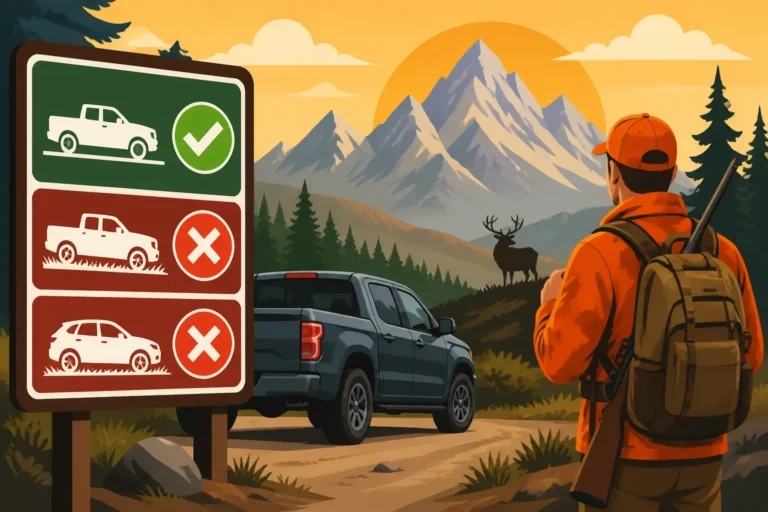
Vehicle use is another big one. The days of driving wherever you please on public land are largely over. Motor Vehicle Use Maps (MVUMs) are your official guide, showing designated roads and trails that are open to motorized vehicles. Driving off these designated routes is prohibited, even if it looks like an old two-track. Parking off-road is usually allowed within a certain distance of the road (often 30-50 feet), but again, always consult the MVUM or local regulations. Hunters often make the mistake of assuming they can drive to their exact hunting spot, only to find the access road is closed or that their intended camping spur is off-limits. Understanding these restrictions is vital not just for legality but also for planning your pack-in distances and overall hunting strategy. And remember, inside designated wilderness areas, motorized travel is almost entirely forbidden, which ties into the Wilderness Rules Every Wyoming Nonresident Should Know if you plan to hunt those areas.
Common Pitfalls and Best Practices for Hunters
Even with the best intentions, a hunting trip can go sideways if you're not prepared for potential issues. Being proactive and thinking ahead can make all the difference between a frustrating experience and a rewarding one.
Respecting Private Land and Other Hunters
Wyoming's landscape is a patchwork of public and private land, and sometimes those boundaries can be tricky to discern, especially when you're focused on game. It's an easy mistake to accidentally cross onto private land without permission, which can lead to serious legal consequences or simply ruin relationships with landowners. This is where tools like onX Hunt become invaluable again, with their clear property ownership layers. Always know exactly where you are and where the boundaries lie. The concept of "corner crossing" has even been affirmed in Wyoming, allowing hunters to step from one piece of public land to another at a common corner without technically trespassing, but it's a nuanced issue and still requires careful attention to ensure you don't touch private ground. It's a prime example of why being absolutely certain of your location is key, especially given topics like How Wyoming's Checkerboard Land Pattern Came About and the complexities it presents.
Beyond property lines, remember that you're likely not the only hunter in the forest. Good hunter ethics mean respecting other people's space and their hunt. Avoid setting up your camp right next to another hunter's setup or in a known high-traffic area if you can help it. If you encounter other hunters, a friendly wave and a brief chat can go a long way. Don't crowd someone's hunting spot, and be mindful of noise, especially at dawn and dusk. We're all out there for a similar experience, and a little courtesy ensures everyone has a better chance at it.
Planning for the Unexpected (Weather, Emergencies)
Wyoming weather is famously unpredictable. A beautiful, mild September day can quickly turn into a blizzard, even at lower elevations. It’s not uncommon to experience all four seasons in a single day, or even within a few hours. Always pack layers of clothing, and ensure your shelter is robust enough to withstand high winds, rain, or snow. A reliable tent, a warm sleeping bag, and extra dry clothes are not luxuries; they are necessities. Don't underestimate the mountains, and be sure you've thought about Preparing for Altitude on a Wyoming Hunt if you're coming from a lower elevation. Altitude sickness can hit hard and fast.
Beyond weather, consider emergencies. Cell service in the backcountry is spotty at best, and often nonexistent. A satellite communication device (like a Garmin inReach or Zoleo) can be a lifesaver for checking in with loved ones or, more critically, calling for help in an emergency. Always let someone know your itinerary, including your exact hunting area, expected return date, and emergency contacts. Carry a well-stocked first-aid kit, and know basic wilderness first aid. Having a contingency plan for vehicle breakdowns, getting lost, or an unexpected injury can mean the difference between a challenging adventure and a genuine crisis.
Below is a table summarizing some key differences and considerations between dispersed and developed camping options in Wyoming's National Forests for hunters.
| Feature | Dispersed Camping (National Forest) | Developed Campground (National Forest) |
|---|---|---|
| Location | Anywhere legal within NF, away from roads/water/developed areas. | Designated sites with numbered spots. |
| Amenities | None (no water, toilets, tables). Pack it in, pack it out. | Vault toilets, sometimes potable water, picnic tables, fire rings. |
| Cost | Generally free. | Fees apply, vary by campground and services. |
| Privacy | High, often isolated. | Lower, campsites are typically close together. |
| Noise Level | Very quiet, natural sounds. | Can be noisy, especially during peak season. |
| Accessibility | May require driving on unmaintained roads or hiking in. Check MVUMs. | Usually accessible by paved or well-maintained gravel roads. |
| Availability | Plentiful spots, but finding a perfect spot requires scouting. | Can fill up quickly, especially on weekends; reservations recommended. |
| Hunter Proximity | Can be set up closer to remote hunting areas/trailheads. | Often further from prime hunting areas, requires more travel to units. |
| Fire Safety | Requires strict adherence to fire restrictions; can be limited. | Designated fire rings often allow fires when dispersed fires are banned. |
| Wildlife Encounters | Higher likelihood of close encounters, especially with bears. | Lower, but still possible. Need to practice bear safety. |
Disclaimer
This article is for general informational purposes only and does not constitute professional advice. Laws, prices and regulations vary by location and change over time. Consult a qualified professional for guidance on your specific situation.