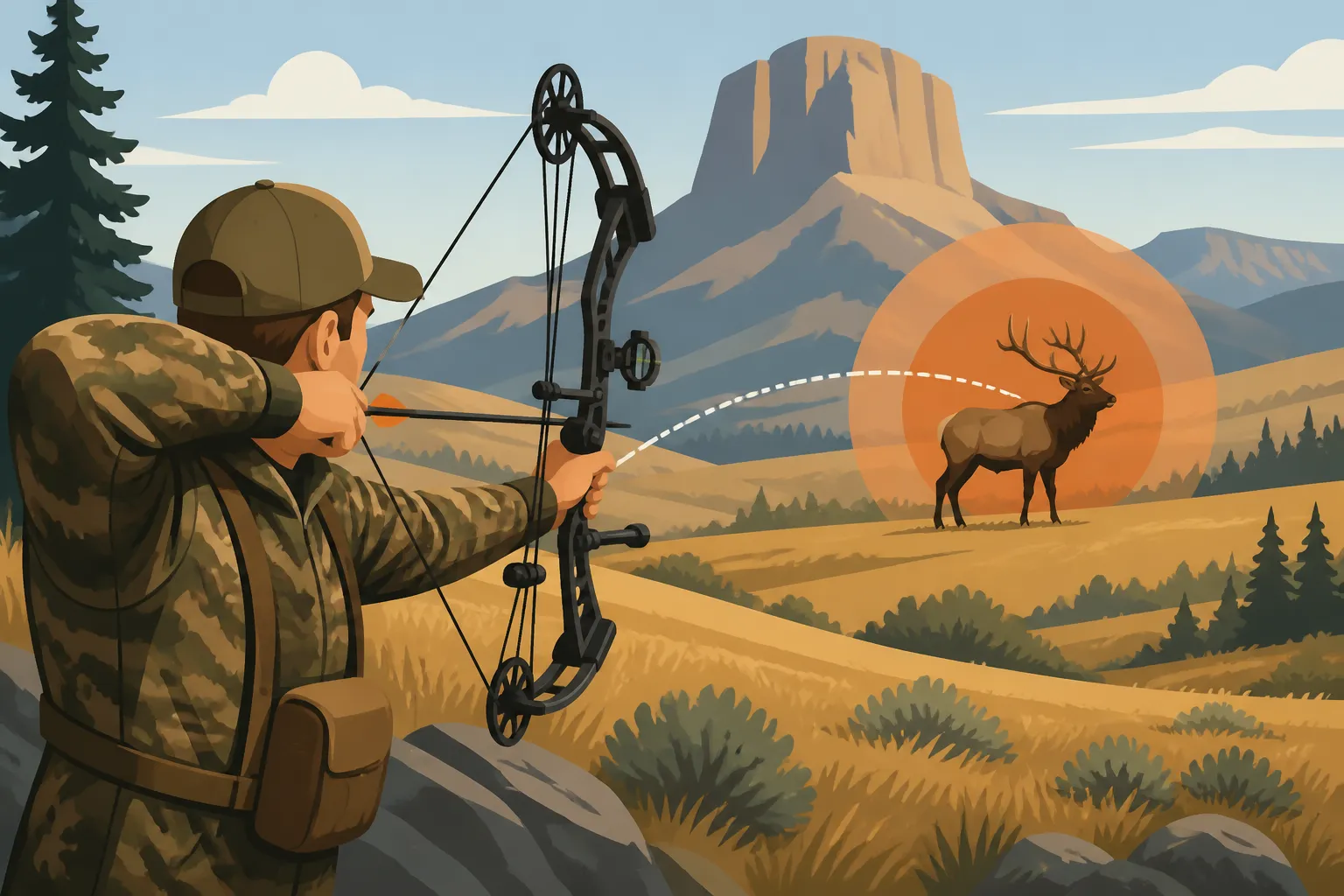
Realistic Archery Practice Distance for Big Game
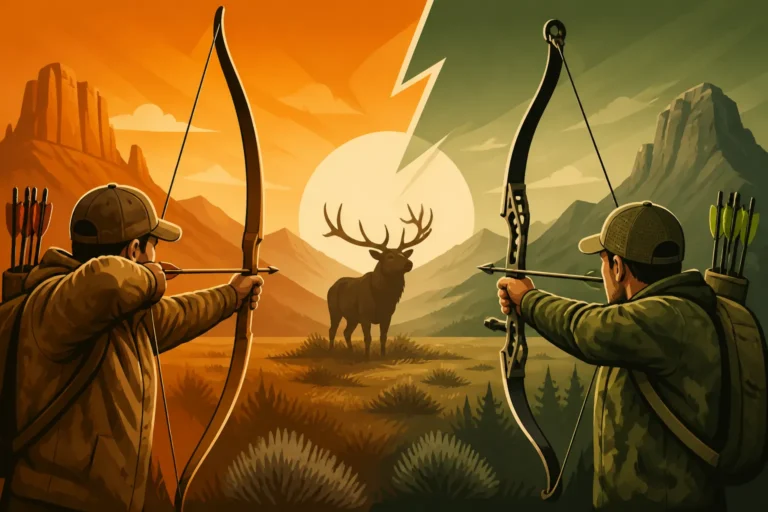
The biggest mistake many bowhunters make is thinking their accuracy on a flat, known-distance range translates directly to the unpredictable wilderness. You might be stacking arrows at 50 yards on the local archery range, but the second a massive bull elk steps out at that exact same distance in a high-wind Wyoming basin, adrenaline, uneven ground, and the sheer stakes of the moment can make that shot feel twice as far. This guide is all about helping you bridge that gap, pushing your practice beyond the ideal conditions to truly prepare for the real-world scenarios you'll face chasing big game across Wyoming's rugged landscape.
Why Realistic Practice Distances Matter for Wyoming Big Game
When you commit to bowhunting, you're signing up for an incredible challenge that carries a significant responsibility. Unlike rifle hunting, where effective ranges can extend much further, bowhunting requires an intimate understanding of an animal's anatomy and your own limitations. This isn't just about hitting the target; it's about hitting the right spot consistently, under pressure, to ensure a humane and ethical harvest.
The Ethics of a Clean Kill
The pursuit of big game with a bow is a deeply personal and often spiritual journey, but it’s underpinned by a fundamental ethical obligation: to make the cleanest, quickest kill possible. This means understanding exactly where to place your arrow to hit vital organs – typically the heart and lungs – and having the confidence and skill to do so even when conditions are far from perfect. If you're consistently putting arrows in the bullseye at 60 yards on a practice range, but can only reliably keep them in a vital-sized area at 40 yards when you're slightly winded, kneeling, or shooting downhill, then your ethical limit is 40 yards. Pushing beyond that in a hunting scenario is a disservice to the animal and yourself.
A clean kill isn't just about trajectory; it's about kinetic energy and broadhead performance too. You need to ensure your arrow has enough punch to penetrate deeply through hide, muscle, and bone to reach those vitals. This ties into factors like your draw weight – for instance, most hunters aim for a minimum draw weight of at least 40 pounds for deer and antelope, while larger animals like elk and moose often require 50 pounds or more. Knowing your setup's capabilities, including your choice of fixed blade against mechanical broadheads on elk, is just as crucial as knowing your own shooting ability.
Wyoming's Vast Open Spaces and Unpredictable Conditions
Wyoming is a land of grandeur and extremes. Its expansive sagebrush flats, towering mountain ranges, and deep canyons present a dynamic backdrop for bowhunting. Unlike hunting in dense timber or smaller, more constrained landscapes, Wyoming's open country often means longer sightlines and, consequently, the potential for longer shot opportunities. You might find yourself stalking pronghorn across a wide-open basin where getting within 30 yards is a monumental feat, or having an elk suddenly appear on a distant ridge, offering a fleeting quartering-away shot at a distance that tests the very edge of your comfort zone.
The environmental factors here are equally challenging. Wind is a constant companion, especially in the basins and on exposed ridges. A seemingly gentle breeze can play havoc with arrow flight, pushing your projectile off course by inches at 40 yards, which can mean the difference between a clean kill and a wounding shot. Elevation changes are also significant; a shot that feels comfortable on flat ground can become incredibly tricky when shooting steeply uphill or downhill, requiring adjustments to aim and a solid understanding of how gravity affects arrow drop. All these variables demand a practice regimen that goes far beyond static targets.
Determining Your Effective Archery Range
Understanding your true effective range is paramount. It’s not just the farthest distance you can sometimes hit a target, but the farthest distance you can consistently hit a vital zone under realistic hunting conditions. This takes honesty, self-assessment, and a dedicated practice routine that simulates those very conditions.
The Difference Between Target Practice and Hunting Scenarios
Target practice is essential for building foundational skills, refining form, and tuning your bow. You're probably shooting at brightly colored targets, from a comfortable stance, with plenty of time to focus. It's a controlled environment designed for precision. Hunting, however, throws all that out the window. Your heart will be pounding, your breathing will be heavy from a strenuous stalk, and you might be contorted into an awkward position behind a sagebrush or kneeling in thick timber. The animal you're aiming for won't be standing still waiting; it might be quartering away, feeding, or just about to bolt.
Consider a scenario: you've been Stalking Pronghorn Across Wyoming's Open Sagebrush for hours, finally getting to what you think is a manageable range. Suddenly, the buck turns, offering a shot at 55 yards. On the range, you hit that all day. But now, your legs are burning, your hands are a little shaky, and you know this is your one chance. Can you still make that shot count? This is why target practice is only the first step. The next step is making your practice replicate the chaos and pressure of a real hunt.
Establishing Your Personal Ethical Limit
Your personal ethical limit is the maximum distance at which you can confidently and consistently place an arrow into a kill zone the size of a dinner plate (for deer/antelope) or a basketball (for elk/moose) under any reasonable hunting condition you might encounter. To determine this, you need to systematically test yourself. Start by shooting at comfortable distances, say 20-30 yards, until you're grouping tightly. Then, incrementally increase the distance by 5-10 yards, focusing not just on hitting the target, but on keeping your arrows within that vital zone size.
When you start to see your groups open up beyond what you deem acceptable for a clean kill, that's likely approaching your current limit. But don't just stop there. Introduce variables: shoot after a sprint, shoot from your knees, shoot uphill and downhill, shoot with a buddy calling out random distances (after you've ranged it, of course!). Be brutally honest with yourself. It's far better to pass on a marginal shot in the field than to take one you're not fully prepared for. Many seasoned western bowhunters will tell you that their absolute maximum ethical shot on big game, even with extensive practice, rarely exceeds 60 yards, and often much less, like when hunting in thicker terrain in areas like Hunting the Whitetail River Bottoms of Eastern Wyoming.
Gear Considerations and Their Impact on Range
While practice is paramount, your equipment plays a significant role in your effective range. A well-tuned bow, matched arrows, and sharp broadheads maximize your potential for accuracy and lethality.
- Bow Type: Whether you're shooting a recurve, longbow or compound for western elk, each has its characteristics. Compound bows, with their let-off, can make holding at full draw longer and more stable, potentially extending your comfortable range compared to traditional bows.
- Arrow Weight: Heavier arrows generally carry more kinetic energy and momentum, which translates to better penetration, especially on thick-skinned animals. However, heavier arrows also drop more quickly, requiring more precise range estimation at longer distances. Understanding Arrow Weight That Gets Through an Elk is critical for ethical hunting.
- Broadheads: Broadhead choice impacts flight characteristics and terminal performance. Fixed-blade broadheads tend to be more robust and reliable for penetration, while some mechanical broadheads offer better flight characteristics at speed but can be prone to failure if they don't deploy correctly. Always ensure your broadheads are razor-sharp.
- Sights: Your choice of sight, whether a single pin or multi pin for open country, can influence your speed of target acquisition and precision at varying distances. A multi-pin setup gives you immediate reference points, while a single-pin slider requires adjustment but offers a cleaner sight picture.
- Bow Tuning: A perfectly tuned bow shoots arrows consistently and accurately. Even the slightest cam lean, fletching contact, or nock point issue can cause erratic arrow flight, especially at longer ranges. This is why Bow Tuning Worth Doing Before a Mountain Hunt is non-negotiable before heading into the field. If your bow isn't tuned, all the practice in the world won't make up for it.
Practical Drills to Build Realistic Hunting Confidence
Moving beyond static range shooting is crucial for developing the muscle memory and mental toughness needed for hunting. Your practice should mirror the challenges of the field as much as possible.
Incorporating Obstacles and Field Positions
Hunting rarely offers a perfectly clear, flat shooting lane. You'll often find yourself needing to shoot around a tree, over a bush, or through a small gap in the vegetation. Practice these scenarios regularly. Set up small branches or other safe obstacles in front of your target and force yourself to find a clear lane.
Furthermore, practice shooting from various field positions:
- Kneeling: This is a common position for ground blinds or when needing to get low behind cover. Can you draw your bow smoothly and hold steady from a kneeling position?
- Sitting: Sometimes you'll find yourself sitting in a chair or on the ground, needing to quickly get a shot off.
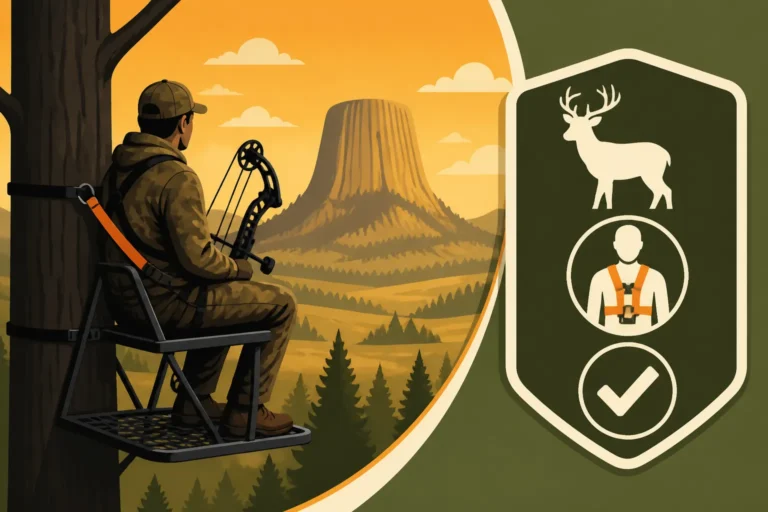
- Uphill/Downhill: These shots drastically change your point of impact due to gravity. Practice shooting at targets placed on hillsides, or from an elevated stand mimicking a treestand setup. Aim low for downhill shots and high for uphill shots to compensate for the effective horizontal distance. Remember, a rangefinder measures the straight-line distance, but gravity acts on the horizontal component.
- From Uneven Ground: Stand on a small rock, or an incline, to simulate unstable footing. The core strength and balance required for these shots are different than on a flat range.
Simulating Stress and Time Constraints
The rush of adrenaline when an animal appears is a powerful force. You can simulate this in practice to build resilience.
- "Fitness to Shoot" Drills: Before shooting, do 20 jumping jacks, sprint 50 yards, or climb a set of stairs. Get your heart rate up, then immediately pick up your bow and shoot. This mimics the condition you might be in after a strenuous stalk or quick movement to get into position.
- Walk-Up Shots: Start 80-100 yards from your target. Walk briskly, stopping at random intervals (e.g., 60, 45, 35, 20 yards) to quickly range and take a shot. This trains your ability to acquire the target, estimate range, and execute under a simulated time crunch.
- Quick Draw/Surprise Shots: Have a friend randomly signal for you to draw and shoot. This hones your ability to react swiftly and efficiently, minimizing unnecessary movement that could spook an animal.
- Cold Bow Drills: Many hunters find their first shot of the day or after a long period of holding to be the most critical. Practice taking a shot from a "cold" bow, perhaps after waiting 10-15 minutes, just as you would on a stand or during a long glassing session.
The Importance of Shot Sequence and Follow-Through
Under pressure, it's easy to rush through your shot sequence or drop your bow arm immediately after release. Consistent practice, especially with stress-inducing drills, helps ingrain proper form. Focus on:
- Smooth Draw: Avoid jerky movements that can torque your bow or alert game.
- Anchor Point Consistency: Ensure your hand goes to the exact same anchor point every single time.
- Aiming Steady: Keep that pin on the vital area, even if it's dancing a little.
- Executing the Release: Don't punch the trigger. A surprise release is often the most accurate.
- Follow-Through: Maintain your form and aim until the arrow impacts the target. Don't drop your bow arm to watch the arrow; trust your shot. This seemingly small detail significantly improves accuracy, especially at longer ranges.
The Role of Technology and Continuous Improvement
Technology has certainly changed how we prepare for and execute hunts, and continuous improvement is the hallmark of any dedicated bowhunter.
Using Rangefinders and Ballistic Calculators
A quality rangefinder is an indispensable tool for bowhunters, especially in wide-open country. It eliminates guesswork and provides precise distances, which is critical for making ethical shots. Practice using your rangefinder quickly and efficiently, especially on uneven terrain or when ranging multiple objects to understand depth. Many modern rangefinders also offer angle compensation, which is invaluable for uphill and downhill shots, giving you the "shoots like" distance.
While ballistic calculators are more commonly associated with firearms, understanding arrow trajectory can be aided by mental models or even simple charts. Knowing your arrow's drop at various distances allows you to make precise pin adjustments or holdovers. For example, if your 20-yard pin is dead on, how much does your arrow drop at 30, 40, 50, and 60 yards? Knowing these numbers intimately helps you react faster in the field. This information, combined with knowing how to read wind on an open-country stalk, forms the bedrock of accurate shooting in challenging environments.
Leveraging Resources Like GoHunt for Unit Specifics
Understanding the specific terrain and typical shot scenarios of your chosen hunt unit in Wyoming can immensely inform your practice. Resources like GoHunt, with their detailed unit profiles and mapping tools, can be incredibly valuable. By studying topographical maps and satellite imagery, you can identify areas where shots might be longer due to open terrain, or where thick cover might force closer encounters.
For example, if you're targeting antelope in a unit known for vast plains, you know that practicing 50-70 yard shots from a kneeling position, simulating a ground blind, will be far more relevant than exclusively practicing 20-yard shots in thick timber. GoHunt can also provide insights into public land access and potential staging areas, helping you visualize where you might encounter animals and the kind of shots you'll need to be prepared for. This kind of detailed scouting, often called Scouting a Wyoming Unit From Your Kitchen Table, helps you tailor your practice to real-world possibilities.
Year-Round Practice: The Key to Consistency
Bowhunting isn't a seasonal hobby; it's a lifestyle. Consistency is paramount. Don't just pick up your bow a month before the season opens. Integrate practice into your regular routine. Even shooting a few arrows several times a week, especially from varying distances and positions, will keep your muscles conditioned and your form sharp. Consider this table illustrating the contrast between casual and dedicated practice:
| Feature | Casual Practice (Pre-Season Rush) | Dedicated Practice (Year-Round Hunter) |
|---|---|---|
| Frequency | Infrequent, intense bursts | Consistent, regular sessions (3-5x/week) |
| Environment | Flat range, ideal conditions | Varied terrain, obstacles, field positions |
| Conditions | Calm, no distractions | Wind, elevated heart rate, time pressure |
| Focus | Hitting target, max distance | Ethical kill zone, consistent form under stress |
| Gear Check | Last-minute before hunt | Regular tuning, maintenance, broadhead testing |
| Mental Prep | Hope for the best | Visualization, confidence building |
| Outcome Likelihood | Increased risk of wounding, missed opportunities | Higher chance of clean kill, successful harvest |
Embrace the off-season as an opportunity to hone your skills. Join a local 3D archery league, which offers varying shot distances and angles, simulating hunting scenarios. Work on your physical fitness – being in shape makes those long stalks and awkward draws much easier. Remember, every arrow you send downrange in practice is an investment in a more ethical and successful hunt, preparing you for the moment when a magnificent animal like those found in the Wyoming Elk, the Feedgrounds and the Disease Question or The Wyoming Range Deer Herd Is Half of What It Should Be stands within your realistic effective range.
Disclaimer
Hunting regulations and requirements, including those related to archery equipment and methods, can change. Always consult the most current Wyoming Game and Fish Department regulations before planning or undertaking any hunting activity. This guide is for informational purposes only and should not be considered a substitute for official legal guidance.