Optics Power for Wyoming’s Long Sightlines
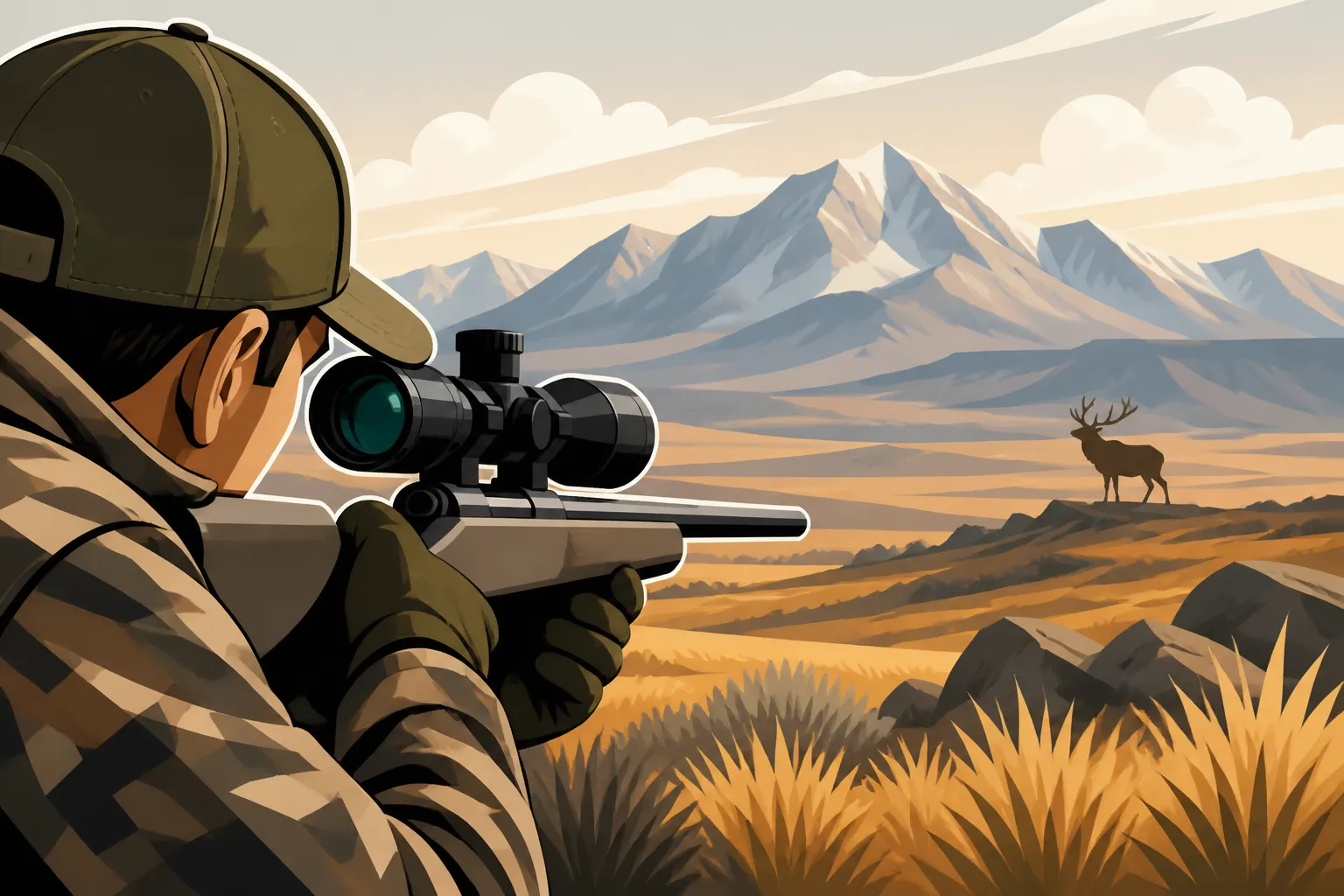
Hunting in Wyoming means contending with incredible distances. You're often glassing vast, open landscapes where an animal that looks close enough to walk to might actually be miles away. This sheer scale can lead to immense frustration when your optics just don't offer the clarity or magnification needed to properly identify a trophy or even a legal animal, forcing you to make exhausting, unnecessary stalks. This comprehensive guide will help you navigate the world of hunting optics, specifically focusing on the ideal power and features for Wyoming's famously long sightlines, ensuring you're better prepared to spot, judge, and approach your quarry efficiently.
Understanding Magnification and Objective Lens Size
Before we dive into specific recommendations, let's unpack the two most important numbers you see on any pair of binoculars or a spotting scope: magnification and objective lens diameter. Understanding these fundamentals is key to making informed decisions about your optical setup for Wyoming's unique hunting challenges.
The "Power" in Binoculars and Spotting Scopes
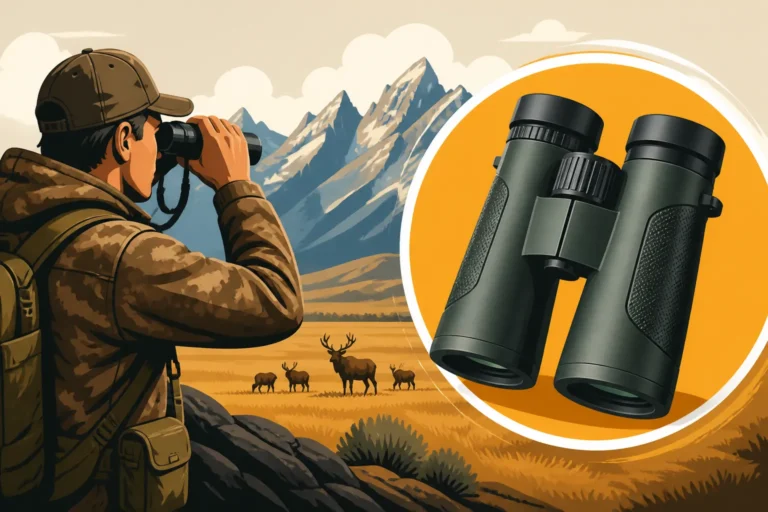
When you see "10×42" or "20-60×80," the first number, or range, refers to the magnification. This tells you how many times closer an object will appear through the optic. For example, a 10x binocular makes an animal 1,000 yards away appear as if it's only 100 yards from you. In a place like Wyoming, where you might be looking across an entire basin at a distant elk herd, that magnification is your first line of defense against misidentifying animals or simply missing them altogether.
However, higher magnification isn't always better, especially in the field. While a 15x binocular brings distant details into much sharper focus than a 10x, it also magnifies your natural hand shake. Even a slight tremor can make glassing uncomfortable and spotting fine details nearly impossible without a solid rest. This is a critical consideration for those long, slow sweeps across the Wyoming sagebrush or up a timbered mountainside, trying to catch a flick of an ear or the outline of an antler. Finding the sweet spot means balancing how close you need things to appear with your ability to hold the image steady.
Objective Lens Diameter and Light Gathering
The second number in those specifications – the 42 in 10×42 or the 80 in 20-60×80 – is the diameter of the objective lens, measured in millimeters. This lens is the one farthest from your eye, and its size directly impacts how much light the optic can gather. The more light it collects, the brighter and clearer your image will be, especially in challenging lighting conditions.
Think about those critical dawn and dusk hours in Wyoming when big game animals are most active. A larger objective lens, say 56mm compared to 42mm, will perform noticeably better in low light, extending your effective glassing time. This can be the difference between spotting a mule deer buck feeding just before legal shooting light or having him vanish into the shadows undetected. The trade-off, of course, is size and weight. Larger objective lenses mean bulkier, heavier optics, which can be a significant factor when packing into remote areas of the Shoshone National Forest or the Bridger-Teton Wilderness. It’s all about finding that personal balance between performance and portability for your specific hunting style.
Binoculars: Your Primary Tool for Glassing Wyoming
When you’re out on the vast plains and mountains of Wyoming, your binoculars are arguably the most used piece of optical gear you’ll carry. They’re your first window into the landscape, constantly scanning for movement, shapes, and colors that don’t quite fit with the natural surroundings. Choosing the right pair for the terrain and species you’re pursuing is paramount.
Ideal Binocular Magnification for Different Terrain and Species
For most general hunting scenarios in Wyoming, a 10x binocular is considered a workhorse. It offers a good balance of magnification, field of view, and enough stability to often be hand-held, especially if you brace against a tree or a hiking pole. For instance, when you're moving through the broken timber and open parks of elk country, a 10x binocular provides enough magnification to pick apart distant timber edges, while still offering a wide enough field of view to quickly locate animals and navigate the terrain. This makes a 10x perfect for situations where you might be quickly scanning and then transitioning into a stalk, as discussed in How Close a Bowhunter Really Needs to Get.
However, when you’re hunting the wide-open sagebrush flats for pronghorn or mule deer across the Red Desert, you might find yourself wishing for more power. This is where 12x or even 15x binoculars start to shine. These higher-magnification binos allow you to pick out details like horn length or antler points from incredible distances, often saving you miles of walking by confirming an animal's trophy potential before you commit to a stalk. The downside? Anything over 10x, and certainly 12x or 15x, becomes incredibly difficult to hold steady for extended periods. This leads us directly to our next crucial piece of gear. When considering the best Binocular Size That Survives an All-Day Glassing Session, remember that higher magnification often dictates a tripod.
The Role of Tripods and Adapters for Binos
In Wyoming, a tripod isn't just for photographers; it's a vital piece of optical equipment for hunters. Even with a 10x binocular, mounting it on a tripod can dramatically improve your ability to resolve details and reduce eye fatigue during long glassing sessions. The slight wobbles and tremors that are imperceptible to your brain when scanning will become obvious when trying to pick apart a distant hillside for an hour. With a tripod, your image becomes rock-solid, allowing you to identify a specific branch as an antler or confirm a bedded animal's exact location.
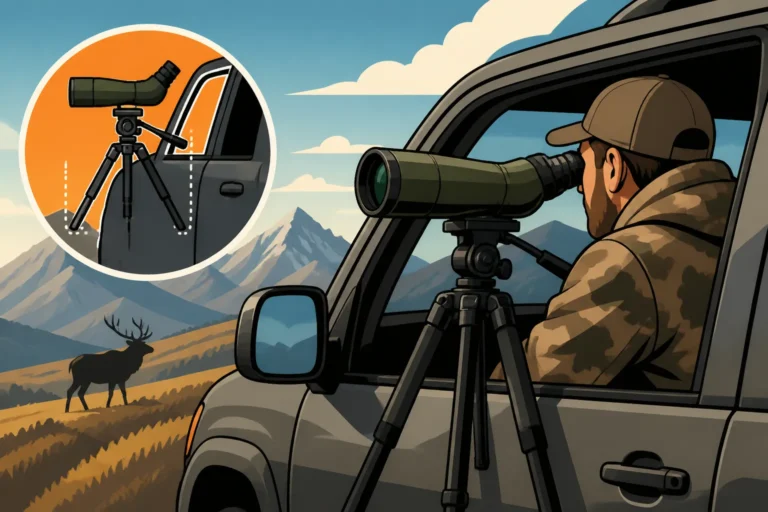
For 12x, 15x, and larger objective binoculars, a tripod is absolutely mandatory. Trying to effectively glass with these power levels freehand is a recipe for frustration and missed opportunities. Carbon fiber tripods offer a great balance of light weight and stability, crucial for packing into the backcountry, while aluminum options provide robust stability at a lower price point, albeit with more weight. Don’t forget a good quality binocular adapter – a simple piece of equipment that connects your binoculars to the tripod head. Many hunters prefer a quick-release plate system that allows them to rapidly attach and detach their binos as they move from one glassing vantage to another. For stationary glassing, perhaps from the back of your vehicle, a sturdy tripod can make all the difference, as detailed in Tripod Setup for Glassing From a Vehicle. Using a comprehensive tool like GoHunt's mapping system can help you identify prime glassing points where a tripod setup will be most effective.
Spotting Scopes: Reaching Out Across the High Plains
While binoculars are your constant companion for scanning and initial identification, there comes a point in Wyoming’s vastness where you need more power – a lot more. This is where the spotting scope earns its place in your pack. It’s the magnifying glass that lets you truly dissect distant landscapes and confirm what your binoculars only hinted at.
When a Spotting Scope Becomes Indispensable
A spotting scope truly shines when you've located something intriguing with your binoculars, but it's just too far to make a definitive judgment. Imagine you're Glassing Wyoming Basins Before You Take a Step for mule deer. You pick up a faint glint or a questionable shape several miles away. Whipping out your spotting scope, you can dial in 20x, 30x, or even 60x magnification to clarify if that shape is a branch or a bedded deer, and if it's a deer, what kind of antlers it's carrying. This level of detail is simply impossible with binoculars alone, especially when assessing a potential trophy animal.
Spotting scopes are indispensable for confirming antler or horn size, sexing animals, and even judging the age of an animal at extreme distances. For bighorn sheep hunters, a high-quality spotting scope is non-negotiable for accurately judging ram curl. Similarly, if you're chasing elk in mountainous terrain or trying to confirm a pronghorn buck's exact horn length before committing to a lengthy stalk across the open flats, the spotting scope is your best friend. It helps you decide whether to invest hours in a stalk, or to keep glassing, preventing wasted effort on animals that don't meet your criteria or aren't legal. For specifics on choosing the right power, check out Spotting Scope Power for Open Country Glassing.
Fixed vs. Variable Power Spotters
Spotting scopes primarily come in two magnification types: fixed power or variable zoom. Fixed power scopes, like a 20x or 30x, generally offer superior optical clarity, brightness, and a wider field of view at their specific magnification. This is because they have fewer moving parts and optical compromises. However, their lack of versatility means you can't zoom in or out, which can be a limitation when you need to quickly scan a wider area before zeroing in on a detail.
Variable power scopes, such as a 20-60x, are by far the more popular choice for hunters due to their immense versatility. You can start at a lower magnification (like 20x) to scan a broader area and quickly locate animals, and then smoothly zoom up to 60x or even higher to really scrutinize details. While there can be a slight decrease in image quality or brightness at the highest magnifications compared to a fixed-power equivalent, the ability to adapt to varying distances and situations is usually well worth it. When making your choice, pay attention to eye relief (the distance your eye can be from the eyepiece and still see the full image), which is crucial for comfort, especially if you wear glasses. Angled eyepieces are often preferred by hunters who spend long hours glassing, as they allow for a more relaxed head position, particularly on varied terrain.
Rangefinders and Beyond: Completing Your Optical Kit
While binoculars and spotting scopes cover the primary visual tasks of hunting in Wyoming, a truly effective optical setup isn't complete without a reliable rangefinder. In a landscape where distances deceive the eye, a rangefinder provides the crucial factual data needed for ethical shot placement and effective stalking.
Integrated Rangefinding Optics
The evolution of hunting optics has seen a fantastic integration of technology, with some binoculars now incorporating built-in laser rangefinders. Brands like Leica with their Geovid series, Sig Sauer with their Kilo line, and Swarovski Optik offer powerful binoculars that not only provide excellent glassing capabilities but also give you instant, accurate distance readings with the push of a button. This eliminates the need to carry and fumble with a separate device, streamlining your gear and making quick, critical decisions in the field much easier.
While these integrated units typically come with a higher price tag, the convenience and efficiency they offer can be invaluable, especially when speed is of the essence. Imagine spotting a pronghorn buck suddenly appear from a coulee. With a rangefinding binocular, you can glass him, instantly range him, and then set up for a shot without ever taking your eyes off the animal. This is crucial for making ethical shots, particularly when considering your Rifle Zero Distance for Open Country Shooting or determining How Close a Bowhunter Really Needs to Get. These devices often come with advanced features like angle compensation and ballistic calculations, further enhancing their utility in Wyoming's varied terrain, from flat plains to steep mountainsides.
Understanding Field of View and Eye Relief
Beyond magnification and objective lens size, two other optical characteristics significantly impact your user experience: field of view and eye relief. The field of view refers to the width of the area you can see through your optics at a certain distance, typically measured in feet at 1,000 yards. As a general rule, higher magnification binoculars and spotting scopes will have a narrower field of view. This means that while you can see objects much closer, you're also seeing a smaller "slice" of the landscape, making it harder to initially locate animals or track moving game.
Eye relief, on the other hand, is the maximum distance your eye can be from the eyepiece while still seeing the entire, unvignetted image. This is a particularly important specification for hunters who wear eyeglasses. Insufficient eye relief means you'll have to press your glasses right up against the eyepiece, which can be uncomfortable and potentially scratch lenses. Good eye relief, typically 15mm or more, allows glasses-wearers to comfortably use their optics without removing their eyewear. Additionally, consider the exit pupil—the diameter of the light beam leaving the eyepiece. A larger exit pupil (calculated by dividing the objective lens diameter by the magnification, e.g., 42mm / 10x = 4.2mm) generally provides a brighter image, especially when your pupils are dilated in low light, making for a more comfortable and effective glassing experience during those critical hunting hours.
Practical Considerations for Wyoming Hunters
Choosing optics for Wyoming isn't just about raw power; it's about finding gear that can stand up to the rigorous demands of the environment and perform when it matters most. The elements here don't pull any punches, and your equipment needs to be as tough as the terrain you'll be hunting.
Weight, Durability, and Weatherproofing
When you're packing into the remote corners of Wyoming's national forests or humping across miles of open country, every ounce in your pack counts. This is why weight is a critical factor, especially for items you'll be carrying constantly, like binoculars and a spotting scope. Lighter doesn't always mean weaker, though. Many premium optics now feature lightweight, durable chassis materials like magnesium or carbon fiber, offering robust protection without excessive bulk. You want optics that feel solid in your hands, not flimsy, as they'll inevitably get bumped and knocked around in the field.
Durability also extends to how well your optics handle the weather. Wyoming can throw everything at you: scorching sun, driving rain, heavy snow, and relentless wind. Look for optics that are fully multi-coated for maximum light transmission and glare reduction, and critically, are nitrogen or argon-purged and O-ring sealed. This process prevents internal fogging due to temperature changes and ensures they are completely waterproof, protecting the delicate internal components from moisture. A little fog on your lenses at the critical moment can mean a missed opportunity, so investing in weather-resistant optics is non-negotiable for a successful Wyoming hunt. GoHunt often features gear reviews and recommendations that emphasize durability for tough Western conditions.
Balancing Cost vs. Performance
Let's be realistic: high-performance optics come with a significant price tag. While it's tempting to reach for the top-tier Alpha brands, it's essential to understand that you often get what you pay for, but there are also diminishing returns past a certain point. A $3,000 pair of binoculars will undoubtedly be phenomenal, but a $1,000-$1,500 pair might offer 90% of that performance for a fraction of the cost, making it a much smarter investment for many hunters.
It's about finding the sweet spot for your budget and hunting style. If your budget is tight, prioritize your binoculars first, as they are your primary glassing tool. A good quality 10×42 or 12×50 binocular should be your core investment. You can then add a mid-range spotting scope later, or even opt for a more budget-friendly brand like Athlon or Vortex, which offer excellent value and performance without breaking the bank. Remember, even the best optics in the world won't help if you don't know how to use them effectively. Practice glassing at home, learning to pick apart landscapes and spot subtle details. This skill, combined with capable optics, will significantly increase your success on a Wyoming hunt.
| Optic Type | Magnification/Objective | Ideal Wyoming Use Case | Pros | Cons |
|---|---|---|---|---|
| Binoculars | 8×42 | Timber, close-quarters, quick scanning | Wide field of view, easy to hand-hold, bright image. | Limited range for long-distance identification. |
| Binoculars | 10×42 | All-around, balanced, general big game | Good balance of power, brightness, and portability. | Can be shaky freehand for extended glassing. |
| Binoculars | 12×50 | Open plains (antelope, mule deer), mountain basins | Increased magnification, good light gathering. | Often requires a tripod, narrower field of view. |
| Binoculars | 15×56 | Extreme long-range glassing (sheep, pronghorn) | Max magnification for binos, excellent detail at distance. | Almost always requires a tripod, heavy, narrow field of view. |
| Spotting Scope | 20-60×60 | Lightweight backpack hunts, general big game | Versatile zoom, good detail, more compact than 80mm. | Less bright than 80mm in low light, can be optically softer at max zoom. |
| Spotting Scope | 20-60×80 | Serious long-range glassing, trophy judging, fixed camps | Superior brightness and resolution, excellent for judging at extreme range. | Heavy, bulky, significant investment. |
Disclaimer
Hunting regulations and requirements can change frequently. The information provided in this guide is for general informational purposes only and is not a substitute for checking the current official Wyoming Game and Fish Department regulations. Always consult the most up-to-date regulations and official sources before planning or engaging in any hunting activities.