Arrow Weight That Gets Through an Elk
If you've ever stood at full draw on a big Wyoming bull elk, heart pounding, you know the absolute terror of doubt. Did you pick the right arrow? Will it actually get through all that muscle, bone, and hide to reach the vitals? It's a question that plagues every archer, and for good reason—elk are incredibly tough animals, and getting enough penetration is paramount for a quick, ethical harvest. This guide is all about demystifying arrow weight and helping you build a setup that gives you maximum confidence when that moment of truth arrives.
Understanding the Physics of Penetration
When we talk about an arrow getting through an animal, we're really talking about energy transfer and the ability of that arrow to overcome resistance. It's not just about how fast your arrow leaves the string, but how much "oomph" it still has when it hits its mark. Many hunters focus purely on speed, but for big game like elk, that can be a critical mistake.
Kinetic Energy vs. Momentum
You've probably heard both terms, kinetic energy (KE) and momentum, thrown around in archery discussions. While they're related, they tell us slightly different things about an arrow's penetration potential.
Kinetic energy is often thought of as the "energy of motion," and it's calculated using both mass (weight) and velocity (speed). A faster, lighter arrow might have a high kinetic energy number, which sounds impressive on paper. However, when an arrow hits something dense like bone or tough hide, it encounters significant resistance. This is where momentum really shines. Momentum is a measure of an object's resistance to stopping, and it emphasizes mass more heavily than velocity. Imagine a bowling ball and a tennis ball traveling at the same speed. The bowling ball, with its much greater mass, has far more momentum and would be much harder to stop.
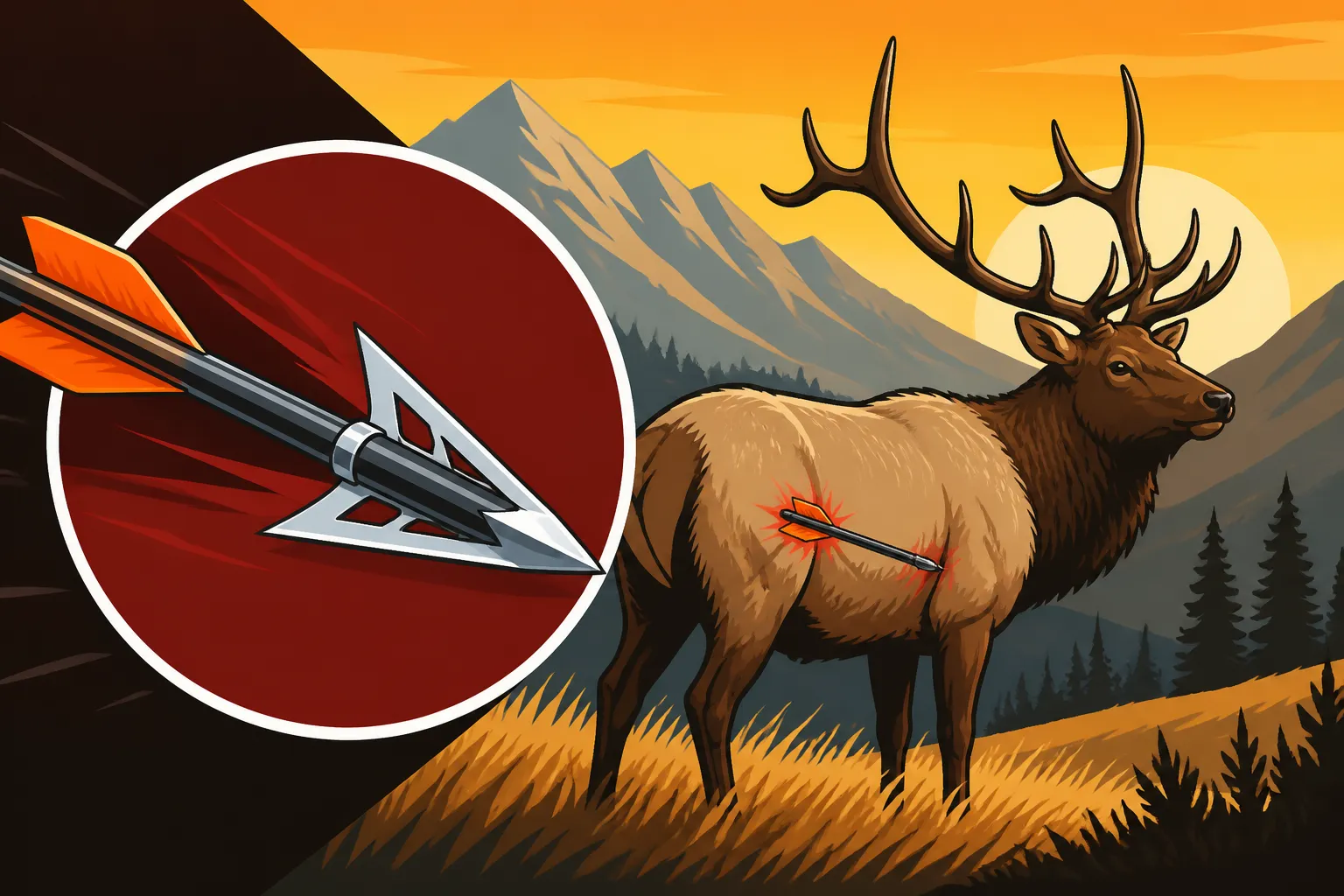
For an elk hunt, especially when you're aiming for a shoulder or trying to punch through ribs, you want an arrow that resists stopping. A heavy arrow, even if it's traveling a little slower, carries more momentum. This momentum helps it maintain its trajectory and drive through those dense tissues, increasing your chances of a pass-through. A pass-through is crucial because it often creates two wound channels, increasing blood loss and making tracking much easier. Many seasoned elk hunters would rather sacrifice a little speed for the added momentum a heavier arrow provides, knowing it gives them a better chance at a clean kill on such a robust animal.
Factors Beyond Weight: FOC and Broadhead Design
While arrow weight is a huge piece of the penetration puzzle, it’s not the only one. Two other critical elements work in tandem with arrow weight: Front-of-Center (FOC) balance and broadhead design.
FOC refers to how much of an arrow's weight is distributed towards the front. A higher FOC means more of the arrow’s weight is concentrated in the front section, usually achieved by using heavier inserts or tips. This front-heavy balance significantly improves an arrow's flight stability, especially at longer distances or in windy conditions, which you'll definitely encounter out in Wyoming's vast expanses. More importantly for penetration, a higher FOC creates a "driving" effect. When the broadhead impacts, the heavier front section pulls the rest of the arrow through the target, rather than the shaft pushing the broadhead in. Think of throwing a dart versus throwing a feather. The dart, with its FOC, penetrates with much more authority. A good starting point for elk hunting is aiming for an FOC of 10-15%, though some hunters go even higher for maximum penetration. When browsing through resources like GoHunt, you'll often see discussions around FOC percentages and how they influence arrow performance, particularly for western big game.
Then there's the broadhead. This is where the rubber meets the road, or more accurately, where steel meets hide and bone. For elk, a fixed-blade broadhead with a strong, cut-on-contact tip and a minimal cutting angle is generally preferred for its superior penetration capabilities compared to many mechanical broadheads. While modern mechanicals have come a long way, some designs can lose significant energy on impact as they deploy their blades, particularly if they hit bone. A stout fixed blade like a Magnus Stinger or a G5 Montec is designed to retain its integrity and slice through whatever it encounters. We explore this more in depth in our guide on Fixed Blade Against Mechanical Broadheads on Elk. The minimum cutting width a broadhead must make also plays a role in Wyoming regulations, ensuring a sufficient wound channel, but effective penetration with a quality blade is what truly makes the difference.
Recommended Arrow Weight Ranges for Elk
So, what's the magic number for an elk arrow? The truth is, there isn't one universal answer, as it depends heavily on your specific bow setup and personal preferences. However, we can certainly give you some solid guidelines to build a lethal arrow system.
General Guidelines for Compound Bows
For most compound bow hunters, an arrow weight between 450 and 550 grains is often considered the sweet spot for elk. This range offers an excellent balance of momentum for penetration, while still maintaining a reasonably flat trajectory for shots out to your effective range.
Let's break that down:
- Draw Weight: If you're pulling a typical 60-70 pounds, which is common for adult hunters, a 450-grain arrow will still be relatively quick and carry plenty of momentum. Remember, Wyoming Sets Bow Draw Weight at 40 Pounds, 50 for Elk, so many hunters are already at or above the 50-pound minimum for these animals.
- Performance: A 450-grain arrow might give you a bit flatter trajectory, which can be a psychological comfort when you're trying to thread an arrow through a small opening at 40 yards. However, if you're comfortable practicing out to longer distances and understanding your arrow's arc, pushing towards the 500-550 grain mark can significantly boost your momentum. An arrow in the 500-grain range, shot from a 65-70 pound bow, will be a formidable projectile, less susceptible to deflection from minor brush and more likely to punch through tough tissue.
- Component Build: To achieve these weights, you'll typically be looking at a heavier arrow shaft (e.g., a spine designed for heavier points), a quality broadhead (100-150 grains), and potentially heavier inserts (50-100 grains) to increase FOC. Companies like Easton, Gold Tip, and Victory Archery all offer components that allow you to build custom heavy arrow setups. When planning your build, consider that the total weight includes the shaft, fletching, nock, insert, and broadhead. Use a reputable arrow builder calculator, often found on manufacturer websites or through hunting planning tools like those on GoHunt, to dial in your precise weight and FOC.
Considering Traditional Bows and Crossbows
The principles of heavy arrows for penetration apply universally, but the specific weights and considerations might shift slightly for traditional bows and crossbows.
- Traditional Bows (Recurves and Longbows): Traditional archers often instinctively gravitate towards heavier arrows, sometimes exceeding 600 or even 700 grains. This is because traditional bows typically have slower arrow speeds compared to compounds, so maximizing momentum through weight becomes even more critical for penetration. If you're wondering about Recurve Poundage That Will Kill an Elk, you'll find that traditional bowhunters often prioritize heavier arrow setups to compensate for the lower velocity, ensuring their arrow carries enough kinetic force to get the job done. With a lower draw weight, a traditional archer simply must maximize arrow mass and FOC, along with a razor-sharp, cut-on-contact broadhead, to achieve reliable penetration on an animal as large as an elk.
- Crossbows: Crossbows, with their often higher draw weights and inherent speed, usually achieve excellent penetration with arrows (often called bolts) in the 400-500 grain range. While crossbows provide powerful thrust, hunters still benefit from ensuring their bolts aren't excessively light. A slightly heavier bolt will absorb more of the crossbow's energy and transfer it more efficiently into the animal. Most manufacturers specify recommended bolt weights for optimal performance and safety, so always stick to those guidelines. Even with a crossbow, a balanced, high FOC bolt with a well-designed broadhead will outperform a lightweight, tail-heavy option when it comes to punching through bone and gristle. The goal remains the same: efficient energy transfer.
| Arrow Weight Range (Grains) | Typical Bow Type | Primary Benefit | Potential Trade-off |
|---|---|---|---|
| 350-425 | Compound (Speed) | Flatter Trajectory | Reduced Momentum/Penetration |
| 450-550 | Compound (Balanced) | Good Momentum, Decent Trajectory | Slightly Slower |
| 550-650+ | Traditional, Heavy Compound | Max Momentum/Penetration | Significantly Slower, Looping Trajectory |
| 400-500 | Crossbow | Excellent Penetration with Speed | Less Critical Variation |
Balancing Speed, Trajectory, and Penetration
Here's where the real mental gymnastics begin for many archers. We're constantly told "speed kills," but is it always true for elk? Not necessarily. Finding the right balance for your personal setup and hunting style is key.
The Speed vs. Weight Trade-off
There's no denying that a faster arrow offers a flatter trajectory, which can be incredibly appealing, especially in open country like much of Wyoming where shots can be longer. A flatter trajectory can also be more forgiving of slight range estimation errors, which can happen in the heat of the moment. However, there's a point of diminishing returns.
If you go too light on your arrow weight in pursuit of blinding speed, you sacrifice momentum. When that super-fast, lightweight arrow hits the dense muscle or a rib bone of an elk, it can shed its energy dramatically and fail to penetrate adequately. It might even glance off. Think of shooting a .223 versus a .30-06 into a thick piece of wood. The .223 is much faster, but the heavier .30-06 bullet will penetrate deeper due to its mass.
For elk, it's generally far better to err on the side of a slightly heavier arrow that may fly a little slower but carries significantly more punch. That extra momentum drastically increases your chances of a pass-through, which is absolutely vital for an ethical harvest and successful recovery. It takes practice and confidence to trust a slightly slower, heavier arrow, but the results speak for themselves. You'll also find that practicing with Are Release Aids Allowed for Archery Hunting? can make managing heavier draw weights easier, allowing you to focus on the arrow’s flight path rather than the strain of holding back.
Practical Applications for Wyoming Elk Hunters
Wyoming elk hunting often means challenging terrain and potentially longer shots than you might experience in dense timber. This requires careful consideration of your arrow setup.
- Shot Distances: While it's always ideal to get as close as possible, sometimes a 40-50 yard shot is the reality. With an elk, you're dealing with a large animal, and errors in range estimation or shot placement can be magnified. A heavier arrow's slight drop-off in trajectory might mean you need to be a bit more precise with your ranging or use a multi-pin sight to compensate, but the trade-off in penetration is often worth it. This is where knowing your Realistic Archery Practice Distance for Big Game becomes paramount. Practice extensively at varying distances, especially out to your maximum ethical range, so you instinctively know your arrow’s drop. For open country hunting, considering a Single Pin or Multi Pin for Open Country can also influence how you manage trajectory.
- Conditions: Wyoming's winds are legendary. A heavier arrow is inherently more stable in flight and less susceptible to wind drift than a lighter arrow. This can be a huge advantage when you're making a critical shot and a crosswind is attempting to push your arrow off course.
- The GoHunt Advantage: Tools like those offered by GoHunt often provide arrow trajectory calculators where you can input different arrow weights, speeds, and bow setups to see how they impact your ballistic curve. This allows you to visually compare how a 400-grain arrow performs against a 500-grain arrow at various distances, helping you make an informed decision without needing to buy and test dozens of different arrow components. This kind of e-scouting isn't just for finding game, it's also for dialing in your equipment before you even hit the mountains.
Ultimately, your goal is to maximize the arrow’s ability to do damage where it counts. Speed is exciting, but momentum drives steel through bone.
Testing Your Setup for Optimal Performance
Even with all the theoretical knowledge in the world, nothing replaces hands-on testing and rigorous practice. Your arrow setup needs to be a seamless extension of you, and that only comes from dedication on the range.
Practicing with Hunt-Weight Arrows
This might sound obvious, but you'd be surprised how many hunters practice with lighter field-point arrows and then switch to heavier broadhead-tipped arrows right before the season. This is a recipe for disaster. Different arrow weights and broadhead types will often fly differently, even subtly.
You absolutely must practice with the exact arrow setup you intend to hunt with, including your broadheads. These are often referred to as "hunt-weight" arrows.
- Broadhead Tuning: Your broadheads need to fly true with your field points. If they don't, you have a tuning issue, not necessarily an arrow weight issue. This might mean adjusting your rest, cam timing, or even tweaking your fletching. This critical step, often called Bow Tuning Worth Doing Before a Mountain Hunt, ensures your arrow is flying perfectly stable.
- Confidence Building: The more you practice with your hunting arrows, the more confidence you'll build in their flight characteristics. You'll learn their trajectory, how they react to wind, and how consistently you can group them. This confidence is invaluable when an elk steps out and your heart rate spikes. If you know your arrow is going to go exactly where you aim it, that's one less thing to worry about. Remember, getting How Close a Bowhunter Really Needs to Get is paramount, but once you're there, having absolute faith in your arrow's flight is everything.
- Simulated Hunting Scenarios: Don't just shoot at a static target from 20 yards. Practice from different positions (kneeling, standing, elevated), shoot at angles, and practice quickly drawing and acquiring targets. These are the kinds of shots you might encounter when you're out in the Elk Hunting the Wind River Wilderness or chasing a bull in rough terrain.
Tuning for Accuracy and Consistency
Beyond just practicing, the actual tuning of your bow is paramount to ensuring your chosen arrow weight delivers maximum performance. A perfectly spined, heavy arrow won't matter if your bow isn't tuned to shoot it accurately.
- Spine Selection: Arrow spine, or stiffness, is critical. A shaft that's too stiff or too weak for your draw weight and arrow length will flex improperly upon release (archer's paradox), leading to erratic flight. Heavier arrow points and higher draw weights typically require stiffer spines. Use a spine chart from your arrow manufacturer or an online calculator, taking into account your chosen arrow length, point weight, and bow draw weight.
- Paper Tuning/Bare Shaft Tuning: These methods help you diagnose how your arrow is leaving the bow. Shooting a fletched arrow through paper will show tears that indicate issues with your rest, nock point, or cam timing. Bare shaft tuning, where you shoot an un-fletched arrow alongside a fletched one, is an even more advanced method to confirm perfect arrow flight.
- Chronograph Your Setup: Once your bow is tuned and you’re shooting your hunt-weight arrows, use a chronograph to measure your actual arrow speed. This real-world data is far more valuable than manufacturer-advertised IBO speeds. Knowing your exact arrow speed allows you to precisely dial in your sight pins and use trajectory calculators accurately, ensuring your arrow will hit its mark at varying distances.
Choosing the right arrow weight for elk hunting isn't about chasing numbers; it's about building a reliable, ethical killing machine. By understanding the physics, considering recommended ranges, and meticulously testing your setup, you'll be well on your way to a successful Wyoming elk hunt. When you see that Boone and Crockett Elk Taken in Wyoming, you'll know your carefully constructed arrow played its part in a memorable hunt.
Disclaimer
The information provided in this guide is for general educational purposes only and is not a substitute for professional advice or current hunting regulations. Always consult the most up-to-date Wyoming Game and Fish Department regulations before hunting. Hunting is an inherently risky activity, and safety should always be your top priority.