Wyoming Draw Odds Broken Down by Hunt Area
Trying to figure out your odds for a coveted Wyoming big game tag can often feel like you're staring at a spreadsheet written in a foreign language. It's a common frustration, the sheer volume of data and the complexities of the draw system making it incredibly difficult to gauge your chances accurately. This guide aims to break down how Wyoming's draw odds are determined and, more importantly, how you can interpret those numbers specifically by hunt area to make the most informed application decisions.
Demystifying Wyoming's Complex Draw System
Wyoming’s big game draw is famous (or infamous, depending on who you ask) for its dual system that allocates tags based on both preference points and a random lottery. This blend creates a unique challenge for hunters trying to secure a tag, whether they're seasoned veterans with a stack of points or newcomers hoping for a lucky break. Understanding the mechanics behind this system is the first critical step in deciphering your actual odds for any given hunt area.
The Foundation of Preference Points
At its core, Wyoming's draw system is built around preference points. These points are awarded annually when you apply for a license and are unsuccessful, or when you simply purchase a point without applying for a tag during the designated point-only period. The idea is simple: the more points you have, the better your chances in the preference point portion of the draw. It’s Wyoming’s way of rewarding consistent effort and patience, ensuring that those who put in the time eventually get a shot at higher-demand units.
However, it's not a guarantee. You'll often hear hunters talk about "point creep," where the number of points required to draw a particular unit slowly increases over time as more hunters accumulate points. This means a unit that took 5 points last year might take 6 this year, and so on. This continuous shift can be incredibly frustrating for hunters who feel like they're always chasing a moving target. Knowing How Many Points It Takes to Draw Wyoming Elk or Points Needed for a Wyoming Mule Deer Tag is a crucial starting point for your planning.
Understanding the 75/25 Draw Split
Where things get really interesting, and often bewildering, is with Wyoming's "75/25" split. For most nonresident big game species like elk, deer, and antelope, 75% of the available tags in any given hunt area are allocated to applicants with the most preference points. The remaining 25% of tags are then thrown into a random lottery, where everyone, regardless of their point total (even those with zero points), has an equal chance. This is fully explained in depth if you look up Wyoming's 75/25 Draw Split Explained.
This split is a double-edged sword. On one hand, it means you can still draw a fantastic tag with zero points if luck is on your side. We’ve all heard those stories from friends or seen posts online about someone getting a dream tag on their first try – that's the 25% random draw at work. On the other hand, it also means that even with a significant number of preference points, you’re never 100% guaranteed a tag until you hit the maximum point ceiling for a unit. This element of chance adds a layer of excitement, but also a healthy dose of anxiety, to every draw application. For species like antelope, it's even possible to draw with minimal points, as highlighted in Wyoming Antelope Odds With Zero Preference Points.
Why Hunt Area Specifics Matter for Your Odds
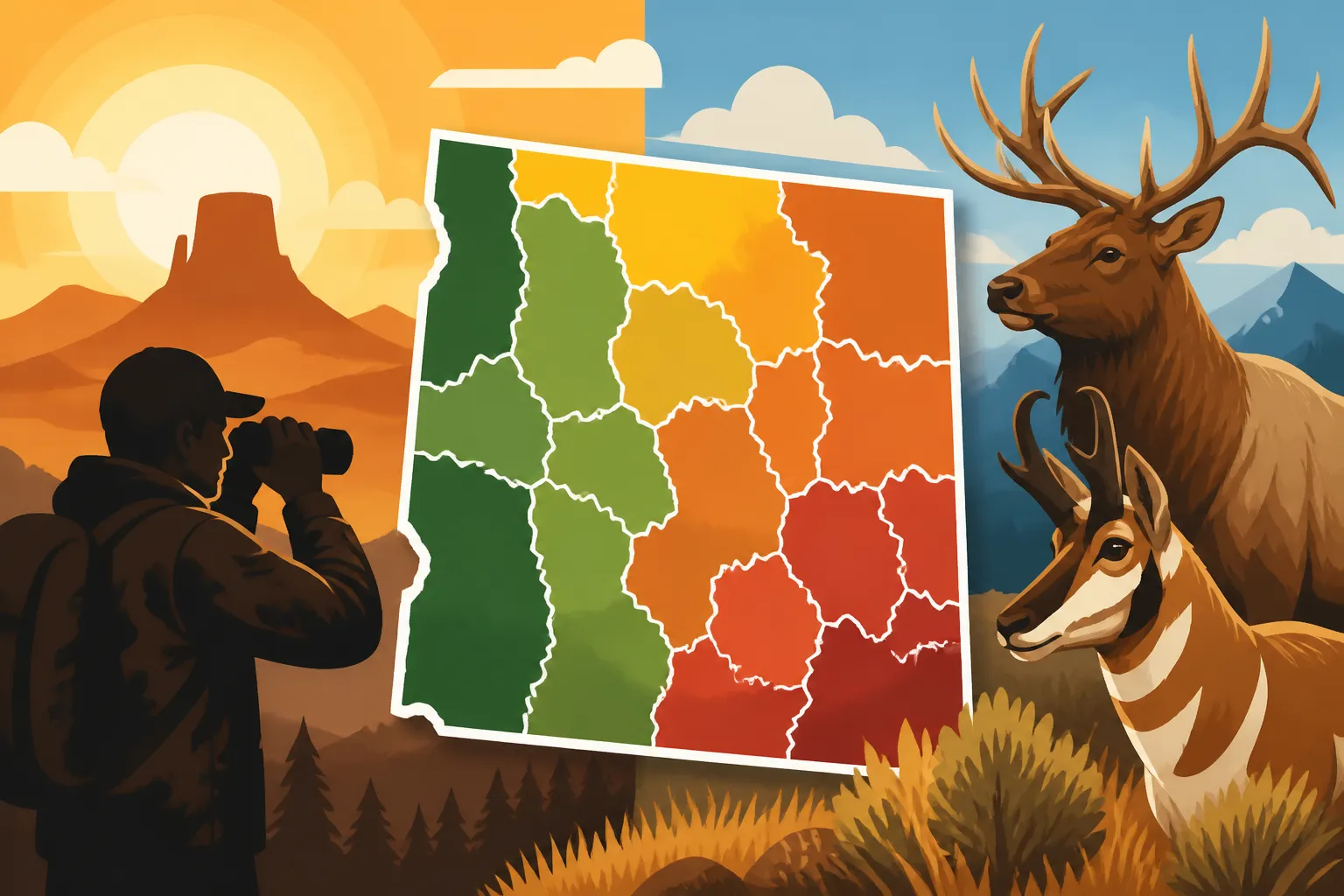
The phrase "draw odds" is almost meaningless without adding "for which hunt area?" This is because Wyoming's diverse landscapes, varying animal populations, and the demand from hunters create wildly different probabilities from one area to the next. What might be a slam-dunk draw in one part of the state could be a decade-long wait in another.
Population Objectives and Quotas
Every single Wyoming hunt area has its own unique set of population objectives, which are essentially targets for how many animals the Wyoming Game and Fish Department wants in that particular region. These objectives are influenced by habitat capacity, landowner tolerance, and historical population data. Based on these objectives and recent herd surveys, the department sets specific quotas – the exact number of licenses available – for each species within each hunt area annually.
A hunt area with a robust, growing population and a high quota will naturally have better draw odds than an area where the population is struggling or being managed for very specific trophy potential with a tiny quota. This is why you'll see units with hundreds of tags where the odds are relatively good, contrasted with units that might only offer a handful of tags, making them incredibly difficult to draw. The sheer number of available licenses is the most fundamental factor impacting your chances. For example, understanding Wyoming General Elk Licenses and Where They Work versus Wyoming Limited Quota Elk Areas Closed to General Licenses in Wyoming can drastically alter your strategy and odds.
Trophy Potential and Hunter Demand
It's no secret that some hunt areas in Wyoming are legendary for producing truly exceptional trophy animals. Whether it's a massive bull elk, a giant mule deer, or a heavy-horned antelope, these "blue-chip" units inevitably attract a huge amount of hunter demand. Everyone wants to hunt where the big ones live, and this increased demand drives down draw odds significantly, pushing preference point requirements sky-high. This phenomenon is often seen in popular areas like Point Creep in Wyoming's Region G.
Conversely, units that might not have a reputation for record-book animals, or perhaps have more challenging access or terrain, often see less demand. This means that even if the quota isn't enormous, the draw odds can still be surprisingly favorable because fewer people are applying for them. It’s a constant balancing act for hunters: do you chase the dream tag in a low-odds unit, or do you prioritize drawing any tag in a more accessible, higher-odds area? Your personal goals for the hunt will heavily influence which hunt areas you focus on.
License Types and Their Impact on Odds
Beyond just the hunt area, the specific type of license you apply for within that area also profoundly affects your draw odds. Wyoming offers a range of license types, such as Type 1 (any elk), Type 6 (cow elk), Type 7 (doe/fawn deer), and so on. Generally speaking, licenses for antlered animals (bulls, bucks, rams) in prime units are the hardest to draw. These are the tags that everyone is vying for.
Doe, cow, or fawn licenses, on the other hand, are often much easier to draw. These tags are typically issued in greater numbers to help manage herd populations, and while they don't offer the opportunity for a trophy, they provide an excellent chance to fill the freezer and experience a Wyoming hunt. Sometimes, these "easier" tags are even available over the counter or in leftover draws after the main draw concludes. It's a strategic decision to consider applying for these if your primary goal is simply to hunt and harvest an animal, regardless of antler size.
Practical Approaches to Researching Draw Odds Data
You can't make smart application decisions if you don't have the right data. Thankfully, the Wyoming Game and Fish Department (WGFD) provides a wealth of information, and several reputable third-party resources have built incredible tools to help hunters navigate this complex landscape.
Utilizing Official Wyoming Game & Fish Data
The first and most authoritative source for draw odds is always the Wyoming Game and Fish Department's official website. Each year, after the draw results are finalized, they publish detailed reports outlining the statistics for every hunt area, species, and license type. These reports typically show the number of applicants, the number of tags issued, the minimum and maximum points drawn, and the odds for various point levels. You can also dive into The Wyoming Hunt Planner for even more detail.
While this data is invaluable, it can be a bit overwhelming to sift through. The raw tables and spreadsheets can be dense, and pulling out the specific information for your chosen hunt areas and species might require a bit of patience and a keen eye for detail. However, this is the definitive source, and understanding how to read these reports is a fundamental skill for any serious Wyoming applicant. Look for categories like "Successful Applicant Points" and "Random Draw Success Rate" to get a clear picture of what happened in the previous year's draw.
Leveraging Third-Party Resources and Tools
For many hunters, especially those new to Wyoming or those who prefer a more streamlined approach, third-party platforms offer incredibly powerful tools for analyzing draw odds. These resources take the raw WGFD data and transform it into user-friendly, interactive databases and predictive models. One such highly respected platform is GoHunt. Their "Insider" service, for instance, provides detailed draw odds calculators, point-trend analysis, and even unit-specific harvest statistics, all presented in an easy-to-understand format.
GoHunt and similar platforms like Eastmans' MRS take the headache out of manual data compilation. They allow you to filter by species, hunt area, license type, and your current preference point total, giving you an instant snapshot of your theoretical odds. They often include projections for future point creep, helping you anticipate how many points you might need in coming years. While these tools come with a subscription fee, many serious Western hunters find them to be an indispensable investment, saving countless hours of research and helping them make more strategic choices. They make Checking Draw Odds Before You Apply far more efficient.
Strategies for Navigating the Wyoming Draw
Once you've wrapped your head around the draw system and know where to find the data, it's time to build a strategy. Wyoming's draw is a long game, and a thoughtful approach can significantly improve your chances over time.
Building Preference Points Smartly
The most straightforward strategy for improving your odds, especially for those highly desirable limited quota units, is to consistently accumulate preference points. Even if you can't afford a hunt every year, or if your schedule simply doesn't allow it, purchasing a preference point annually is a very smart move. These points never expire (unless you draw a tag for that species), and they steadily increase your chances in the 75% preference point portion of the draw. It's a low-cost, high-return investment in your future Wyoming hunting opportunities.
Think of it like saving up for a big purchase. You might not have enough for that dream elk tag this year, but by banking a point, you're one step closer to it next year. Be mindful of the application deadlines – Wyoming Nonresident Elk Applications Close in Early February, Sheep, Goat, Moose and Bison Close April 30 in Wyoming, and Wyoming Deer and Antelope Applications Close June 1. Don't miss the window to buy a point if you don't plan to apply for a tag!
Balancing Desirability and Reality
This is where the art of the application comes in. Most hunters have a "dream unit" – that one hunt area they really want to draw. But unless you have a massive stack of points, applying for that dream unit year after year without a backup plan is often a recipe for disappointment. A common and effective strategy is to use your first choice for a high-demand, high-point unit you aspire to hunt, knowing it's a long shot, but then use your second choice for a unit with more realistic odds.
Many applicants use their second choice to target units that consistently draw with fewer points, or units that have strong random draw odds. The key is to thoroughly research both your first and second choices. Don't just pick a random area for your second choice; choose one that offers a good hunting experience and a solid chance of success. This balanced approach gives you a shot at a dream tag while still keeping a foot in the door for a hunt this season.
Considering "General" Licenses and Leftovers
Don't overlook the power of "general" licenses and the leftover draw, especially if your primary goal is simply to hunt Wyoming big game, regardless of a specific trophy unit. Wyoming offers general licenses for elk and deer in many areas, which typically allow you to hunt in a broader range of units that aren't designated as limited quota. These general tags often have much better draw odds, sometimes even drawing with zero or very few points. While the hunting can be more challenging or the trophy potential might not be as high as in a limited quota unit, it's a fantastic way to experience Wyoming hunting.
Furthermore, after the main draw results are posted (Wyoming Elk Draw Results Come in May, Wyoming Deer and Antelope Results Come in June), any unallocated tags go into a "leftover" draw, usually in late June. This Wyoming Leftover Draw in Late June can be a golden opportunity for hunters who were unsuccessful in the main draw, or even those who decide to hunt last minute. While the best units and license types are usually gone, there are often still doe/cow tags or tags in less popular areas available, offering a legitimate hunting opportunity. Keep an eye on GoHunt's breakdown of leftover tags; they often provide alerts and analysis that can be incredibly helpful. Remember, a Wyoming Nonresident Tags Run $326 to $1,965, so plan your budget carefully.
Example Draw Odds Breakdown (Nonresident Type 1 License)
To give you a clearer picture, here's a hypothetical table comparing draw odds for various Wyoming hunt areas and species based on differing point levels. Remember, these are illustrative, and actual odds change annually.
| Species & Hunt Area | Preference Points to Apply | Draw Odds (75% Point Pool) | Draw Odds (25% Random Pool) | Last Year's Max Points Drawn |
|---|---|---|---|---|
| Elk Area 10 (Trophy) | 10+ | 100% | 0% | 12 |
| Elk Area 25 (Good) | 5 | 45% | 3% | 8 |
| Deer Area 50 (Solid) | 3 | 30% | 5% | 6 |
| Antelope Area 70 (Gen) | 0 | 10% | 20% | 2 |
| Deer Area 80 (Gen) | 0 | 5% | 15% | 1 |
As you can see, higher preference points drastically improve your chances in the "point pool," often guaranteeing a tag in some of the most sought-after units. However, the random pool always offers a glimmer of hope, even for those starting with no points. This table highlights why understanding both components of the draw is vital for crafting an effective application strategy.
Disclaimer
Please be aware that hunting regulations, seasons, and draw odds in Wyoming can change annually. The information provided here is for general guidance and educational purposes based on current knowledge. Always consult the official Wyoming Game & Fish Department regulations, brochures, and website for the most accurate and up-to-date information before planning your hunt or applying for licenses. Hunting involves inherent risks, and it is your responsibility to ensure you are in compliance with all applicable laws and regulations.