Elk Point Creep in the Bighorn Mountains
Trying to draw an elk tag in Wyoming, especially in a coveted area like the Bighorn Mountains, can feel like you're chasing a mirage. You accumulate preference points year after year, only to see the required number climb higher, seemingly just out of reach. This frustrating phenomenon, known as "point creep," makes planning your dream hunt incredibly challenging. This guide will meticulously break down what point creep means for elk hunters eyeing the Bighorns and offer strategies to navigate Wyoming's competitive draw system.
Understanding Preference Points and the Draw System
Wyoming's draw system for coveted big game licenses, particularly for elk, can be a labyrinth if you don't understand its core mechanics. It's designed to give preference to those who've been applying longer, but it's not a simple first-come, first-served queue. The rise of "point creep" is a direct consequence of increasing demand meeting this structured system, and it’s something every aspiring Wyoming elk hunter needs to grasp.
The Mechanics of Wyoming's Draw
Wyoming employs a hybrid draw system for nonresident elk tags, which mixes both preference points and random chance. This system splits the available tags into two pools. For most species, 75% of the nonresident quota goes to the highest preference point holders, while the remaining 25% is allocated through a random drawing, regardless of how many points an applicant has. This is famously known as the Wyoming's 75/25 Draw Split Explained. What this means in practice is that you have two chances to draw: one based on your accumulated points and another, albeit smaller, purely by luck.
When you apply, if you're unsuccessful in drawing a tag, you automatically receive a preference point for that species (provided you selected the option to gain a point if unsuccessful, or applied for a point only). These points accumulate over time, increasing your odds in the preference point portion of future draws. For many hunters, especially those from out of state, these points are an investment in a future high-quality hunt. The value of these points becomes particularly evident when you consider the price of a Wyoming Nonresident Elk License Price and the effort involved in planning a western hunt.
What "Point Creep" Really Means
Point creep is that sinking feeling you get when you check the draw odds for a particular hunt area, only to find that the minimum number of preference points required to draw a tag has increased since last year, often by one or even two points. Imagine you've diligently applied for five years, accumulating five points, and last year, your dream unit drew with four points. You're feeling pretty confident, right? Then the new draw results come out, and suddenly that unit required six points. Your five points, which should have been enough, are now insufficient. That's point creep in action.
This phenomenon occurs due to several factors. Firstly, more people are applying for fewer available tags, or the same number of tags with growing interest. Secondly, the pool of applicants with a high number of preference points grows larger each year. As more hunters accumulate maximum or near-maximum points, the "floor" for drawing a tag gets incrementally higher. It's a supply-and-demand problem in its purest form, where the demand for premier hunt areas, like those in the Bighorns, far outstrips the supply of available licenses. This constant upward shift means that simply banking a point each year often isn't enough to keep pace with the increasing demand for those coveted tags.
Why the Bighorn Mountains are So Desirable for Elk
The Bighorn Mountains, straddling north-central Wyoming, have a legendary status among elk hunters, and for very good reason. This allure is precisely what drives the intense competition and, consequently, the point creep we see in its hunt areas. Understanding what makes this region so special helps put the draw challenges into perspective.
Prime Habitat and Herd Quality
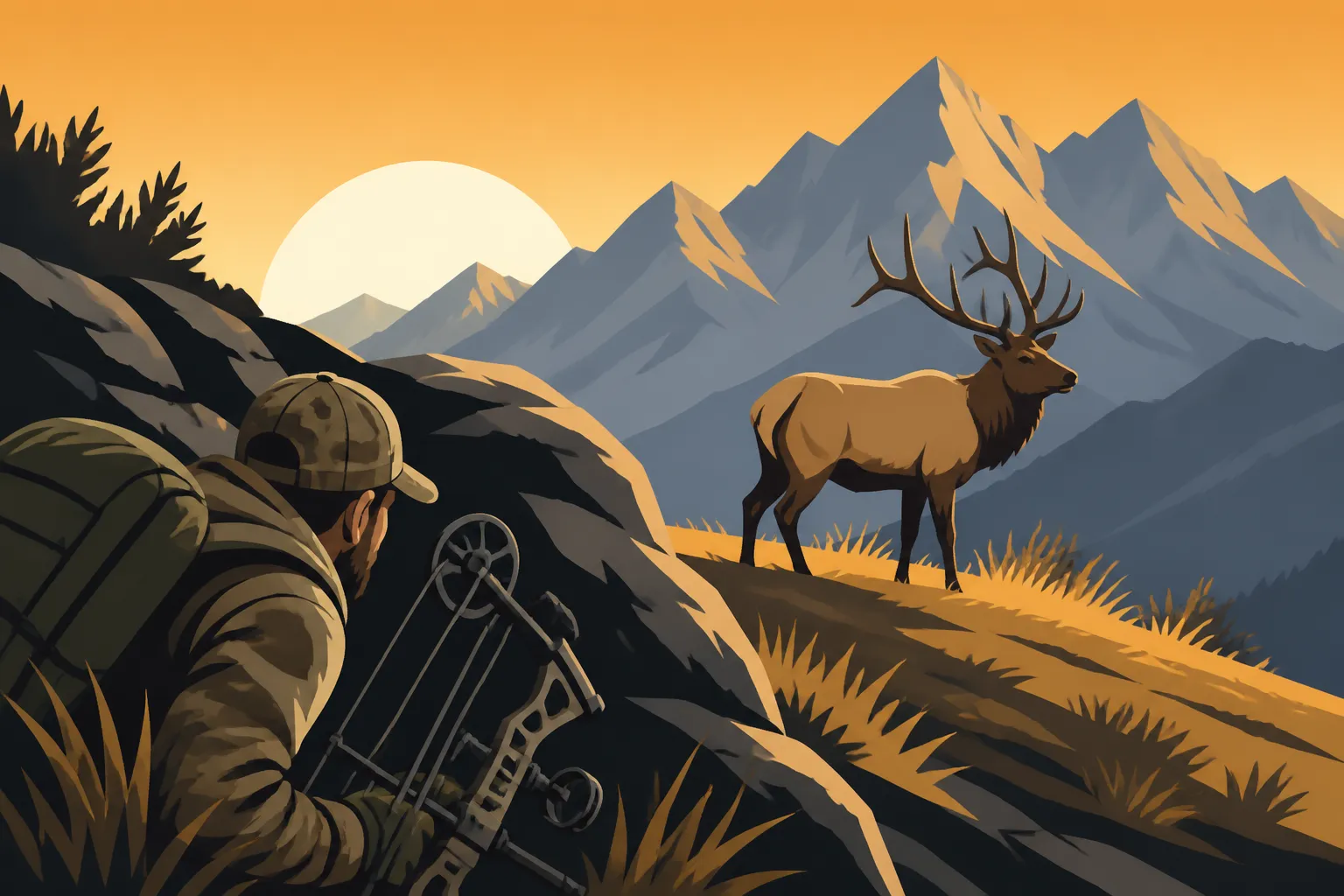
The Bighorns boast a spectacular mosaic of prime elk habitat. We're talking about vast expanses of mixed conifer forests, interspersed with aspen groves, open sagebrush parks, and high-alpine meadows. This diverse landscape provides everything a healthy elk herd needs: ample forage in the form of lush grasses and forbs, critical thermal and hiding cover, and abundant water sources. The elevation changes dramatically, offering elk crucial seasonal migration routes, from lower wintering grounds to high-elevation summer pastures. This rich environment supports a robust elk population, and critically, one known for producing mature bulls. Hunters dream of the chance to pursue a big, mature bull elk, and the Bighorns consistently deliver that potential. The quality of the animals, combined with the wild, rugged beauty of the landscape, elevates these areas to the top of many hunters' wish lists. If you're looking for an area with a history of big bulls, the Bighorns definitely come up in conversation. For a deeper dive into the overall health and distribution of elk in the state, you might want to look at Wyoming Elk Herd Units and Winter Range.
Accessibility and Public Land Opportunities
Another significant draw of the Bighorn Mountains is the substantial amount of public land available for hunting. Unlike some other areas in Wyoming, where private land can complicate access, a large portion of the Bighorns falls within the Bighorn National Forest. This means vast tracts of land are open to the public, providing ample room for hunters to spread out and experience a true wilderness hunt. This accessibility for public land hunters, especially nonresidents who might struggle with gaining private land access elsewhere, adds another layer of appeal. The ability to simply drive to a trailhead, pack in, and hunt without needing special permission or paying trespass fees is a huge draw. However, this ease of access also means more hunters are vying for the same limited quota tags. When public land opportunities for high-quality animals are abundant, demand inevitably skyrockets. Many hunters spend countless hours E-Scouting a Unit Before the Season Opens in areas like the Bighorns, pouring over maps and satellite imagery, precisely because they know the public land offers unparalleled opportunity, if only they can draw the tag.
Analyzing Elk Point Creep Specifically in the Bighorns
Now that we understand what makes the Bighorns so desirable, let's zero in on how point creep specifically impacts drawing an elk tag in this iconic range. It’s not just a general upward trend; it’s a detailed dance of demand, specific unit appeal, and license types.
Historical Trends and Current Point Requirements
Over the past decade, the trend in the Bighorn Mountains for elk tags has been a relentless march upwards in terms of preference points needed. What might have taken 4-5 points to draw a Type 1 bull tag five years ago, could now easily require 6-8 points, or even more for the absolute premier units. Some general areas might still be accessible with fewer points, but the coveted limited quota units, particularly those known for older age-class bulls, are the ones where point creep hits hardest.
For example, looking at various Bighorn units (which often fall within Hunt Areas E1 through E10, as outlined in Wyoming's Elk Units, E1 Through E10), you'd notice a consistent annual increase. A unit that drew with 5 points in 2021 might have needed 6 points in 2022 and 7 points in 2023. This isn't always a direct one-point-per-year increase, but the overall trajectory is clear. The sheer number of applicants with maximum preference points (currently 12 for Wyoming) continues to grow, and as they apply, they push the minimum drawing threshold higher for everyone else. This means if you're starting from scratch, or only have a few points, you're constantly playing catch-up for those top-tier Bighorn tags. It's a game of patience and long-term strategy, understanding that a quick draw for a prime Bighorn bull is highly unlikely without significant points.
To illustrate, consider these hypothetical point requirements for a desirable Bighorn unit over time:
| Year | Minimum Nonresident Preference Points for Type 1 Tag |
|---|---|
| 2019 | 4 |
| 2020 | 5 |
| 2021 | 6 |
| 2022 | 6 (High number of max point applicants) |
| 2023 | 7 |
Note: These are illustrative numbers based on typical point creep trends, not specific historical data for any single unit, which can fluctuate.
Strategies for Navigating Point Creep in the Bighorns
Given the challenges, how can you still pursue an elk hunt in the Bighorns? It requires a blend of realistic expectations, diligent research, and a flexible mindset.
- Play the Long Game: If a trophy bull in a top Bighorn unit is your ultimate goal, understand that it will likely take 8-12+ preference points. Commit to buying a point every year during The July to November Point-Only Window in Wyoming, even if you don't apply for a tag. This ensures you're continually advancing in the point rankings.
- Consider "Building" Units: Some Bighorn units might require fewer points, perhaps 4-6, but offer a lower success rate for trophy animals. These can be good options for hunters who want to experience a Bighorn elk hunt sooner, even if it means a more challenging hunt for a mature bull. These units often have good cow elk opportunities as well, which can be drawn with even fewer points, or sometimes over-the-counter as What a Wyoming Cow Elk Tag Costs.
- Explore Different License Types: Wyoming offers various license types beyond the standard Type 1 bull tag. Type 6, 7, or 8 licenses, for example, often target cow elk or antlerless animals. These frequently require far fewer points, or can sometimes be drawn with zero points in certain areas. While not a bull hunt, it's a fantastic way to experience hunting elk in the Bighorns, fill your freezer, and continue building points for a bull tag. For more on what these types mean, refer to What a Wyoming Type 1 Elk License Means.
- The Random Draw is Still a Chance: Don't forget the 25% random draw. While the odds are generally low, especially for premier Bighorn units, it's still a lottery ticket. Some hunters apply with minimal points, hoping for a stroke of luck, knowing they'll get a point if they're unsuccessful.
Utilizing Tools Like GoHunt for Draw Odds
In this complex draw environment, relying on up-to-date, accurate data is paramount. This is where resources like GoHunt become invaluable. GoHunt offers a comprehensive platform that breaks down draw odds, unit statistics, and application strategies for Wyoming and other western states. Their Insider membership provides detailed information on what it takes to draw specific hunt areas in the Bighorns, including historical point requirements, success rates, and even land ownership maps.
With GoHunt, you can dive deep into individual elk hunt units within the Bighorns. You can filter by species, license type, and nonresident status to see the exact number of points it took to draw a tag in previous years. This helps you understand the rate of point creep for specific units you're interested in and make an informed decision on where to apply. They also provide tools to help you compare different units, analyze population trends, and even scout potential hunting areas with satellite imagery and public/private land overlays. Without such robust data, navigating the draw for the Bighorns would be a much more speculative and frustrating endeavor. Using GoHunt can help you tailor your application strategy, whether you're aiming for a top-tier unit in five years or a more accessible hunt next season. It's truly a game-changer for serious western hunters.
Alternative Strategies for Elk Hunting in Wyoming
While the Bighorns are legendary, the reality of point creep means that many hunters will need to look elsewhere, at least for their initial Wyoming elk adventures. The good news is that Wyoming still offers fantastic elk hunting across a huge portion of the state, with opportunities ranging from high-point limited quota units to over-the-counter general tags.
Exploring Other Limited Quota Units
Wyoming is a vast state, and while the Bighorns get a lot of attention, there are numerous other limited quota elk units that offer incredible hunting experiences. These units might not always have the same reputation for giant bulls as the most difficult-to-draw Bighorn areas, but they still provide excellent opportunities for mature animals and a high-quality hunt. Many of these units might require fewer preference points, making them more attainable for hunters who don't have a decade's worth of points banked.
When exploring these alternatives, consider areas in western Wyoming, such as portions of the Bridger-Teton National Forest or the Shoshone National Forest. These areas are rugged, expansive, and hold significant elk populations. You might find units that consistently draw with 4-7 points, offering a more realistic goal for many nonresident applicants. The key is to thoroughly research the draw odds and success rates for these areas. Resources like the Wyoming Game and Fish Department's hunt planner and tools from GoHunt can help you identify these "sleeper" units or those that align better with your current point total. Remember that Checking Draw Odds Before You Apply for all these options is crucial to make an informed decision. Look beyond just the biggest bulls and consider overall hunter success, public land access, and the type of hunting experience you desire. Some areas might have lower bull-to-cow ratios but still offer a challenging and rewarding hunt for a meat animal.
Pursuing General Elk Licenses
For many hunters, especially those with fewer preference points or those who prioritize simply getting out and hunting elk in Wyoming sooner rather than later, the general elk license is an absolute godsend. These licenses are available over-the-counter (OTC) for residents and, for nonresidents, are drawn with significantly fewer points than most limited quota areas, sometimes even with zero points, though it's become increasingly competitive. The beauty of a The Wyoming General Elk License Explained is that it allows you to hunt in a vast number of "general" units across the state, often including large portions of National Forests and BLM land.
While general units might not produce the same percentage of Boone and Crockett animals as the most exclusive limited quota areas, they offer abundant opportunities for a memorable hunt and a freezer full of elk meat. These hunts often require more effort in scouting and covering ground, as elk can be more widely dispersed or on more pressured public land. However, the satisfaction of earning a general tag bull or cow is immense. Areas within the Medicine Bow National Forest in southern Wyoming or parts of the Bighorn National Forest (outside of the limited quota sections) can offer solid general season opportunities. Remember that Wyoming Elk Season Dates Are Set Hunt Area by Hunt Area, so even general licenses have specific opening and closing dates depending on the unit you choose to hunt within the general boundary. This flexibility allows you to target different times of the season, from early archery to late rifle, depending on your preferences and the specific area's regulations. Pursuing a general tag is a fantastic way to gain invaluable experience hunting elk in Wyoming, learn the landscape, and continue accumulating preference points for those highly sought-after limited quota units down the road.
Disclaimer
Please note that hunting regulations, license fees, and draw odds can change annually. It is imperative that all hunters consult the most current Wyoming Game and Fish Department regulations prior to applying for licenses or heading afield. This guide provides general information and recommendations but is not a substitute for official sources.