Telling Whitetail From Mule Deer in Wyoming
For hunters, few things are as universally frustrating as that split-second decision in the field, trying to discern exactly what animal stands before you. In Wyoming, this confusion often centers around the state's two primary deer species: the elusive whitetail and the iconic mule deer. Mistaking one for the other isn't just a minor error; it can lead to tagging the wrong animal, violating regulations, or missing out on a hard-earned opportunity. This comprehensive guide aims to arm you with the knowledge to confidently tell these magnificent creatures apart, ensuring your next Wyoming hunt is both successful and compliant.
The Tale of Two Tails: Obvious Indicators
When you first spot a deer in Wyoming, your eyes are naturally drawn to its overall profile and, often, its tail. This seemingly small detail is, in fact, one of the most reliable and immediate ways to differentiate between a whitetail and a mule deer, giving them their very names! Beyond the tail, their antlers and ears also provide tell-tale signs that, with practice, become second nature.
Tail Shape and Color
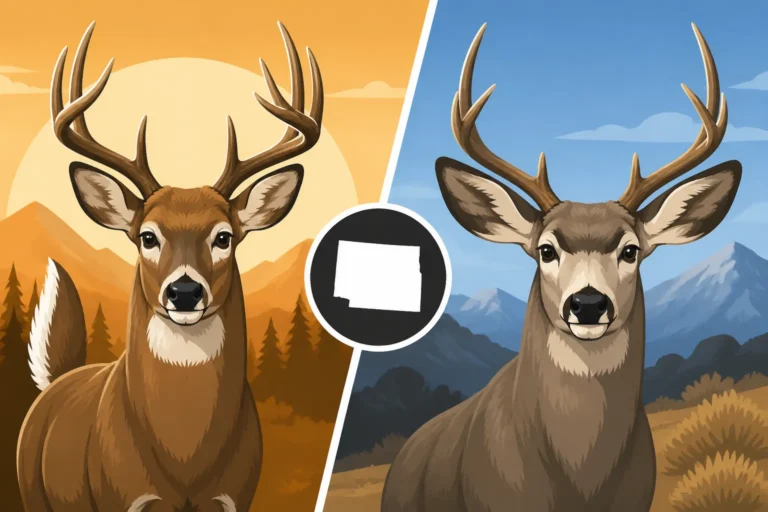
Let's start with the most famous distinction: the tail. A whitetail deer, when alarmed or running, will literally "flag" its tail straight up, revealing a broad, bright white underside. This white flag is unmistakable, a beacon waving through the timber or across a field. It’s an evolutionary adaptation, believed to serve as a warning signal to other deer or as a distraction for predators, drawing their attention to the tail rather than the body. When a whitetail bounds away, that white flag is the last thing you'll see disappearing into the brush, making identification relatively straightforward in these moments.
In stark contrast, the mule deer's tail is much narrower, often described as a rope-like appendage. Its color is usually buff or light brown with a distinctive black tip. When a mule deer runs, its tail typically remains down, perhaps swishing from side to side, but it never "flags" vertically like a whitetail's. You'll see that black tip clearly as it disappears, confirming it's a mule deer. Pay close attention to this feature; it's the simplest and most consistently reliable indicator you have when these animals are on the move. Even a quick glimpse can often tell you what you're looking at.
Antler Configuration
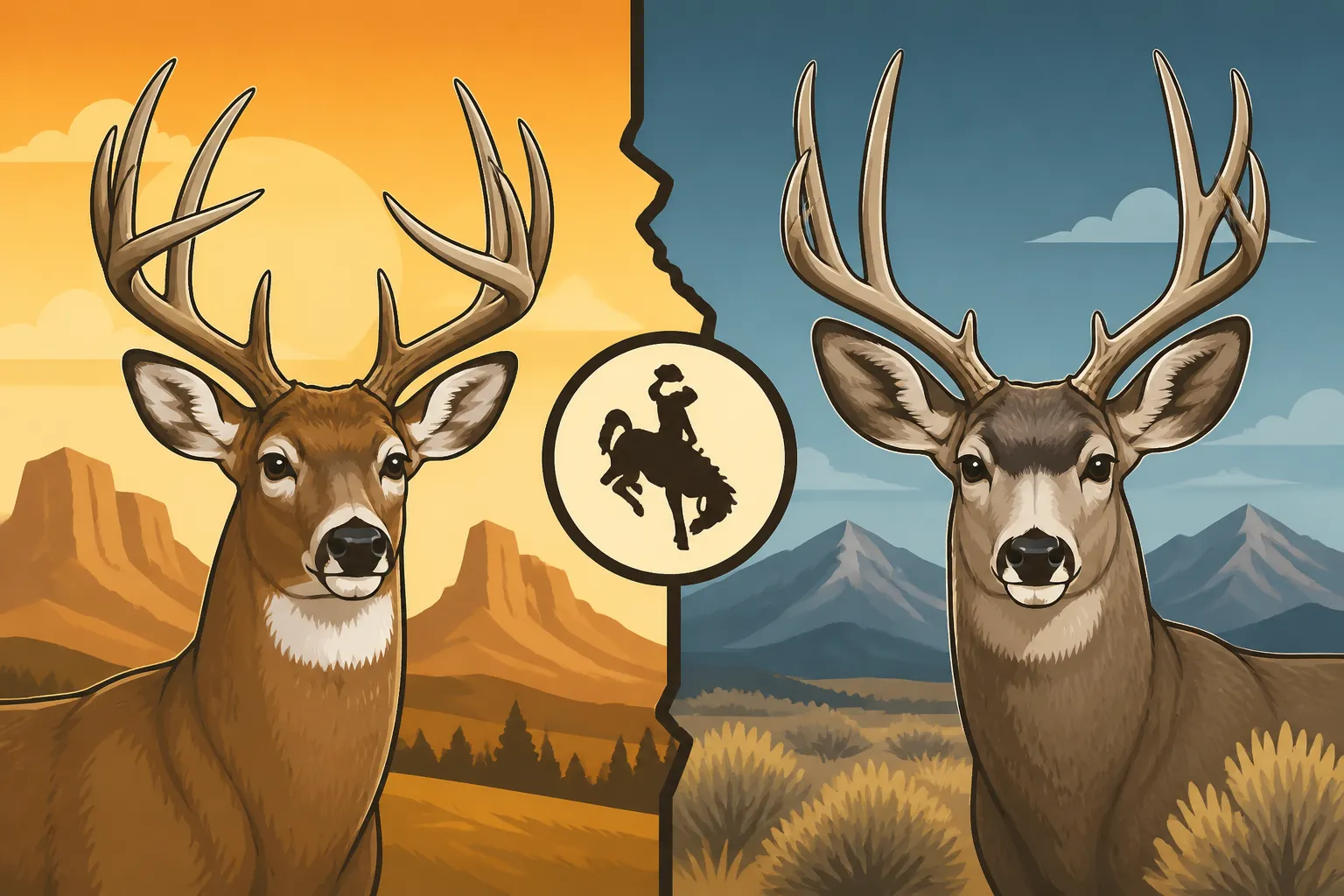
While tails offer a quick read, antlers are another primary identifier, particularly for bucks. Whitetail bucks typically grow antlers where all points (tines) originate from a single main beam. Imagine the main beam curving forward, and then all the individual tines sprouting upwards from that curve. This creates a more 'basket-like' appearance, or like fingers spreading from a wrist. There might be some variation, of course, with non-typical points or drop tines, but the fundamental structure remains a main beam with tines branching off it.
Mule deer antlers, on the other hand, are characterized by their bifurcated, or "forked," nature. The main beam forks, and then each of those forks often forks again. So, instead of tines growing directly off a main beam, you see a series of divisions. A mature mule deer buck often has what's called a "four-point" rack on each side, meaning two forks on each beam, but remember this is distinct from four individual tines. This unique forking pattern gives mule deer antlers a wider, more open appearance. When comparing photos or even live animals, this difference in antler growth pattern is quite distinct and provides a solid basis for identification.
Ear Size and Shape
The name "mule deer" itself hints at another key physical trait: their ears. Mule deer possess remarkably large, prominent ears that are often described as being similar in size to those of a mule. These ears are typically 7 to 9 inches long and are constantly swiveling, funneling sounds from all directions. They're a defining characteristic, giving the deer a distinct, almost comical, appearance when they're relaxed and just listening to their surroundings. Even at a distance, the sheer size of a mule deer's ears can be quite striking and is often the first thing you notice about their head.
Whitetail deer, while certainly having functional ears, have ears that are noticeably smaller and more proportionate to their head size. They are typically about 5 to 6 inches long. While they still rotate to pick up sounds, they don't have the broad, 'satellite dish' look of their mule deer cousins. When you're trying to identify a deer from a distance, or if you only have a partial view, paying attention to the relative size and shape of the ears can be a crucial clue. Large, floppy ears strongly suggest a mule deer, while smaller, more pointed ears lean towards a whitetail.
Body Language and Movement Patterns
Beyond their physical features, how these deer move and behave in their natural habitat offers another layer of distinction. Their gaits, their overall demeanor, and even the types of terrain they prefer are all subtle clues that, when combined with visual identification, paint a clearer picture for the observant hunter.
The Mule Deer's Bouncing Gait
One of the most captivating and distinctive traits of a mule deer is its unique way of moving when startled or traversing difficult terrain. This is known as the "stotting" or "pronking" gait. When a mule deer needs to move quickly, it bounds with all four feet hitting the ground simultaneously, often in a stiff-legged, bouncy fashion. It looks almost like a synchronized leap, covering ground in powerful, spring-loaded bounds. This method is incredibly efficient for navigating rocky, uneven terrain, or for gaining a quick vantage point to assess a threat.
This stotting gait is rarely, if ever, seen in whitetail deer. Instead, a whitetail will typically run with a more fluid, flowing stride, much like a domestic dog or horse, with alternating leg movements. When you see a deer bounding away with all four legs lifting and landing together, like a super-sized pogo stick, you can be almost certain it's a mule deer. This difference in locomotion is a truly remarkable identifier, and once you've seen both in action, it's something you won't easily forget. It's a key piece of the puzzle, especially when trying to identify animals at longer ranges.
Whitetail's Sneaky Demeanor
Whitetail deer are renowned for their incredible stealth and their ability to seemingly vanish into thin air. They are masters of using cover to their advantage, often moving through dense timber, thick brush, or river bottom corridors with an almost ghost-like presence. When startled, a whitetail's first instinct is often to drop its head and try to slip away undetected, using every available piece of cover to its advantage. They'll hug the terrain, disappear behind a single bush, or melt into the shadows of a dark timber patch. You might catch a glimpse, then they're gone, making you wonder if you saw anything at all.
This contrasts sharply with the mule deer's more open-country approach. While not clumsy, mule deer often seem less concerned with hiding in plain sight and more focused on using their keen eyesight and hearing, along with their bounding gait, to put distance between themselves and perceived threats. They might pause on a ridge, silhouetted against the sky, surveying their surroundings before moving on. Observing how a deer reacts to your presence and how it attempts to escape can be a crucial indicator. Is it trying to disappear, or is it trying to put distance on you?
Habitat Preferences and Ranging
Wyoming's diverse landscapes offer distinct habitats that often dictate where you'll find each deer species. Whitetail deer are primarily associated with dense, riparian (river bottom) areas, agricultural fields, and brushy drainages, especially in the eastern and northern parts of the state. They thrive in areas with abundant cover, water, and food sources found along fertile river valleys. If you're hunting the rich river bottoms of the Powder River or the North Platte, for instance, you're in prime whitetail country. Understanding the specific characteristics of these areas can help you narrow down the possibilities. If you're researching potential hunt units using tools like GoHunt, pay close attention to the habitat overlays, as they can reveal where these species are likely to be found.
Mule deer, on the other hand, are the quintessential deer of the Western high country. They prefer more open, rugged terrain, including sagebrush flats, aspen groves, mountain slopes, and conifer forests. They are adept at navigating steep, broken country and often make extensive seasonal migrations between their high-elevation summer ranges and lower-elevation wintering grounds. In areas like the Wyoming Range or the Red Desert, where vast expanses of sagebrush and scattered timber dominate the landscape, you are far more likely to encounter mule deer. While there are certainly overlap zones, understanding these general habitat preferences can significantly aid in your identification efforts before you even spot a deer. Knowing where to expect each species helps you anticipate what you're looking for.
Subtle Anatomical Nuances
Once you've grasped the obvious distinctions and observed their movement, you can delve into some of the more subtle anatomical differences that become apparent upon closer inspection. These finer details, when combined with the primary indicators, solidify your identification and can be particularly helpful when you have a good, stationary view of the animal.
Facial Markings and Head Shape
Upon closer examination, the faces of whitetail and mule deer also present subtle but consistent differences. Whitetails typically have a more reddish-brown coat overall, and their faces often feature a distinct white band across the nose and muzzle, almost like a white bridle. Their eyes tend to appear darker and perhaps a bit more almond-shaped. The forehead might be a darker brown, contrasting with the lighter muzzle.
Mule deer generally have a grayer, more uniform body color, especially in winter. Their faces tend to be a paler gray or tan, without the distinct white muzzle band. The area around their eyes might be lighter, and their eyes often appear larger and rounder, giving them a slightly different expression. Their forehead typically blends more seamlessly with the rest of their face color. While these are not as striking as a flagging tail or forked antlers, observing these facial nuances can be the final confirmation when you have a good, clear view of the deer's head.
Body Size and Proportion
While there's certainly overlap in overall size, mature mule deer generally tend to be larger and more robust than whitetail deer. They often have deeper chests, broader shoulders, and a more heavily muscled appearance. A large mule deer buck can easily weigh 250-300 pounds or more, with some exceptional specimens pushing even higher. Their legs can also appear slightly longer in proportion to their body, especially when compared to the compact build of many whitetails.
Whitetail deer, while capable of growing quite large, often present a more slender, athletic build. A mature whitetail buck might range from 180-250 pounds. Their bodies tend to be more streamlined, giving them that nimble, quick-moving appearance. When you see a pair of deer side-by-side, or if you have a sense of scale, these proportional differences can become noticeable. Remember, however, that factors like age, nutrition, and regional variation can influence an individual deer's size, so this should always be considered alongside other, more reliable identifiers.
Metatarsal Glands and Their Clues
This is a detail you might not observe in the field unless you're very close or examining a harvested animal, but it's a fascinating and definitive difference: the metatarsal glands on their hind legs. Both species have these scent glands on the outside of their lower hind legs, just above the hoof. However, their size and color differ significantly.
On a whitetail deer, the metatarsal gland is relatively small, typically less than 1.5 inches in length. The hair surrounding it is usually the same color as the leg, or only slightly darker. On a mule deer, these glands are much larger and more prominent, often 3 to 5 inches long, and are surrounded by a patch of distinctive white hair. This white patch makes the gland much more visible. While not practical for live identification at a distance, it's an absolute guarantee of species if you have the opportunity to examine the lower leg, such as during field dressing. It's a scientific stamp of approval on your visual identification.
Where They Roam: Wyoming's Deer Country
Understanding the typical geographical distribution of whitetail and mule deer in Wyoming is incredibly valuable. While there are areas of overlap, knowing which species primarily inhabits which kind of terrain helps you set expectations and narrow down possibilities even before you leave your truck.
Whitetail Strongholds in River Bottoms
In Wyoming, if you're looking for whitetail deer, your best bet is to focus on the eastern third of the state and the major river drainages. These deer thrive along the riparian corridors of rivers like the Platte, Powder, Belle Fourche, and Tongue River. These areas provide the dense cover of cottonwoods, willows, and various shrubs that whitetails prefer for bedding and escaping predators, along with the rich agricultural lands for abundant forage. You'll find them hunkered down in the thickets, often moving into adjacent alfalfa or corn fields at dawn and dusk.
Eastern Wyoming's landscape, with its lower elevations and more moderate rainfall compared to the mountains, creates perfect conditions for these "timber ghosts." Hunters pursuing whitetails often focus on smaller, private land parcels, or specific Walk-In Areas within these river bottoms. When you're scouting or researching units, looking for "Whitetail Range in Eastern Wyoming" maps or detailed satellite imagery showing dense riverine vegetation will guide you to their primary domains. Remember, these areas can be quite different from the vast, open spaces many associate with Wyoming hunting.
Mule Deer Across the High Country and Sagebrush
The vast majority of Wyoming is prime mule deer habitat. These deer are truly creatures of the West's expansive and often rugged landscapes. You'll find them ranging from the high alpine meadows and conifer forests of the Rocky Mountain ranges, like the Bighorns, Wind Rivers, and Tetons, down to the sprawling sagebrush-steppe country of the Red Desert, the Shirley Basin, and much of the western and central parts of the state. Mule deer are built for this country, their powerful legs and bounding gait allowing them to navigate steep slopes and broken terrain with ease.
They are often found higher up on mountain slopes during the summer, migrating to lower elevations and specific "Mule Deer Winter Range Closures Explained" areas as snow accumulates. Hunting mule deer often involves extensive glassing across large basins and covering significant ground on foot or horseback. If you're planning a hunt in the mountainous regions or the wide-open sagebrush country, a mule deer is overwhelmingly the species you should expect to encounter. Using mapping tools from companies like GoHunt, which show elevation changes and vegetation types, can really help you visualize these different deer habitats.
Overlap Zones and Hybrid Concerns
While distinct in their preferred habitats, there are certainly areas in Wyoming where the ranges of whitetail and mule deer overlap. These "transition zones" often occur where mountainous, sagebrush-dominated terrain gives way to river valleys or agricultural lands. In such areas, it's not uncommon to see both species, sometimes even in relatively close proximity. This is where your identification skills become paramount, as a momentary lapse in judgment could lead to misidentification.
Furthermore, hunters occasionally report seeing "hybrids" – offspring resulting from cross-breeding between whitetails and mule deer. While rare, these animals can present a confusing mix of traits, making definitive identification challenging. They might have antlers that show characteristics of both species, or tails that aren't quite one thing or the other. In these rare cases, if you are truly unsure, the safest and most ethical approach is to pass on the shot. It's better to be absolutely certain of your target than to risk violating regulations or making a mistake. When in doubt, let it walk; there will always be another deer.
| Feature | Whitetail Deer | Mule Deer |
|---|---|---|
| Tail | Broad, white underside; "flags" when alarmed | Narrow, rope-like, black tip; usually held down |
| Antlers (Bucks) | Tines grow from a single main beam | Bifurcated (forked) main beam and tines |
| Ears | Smaller, proportionate to head | Very large, "mule-like" ears |
| Movement/Gait | Fluid, running stride; stealthy | "Stotting" or "pronking" (all four feet together) |
| Coat Color | Reddish-brown (summer), grayish-brown (winter) | Grayish-brown year-round, lighter face |
| Facial Markings | Distinct white band across nose/muzzle | Paler face, less distinct markings |
| Metatarsal Gland | Small (under 1.5 inches), same color as leg | Large (3-5 inches), surrounded by white hair |
| Preferred Habitat | Dense riparian corridors, agricultural fields | Open sagebrush, mountain slopes, conifer forests |
Why Proper Identification Matters So Much
The ability to accurately tell whitetail from mule deer isn't just about showing off your field craft. It has direct, practical, and legal implications for every hunter in Wyoming. Understanding these nuances can prevent costly mistakes and ensure you remain a responsible and ethical participant in the hunting tradition.
Avoiding Tagging Mistakes
One of the most critical reasons for precise identification is to avoid illegally tagging the wrong species. In Wyoming, deer licenses are species-specific, meaning you'll purchase either a "Deer" license that usually covers mule deer or a "Whitetail Deer" license. Using a mule deer tag on a whitetail, or vice-versa, is a serious violation that can result in hefty fines, loss of hunting privileges, and confiscation of your harvested animal. Imagine drawing a coveted mule deer tag after years of building points, only to mistakenly shoot a whitetail because you couldn't tell the difference in a moment of excitement. The consequences are real and severe.
This is particularly relevant in units where both species coexist. Before you head into the field, meticulously review your tag's specifics and the regulations for your chosen hunt area. If there are antler point restrictions, like those mentioned in "Antler Point Restrictions Wyoming Kept for 2026", these might apply differently to each species or even within specific areas. A misidentification of species could also lead to misjudging antler points, creating a double whammy of regulatory issues. Every hunter has a responsibility to know their target, and that starts with confident species identification.
Understanding Species-Specific Regulations
Beyond the general tag type, many specific regulations can vary between whitetail and mule deer, depending on the hunt area and the current management objectives. For example, season dates might open or close differently, or certain hunt areas might be "whitetail only" or have specific antler point restrictions that only apply to one species. Some areas might have specific limitations on harvest types, such as allowing only antlerless whitetail but general antlered mule deer. These regulations are designed to manage populations effectively, ensuring healthy herds for future generations.
It's paramount to thoroughly read the Wyoming Game and Fish Department regulations specific to your hunt area. Don't assume that rules for one deer species apply universally to the other, even if they share the same general habitat. Knowing the species you're pursuing informs your entire hunting plan, from scouting to shot placement. Understanding these regulations is a core component of being a responsible hunter, on par with knowing when "Wyoming Legal Shooting Hours for Big Game" are. When you utilize resources like GoHunt, make sure you're cross-referencing their unit breakdowns with the official Game and Fish regulations to be absolutely certain of the rules for each species.
Enhancing Your Hunting Strategy
Finally, the ability to differentiate between whitetail and mule deer significantly sharpens your hunting strategy. Because their behaviors and habitat preferences are so different, knowing which species you're targeting allows you to employ the most effective techniques. For instance, if you're hunting whitetails in a dense river bottom, you might focus more on still hunting, understanding "Reading Wind on an Open-Country Stalk" and how it influences deer movement through thick cover, or setting up on pinch points and travel corridors. Your gear choices might even change, favoring lighter, more maneuverable bows or rifles for closer shots in dense vegetation.
Conversely, if you're after mule deer in expansive, open country, your strategy will likely revolve around extensive glassing, long-range shooting considerations, and covering vast distances. You'll employ different stalking techniques, using terrain features to close the distance. Your optics will be crucial for spotting deer from afar, and your rifle zero and bullet choice will be optimized for longer shots. A mule deer hunt often demands a different level of physical conditioning and a mastery of open-country tactics. By accurately identifying the species, you're not just avoiding a mistake; you're actively optimizing your entire hunting experience for success and enjoyment.
Disclaimer
Please remember that hunting regulations, seasons, and requirements can change. Always consult the most current Wyoming Game and Fish Department regulations before planning or undertaking any hunting activity. This guide is for informational purposes only and does not supersede official state regulations.