Whitetail Rut Timing on the Prairie
Hunting whitetail deer on Wyoming's vast prairie can feel like a game of hide-and-seek, especially when you're trying to pinpoint that elusive rut. It's frustrating when you know the bucks are moving, but you just can't seem to intercept them in the sprawling, often dense, cover of the river bottoms. This guide is here to untangle the mysteries of the whitetail rut timing on the prairie, breaking down the behavioral shifts, environmental influences, and strategies you need to be in the right place at the right time.
Understanding Wyoming's Whitetail Country
When most people picture hunting in Wyoming, they often envision vast sagebrush flats dotted with antelope, or towering mountain ranges holding elk and mule deer. And while those iconic landscapes are certainly a huge part of the experience, Wyoming also harbors a robust, albeit often overlooked, population of whitetail deer, primarily concentrated in its eastern prairie regions. This habitat is a world away from the high country, presenting its own set of unique challenges and rewards.
The Unique Landscape of Eastern Wyoming
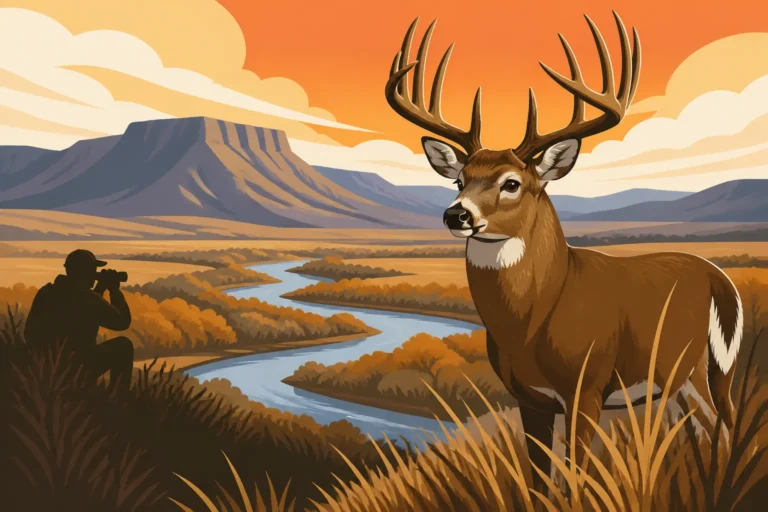
Eastern Wyoming is largely defined by its fertile river bottoms, agricultural fields, and numerous shelterbelts – those lines of trees planted by farmers to break the wind. The North Platte River, Tongue River, and Powder River drainages, among others, carve green arteries through the otherwise open prairie. These riparian corridors provide everything a whitetail needs: dense cover for bedding and escape, consistent water sources, and often, abundant food from adjacent agricultural lands like corn, alfalfa, and winter wheat.
Unlike their mule deer cousins who thrive in more open, broken terrain, whitetails are masters of concealment. They prefer thickets of willow, cottonwood stands, and brushy draws, making them incredibly difficult to spot, let alone stalk, in their preferred haunts. Hunters accustomed to glassing wide-open spaces for mule deer often find themselves frustrated by the "ghosts" of the river bottom. The key to success here isn't necessarily seeing hundreds of deer, but understanding where the few, big bucks are hiding and how they move through this specific landscape.
Whitetail Concentrations and Habitat Preferences
Wyoming's whitetail deer populations are strongest in the eastern counties, particularly along the major river systems. Counties like Sheridan, Johnson, Converse, Goshen, and Laramie are prime examples where hunters can find good numbers of whitetails. These deer thrive on the edges – where dense cover meets agricultural fields or even suburban fringes. They are creatures of habit, often using the same travel corridors for generations, moving between bedding areas, food sources, and water.
Their reliance on dense cover makes patterning these deer a different game entirely compared to open-country mule deer. While a mule deer buck might bed on an open hillside and be visible for miles, a whitetail buck could be tucked away in a tiny thicket just yards from a busy road, completely out of sight. This requires hunters to shift their focus from long-range glassing to understanding micro-terrain, reading subtle signs like rubs and scrapes, and utilizing tools like onX Public Land Layers in Wyoming or GoHunt maps to identify those crucial pockets of cover and potential travel routes. Successful whitetail hunting in these areas often comes down to patience, stealth, and a deep understanding of how these deer utilize their specific, often constricted, habitat. For a deeper dive into where these deer roam, check out our guide on the Whitetail Range in Eastern Wyoming.
The Phases of the Whitetail Rut on the Prairie
The whitetail rut is one of the most exciting times to be in the deer woods, or in this case, the deer river bottoms and shelterbelts of Wyoming's prairie. Understanding its progression isn't just about knowing when bucks are chasing does; it's about anticipating their behavior and adjusting your hunting strategy to match each stage. The rut isn't a single event but a dynamic period with distinct phases.
Pre-Rut: Building Anticipation
The pre-rut period typically kicks off in late October and builds intensity into early November. This is a time of increasing aggression and exploratory behavior from bucks. Their necks swell, their testosterone levels surge, and they begin to actively seek out the first does coming into estrus. You'll start to see a lot more fresh rubs—where bucks strip bark from trees—and scrapes—patches of ground where they paw away leaves and urinate, often under an overhanging branch called a licking branch. These are essentially calling cards, announcing their presence and dominance.
During this phase, bucks are often still somewhat tied to food sources, but they're also covering more ground, cruising travel corridors and checking scent in doe bedding areas. Does, on the other hand, are largely still in their family groups, though they might show some early signs of being harassed by persistent bucks. For hunters, this is an excellent time to focus on food sources that are close to dense cover, like alfalfa fields or winter wheat pastures adjacent to a creek bottom. Setting up near fresh sign, like a line of rubs or an active scrape, can be highly effective. Bucks are still somewhat predictable as they follow their stomachs, but their wanderlust is growing.
Peak Rut: Controlled Chaos
The peak rut is what most hunters dream about, and in Wyoming's prairie, it generally hits its stride in mid-November, often coinciding with or just after Veteran's Day. This is the period of "controlled chaos" where breeding activity is at its highest. Bucks are almost entirely focused on finding and breeding does. Their caution often drops significantly, and they can be seen chasing does relentlessly, sometimes even in broad daylight in surprisingly open areas.
During this frantic period, bucks are less concerned with feeding and more with "seeking and chasing." They will cover extensive ground, sometimes running ragged, appearing almost oblivious to their surroundings as they pursue an estrus doe or respond to a competitor. Does in estrus become the focal point, leading bucks on merry chases through the timber and brush. Weather can play a crucial role here; a cold snap or a fresh blanket of snow can really ignite daytime movement, making bucks even more visible. This is the time when patience in a well-placed stand overlooking a natural funnel or cruising lane can pay huge dividends. You might sit for hours with no action, only to have a hot doe come tearing through with a mature buck right on her heels. For more on late-season tactics, take a look at our guide on Late Season Whitetail Hunting on the Prairie.
Post-Rut: Recovery and Second Chances
As the peak rut wanes, typically moving into late November and early December, whitetails enter the post-rut phase. Bucks are often exhausted, having expended massive amounts of energy during the peak breeding period. Their primary focus shifts back to recovery, meaning they'll return to prioritizing food sources to replenish their depleted fat reserves. However, this doesn't mean the rut is entirely over.
Some does, especially younger ones, may not have been bred during their initial estrus cycle and will come into heat again, creating a "second rut." This offers a final surge of breeding activity, and while less intense than the peak, it can still provide excellent opportunities for patient hunters. Bucks, though tired, will still be receptive to these late-cycling does. For hunters, the strategy should once again pivot towards focusing on reliable food sources where does are congregating. These areas will draw in any remaining unbred does, and consequently, still-eager bucks. Understanding the remaining doe family groups and where they are feeding becomes paramount during this phase, as bucks will inevitably be cruising these areas, looking for one last chance.
Factors Influencing Rut Timing and Intensity
While many hunters might think the rut is a fixed date on the calendar, its timing and intensity can actually fluctuate based on several environmental and population-level factors. Understanding these nuances is crucial for predicting deer behavior and maximizing your hunting success in Wyoming's whitetail country.
Photoperiod and Weather Conditions
The most significant and non-negotiable driver of the whitetail rut is photoperiod – the length of daylight hours. As the days shorten in the fall, specific hormonal changes are triggered in both bucks and does, initiating the breeding cycle. This means the general timing of the rut is remarkably consistent year after year, regardless of external conditions. You can almost always count on activity picking up in late October and peaking in mid-November.
However, intensity and daytime movement during the rut are heavily influenced by weather. A sudden cold front can dramatically increase deer movement, pushing bucks to cruise more actively in search of does. Snowfall, especially a fresh blanket, can also spur deer activity and make tracking easier, revealing fresh sign. Conversely, unseasonably warm temperatures or strong, persistent winds can suppress daytime movement, making deer more nocturnal or causing them to bed down more frequently. For example, a mild November might see deer moving more at dawn and dusk, while a harsh early snow can make them move throughout the day to find food and cover. Hunters need to pay close attention to the forecast and be ready to adapt their strategies based on the current conditions, using tools like GoHunt's weather overlays to anticipate these shifts.
Doe to Buck Ratios and Population Health
The balance within the deer herd itself also plays a substantial role in the rut's dynamics. In areas with a healthy, balanced doe-to-buck ratio (meaning there are sufficient mature bucks to breed the available does), the rut tends to be more intense and compressed. Most does will be bred during their first estrus cycle, leading to a more focused and predictable peak rut. Bucks don't have to wander as far or chase as long to find a receptive doe.
Conversely, in herds with an unbalanced ratio, particularly those with too many does and too few mature bucks, the rut can become prolonged and scattered. Younger bucks may be forced to do more of the breeding, and some does might cycle through estrus multiple times before being bred. This can make it harder for hunters to pinpoint the "peak" of the rut, as breeding activity is stretched out over a longer period. The Wyoming Game and Fish Department closely monitors herd health and population objectives, which in turn influences tag allocations and helps manage these ratios. Understanding this, alongside resources like the Wyoming Hunt Planner, can give hunters an edge in selecting units with healthy populations.
Hunting Pressure and Nocturnal Activity
Hunting pressure is another critical factor, especially on prairie whitetails, many of whom reside near human populations or agricultural operations. High hunting pressure, whether from numerous hunters on public land or consistent activity on private land, can quickly push whitetails into more nocturnal patterns. Deer, particularly mature bucks, learn quickly to associate daytime movement with danger.
In heavily hunted areas, bucks might do most of their seeking and chasing under the cover of darkness, only emerging at first light and last light to quickly feed or breed. This demands a change in strategy from hunters. Instead of sitting all day in an open field, focusing on early morning and late evening hunts, or targeting those brief windows when deer move between dense cover, becomes essential. It might also mean venturing deeper into the thickest, nastiest cover that other hunters avoid. While Wyoming Legal Shooting Hours for Big Game provide clear guidelines, the deer often choose to move when the woods are quiet. Effective strategies often involve patience and finding sanctuary areas where deer feel safe enough to move during legal hunting hours, understanding that even a little pressure can dramatically alter their natural rut behavior.
Effective Hunting Strategies During the Rut
Successfully hunting whitetail deer during the rut on Wyoming's prairie requires a blend of traditional tactics and an understanding of the unique environment. It's not just about sitting and waiting; it's about anticipating deer movement and actively engaging in strategies that draw them into range.
Calling and Decoying on the Prairie
Calling can be incredibly effective during the pre-rut and peak rut phases. Grunt calls, ranging from aggressive tending grunts to quieter social grunts, can pique a buck's curiosity or challenge his dominance. Doe bleats, especially estrus bleats, are designed to mimic a receptive doe and can pull a distant buck right to your location. Rattling antlers, simulating a buck fight, can also be highly effective, especially during the pre-rut when bucks are establishing dominance.
Decoying adds another layer of realism. A single doe decoy can entice a cruising buck looking for a mate. A buck decoy can challenge a dominant buck, especially if combined with rattling. The key to decoying on the prairie is placement: ensure your decoy is visible but also positioned so an approaching buck is forced to come into an ethical shooting lane. Always consider the wind direction, as bucks will almost always circle downwind to scent-check the "deer" they're approaching. It's vital to remember that in Wyoming, electronic calls are generally not legal for big game hunting, so stick to manual calls and practice your technique!
Stand Placement and Movement
Strategic stand placement is paramount, particularly during the rut when bucks are actively cruising for does. In river bottoms, identify natural funnels where deer movement is concentrated – think narrow strips of timber between fields, bends in a creek, or saddles in rolling terrain. Pinch points, where two pieces of cover converge, are also high-traffic areas. Utilizing GoHunt's mapping features can help pinpoint these critical landscape features, even from your kitchen table.
Playing the wind is always crucial, but especially during the rut when bucks are hyper-aware of scent. Always set up so your scent is blowing away from the anticipated approach of deer. During the peak rut, you might consider still-hunting slowly through dense cover, moving only a few steps at a time, pausing to listen and scan. This can be effective for surprising a buck focused on a doe. Alternatively, sitting patiently in a well-concealed ground blind or tree stand overlooking a known travel corridor or scrape line can be highly productive. For a more detailed look at anticipating buck movement, read our guide on Patterning a Buck in the Weeks Before Opener.
Optics and Ethical Shot Distances
Hunting in Wyoming, even on the prairie, often means long sightlines and the need for quality optics. A good pair of binoculars (10×42 or 12×50 are popular choices) is indispensable for scanning distant river bends, checking field edges, and identifying deer tucked into cover. A spotting scope can be useful for evaluating bucks from a distance without disturbing them, especially when trying to discern antler points or overall size. For more on selecting the right gear, check out Optics Power for Wyoming's Long Sightlines.
With increased deer movement during the rut, bucks can appear suddenly and present fleeting shot opportunities. It's crucial to practice shooting at various distances and from different positions to be prepared. Always prioritize an ethical shot within your comfortable range. Use a rangefinder to confirm distances, and resist the urge to take a risky shot at a running or poorly presented animal. Knowing your rifle's zero distance is also key for those longer shots that can sometimes present themselves in the more open prairie environments. Our article on Rifle Zero Distance for Open Country Shooting offers valuable insights for tuning your firearm for these conditions. Patience and discipline are your best friends when a trophy buck is on the move.
Special Considerations for Wyoming Whitetails
Hunting whitetail deer in Wyoming, particularly in the prairie and river bottom areas, comes with its own set of rules and realities that hunters need to be aware of. From land access to specific regulations, being prepared can make all the difference between a successful hunt and a frustrating one.
Public vs. Private Land Access
One of the biggest realities for whitetail hunters in eastern Wyoming is that a significant portion of the prime whitetail habitat is located on private land. River bottoms, agricultural fields, and shelterbelts are often part of private ranches and farms. This means securing permission from landowners is frequently a prerequisite for hunting these areas. It’s not always easy, but a polite, respectful approach, ideally well in advance of the season, can sometimes open doors. Offering to help with chores or sharing some of your harvest can also go a long way in building relationships.
While private land dominates, there are still public access opportunities. These can include segments of Bureau of Land Management (BLM) land, State Trust Land, and designated Walk-In Areas (WIAs) or Hunter Management Areas (HMAs) managed by the Wyoming Game and Fish Department through its Access Yes program. These programs lease hunting access from private landowners, providing valuable opportunities for public hunters. However, these areas can be popular, so checking maps and regulations for specific HMAs and WIAs is essential. For more detailed information on navigating these lands, see our guide on Hunting the Whitetail River Bottoms of Eastern Wyoming. Always be sure to carry current maps, like those provided by GoHunt, that clearly delineate public and private boundaries.
Regulatory Nuances for Whitetail
Wyoming's hunting regulations can be quite specific, and it's vital to understand them, especially for whitetails. Licenses are issued by hunt area and often by "Type," which dictates what kind of deer (buck, doe, or fawn) and sometimes even what weapon type is allowed. For whitetails, you might encounter Type 1 licenses for any white-tailed deer, or Type 9 licenses which are specifically for antlerless whitetails. It’s critical to double-check the current year’s regulations for your chosen hunt area, as season dates and license types can vary. Our article on Whitetail Only Doe and Fawn Licenses Explained goes into more detail on these specific tags.
Additionally, pay close attention to general regulations that apply to all big game, such as Wyoming Legal Shooting Hours for Big Game, which define when you can legally hunt from half-hour before sunrise to half-hour after sunset. During rifle seasons, blaze orange requirements are also in effect for your safety and the safety of others. While archery season typically doesn't require blaze orange, rifle season mandates it, so always be prepared. Our guide on Blaze Orange Requirements Through the Rifle Season provides all the specifics you need to know. Staying informed and compliant ensures your hunt is both legal and enjoyable.
| Rut Phase | Typical Timing | Key Buck Behavior | Key Doe Behavior | Hunting Strategy Focus |
|---|---|---|---|---|
| Pre-Rut | Late Oct – Early Nov | Increased rubs/scrapes, sparring, exploring cover | Still in family groups, some early harassment | Food sources near cover, fresh sign, calling |
| Peak Rut | Mid-November (approx. Nov 10-20) | Chasing, breeding, less cautious, highly visible | Estrus, leading chases, receptive to bucks | Funnels, pinch points, calling/decoying, patience |
| Post-Rut | Late Nov – Early Dec | Exhaustion, returning to food, seeking late does | Some does re-enter estrus if not bred initially | Food sources, late estrus does, targeting family groups |
Disclaimer
Please remember that hunting regulations can change frequently. While this guide provides comprehensive information, it is essential to consult the most current Wyoming Game and Fish Department regulations directly before planning any hunting trip. This content is for informational purposes only and does not supersede official legal requirements.