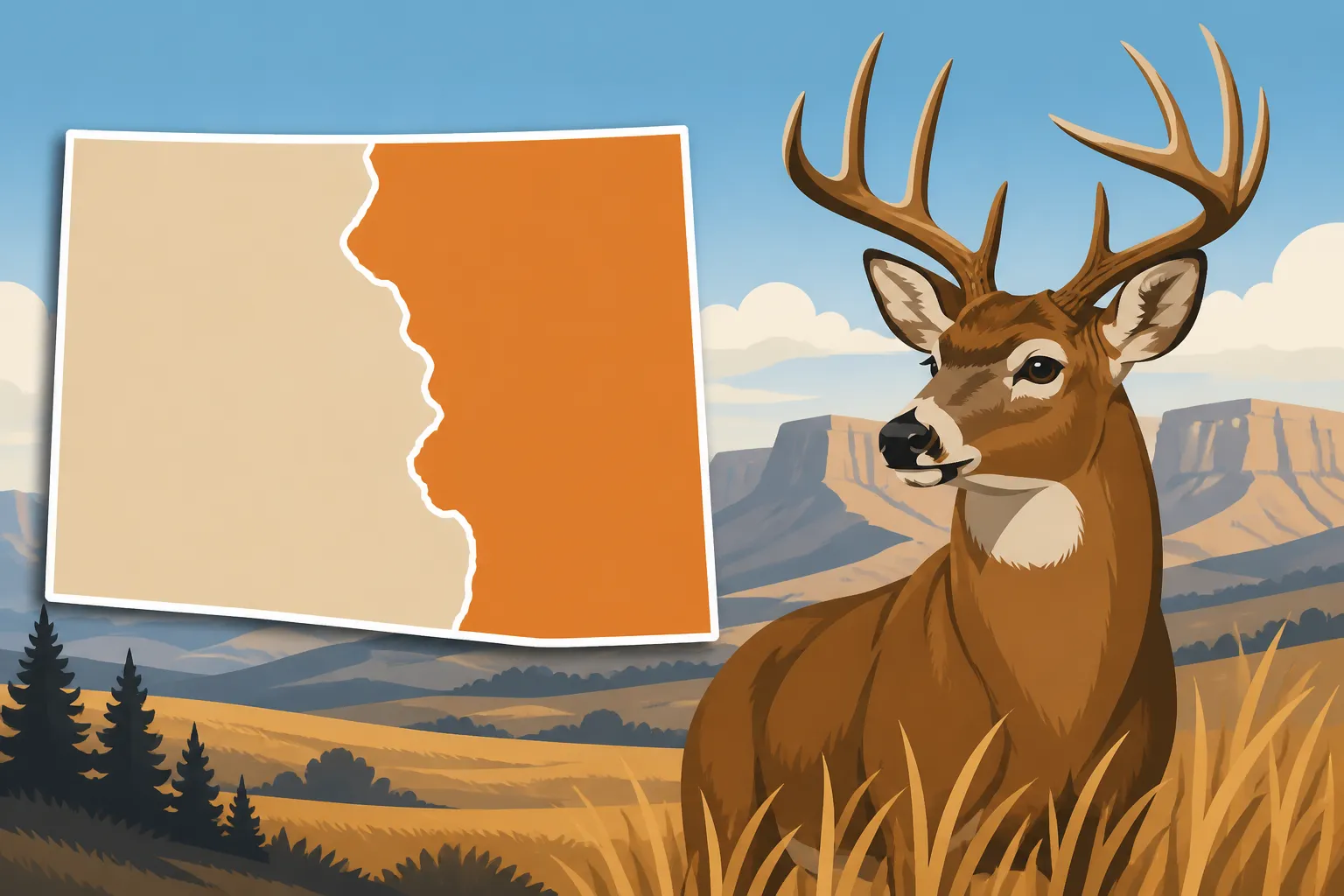
Whitetail Range in Eastern Wyoming
For many hunters, the word "Wyoming" immediately conjures images of vast sagebrush flats holding mule deer or snow-capped peaks where elk bugle. While those iconic hunts absolutely define a huge part of the experience here, it's easy to overlook a quieter, equally rewarding pursuit: the whitetail deer that thrive in our eastern river bottoms and agricultural pockets. If you've felt like western whitetail opportunities are a well-kept secret, or you're simply struggling to pinpoint their habitat, this comprehensive guide will illuminate the specific range, behaviors, and strategies for successfully pursuing whitetail in Eastern Wyoming.
Understanding Wyoming's Whitetail Landscape
When most people think of Wyoming hunting, they're picturing the rugged mountains and wide-open basins, the kind of country that defines mule deer and elk pursuits. But venture east, away from the towering peaks and into the sprawling river systems and agricultural lands, and you'll find a different kind of deer, one that prefers the dense cover and rich food sources that these areas provide. It's a hunting experience that combines the challenge of thick riparian zones with the vastness of the prairie.
The Allure of Eastern Wyoming for Whitetail
There's a distinct charm to chasing whitetails out here, a stark contrast to the more publicized hunts. Unlike the high-country elk or the migratory mule deer, Wyoming's whitetails are generally found in specific, often linear habitats. This makes them predictable in some ways, but incredibly challenging in others. The dense willow thickets, cottonwood groves, and undergrowth along river courses provide perfect sanctuary, making a stealthy approach difficult and visibility often limited to mere yards. This isn't the kind of spot-and-stalk hunting you'd typically associate with Wyoming; it's more akin to Midwest whitetail hunting, demanding patience, scent control, and a deep understanding of deer movement within these confined spaces. The allure, for many, lies in the intimacy of these environments and the satisfaction of outsmarting a wary buck in its preferred, often claustrophobic, habitat.
Contrasting Whitetail and Mule Deer Habitats
One of the first things you'll notice in Eastern Wyoming is the clear distinction between where you'll find a whitetail versus a mule deer. While there can be overlap, especially where river bottoms meet sagebrush, these two species generally occupy different niches. Mule deer, with their large ears and bounding gait, are built for the open, broken country of the western states. They thrive in sagebrush, juniper breaks, and scattered timber, often migrating long distances between seasonal ranges.
Whitetails, on the other hand, are creatures of cover. Their smaller size and more cautious demeanor make them perfectly adapted to thick riparian zones and forested areas. In Eastern Wyoming, this means they cling to the major river systems like the Belle Fourche River, the Cheyenne River, and the North Platte River, as well as their tributaries. You'll find them embedded in the dense stands of cottonwoods, willows, and box elders that line these waterways, often within a stone's throw of agricultural fields. Understanding this habitat preference is crucial. If you're glassing wide-open plains and only seeing mule deer, you're likely not looking in the right spot for whitetails. Instead, focus your efforts on the thickest, greenest strips of vegetation you can find, often appearing like a ribbon of trees winding through otherwise arid country. You can dive deeper into the visual differences by exploring content on Telling Whitetail From Mule Deer in Wyoming to sharpen your identification skills in the field.
Prime Whitetail Country: River Bottoms and Agriculture
Eastern Wyoming's whitetail population largely owes its existence to the lifeblood of the region: its rivers and the agriculture they support. These are the twin pillars of whitetail habitat, providing both dense cover and abundant food sources that these deer crave. Without these crucial elements, the vast, arid landscape wouldn't sustain the thriving whitetail herds we see today.
Key River Systems Holding Whitetail
The river systems in Eastern Wyoming are the undisputed kings of whitetail habitat. These aren't just narrow creeks; many are substantial waterways that carve out lush, fertile valleys, creating linear oases in an otherwise dry environment. The North Platte River, for instance, particularly as it flows through the southeastern part of the state, supports a healthy whitetail population, especially in areas with extensive agricultural development nearby. Further north, the Belle Fourche River and the Cheyenne River systems, winding through counties like Crook and Weston, are prime examples of classic whitetail country. These river corridors are characterized by mature cottonwood trees, dense willow thickets, wild plum bushes, and various other understory plants that provide both excellent forage and impenetrable bedding cover.
Hunting these areas requires a different mindset. Instead of vast sweeps of country, you're often focusing on relatively narrow strips of habitat, sometimes only a few hundred yards wide. This funneling effect can concentrate deer, but it also makes them incredibly sensitive to pressure. Understanding the contours of the river, identifying natural pinch points, and knowing where deer cross or funnel through the densest cover are all critical skills. Scouting these areas, whether physically or through modern e-scouting tools like those offered by GoHunt, becomes paramount to identifying these key features before you ever step foot in the woods. These natural travel corridors are where you're most likely to intercept a mature buck moving between bedding and feeding areas.
Agricultural Interfaces and Their Importance
The marriage of river bottoms and agricultural fields creates an almost ideal environment for whitetails. While the thick cover of the riparian zones provides safety and bedding, the adjacent farm fields offer a caloric buffet. Alfalfa, corn, wheat, and soybean fields are magnets for deer, especially during the fall as they bulk up for winter and enter the breeding season. The deer will spend their days bedded down in the security of the river bottom timber, then emerge in the late afternoon or evening to feed in the nearby fields.
This creates distinct patterns and opportunities for hunters. The edges where the dense timber meets the open fields are often prime locations for setting up tree stands or ground blinds. However, hunting these edges demands extreme caution with wind direction, as human scent can easily spook deer moving into the open. It's not uncommon to see deer moving out of the river bottom cover just as the sun begins to set, offering limited shooting light. These agricultural interfaces also often come with their own set of access challenges, as much of this land is privately owned. Building relationships with landowners, or utilizing public access programs, becomes vital for unlocking these productive areas. The importance of these food sources cannot be overstated, particularly when planning for Late Season Whitetail Hunting on the Prairie where natural forage might be scarce.
Specific Hunt Areas and Counties for Whitetail
While whitetails can be found in various pockets across Eastern Wyoming, certain counties and hunt areas consistently stand out as reliable producers. These are the places where the habitat is just right, offering that perfect blend of dense cover and abundant food that allows whitetail populations to thrive. Knowing where to focus your efforts can save you a lot of time and increase your chances of success.
Crook and Weston Counties: A Whitetail Hotbed
If you're serious about whitetail hunting in Wyoming, Crook and Weston Counties in the northeastern part of the state should be at the top of your list. These counties are often considered the heart of Wyoming's whitetail country. Here, the landscape transitions from the vast plains into the foothills of the Black Hills, providing a unique mix of timbered draws, sprawling agricultural fields, and, crucially, significant river systems like the Belle Fourche and Cheyenne Rivers. This convergence creates incredibly diverse and productive habitat.
Crook County, in particular, is renowned for its whitetail hunting. Areas around the Bearlodge Mountains and the extensive river drainages hold impressive numbers of deer. The terrain here can be hilly and broken, offering more concealment than the flatter prairie lands. Weston County, directly to the south, shares many of these characteristics, with strong whitetail populations tied to the watercourses and agricultural lands surrounding towns like Newcastle. The success rates in these areas are often higher for whitetail than in other parts of the state, simply because the deer densities are greater and the habitat is so well-suited to them. Hunters here often focus on river bottom hunting, using stands or still-hunting techniques in the dense cover, or setting up blinds on the edges of agricultural fields. Scouting, especially using digital tools like GoHunt to identify public land access points and analyze historical harvest data, is key to navigating these complex, often checkerboarded landscapes effectively.
Other Productive Eastern Wyoming Regions
While Crook and Weston Counties might get the most buzz, other regions in Eastern Wyoming also offer excellent whitetail opportunities. The North Platte River drainage, as it flows through counties like Goshen, Platte, and Laramie in the southeastern part of the state, can be incredibly productive. This area is characterized by vast irrigated farmlands alongside the river, creating substantial food sources for deer. While perhaps not as timbered as the Black Hills region, the sheer volume of agricultural production here means deer have access to high-quality forage throughout the year.
Smaller river systems and their tributaries throughout eastern counties, even those typically associated more with antelope or mule deer, can also hold surprising pockets of whitetails. Look for any substantial creek or river that has developed a mature riparian buffer – even a narrow strip of trees can be enough to hold a resident whitetail herd. These smaller, more isolated populations might offer a different kind of challenge, but they can also provide unpressured hunting opportunities for those willing to explore off the beaten path. Always consult the current year's Wyoming Game and Fish Department regulations and unit maps to identify specific hunt areas, season dates, and license types. For those interested in managing deer populations, remember that Whitetail Only Doe and Fawn Licenses Explained are often available in areas with robust whitetail numbers, contributing to herd health and providing additional hunting opportunities.
Strategies for Hunting Eastern Wyoming Whitetails
Hunting whitetails in Eastern Wyoming demands a specific approach, one that often differs significantly from traditional Western hunting styles. The dense cover, linear habitat, and prevalence of private land require careful planning, adaptable tactics, and a keen understanding of whitetail behavior in these unique environments.
Scouting and Accessing River Bottoms
Effective scouting is the bedrock of successful whitetail hunting in Eastern Wyoming's river bottoms. These areas can be incredibly thick, making it nearly impossible to "hunt on the fly" without a solid plan. Start with e-scouting tools, looking for the densest vegetation along waterways, identifying potential pinch points, old logging roads, or cattle trails that might funnel deer. Digital mapping services, particularly those that show public land boundaries, are invaluable for this. You can leverage platforms like GoHunt to pinpoint walk-in areas or hunter management areas that provide public access to these coveted river systems.
Once you have a general idea, boots-on-the-ground scouting is essential. This is where you'll find actual deer trails, rubs, scrapes, and bedding areas. Pay close attention to wind currents within these river bottoms; they can swirl unpredictably due to the dense cover and changes in topography. Identify natural funnels where deer are forced to move through a narrow corridor, or areas where thickets open up slightly, offering a potential stand location. Consider setting up trail cameras well in advance to pattern deer movement, especially during low-light hours. Access can be a major hurdle; many prime river bottoms are bordered by private land. Always be respectful of private property and ensure you have legal access before venturing in. Detailed information on Hunting the Whitetail River Bottoms of Eastern Wyoming provides further insights into these specific tactics.
Tactics for Hunting Agricultural Edge Habitat
Hunting the edges where river bottoms meet agricultural fields requires a blend of stealth and strategic positioning. Deer will use the cover of the river system for bedding and security during the day, emerging into the fields to feed in the evenings and sometimes lingering in the mornings. This predictable pattern offers excellent ambush opportunities.
Your primary consideration here must be the wind. Deer approaching a field will almost always try to scent-check the open area before stepping out, so setting up downwind of their expected entry point is critical. Tree stands offer an elevated vantage point, allowing your scent to dissipate above the deer's nose, but ground blinds can also be effective if positioned correctly, ideally tucked into heavy cover or a natural depression. Consider the sun's position for both morning and evening hunts to avoid silhouetting yourself.
A crucial tactic is patience. Deer often appear just as legal shooting light begins to fade. Be prepared for short shooting windows. During the rut, bucks might cruise these edges searching for does, offering opportunities outside of typical feeding patterns. For setting up your ambush points, understanding Tree Stand Rules That Apply on Public Land is vital, especially if you're on a public parcel adjacent to agricultural ground.
Reading Sign and Rut Behavior
Whitetails leave clear signs of their presence, and learning to interpret these clues is fundamental to successful hunting. Look for fresh tracks, especially larger buck tracks, entering and exiting cover. Rubs – where bucks scrape their antlers on trees – and scrapes – where they clear patches of ground and urinate – are unequivocal signs of buck activity, particularly as the rut approaches. The intensity and freshness of these signs can tell you a lot about how recently deer have been in the area.
Understanding Whitetail Rut Timing on the Prairie is paramount. The rut is a magical time for whitetail hunters, as bucks become far less cautious, driven by the urge to breed. During this period, rattling antlers and grunt calls can be incredibly effective, as they mimic the sounds of bucks fighting or communicating. Bucks will actively cruise known doe bedding and feeding areas, often checking river bottoms and agricultural edges repeatedly. Identifying doe family groups during the pre-rut can give you a significant advantage, as bucks will inevitably be drawn to them once the breeding phase kicks in. Don't overlook the importance of patterning these movements in the weeks leading up to the season. You can gain valuable insights from resources detailing Patterning a Buck in the Weeks Before Opener to truly maximize your chances.
| Wyoming Eastern Whitetail Counties | Primary Habitat Features | Hunting Focus | Public Land Access Notes |
|---|---|---|---|
| Crook County | Black Hills foothills, Belle Fourche River, timbered draws, agriculture | Stand hunting in timber, agricultural edges | Significant BLM and National Forest, some Access Yes |
| Weston County | Cheyenne River, prairie breaks, agriculture, Black Hills influence | River bottom ambushes, field edge blinds | BLM, State Lands, good Access Yes participation |
| Goshen County | North Platte River, extensive irrigated agriculture | Field edge stands, waterhole blinds | Limited public, strong Access Yes/HMA reliance |
| Platte County | North Platte River, agricultural valleys, smaller tributaries | River bottom still-hunting, feeder creek scouting | Some BLM/State, but heavily private; check HMAs |
| Niobrara County | Cheyenne River tributaries, prairie draws, dryland farms | Gulch hunting, opportunistic spot-and-stalk | Scattered BLM/State, often landlocked, requires research |
Navigating Public vs. Private Land Challenges
Hunting whitetails in Eastern Wyoming inevitably brings you face-to-face with the complexities of land ownership. Unlike the vast tracts of contiguous public land found in the western mountains, much of Eastern Wyoming's prime whitetail habitat, especially along river systems and adjacent to agriculture, is privately owned. This reality can be a source of frustration for many hunters, but with the right approach and knowledge, successful public land hunts are absolutely possible.
Finding Public Access in Whitetail Zones
The good news is that public land does exist in Eastern Wyoming's whitetail zones, but it often comes in smaller, more fragmented parcels, frequently mixed in a "checkerboard" pattern with private ground. The Bureau of Land Management (BLM) and State Trust Lands make up a significant portion of this public acreage. However, these parcels can often be landlocked or challenging to access without crossing private property, which is illegal without permission.
This is where detailed mapping tools, like those available on GoHunt or similar platforms, become indispensable. These tools allow you to clearly identify public land boundaries, roads, and potential access points. You'll need to spend time studying these maps, looking for public roads that lead directly into public ground, or larger blocks of public land that might be accessible via less-traveled routes. Additionally, the Wyoming Game and Fish Department's Access Yes program is a hunter's best friend in these areas. Access Yes Opens Private Wyoming Ground to Public Hunters by securing agreements with landowners to allow public hunting, often on prime whitetail habitat that would otherwise be inaccessible. These "Walk-In Areas" (WIAs) and "Hunter Management Areas" (HMAs) are critical for securing hunting opportunities on the ground. Always check the Access Yes program maps and rules annually, as participating properties can change.
The Role of Landowner Permission
Given the prevalence of private land in Eastern Wyoming's whitetail country, securing landowner permission can unlock some of the best hunting opportunities. This might seem daunting, especially for non-residents or those new to the area, but a respectful and well-prepared approach can yield surprising results. The key is to start early, well before the hunting season begins.
Begin by identifying landowners adjacent to public lands you want to hunt, or properties that hold promising habitat. A simple knock on the door, a polite phone call, or a letter introducing yourself and your intentions can go a long way. Always be courteous, offer to help with chores, and emphasize that you will respect their property, close gates, and drive slowly. Many landowners are receptive to hunters who are responsible and willing to ask. Some might even allow access for a small trespass fee, or in exchange for help with predator control. Even if you secure permission on a small parcel, it can provide crucial access to an otherwise landlocked piece of public ground or an overlooked pocket of whitetails. Remember that some landowners may also participate in the Access Yes program as Hunter Management Areas (HMAs), which often require an online permission slip obtained through the Wyoming Game and Fish Department website.
Essential Gear and Preparation for Whitetail Success
Successfully hunting whitetails in Eastern Wyoming means being prepared for dense cover, variable conditions, and the need for precision. Your gear choices and physical preparation should reflect the unique challenges presented by river bottoms and agricultural landscapes.
Optics and Stands for River Bottoms
In the often-confining environment of river bottoms, your optics needs shift slightly from wide-open Western glassing. While good binoculars (10×42 are versatile) are still essential for identifying deer movement and checking trails, a spotting scope might be less useful unless you're overlooking a large field from afar. The focus here is more on quick target acquisition in dense cover. A rangefinder is crucial for accurately judging distances in thick timber where visual cues can be deceiving.
When it comes to stands, portable tree stands or ground blinds are your go-to. Hang-on stands or climbing stands are excellent for flexibility, allowing you to adapt to fresh sign or changing deer patterns. Consider a sturdy, comfortable stand that allows for silent adjustments, as whitetails in close quarters are incredibly sensitive to noise. Ground blinds, especially pop-up models, can also be very effective if they are brushed in properly and set up well in advance of your hunt to allow deer to get used to their presence. The cover in river bottoms naturally lends itself to concealment, so utilize it to your advantage. For those considering permanent structures, always be mindful of Tree Stand Rules That Apply on Public Land and obtain permission if on private ground.
Scent Control and Stealth
If there's one golden rule for whitetail hunting, it's scent control, and it's especially critical in the close-quarters of Eastern Wyoming's river bottoms. Whitetails rely heavily on their sense of smell, and a single gust of wind carrying human odor can clear an area of deer faster than you can blink. Start your scent control regimen before you even leave home: wash hunting clothes in scent-free detergent, store them in airtight containers, and dress in the field to minimize contamination.
Using scent-eliminating sprays on your clothes, boots, and gear is a good practice, but the most important factor is playing the wind. Always position yourself downwind of where you expect deer to approach or bed. If the wind shifts, be prepared to move, or your hunt might be over. Footwear should be quiet and comfortable, allowing for silent stalks through crunchy leaves or thick underbrush. Layering your clothing is also important, as temperatures can fluctuate wildly from crisp mornings to warm afternoons. Moving slowly, deliberately, and minimizing noise are just as important as scent control; a snapping twig can be just as alarming to a whitetail as a foreign scent. Stealth is paramount when trying to sneak into position, especially within the confines of a thick river bottom.
Disclaimer
Please remember that hunting regulations and land access rules in Wyoming can change. Always consult the most current Wyoming Game and Fish Department regulations, maps, and land ownership information before planning and executing any hunt. This guide is for informational purposes only and does not constitute legal advice. It is your responsibility to know and abide by all applicable laws and regulations.