Mountain Goat Draw Odds for Nonresidents
Hunting for mountain goat in Wyoming is often described as the pinnacle for many Western hunters, but for nonresidents, simply getting a tag in hand feels like winning the lottery itself. The draw odds can be incredibly disheartening, leaving many wondering if it's even worth the consistent effort and application fees. This guide is here to realistically lay out the nonresident mountain goat draw odds in Wyoming, explain why they are what they are, and offer a few tips for staying persistent in your quest for a truly once-in-a-lifetime tag.
The Reality of Nonresident Mountain Goat Tags in Wyoming
Let's not sugarcoat it: drawing a nonresident mountain goat tag in Wyoming is exceptionally difficult. It's not just "hard"; it's a long-shot endeavor that often requires years, sometimes decades, of consistent applications for many hopefuls. This isn't due to a lack of interest, but rather a combination of strict regulations designed for species management and the inherent rarity of these magnificent animals in the Cowboy State.
Understanding the "Once-in-a-Lifetime" Rule
One of the biggest hurdles, and frankly, one of the most frustrating aspects for nonresident applicants, is Wyoming's "once-in-a-lifetime" rule for mountain goats. What this means is exactly what it sounds like: if you are lucky enough to draw a mountain goat tag and successfully harvest an animal in Wyoming, you are then permanently ineligible to apply for or receive another mountain goat license in the state. This rule is in place to spread out the opportunity among as many hunters as possible, given the limited population and the extreme demand for these tags.
While it's a noble conservation effort, it means that every single person who applies knows this is their one shot. This "one and done" policy helps prevent any single individual from monopolizing a rare hunting experience, but it also means the pool of applicants is constantly refreshed with new, highly motivated individuals. Unlike species where you might draw a tag every few years, the mountain goat hunt is a singular event in a hunter's Wyoming journey. You can learn more about this specific regulation in The One Goat License in a Lifetime Rule.
The Limited Number of Nonresident Licenses
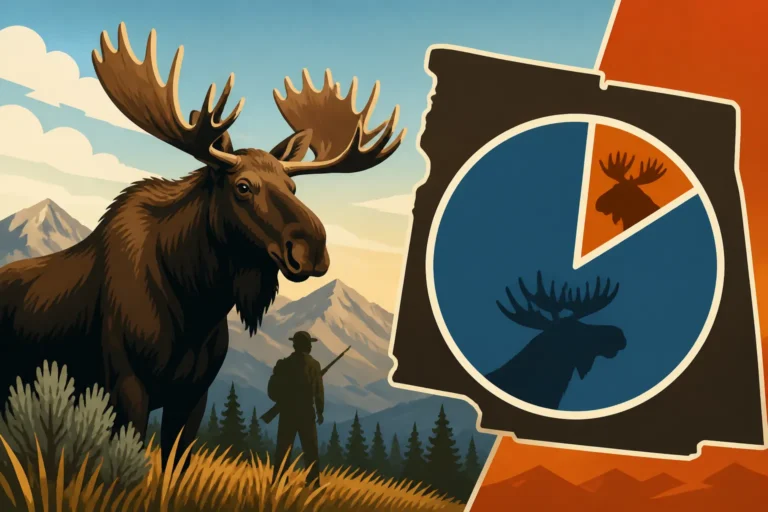
The primary reason for the abysmal draw odds boils down to simple mathematics: there are very, very few mountain goat tags allocated to nonresidents each year. Wyoming manages its mountain goat population carefully, and as such, the total number of tags issued annually for residents and nonresidents combined is already small. When you then consider the statutory allocation percentages, the nonresident slice of that already tiny pie shrinks to a mere sliver.
This isn't a situation like elk or deer where hundreds or even thousands of nonresident tags might be available across multiple hunt areas. For mountain goats, you're often looking at single-digit tag allocations for nonresidents across the entire state, sometimes even just one or two in a given year. These numbers are set by Wyoming Game and Fish Department biologists based on herd health, population objectives, and harvest data, and they are designed to be extremely conservative to ensure the long-term sustainability of the species. It truly is a testament to how few opportunities exist, which naturally drives the draw odds into the basement.
Why There Are No Preference Points for Mountain Goats
Adding to the challenge and the distinct nature of the mountain goat draw is the fact that Wyoming does not offer preference points for mountain goats. This sets it apart from many other big game species in the state, like elk, deer, and antelope, where accumulating preference points over years can significantly improve your odds of eventually drawing a tag. For mountain goats, it’s a pure, unadulterated lottery every single year.
This means that whether you're a first-time applicant or someone who has been applying for twenty years, your name goes into the digital hat with the exact same mathematical chance as everyone else. There's no strategic advantage to applying consistently beyond simply being in the draw each year. While some hunters appreciate the fairness of a pure lottery, for others, it can be incredibly frustrating to feel like their dedication and years of application don't count for anything in the odds equation. This lack of a points system contributes directly to why the draw odds are so low and unpredictable for nonresidents. You can dive deeper into this specific rule with Mountain Goat Has No Preference Points in Wyoming.
Breaking Down the Mountain Goat Draw Odds
When you look at the draw odds for nonresident mountain goats, it's easy to feel overwhelmed. The numbers often hover around fractions of a percent, making it seem almost impossible. However, understanding how those numbers are generated and what goes into them can help you contextualize your application strategy, even if it doesn't make the odds any better.
The Pure Random Draw System
As we touched upon, the Wyoming mountain goat draw for nonresidents operates on a purely random basis. There are no weighted preferences, no bonus points, and no advantages for prior unsuccessful applicants. Each application for a nonresident mountain goat tag is essentially assigned a random number in the system. Once all applications are in, the system sorts these numbers, and tags are awarded starting with the lowest (or highest, depending on the algorithm) numbers until the allocated number of tags for that hunt area and license type is exhausted.
This system means that theoretically, you could draw a tag on your very first application, or you could apply for twenty years and never see a notification other than "unsuccessful." It's the ultimate test of patience and blind luck. While it can be frustrating not to have a sense of progression, it also means that every year, every applicant has an equal, albeit tiny, shot. Tools like GoHunt can provide statistics on these random draws, showing you the number of applicants versus tags, but they cannot predict your personal outcome.
Historical Odds and What They Tell Us
Looking at historical draw odds is crucial for understanding the landscape, but it's important to view this data with a realistic perspective. Historical odds show you what has happened, not what will happen. They're a snapshot of demand versus supply in previous years. For example, if a particular hunt area received 500 nonresident applications for one tag last year, the odds were 1 in 500, or 0.2%. If the next year that same hunt area gets 700 applications for one tag, the odds drop to 1 in 700, or roughly 0.14%.
Websites like GoHunt often compile and present this historical data in an accessible format, allowing you to see trends in application numbers and success rates over time for each hunt district. This information is invaluable for identifying the least difficult draws, which even then will still be incredibly tough. Pay close attention to the number of tags issued to nonresidents in previous years for specific hunt districts, as this figure can sometimes fluctuate slightly. Knowing How Many Goat Licenses Nonresidents Received Last Year can give you an idea of the extremely limited opportunities.
Factors Influencing Year-to-Year Fluctuations
While the random draw itself is static in its fairness, the odds can still fluctuate from year to year based on a few key factors:
- Quota Changes: The Wyoming Game and Fish Department might adjust the total number of mountain goat tags issued annually based on recent surveys, winter mortality, or population objectives. A slight increase or decrease in the overall quota directly impacts the number of tags available to nonresidents.
- Applicant Numbers: This is the biggest variable. If a particular unit gained notoriety, or if interest in mountain goat hunting surged nationally, the number of nonresident applications could jump significantly. More applicants for the same number of tags means lower odds for everyone.
- Resident Success: While nonresident tags are drawn from a separate pool, overall management goals can indirectly affect nonresident allocations. If resident success rates are exceptionally low or high, it might prompt biological adjustments that eventually ripple through to the nonresident quotas.
Therefore, while historical data is your best friend for research, remember that each draw year is a new game. You can find information on general application deadlines in Wyoming's Four Application Deadlines, February Through June to ensure you never miss your chance.
Strategies for the Nonresident Mountain Goat Applicant
Given the daunting odds, simply applying and hoping for the best is one strategy, but a more informed approach can at least maximize your minuscule chances and manage your expectations. Think of it less as a strategy to "beat" the odds, and more as a strategy to stay in the game and make the most of your application.
Researching Hunt Areas (Hunt Districts)
Before you even think about applying, deep-diving into the specific mountain goat hunt districts is non-negotiable. Don't just pick one at random. Each district has unique characteristics in terms of terrain, accessibility, and goat populations. Some areas might be known for larger trophy potential, attracting more applicants, while others might be incredibly rugged and less desirable for the average hunter, potentially (and this is a big "potentially") leading to slightly better odds due to fewer applicants.
Utilize resources like GoHunt's "Insider" platform, which often breaks down draw odds by hunt area, provides unit-specific information, and may even offer insights into population trends. Look at maps, satellite imagery, and past hunter reports. Consider the physical demands of each unit – mountain goat hunting is inherently strenuous and often takes place in extremely challenging, high-alpine environments. An area that is less accessible might mean fewer hunters applying, but it also means a much tougher hunt. Don't just chase the "best" area; chase the one that fits your physical capabilities and experience level, assuming you ever draw the tag. A good starting point for any hunt is E-Scouting a Unit Before the Season Opens.
Managing Expectations and Persistence
This is perhaps the most critical "strategy" for a nonresident mountain goat applicant: manage your expectations. Accept upfront that the odds are incredibly low. This isn't a hunt you plan on drawing in the next couple of years. For many, it's a lifelong pursuit that may never culminate in a tag. The goal isn't necessarily to draw this year, but to stay in the game year after year.
Think of each application as buying a very, very cheap lottery ticket for a dream hunt. The cost of a nonresident mountain goat application fee is relatively low, though the full license fee, if you draw, is significantly higher. You can check the general range of costs for tags in Wyoming Nonresident Tags Run $326 to $1,965. For the minimal upfront investment, you're buying a chance at an unparalleled experience. Persistence is key; consistent application is the only way to ensure your name is in the hat for that one lucky draw. It's also worth noting that Wyoming offers a Super Tag raffle, which provides another avenue for a dream tag, though with even longer odds, as detailed in What a Wyoming Super Tag Raffle Ticket Costs.
Considering Other Wyoming Opportunities
While mountain goat is an incredible aspiration, don't let the singular focus on this impossibly difficult draw overshadow other fantastic hunting opportunities Wyoming has to offer. If you're consistently applying for mountain goat, perhaps also consider applying for species with more favorable nonresident odds, or even exploring options that don't require decades of waiting.
Wyoming offers amazing hunts for elk, mule deer, and pronghorn, many of which have much better draw odds, especially if you're willing to hunt cow elk or doe antelope. Building points for these species is a much more tangible path to a tag. This allows you to experience the incredible hunting landscape of Wyoming more regularly, rather than pinning all your hopes on a single, extremely rare draw. Remember, the joy of hunting isn't just about the trophy, but the experience in the field, and Wyoming has plenty of that to offer across many species.
The Mountain Goat Hunt Experience
Let's imagine, for a moment, that you beat the odds and your Wyoming mountain goat tag arrives in the mail. What kind of experience awaits you? This isn't your typical Western big game hunt. Mountain goats inhabit some of the most unforgiving, high-altitude terrain imaginable, and harvesting one is a monumental accomplishment that goes far beyond pulling a trigger.
Physical Demands and Preparation
A mountain goat hunt is an extreme physical challenge. These animals live at or above timberline, often in cliffs and steep, rocky basins that require serious climbing, scrambling, and navigating dangerous scree fields. Forget about flat ground; you'll be gaining and losing thousands of feet of elevation daily, often with heavy packs. The air is thin, the weather can change in an instant, and every step is a deliberate effort.
Proper physical conditioning is not just recommended; it's absolutely essential. We're talking months of dedicated training focused on endurance, strength, and cardiovascular fitness, preferably with significant elevation gain. If you're not already accustomed to serious mountain hiking, start now. Hiking with a weighted pack, stair climbing, and working on your core strength will be your best friends. Failing to prepare physically could not only jeopardize your hunt but put you in a dangerous situation. This is why we often highlight the importance of Physical Conditioning for a Mountain Hunt for any high-country pursuit.
The Importance of a Guide or Experienced Partner
For a nonresident drawing a mountain goat tag, especially if you're not intimately familiar with high-alpine hunting or the specific hunt district, hiring a reputable guide or going with an experienced partner is highly advisable, if not required by law in certain areas. Wyoming has specific wilderness rules that necessitate a licensed guide for nonresidents hunting designated wilderness areas, and many prime mountain goat habitats fall within these boundaries. You absolutely need to research Wyoming's Wilderness Guide Law for Nonresidents to know if your drawn unit requires a guide.
Even outside of legal requirements, a guide brings invaluable local knowledge, safety protocols, expertise in mountain navigation, and the physical capability to assist in tracking, quartering, and packing out a heavy animal from extremely difficult terrain. This is not a hunt to take lightly or attempt solo without extensive prior experience in similar conditions. The cost of a guided hunt, while significant, is often a worthwhile investment to ensure a safe, successful, and ethical experience on such a rare tag.
Trophy Potential and Conservation
Mountain goats aren't pursued for their massive antler spreads like elk or deer; their allure lies in their unique beauty, their challenging habitat, and the sheer accomplishment of a successful hunt. A mature billy with long, thick horns is a prized trophy, but every goat harvested represents a hard-earned victory in some of the most remote and stunning landscapes on the continent.
Beyond the personal achievement, every mountain goat hunt in Wyoming is part of a larger conservation effort. The limited tags, the careful management, and the dedication of hunters contribute to the continued health and viability of these incredible animals. Hunters provide funding through license sales and often participate in data collection, playing a critical role in species protection. When your draw results finally post, as covered in When Wyoming Draw Results Post, Species by Species, and if that elusive goat tag is yours, remember the profound privilege and responsibility that comes with it.
Nonresident Mountain Goat Draw Odds: A Hypothetical Glance
To illustrate the challenge, here's a hypothetical look at what nonresident mountain goat draw odds might resemble, showing how few tags are typically available compared to the number of hopeful applicants.
| Year | Hunt Area (Example) | Nonresident Tags Issued | Total Nonresident Applicants | Approximate Draw Odds |
|---|---|---|---|---|
| 2021 | Unit 1 (Absaroka) | 1 | 450 | 0.22% (1 in 450) |
| 2022 | Unit 2 (Bighorns) | 2 | 600 | 0.33% (1 in 300) |
| 2023 | Unit 1 (Absaroka) | 1 | 520 | 0.19% (1 in 520) |
| 2024 | Unit 3 (Teton) | 0 | 380 | 0.00% (0 in 380) |
| 2025 | Unit 2 (Bighorns) | 1 | 710 | 0.14% (1 in 710) |
Note: These numbers are purely illustrative and do not reflect actual, current, or past Wyoming Game and Fish Department data. Real figures can vary significantly.
Disclaimer
This article is for general informational purposes only and does not constitute professional advice. Laws, prices and regulations vary by location and change over time. Consult a qualified professional for guidance on your specific situation.