Mountain Lion Quotas by Hunt Area
It's incredibly frustrating when you're dreaming of a Wyoming mountain lion hunt, only to realize that understanding the specific quotas for each hunt area feels like trying to solve a cryptic puzzle. You want to plan, you want to prepare, but the rules around how many lions can be harvested in a given area, and how quickly those quotas can close, can make your head spin. This guide is here to untangle that web, helping you understand how Wyoming manages its elusive mountain lion populations through hunt-area specific quotas, so you can approach your hunt with clarity and confidence.
Understanding Wyoming's Mountain Lion Management Philosophy
Hunting mountain lions in Wyoming isn't just about the thrill of the chase; it's about being a responsible participant in a carefully managed ecosystem. The state takes its role in wildlife conservation seriously, and that's especially true for apex predators like mountain lions. Without proper management, these populations could face unsustainable pressure, impacting not only the lions themselves but also their prey species. This holistic approach ensures that future generations of hunters will also have the opportunity to experience a Wyoming mountain lion hunt.
Why Quotas Are Necessary for Mountain Lions
Mountain lions are fascinating creatures, but their secretive nature makes them notoriously difficult to count with precision. Unlike deer or elk that often congregate in open areas, lions tend to be solitary and cover vast territories, often in rugged, densely vegetated terrain. This elusiveness means that wildlife managers can't just do a simple headcount. Instead, they rely on a combination of track counts, scat analysis, GPS collar data, and harvest data to estimate populations and trends.
Because of these challenges, a quota system becomes absolutely essential. Without it, there's a real risk of overharvesting, particularly females, which can severely impact a population's ability to reproduce and sustain itself. Think of it like a bank account: if you're constantly withdrawing more than you're depositing, eventually the account runs dry. Quotas act as a withdrawal limit, ensuring that enough "capital" (breeding animals) remains to keep the population healthy and thriving. They allow the Wyoming Game and Fish Department (WGFD) to manage harvest pressure across different areas, responding to local population dynamics, prey availability, and even habitat changes. The goal is always to maintain a stable, viable population for the long term, balancing hunting opportunities with conservation needs.
The Role of Hunt Areas in Quota Allocation
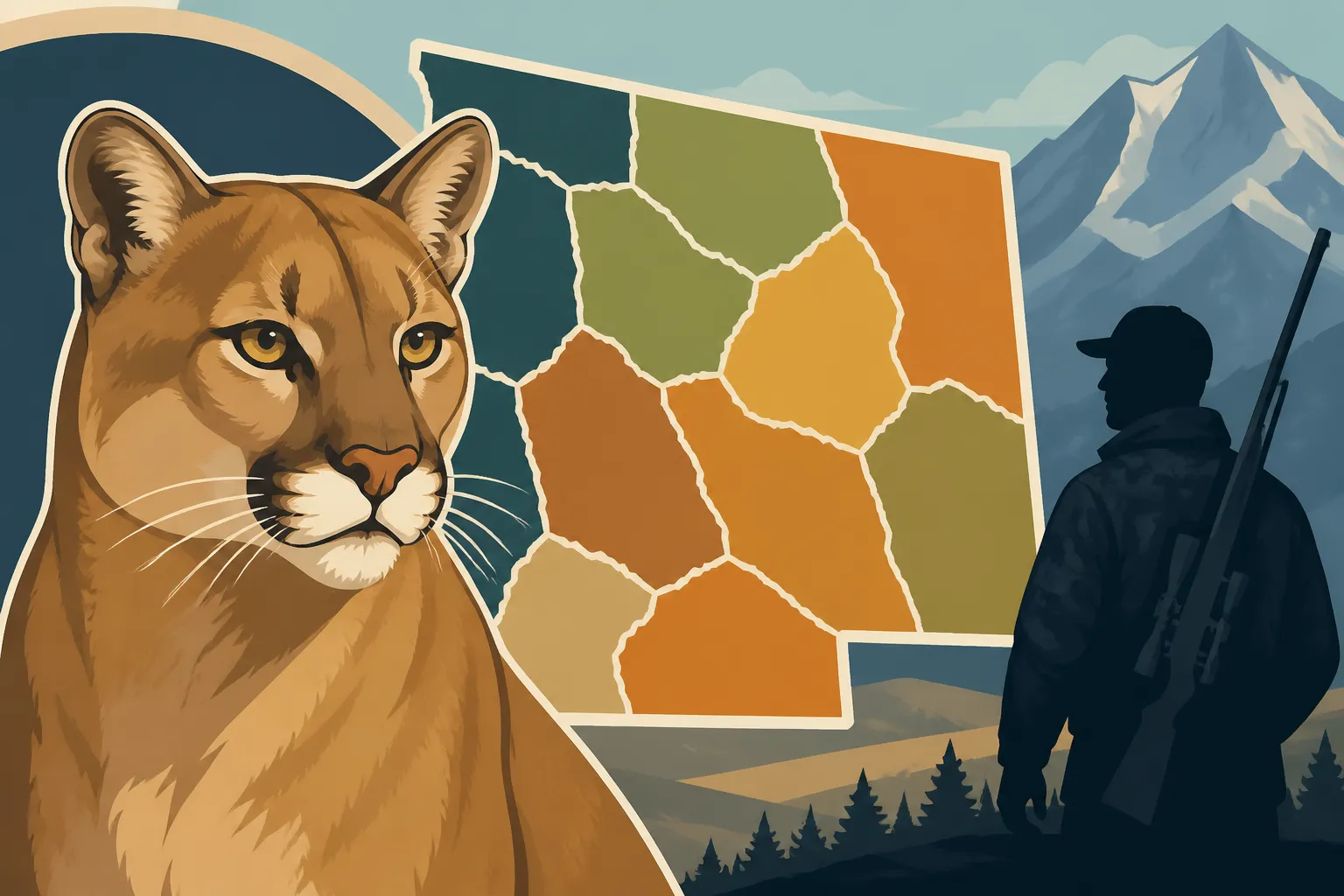
Wyoming is a vast state, and its mountain lion populations aren't evenly distributed. Some areas boast robust lion numbers with abundant prey, while others might have sparser populations due to habitat limitations, disease, or other environmental factors. To account for these regional differences, the WGFD divides the state into numerous "hunt areas." These aren't just arbitrary lines on a map; they are carefully drawn boundaries, often following natural geographic features like mountain ranges, major rivers, or established roads, designed to delineate distinct lion populations or management units.
Each hunt area receives its own specific quota, which is a number of lions that can be harvested within that boundary during a given season. This highly localized approach allows managers to tailor their conservation efforts precisely. For example, a hunt area with a healthy, expanding lion population might have a more generous quota, while an area recovering from a tough winter or experiencing lower prey numbers might have a very conservative, or even zero, quota. It's a nuanced system that aims to avoid a one-size-fits-all approach, recognizing that what works for lions in the Bighorns might not work for those near the Red Desert. This specificity is why understanding your chosen Wyoming Mountain Lion Quota Areas is paramount before you even consider packing your gear.
Navigating Wyoming's Mountain Lion Hunt Areas and Quotas
Hunting mountain lions successfully in Wyoming is as much about understanding the regulations as it is about tracking skills. The quota system is central to this, and it requires diligent attention from any hunter hoping to pursue these apex predators. It's not a static system you can check once and forget about; it's dynamic, responding to real-time conditions.
Deciphering the Quota System for Specific Areas
When you look at the Wyoming Game and Fish Department's regulations for mountain lions, you'll see a table listing various hunt areas. Next to each area, you'll find the total quota, but often, there's a critical second number: the female maximum. For instance, an entry might read: "Hunt Area 1: Total Quota 10, Female Max 4." This means that while up to ten lions can be harvested in that area, no more than four of them can be females.
The female maximum is incredibly important for population management. Females are the reproductive engine of any species, and an excessive harvest of breeding females can have long-lasting negative impacts on the entire population. Therefore, even if the total quota hasn't been met, the hunt area will close if the female maximum is reached. This is a common and vital management tool across many states that manage predators.
To really dig into this, tools like GoHunt can be incredibly helpful for researching specific areas, reviewing past harvest data, and even predicting pressure. While GoHunt can't give you real-time quota closures (that's the WGFD's domain), it can help you understand the historical context of a hunt area, allowing you to make more informed decisions when picking your areas. You'll want to cross-reference any information with the official WGFD regulations, which are the final word.
Here’s a simplified example of how you might see quotas structured:
| Hunt Area Number | General Location | Total Quota (Max) | Female Quota (Max) | Season Dates (Example) |
|---|---|---|---|---|
| 1 | Bighorn Mountains | 12 | 5 | Nov 1 – Mar 31 |
| 2 | Absaroka Range | 8 | 3 | Dec 1 – Mar 15 |
| 3 | Southern Rockies | 15 | 6 | Nov 15 – Apr 15 |
| 4 | Wind River Range | 10 | 4 | Jan 1 – Mar 31 |
| 5 | Black Hills | 7 | 2 | Dec 1 – Feb 28 |
This table illustrates how quotas vary significantly by area, reflecting different population objectives and conditions. It highlights the absolute necessity of knowing your specific hunt area's numbers.
The Dynamic Nature of Quotas: Why They Change
Mountain lion quotas aren't set in stone from year to year; they are dynamic and can even change mid-season. This flexibility is crucial because wildlife populations and environmental conditions are constantly in flux. Several factors can influence quota adjustments:
- Previous Harvest Success: If hunters met or exceeded quotas in prior seasons, it might indicate a robust population, potentially leading to similar or slightly adjusted quotas. Conversely, if harvest was consistently low, it could signal a declining population or difficult hunting conditions, prompting managers to lower quotas.
- Population Surveys and Research: The WGFD continually conducts research, monitors lion sign, and analyzes data from harvested animals. New information about population health, age structures, and reproductive rates can lead to quota modifications.
- Prey Availability: Mountain lion populations are directly tied to the health of their prey base, primarily deer and elk. A severe winter impacting deer herds in a specific area, for example, might trigger a reduction in lion quotas to ensure the predator population doesn't put undue pressure on already stressed prey.
- Public Input and Management Goals: While science-driven, management also considers public input and broader management goals for different areas.
- Unforeseen Events: Wildfires, disease outbreaks, or other large-scale environmental changes can also necessitate adjustments.
The most critical aspect for a hunter to grasp is that a hunt area can and will close as soon as its quota (or female maximum) is met. This isn't something that waits until the end of the day or week; it's effective immediately. This means that Mountain Lion Season and Quota Closures are a very real part of the hunt, and you need to be prepared to adapt your plans at a moment's notice.
Practical Strategies for Mountain Lion Hunters in Quota Areas
Hunting mountain lions is already a significant challenge, but add in the layer of dynamic quotas, and it requires even more strategic planning and vigilance. You can't just pick an area and go; you have to be constantly aware of the current harvest status. This is especially true if you're pursuing these cats with hounds, where the effort and logistics are substantial.
Monitoring Quota Status During the Season
This is perhaps the most critical piece of advice for any aspiring Wyoming mountain lion hunter. Once the season opens, you absolutely must have a plan for monitoring the quota status of your chosen hunt area. The Wyoming Game and Fish Department maintains an online portal or hotline specifically for this purpose. Many successful lion hunters check this resource daily, or even multiple times a day, especially as the season progresses and quotas start to dwindle.
Imagine this scenario: you've been on a hard track for two days, your hounds are closing in, and you're miles into the backcountry. You finally get visual on a beautiful tom, only to discover, upon getting cell service, that the female quota was met earlier that morning, closing your hunt area. This is a heartbreaking, but entirely avoidable, situation. You need to know the moment a quota closes. Some hunters even assign a "quota monitor" in their group back in cell service range to check hourly and send updates. While GoHunt is excellent for research, for real-time quota closure information, the official WGFD channels are your lifeline. This immediate closure rule also applies to other predator species in certain management units, so understanding the nuances of The Predator Zone Wolf Rules Explained or how bear seasons operate can offer similar lessons in vigilance.
Planning Your Hunt Around Quota Limitations
Given the dynamic nature of quotas, your hunt planning needs to be flexible and well-informed. Don't just pick one hunt area; have backup plans. Research several Wyoming Mountain Lion Quota Areas that fit your criteria in terms of terrain, access, and historical success rates. This way, if your primary area closes unexpectedly, you can quickly pivot to a secondary or tertiary option.
Consider the timing of your hunt. Early season often sees higher lion activity, but it also usually means more hunters and potentially faster quota attainment. Hunting later in the season might mean fewer hunters, but you run the risk of quotas already being filled. Understanding the typical harvest trends for your desired areas can help you decide when to schedule your trip. For example, if an area historically fills its female quota within the first few weeks, you might consider either hunting extremely early or choosing a different area with a larger female quota.
For those employing hounds, the logistics are even more complex. You're committing time, energy, and resources to working your dogs, and hitting a closed quota can be devastating. This is why many hound hunters will call the WGFD hotline or check the online portal before they even load the dogs in the truck each morning. The intense effort involved in Hunting Mountain Lions Behind a Pack of Hounds means that staying on top of the quota status is not just a good idea, it's absolutely essential. Remember, after a successful harvest, reporting requirements and The Wyoming Mountain Lion Pelt Sealing Requirement are critical steps that must be taken promptly, so understanding those rules before you go is also paramount.
Disclaimer
This article is for general informational purposes only and does not constitute professional advice. Laws, prices and regulations vary by location and change over time. Consult a qualified professional for guidance on your specific situation.