The Bear Meat Salvage Requirement Explained
One common source of anxiety for hunters, especially those new to pursuing bears, revolves around understanding exactly what parts of an animal they are legally and ethically obligated to take from the field. It’s a crucial question, not just about following the letter of the law, but about respecting the animal and the privilege of hunting. This guide will walk you through Wyoming's bear meat salvage requirements, helping you understand your responsibilities and how to confidently comply.
Why Bear Meat Salvage Matters in Wyoming
Let's be honest, hunting is a privilege, not a right, and with that privilege comes a deep responsibility to the animals we pursue. The idea of "wanton waste" is something that echoes deeply in every ethical hunter's mind. Nobody wants to be accused of it, and more importantly, nobody wants to contribute to it. Wyoming, like many states, has specific regulations designed to prevent this very thing, ensuring that the harvest of an animal is done with respect for its life and its utility.
The Foundation of Ethical Hunting
At its heart, the meat salvage requirement for bears in Wyoming isn't just a bureaucratic hurdle; it's a direct reflection of ethical hunting principles. As hunters, we strive to utilize as much of the animal as possible. This means not just taking a trophy or a hide, but ensuring that the edible portions contribute to food, just as our ancestors did. When you take a bear, you're not just taking a magnificent animal; you're taking a source of sustenance. To leave that behind is to disrespect the animal and the resource it represents. It also undermines the public perception of hunting, which is something we all need to protect. The rules are there to codify this ethical obligation. You’ll find similar requirements for other big game, reinforcing the core message of Wanton Waste Rules Every Wyoming Hunter Should Know.
Distinguishing Bear From Other Big Game
While the general principle of meat salvage applies to all big game, there can sometimes be nuances when it comes to bears. For species like deer or elk, the concept of "edible meat" is pretty straightforward: all skeletal muscle that's fit for human consumption. Bears, however, sometimes get a bad rap, or people might have preconceived notions about their meat quality. This can lead to confusion or even an unfortunately mistaken belief that bear meat isn't worth salvaging. Wyoming's regulations are clear: bear meat is considered edible meat, and it must be salvaged. There are no exceptions for perceived taste or texture. This puts bear meat on the same legal footing as a deer or antelope, demanding the same level of respect and effort in the field.
Defining "Edible Meat" for Bears in Wyoming
So, what exactly does "edible meat" mean when it comes to a black bear in Wyoming? This is where rubber meets the road, and understanding the specifics is key to staying compliant and ethical. It's not about making a pot of stew right there in the backcountry, but about ensuring that the valuable protein doesn't go to waste.
The General Standard
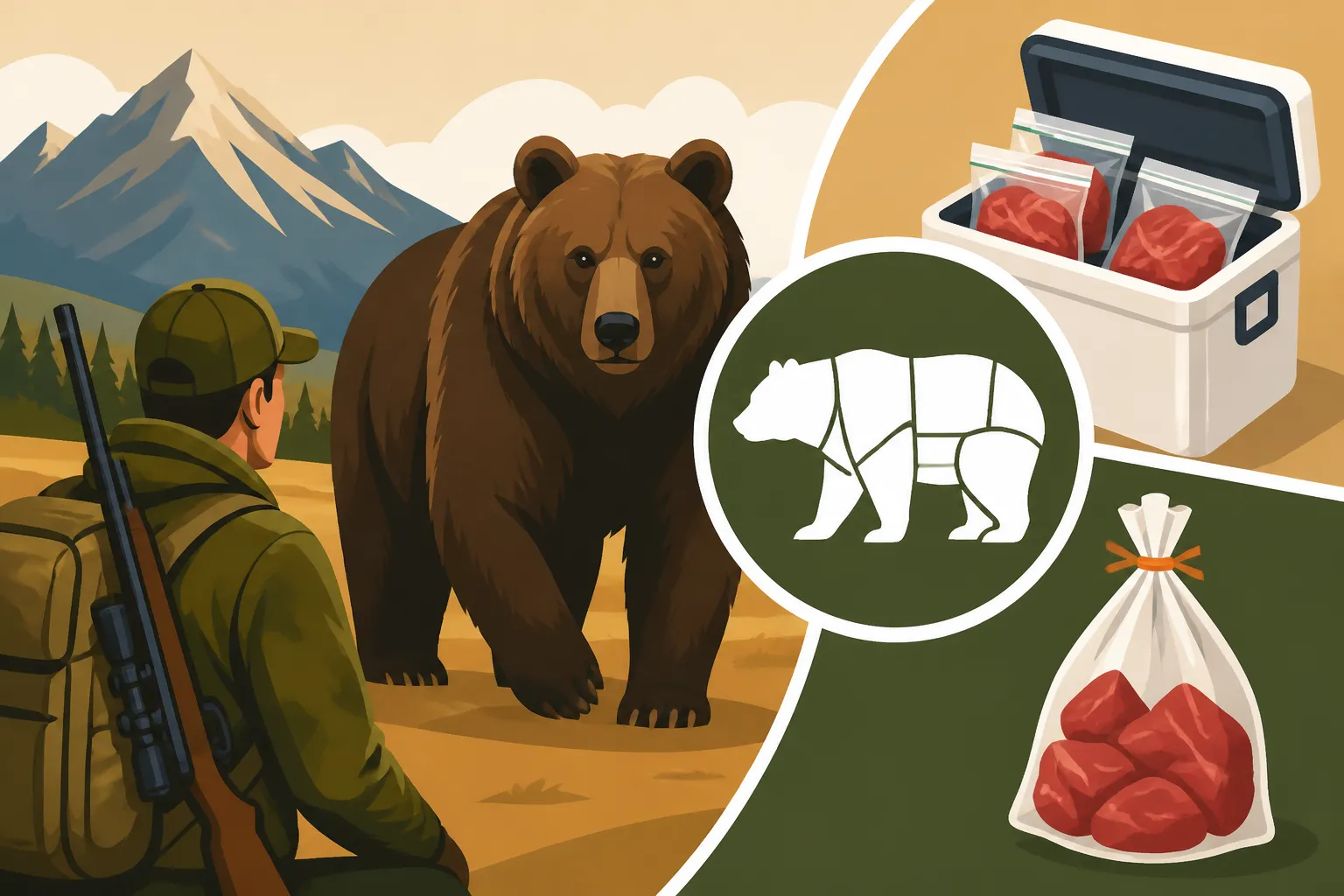
For bears, Wyoming's definition of salvageable meat is generally consistent with other big game species. It refers to the "meat of the animal from the hindquarters, front quarters, and the meat along the backbone" that is "fit for human consumption." This explicitly excludes things like the internal organs (viscera), glands, stomach, intestines, or spoiled portions. Basically, if it's muscle tissue that you would reasonably consider eating, you need to pack it out. This means you're obligated to take the large muscle groups that make up the vast majority of the bear's biomass, which is a significant amount of meat.
Let's break down those main components:
- Hindquarters: Both legs, from the hip down. These are typically the largest and meatiest parts of any big game animal, bears included.
- Front Quarters: Both shoulders and legs, from the shoulder blade down. While not as massive as the hindquarters, they still yield substantial amounts of meat.
- Backbone Meat: This includes the tenderloins (which are internal) and the large muscle strips that run along the backbone (the backstraps or loins). These are often considered prime cuts.
It's important to remember that "fit for human consumption" implies meat that hasn't been allowed to spoil due to improper care or excessive bullet damage. While you can't salvage bullet-riddled, splintered bone fragments, you can't intentionally ruin meat and then claim it's "unfit." The expectation is that you make a reasonable effort to preserve the quality of the edible portions immediately after the kill. This is especially critical in warmer weather, where swift action is necessary. Many hunters use resources like GoHunt to understand seasonal temperatures in their hunt areas, which impacts how quickly they need to act on a kill.
What Doesn't Count as Salvageable
Just as important as knowing what is salvageable, is understanding what isn't. You are not expected to pack out:
- Organs: The heart and liver are certainly edible and often desired by hunters, but they are generally not legally required to be salvaged under the broad definition of "meat." However, many ethical hunters choose to take these as well.
- Head and Hide: While the hide (pelt) is often the primary reason for bear hunting, and the skull is necessary for trophy scoring, these are separate from the meat salvage requirement. You're required to save the hide and skull for sealing, but their inclusion doesn't negate the need to salvage the meat.
- Severely Damaged or Spoiled Portions: If a section of meat is completely destroyed by a bullet or arrow, or if it has spoiled due to neglect, you're not expected to salvage that specific portion. However, the onus is on the hunter to prevent spoilage through prompt and proper field dressing. If you shoot a bear late in the day in warm weather and leave it overnight without field dressing, you could be in violation if the meat spoils.
Consider this simple rule of thumb: if it's muscle tissue you would buy from a butcher, you should be trying to get it out of the field.
Field Dressing and Transport: Meeting the Requirement
Okay, so you've harvested a bear. Now what? The clock starts ticking, especially if temperatures are mild. Proper field dressing and transport are your primary tools for meeting the meat salvage requirement and ensuring the meat remains "fit for human consumption." This isn't a race, but it does demand efficiency and careful planning. You can also refer to Field Dressing and Carcass Transport Rules Explained for more general tips.
Immediate Post-Harvest Steps
The very first thing you need to do after a safe kill is to get that bear field dressed. This is non-negotiable.
- Tagging: First and foremost, tag your bear immediately and correctly, as per Wyoming regulations.
- Gutting: Open the body cavity and remove all the entrails. This allows the carcass to cool rapidly, which is critical for preventing bacterial growth and spoilage. In warm weather, even a short delay can lead to irreversible damage to the meat.
- Skinning: For bears, skinning is often done immediately, or at least started, to further aid cooling. Bear fat acts as an incredible insulator, holding heat in. Getting the hide off will drastically speed up cooling. This is often more involved than just gutting, but essential. You'll need to know your plan for hide sealing and skull preparation, as these are often tied to the meat salvage process.
Many hunters will quarter a bear in the field, especially if it's a large animal or if they are deep in the backcountry. This involves removing the four legs and backstraps from the bone, making them easier to pack out. This process, often called the "gutless method" for other big game, can be adapted for bears. This not only lightens the load but also maximizes cooling by exposing more surface area of the meat to the air.
Packing it Out: Strategies and Challenges
Packing bear meat out of the backcountry presents unique challenges. Bears can be surprisingly heavy, and their dense, fatty meat can be awkward to carry.
- Weight: A mature black bear can weigh anywhere from 200 to 400 pounds or more. Even if you only take the boneless meat, you're looking at a substantial load. Don't underestimate this. Planning your extraction route and method before the hunt is paramount.
- Cooling and Contamination: As you pack out, you need to keep the meat clean and cool. Meat bags are essential. Don't just throw raw meat directly into your backpack, where it can get dirty or continue to absorb heat. If hiking a long distance, especially in warmer temperatures, consider taking multiple trips or utilizing a game cart, horse, or ATV if allowed in your hunt area. When planning your hunt, consider what methods are legal for transport – some areas might limit vehicle use. Using a platform like GoHunt can help you research specific hunt area regulations regarding vehicle access.
- Distance and Terrain: The further you are from your vehicle or camp, and the rougher the terrain, the more difficult it will be to salvage all the required meat. This needs to be a primary consideration when choosing your hunting spot and planning your approach. You must be prepared to make multiple trips if necessary.
| Aspect of Salvage | Description | Importance for Bear Hunters |
|---|---|---|
| Cooling | Removing heat from carcass rapidly. | Critical due to bear fat acting as insulation; prevents spoilage. |
| Cleanliness | Keeping meat free from dirt, hair, and gut contents. | Essential for "fit for human consumption"; prevents bacterial growth. |
| Quarters & Backstraps | Large muscle groups from legs and along spine. | Legally required for salvage; constitutes the bulk of edible meat. |
| Transport | Moving meat from kill site to processing. | Must maintain cooling and cleanliness; often involves heavy packs. |
| Timeliness | Acting quickly after the kill. | Reduces risk of spoilage, especially in warm weather. |
If you're hunting in warmer weather, a strategy might involve hunting closer to roads or areas with easier access, so you can get the meat out and into coolers faster. For spring bear season, for example, which can fall on mild days, When Wyoming's Spring Bear Season Falls and swift processing are especially important.
The Consequences of Non-Compliance
Failing to meet the meat salvage requirement in Wyoming is a serious offense. It's considered "wanton waste," and it carries significant penalties. This isn't just a slap on the wrist. You could face fines, forfeiture of your hunting privileges for a period, or even jail time in severe cases. Game wardens take these laws very seriously, as they represent the ethical bedrock of hunting. It's a black mark on both the individual and the entire hunting community. So, understand the rules, plan meticulously, and execute carefully to avoid any issues.
Beyond the Law: Ethical Considerations and Preventing Waste
While the law dictates what you must do, true ethical hunting often goes above and beyond the minimum legal requirements. For many of us, it's about honoring the animal and making sure that nothing goes to waste. This applies just as much to bear hunting as it does to any other species.
Maximizing Your Harvest
Think about what else you can utilize from a bear. Beyond the legally required meat, many hunters value the fat (for rendering into lard or cooking oil), the hide (for tanning), and the skull (for cleaning and display). Some even utilize the claws or other parts for crafts. Making the most of your harvest is a sign of respect and truly embodies the conservation ethic. This might mean extra effort in the field or more careful planning for transport, but the satisfaction of fully utilizing your animal is immense.
For instance, How Common Color Phase Black Bears Are can make the hide especially valuable, leading many hunters to take extra care in skinning and preserving it, which often goes hand-in-hand with careful meat salvage.
Proper Meat Care from Field to Freezer
The salvage requirement doesn't end when you get the meat to your truck. It extends to properly caring for it until it's processed.
- Coolers and Ice: Once you have the meat quartered and bagged, get it into coolers with ice as quickly as possible. Ensure the meat is not sitting directly in meltwater, which can speed up spoilage. Use dry ice or frozen water bottles, or elevate the meat on grates.
- Processing: Get the meat to a butcher or process it yourself in a timely manner. Don't let it sit in coolers for days on end. Proper aging of bear meat, if desired, should be done in a controlled, refrigerated environment, not in a field cooler.
- Storage: Once processed, freeze the meat properly in vacuum-sealed bags or heavy-duty freezer paper to prevent freezer burn and ensure its quality for months to come.
By taking these steps, you not only fulfill your legal obligation but also ensure that the bear meat provides nutritious meals for your family and friends, continuing the cycle of respect and utilization. This holistic approach to the harvest is what truly defines an ethical hunter. Many hunters consult online resources or apps like GoHunt to find local meat processors near their hunt areas, especially after a successful hunt where time is of the essence.
Disclaimer
This article is for general informational purposes only and does not constitute professional advice. Laws, prices and regulations vary by location and change over time. Consult a qualified professional for guidance on your specific situation.