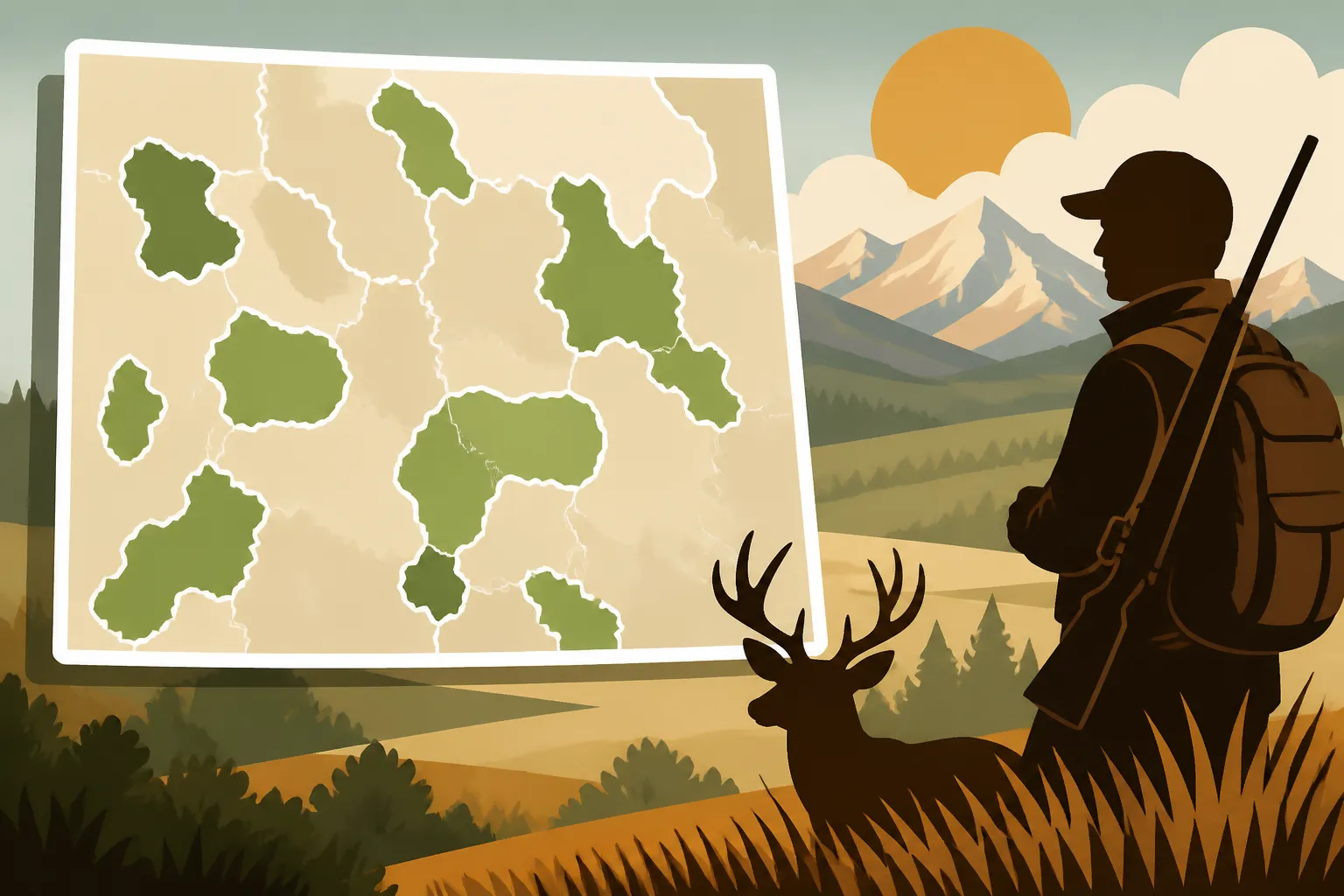
A List of Wyoming’s Habitat Management Areas
Finding quality hunting ground can often feel like a puzzle, especially when you're trying to navigate public land opportunities in a vast state like Wyoming. It's easy to get overwhelmed trying to differentiate between BLM, Forest Service, and state lands, let alone figuring out where wildlife managers have put in extra effort. This guide is here to shed light on a crucial, often overlooked resource for hunters: Wyoming's Habitat Management Areas, explaining what they are, how to access them, and what to expect when you hunt these special places.
What Exactly Are Wyoming's Habitat Management Areas?
Wyoming's Habitat Management Areas, or HMAs, aren't just another patch of public land. They are specific parcels of land, often acquired or managed through agreements by the Wyoming Game and Fish Department, with the explicit goal of enhancing, protecting, or providing public access to critical wildlife habitat. Think of them as designated zones where wildlife conservation is the primary directive, and hunting access is a carefully integrated benefit. These areas are designed to ensure that species like deer, elk, antelope, and various upland birds have the forage, cover, and security they need to thrive, especially during crucial times of the year.
More Than Just Public Land
Unlike general Bureau of Land Management (BLM) or National Forest lands, which have broader multi-use mandates, HMAs are singularly focused on wildlife. This means the management practices within an HMA – from habitat improvements like prescribed burns or water developments to grazing rotations – are all geared towards benefiting the animal populations. For hunters, this often translates into more robust wildlife numbers and better hunting opportunities compared to areas where wildlife considerations might be balanced with timber production, mineral extraction, or high recreational use. It’s about creating prime habitat, not just existing habitat.
Consider the effort that goes into securing winter range for mule deer or elk. During harsh Wyoming winters, animals concentrate in specific areas where snow depth is manageable and food is accessible. Without these crucial wintering grounds, entire herds can suffer significant losses. Many HMAs are specifically managed to protect these vital winter ranges, often leading to seasonal closures to prevent disturbance when animals are most vulnerable. Understanding these areas means you’re tapping into locations where significant conservation investment has been made to support healthy game populations.
Who Manages These Areas?
The Wyoming Game and Fish Department (WGFD) is the primary managing agency for HMAs. They might own these lands outright, lease them from private landowners, or operate them under cooperative agreements with federal agencies like the BLM or Forest Service. This direct management means a consistent focus on wildlife objectives. The WGFD biologists and game wardens have a vested interest in the ecological health and the public access provisions of these areas. This often means more detailed mapping, clearer rules, and consistent enforcement, which can be a real benefit to hunters trying to understand the nuances of a new hunting area.
For example, a specific HMA might be managed to provide critical fawning habitat for pronghorn in the spring, or to create high-quality nesting cover for pheasants. This targeted management is a huge differentiator from other public lands where wildlife is just one piece of a much larger puzzle. It also means that when you’re scouting or hunting an HMA, you’re often operating in an area that has been specifically tailored to support the game you're after.
How to Find and Access These Critical Hunting Areas
The sheer number of public land acres in Wyoming can be daunting, but locating and understanding Habitat Management Areas is surprisingly straightforward if you know where to look. Unlike some of the more complex access issues you might encounter with checkerboard land or landlocked public parcels, HMAs are typically well-documented by the Wyoming Game and Fish Department. However, "well-documented" doesn't always mean "easy to find with a casual glance," so a bit of intentional research is key.
Official Resources for Identification
Your first stop should always be the Wyoming Game and Fish Department's official website. They maintain a comprehensive list and interactive maps of all designated HMAs. These resources are invaluable because they provide crucial details such as:
- Location and Boundaries: Clear mapping shows exactly where the HMA sits, often overlayed on satellite imagery or topographic maps.
- Primary Species: You'll usually find information on which species the HMA is primarily managed for (e.g., elk winter range, mule deer migration corridor, upland bird habitat).
- Access Points: Specific parking areas, walk-in points, or designated vehicle routes are typically marked.
- Special Regulations: This is where you'll find details on seasonal closures, weapon restrictions, or specific permit requirements.
You might also find that HMAs are sometimes called by different names or are part of larger "Hunter Management Areas" or "Walk-In Areas" that the WGFD cooperatively manages. It can be a little confusing, but the core idea remains: these are specific areas where WGFD has a hand in managing both habitat and access. Always refer to the most current WGFD regulations for the specific area you plan to visit, as details can change.
Using Digital Mapping Tools
Modern digital mapping applications are indispensable for navigating HMAs. Tools like onX Hunt or GoHunt have become standard gear for many hunters, and for good reason. These apps often integrate public land ownership data, including HMAs, directly onto your phone or GPS device. This allows you to:
- Visualize Boundaries: Clearly see HMA boundaries in the field, preventing accidental trespass onto private land or unintended entry into a closed area.
- Identify Access: Pinpoint designated access routes and parking areas, helping you plan your approach.
- Scout Remotely: Use the app to "e-scout" an HMA from your home, identifying potential bedding areas, water sources, and travel corridors before you ever set foot on the ground. This is incredibly helpful for understanding the terrain and layout. E-Scouting a Unit Before the Season Opens
- Layer with Topography: Overlay HMA boundaries with topographic maps to understand elevation changes and potential natural barriers.
While these tools are fantastic, remember they are supplementary. Always cross-reference with the official WGFD regulations, especially for specific HMA rules, as the apps might not always reflect the most granular, real-time closures or specific permit requirements.
Here's a simplified look at what you might expect to find when researching different types of managed access areas in Wyoming:
| Type of Area | Primary Purpose | Access Method (General) | Typical Rules/Considerations |
|---|---|---|---|
| Habitat Management Area (HMA) | Wildlife habitat enhancement, public hunting | Walk-in, designated vehicle | Seasonal closures, specific species limits, WGFD managed |
| Hunter Management Area (HMA) | Private land enrolled for public hunting | Walk-in, often requires permission slip | Permission slips required, limited hunter numbers, WGFD managed |
| Walk-In Area (WIA) | Public access to private land (often seasonal) | Walk-in only | Seasonal, often for specific species, no permission slip needed |
| State Trust Land | Generate revenue for public institutions | Public access with some rules | Respect improvements, no camping without permission, vehicle use |
Note: While all HMAs are "managed for habitat," the WGFD also uses "Hunter Management Area" specifically for private land access programs. It's crucial to check each area's specific details on the WGFD website.
Specific Access Requirements
While many HMAs offer straightforward public access, some might have nuances. For instance, certain Hunter Management Areas Do Need One if they are built on agreements with private landowners. These "permission slips" are usually available online through the WGFD website and require you to register for a specific hunt area during a specific time frame. This system is designed to manage hunter numbers and ensure a quality experience, while also honoring the private landowner's generosity. Always check if a permission slip is required before heading out, as showing up without one could lead to a frustrating turnaround or even a citation.
You'll find that many of these areas are specifically designated for walk-in access only, which means leaving your vehicle at a designated parking area and proceeding on foot. This not only minimizes disturbance to wildlife but also enhances the hunting experience by making you truly earn your spot. Understanding these ground rules before you go can save you a lot of grief. Finding Walk-In Area Maps by County can give you a head start on planning your foot-powered adventures.
Rules and Regulations Specific to Habitat Management Areas
It's tempting to think that "public land is public land," but when it comes to Wyoming's Habitat Management Areas, that mindset can get you into trouble. Because HMAs are specifically managed for wildlife, they often come with a unique set of rules and regulations that go beyond general state hunting laws. These rules are in place to protect the fragile ecosystems, minimize disturbance to animals, and ensure sustainable use for all. Ignorance of these rules is never an excuse, and game wardens in these areas are often quite diligent about enforcement.
Seasonal Closures and Vehicle Restrictions
One of the most common and critical regulations you'll encounter in HMAs are seasonal closures. These are put in place to protect wildlife during vulnerable periods, such as winter stress for big game or nesting season for birds. For example, an HMA that serves as critical Seasonal Winter Range Closures for Big Game for elk or mule deer will likely be closed to human entry during the harsh winter months, sometimes from December 1st through May 15th, or similar dates. Showing up to hunt in January, only to find the gates locked and signs posted, is a common frustration for hunters who haven't done their homework. Always check the specific HMA's dates before you plan your trip.
Vehicle access is another significant area of regulation. Many HMAs are designated as "walk-in" only, meaning motorized vehicles are prohibited beyond designated parking areas. Even in HMAs where some vehicle use is allowed, it's often restricted to established roads and two-tracks, with strict prohibitions on off-road travel. This helps prevent habitat damage, soil erosion, and excessive disturbance to wildlife. Always consult the HMA's specific map and regulations for permissible vehicle use. A good tool like onX Hunt can often show designated routes, but again, the official WGFD maps and regulation pamphlets are the ultimate authority.
Permitted Activities and General Conduct
Beyond closures and vehicle rules, HMAs often have specific guidelines on general conduct and permitted activities:
- Camping: While dispersed camping is often allowed on general public lands, it might be restricted or prohibited entirely within HMAs, or limited to specific designated campsites. This is often to reduce human impact on sensitive habitat.
- Firewood Gathering: Similarly, cutting firewood might be forbidden or require a special permit.
- Trail Cameras: The use of Trail Camera Rules on Wyoming Public Land can vary. While generally permitted on public land, specific HMAs might have more restrictive rules regarding placement or timing to minimize intrusion.
- Firearms vs. Archery: While most HMAs allow legal hunting during open seasons, it’s always wise to double-check if any HMA has specific archery-only sections or unique firearm restrictions that differ from the broader hunt area regulations.
- Litter and Waste: This should go without saying, but leaving no trace is paramount. Pack out everything you pack in, and then some. HMAs are prime examples of "leave it better than you found it" territory, as they represent a concerted effort to preserve wild places.
The bottom line is that while HMAs offer fantastic hunting opportunities, they demand a higher level of awareness and adherence to specific rules. Treating them with the respect their conservation purpose demands ensures they remain viable hunting grounds for years to come.
Making the Most of HMAs for Your Next Hunt
Now that we've covered what Habitat Management Areas are and how to navigate their rules, let's talk about how to strategically incorporate them into your hunting plans. These aren't just places to stumble upon; they are destinations worth serious consideration and pre-season planning. Maximizing your success in an HMA often comes down to timing, understanding the habitat, and putting in the legwork.
Strategic Scouting and Timing
Because HMAs are managed for specific wildlife benefits, understanding these objectives can be your biggest advantage. If an HMA is primarily a winter range, it might be an excellent spot for late-season hunts when animals are pushed down by snow. If it's fawning or calving grounds, it might be less productive during the early season but could hold post-rut activity or provide excellent spring bear habitat, if applicable.
E-scouting with tools like onX Hunt or even GoHunt's scouting tools can reveal a lot about an HMA's topography, vegetation, and proximity to private land or other public land parcels. Look for natural funnels, pinch points, and areas of dense cover adjacent to feeding grounds. Pay attention to water sources, especially in arid parts of Wyoming, as these can be magnets for game. Optics Power for Wyoming's Long Sightlines is key for scouting these open areas, whether virtually or in person.
In-person scouting is still king. Visit the HMA during the off-season, if permitted, to learn the terrain firsthand. Look for game trails, rubs, scrapes, and bedding areas. Identify potential ambush points or spots where you can intercept animals moving between feeding and bedding areas. Even if an HMA has a winter closure, understanding its layout in the summer can give you a huge advantage when it reopens for hunting season.
Pairing HMAs with Adjacent Lands
Many HMAs are strategically located adjacent to larger swaths of BLM, National Forest, or private lands. This can create a fantastic mosaic of hunting opportunities. Animals often move between these different land types, using HMAs for security and prime forage, then moving to other areas. If you can identify an HMA that borders a large private ranch that experiences little pressure, you might find that animals use the HMA as a refuge during hunting season or as a travel corridor.
Think about how you can use the HMA to your advantage:
- Pressure Relief: If adjacent public lands are heavily hunted, the more protected HMA might offer a sanctuary where animals feel safer, especially if it's walk-in only.
- Migration Routes: Some HMAs are specifically located along critical migration corridors. Learning these routes can lead to incredible opportunities during specific times of the year, such as the deer rut in November. The Red Desert Mule Deer Migration Explained
- Edge Hunting: Hunting the edges of an HMA where it meets another land type can be very productive. Animals often stage in cover before moving into open feeding areas, and these transition zones can be ideal.
However, always be acutely aware of private land boundaries, especially when animals are on the move. Use your mapping tools diligently to ensure you stay on legal ground.
Respect and Responsibility
Ultimately, the continued access to and quality of hunting in Habitat Management Areas relies heavily on hunter responsibility. These areas are a privilege, not a guarantee. Adhering to all regulations, practicing ethical hunting, and leaving no trace helps ensure that the Wyoming Game and Fish Department continues to receive public support for these crucial conservation efforts. From carrying out your trash to reporting any violations you witness, every hunter plays a role in protecting these valuable assets. Being a good steward of HMAs means these special places will continue to benefit wildlife and hunters for generations to come. A List of Wyoming's Habitat Management Areas is a resource we all need to cherish.
Disclaimer
This article is for general informational purposes only and does not constitute professional advice. Laws, prices and regulations vary by location and change over time. Consult a qualified professional for guidance on your specific situation.