Is State Trust Land Open to Hunting?
There's nothing quite like scouting out a promising area on your map, seeing those big blocks of public land, and then realizing some of them are labeled "State Trust Land." Instantly, a mix of excitement and confusion bubbles up: can you hunt there? Is it like BLM or National Forest, or are there hidden rules? It’s a common frustration, especially here in Wyoming where public access isn't always as straightforward as it seems. This guide will walk you through exactly what Wyoming State Trust Land is, how to identify it, and most importantly, how to legally access it for your next hunting adventure.
Understanding Wyoming's State Trust Land
When you're looking at a hunting map, you'll see various designations for public land: Bureau of Land Management (BLM), National Forest, State Parks, and then there are these curious "State Trust Lands." They often appear in a checkerboard pattern, especially across vast private ranches. It's easy to assume all public land is the same, but that's a mistake that can lead to a trespassing ticket.
What is State Trust Land, Anyway?
Unlike federally managed lands (like the BLM or National Forests) which are held for broad public benefit, Wyoming's State Trust Lands have a very specific purpose: to generate revenue for specific beneficiaries, primarily public education. These lands were granted to the state by the federal government when Wyoming achieved statehood, with the mandate that any income derived from them—through grazing leases, mineral extraction, or even recreational permits—goes to support schools and other public institutions. Think of them as a massive endowment managed by the Office of State Lands and Investments. While they are "public" in ownership, their primary mission is economic, which influences how they are managed and accessed compared to other public lands. This distinction is crucial for hunters to understand, as it directly impacts the rules of engagement.
Identifying State Trust Land on a Map
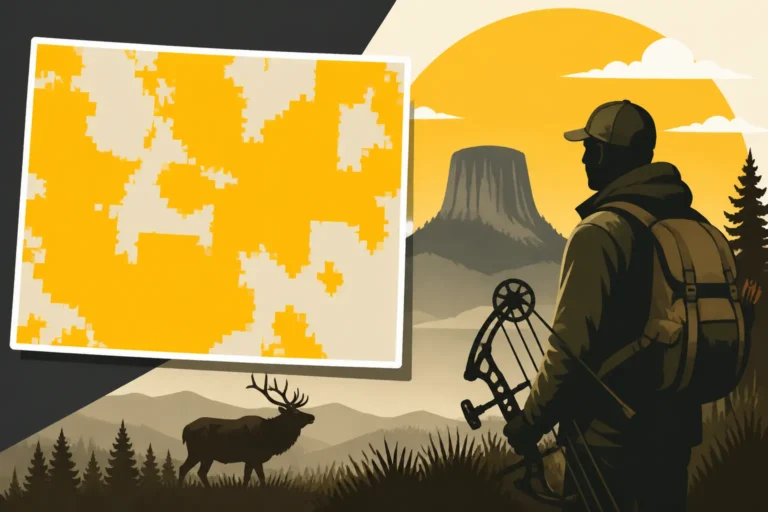
The first step to hunting State Trust Land is knowing where it actually is. On paper maps, it might be shaded a specific color (often light green or yellow) or explicitly labeled "State Trust Land" or "School Section." However, in today's digital age, mapping applications like onX Hunt are invaluable. These apps use different color overlays to clearly distinguish between BLM, National Forest, State Trust Land, and private parcels. You can literally zoom in on a topo map and see the boundaries clearly marked, often with the specific section numbers. This visual clarity is a game-changer for planning a hunt and ensuring you stay within legal boundaries. Many times, you’ll see it laid out in perfect square-mile sections, contrasting sharply with the often irregular shapes of private parcels or federal lands. For more general area planning, you can also check resources like The Wyoming Public Land Owner Map Explained.
The "School Section" Legacy
If you ever hear someone refer to "school sections," they're talking about State Trust Land. This terminology comes from the original land grants, where sections 16 and 36 of every township were typically designated as state school lands. Imagine a grid across Wyoming, and in almost every 36-square-mile township, those two sections were set aside. This historical pattern is why you often see State Trust Lands appearing as isolated squares or rectangular blocks completely surrounded by private ground—a logistical nightmare for hunters seeking access. This checkerboard pattern is a direct result of how the West was settled and land was distributed. Understanding this historical context helps to explain why access can be so tricky; these lands weren't necessarily set up with public recreational access as a primary goal.
Navigating Access Rules for State Trust Lands
This is where the rubber meets the road, or more accurately, where your boots meet the dirt. Knowing where State Trust Land is doesn't automatically mean you can hunt it. Wyoming has specific rules for public access to these lands, and they revolve entirely around how you get to them.
Public Access for Hunting and Fishing
The good news is that, yes, Wyoming State Trust Lands are generally open for public hunting and fishing, provided you follow all applicable game and fish regulations. You don't need a special permit from the Office of State Lands and Investments to hunt or fish on these parcels. It’s important to treat these lands with the same respect you would any other public ground, perhaps even more so, as they are often leased for grazing by private landowners. This means you might encounter livestock, fences, and gates that you'll need to navigate responsibly. The ability to hunt these lands provides crucial opportunities, especially for species like deer and antelope, which frequently utilize these areas that often blend into the surrounding private ranch land.
The Critical Requirement: Legal Access
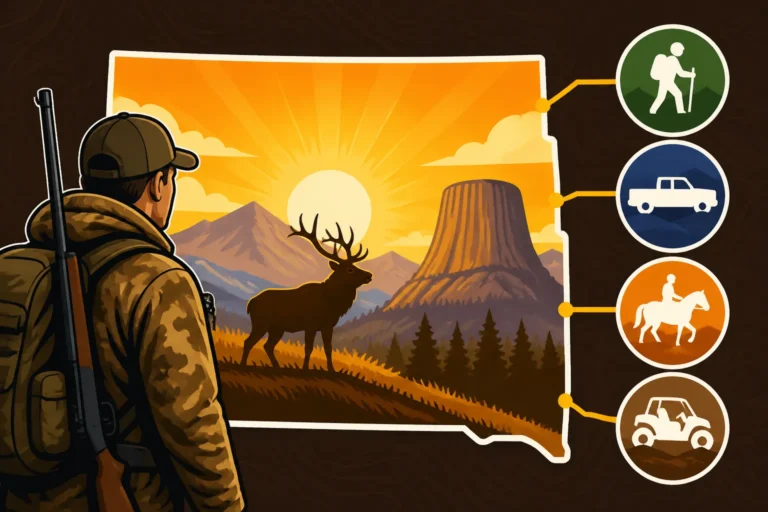
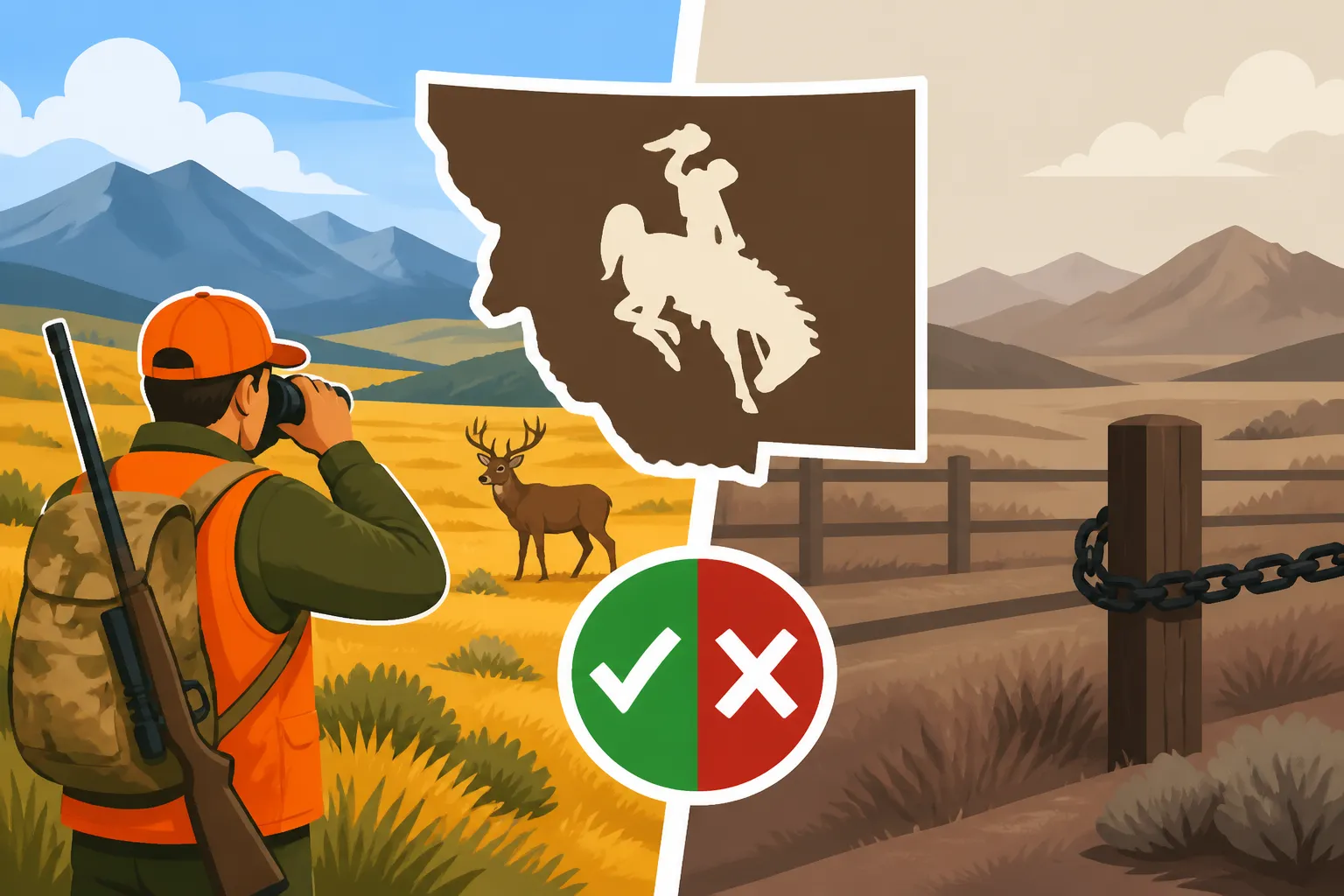
This is, hands down, the biggest hurdle for hunters wanting to utilize State Trust Land. Just because a piece of State Trust Land is public doesn't mean you can cross private land to get to it without permission. In Wyoming, you must have legal access to enter State Trust Land. This means:
- Entering directly from other contiguous public lands (BLM, National Forest, other State Trust Land). If a State Trust parcel borders a National Forest boundary, you can legally walk from the National Forest onto the State Trust Land.
- Accessing via a public road or right-of-way. This can be tricky, as many roads that look public may actually be private. Proper research is key.
- Obtaining explicit permission from the private landowner whose property surrounds or borders the State Trust Land. This is often the most reliable, though sometimes difficult, path.
Many State Trust Land parcels are "landlocked"—entirely surrounded by private property with no public road leading to them. Attempting to cross private land to reach these parcels, even if you don't touch the ground and only step from corner to corner, used to be a gray area but recent court rulings, notably on Whether Corner Crossing Is Legal in Wyoming, have clarified this. However, the spirit of the law still emphasizes that simply knowing land is public doesn't grant you permission to trespass across private ground to get there. It’s a common pitfall that lands many well-meaning hunters in trouble. You must know Four Legal Ways Onto Wyoming Public Land before heading out.
Understanding Easements and Road Status
This is where it gets really murky. You might spot a two-track road leading toward a block of State Trust Land on your map and think, "Aha! Public access!" Not so fast. Many roads traversing private land, even if they appear well-used, are private roads or simply easements granted for specific purposes, not general public access. Determining the legal status of a road can be incredibly challenging without local knowledge or specific county or state records.
County road maps and online GIS systems can sometimes help identify truly public roads, but even then, nuances exist. A road might be public for a certain distance, then become private. The best approach is to contact the local county road and bridge department, or even the Office of State Lands and Investments, if you're uncertain about a specific road. Don't rely solely on what a general mapping app shows regarding road ownership, as these details can be complex and are not always perfectly depicted. When in doubt, always assume a road is private until you can confirm otherwise, and if possible, seek permission from the adjacent landowner.
Practical Tips for Hunting Wyoming State Trust Land
Hunting State Trust Land can be incredibly rewarding, offering opportunities on less-pressured animals, but it demands diligence and respect for the rules.
Using Mapping Tools to Your Advantage
Modern mapping tools are your best friend when it comes to hunting State Trust Lands. As mentioned, onX Hunt is a popular choice among hunters for its clear display of land ownership boundaries, which includes distinguishing State Trust Lands from other public or private parcels. You can plan your approach by identifying adjacent public lands or confirmed public roads.
Furthermore, these apps allow you to mark potential access points, track your route, and ensure you remain on legal ground throughout your hunt. Many also show topographic features, water sources, and vegetation, which are crucial for effective scouting. Some even have layers showing Wyoming Game and Fish posts Access Area Maps or Wyoming's Access Yes Program Works properties, which might include or border State Trust Lands, providing an indirect means of entry. Before you head out, make sure your maps are downloaded for offline use, as cell service can be spotty in many remote Wyoming areas.
Respecting Boundaries and Private Landholders
Even with legal access, it is paramount to be a good neighbor and respect the private landowners who often lease these State Trust Lands. This means:
- Leaving gates as you found them: If a gate is closed, close it behind you. If it's open, leave it open. This is a fundamental rule of respecting ranching operations.
- Staying on designated routes: If you have permission to cross private land on a specific two-track, stick to that route. Do not deviate.
- Packing out all trash: Leave no trace of your presence.
- Being aware of livestock: Give cattle, horses, or sheep a wide berth. Close interaction can stress animals or interfere with grazing operations.
- Obtaining permission for game retrieval: If an animal you shoot on State Trust Land runs onto adjacent private property, you generally need the landowner's permission to retrieve it. This is a crucial conversation to have before the hunt, if possible.
A good relationship with local landowners can go a long way, and disrespectful behavior jeopardizes access for all hunters in the future.
Checking for Special Restrictions or Closures
While State Trust Lands are generally open, there can be specific, localized restrictions or temporary closures that you need to be aware of. These might include:
- Seasonal closures: Some areas might be closed during specific times of the year to protect wintering wildlife or during certain agricultural operations. You might see Seasonal Winter Range Closures for Big Game that apply to State Trust Lands, too.
- Fire restrictions: During dry periods, fire restrictions can limit camping, campfires, or even off-road vehicle use.
- Vehicle restrictions: Some State Trust Lands might have limitations on where you can drive, requiring foot or horseback travel only beyond a certain point. Always check Reading a Motor Vehicle Use Map if you're bringing an ORV.
- Permit requirements for specific activities: While hunting itself doesn't require a special permit from the State Lands Office, other activities like camping overnight or certain commercial uses might. Always verify with the Office of State Lands and Investments or the Wyoming Game and Fish Department for the specific hunt area you plan to visit.
A good starting point is the Wyoming Game and Fish Department's website, which often publishes maps and regulations specific to Wyoming Hunt Areas That Limit Your Weapon Choice and other access details. Another valuable tool for checking these details and researching draw odds and unit information is GoHunt, which compiles a lot of data in one place.
Here's a quick comparison of general characteristics for different public land types in Wyoming:
| Feature | State Trust Land | BLM Land (Bureau of Land Management) | National Forest Land |
|---|---|---|---|
| Primary Purpose | Generate revenue for public education/beneficiaries | Multiple use (grazing, energy, recreation, conservation) | Timber, water, wildlife habitat, recreation |
| Hunting/Fishing Access | Generally permitted, but legal physical access required | Generally permitted | Generally permitted |
| Legal Access Challenge | High (often landlocked by private, checkerboard) | Moderate (some landlocked parcels exist) | Low (more contiguous blocks, established access points) |
| Common Uses | Grazing, mineral extraction, recreation | Grazing, energy development, recreation, conservation | Logging, grazing, recreation, wilderness preservation |
| Management Body | Wyoming Office of State Lands and Investments | U.S. Department of the Interior | U.S. Department of Agriculture |
| Permits Needed? | No special permit for hunting/fishing | No special permit for hunting/fishing | No special permit for hunting/fishing |
Hunting Wyoming State Trust Land offers a unique challenge and opportunity. By understanding its purpose, using modern mapping tools effectively, and meticulously respecting access rules and private landowners, you can successfully navigate these often-overlooked hunting grounds and potentially find some fantastic animals. It requires more homework than simply heading into a vast stretch of National Forest, but the rewards can be well worth the effort.
Disclaimer
This article is for general informational purposes only and does not constitute professional advice. Laws, prices and regulations vary by location and change over time. Consult a qualified professional for guidance on your specific situation.