The Red Desert Mule Deer Migration Explained
For any hunter who’s spent time looking for mule deer in Wyoming, the Red Desert isn't just a place; it's an enigma. It's a vast, windswept landscape that, at first glance, seems utterly devoid of life, yet it harbors one of the most incredible wildlife spectacles on the continent: the epic migration of its mule deer herds. Understanding this monumental journey is crucial for anyone hoping to connect with these animals, but it’s often shrouded in mystery and complex data. This guide aims to pull back the curtain on the Red Desert mule deer migration, explaining where they go, why they go there, and what it means for conservation and hunting in the Cowboy State.
Understanding the Red Desert Mule Deer Migration
The Red Desert, covering a significant portion of south-central Wyoming, isn't your typical deer habitat with dense timber and lush meadows. Instead, it’s a mosaic of sagebrush steppe, badlands, and alkali flats, an incredibly harsh environment that demands a unique survival strategy from its wildlife. For mule deer, this means undertaking one of the longest land migrations in the lower 48 states, a journey born of necessity, dictated by seasons and the availability of food and shelter. It’s a testament to their resilience, but also a delicate balance that can be easily disrupted.
What Makes the Red Desert Unique for Mule Deer?
Imagine a landscape where water is scarce, winter winds howl with relentless force, and summer temperatures can bake the earth to a crisp. This is the Red Desert. It’s a place of extremes, yet it’s precisely these extremes that have shaped the mule deer here. Unlike deer in more forested regions, Red Desert mule deer rely heavily on the vast expanses of sagebrush for forage, especially during the lean winter months. This particular subspecies of sage is robust and retains nutrients even under a blanket of snow, making it a critical food source when everything else is frozen or gone. The sheer scale of the landscape also means that deer here have to cover immense distances to find what they need, moving between distinct seasonal ranges.
During the warmer months, after a good snowmelt, wildflowers and forbs can pop up in surprising abundance, providing a much-needed boost of protein and moisture. But these resources are fleeting. As soon as the brutal winter approaches, those high-quality forages vanish, forcing the deer to move to lower elevations and specific wintering grounds where the sagebrush is more accessible and snow depths are generally less severe. This annual back-and-forth movement is ingrained in their very being, passed down through generations.
The Urgency of Understanding Migration Corridors
The concept of migration corridors might sound like a scientific buzzword, but for the Red Desert mule deer, these pathways are literally lifelines. These aren't just random routes; they are ancient, established trails that connect their summer breeding and fawning grounds with their vital winter refuges. Think of them as superhighways for wildlife, often narrow pinch points that deer have used for thousands of years. Without these unobstructed routes, the herds simply cannot access the resources they need to survive.
From a conservation standpoint, understanding "Migration Corridors and the Red Desert Herd" is paramount. These corridors are increasingly threatened by human development, whether it's fences, roads, energy infrastructure, or expanding human settlements. When a corridor is blocked or degraded, it creates a bottleneck, concentrating deer and making them more vulnerable to disease, predation, and starvation. For hunters, knowing these corridors isn't just about ethics; it's about strategy. It helps you understand herd dynamics, where deer are likely to be during different phases of the season, and how to plan your hunt responsibly without disrupting these critical movements. Tools like those offered by GoHunt, which integrate migration data, can be incredibly valuable for this kind of advanced planning.
Mapping the Epic Journey: Key Migration Routes
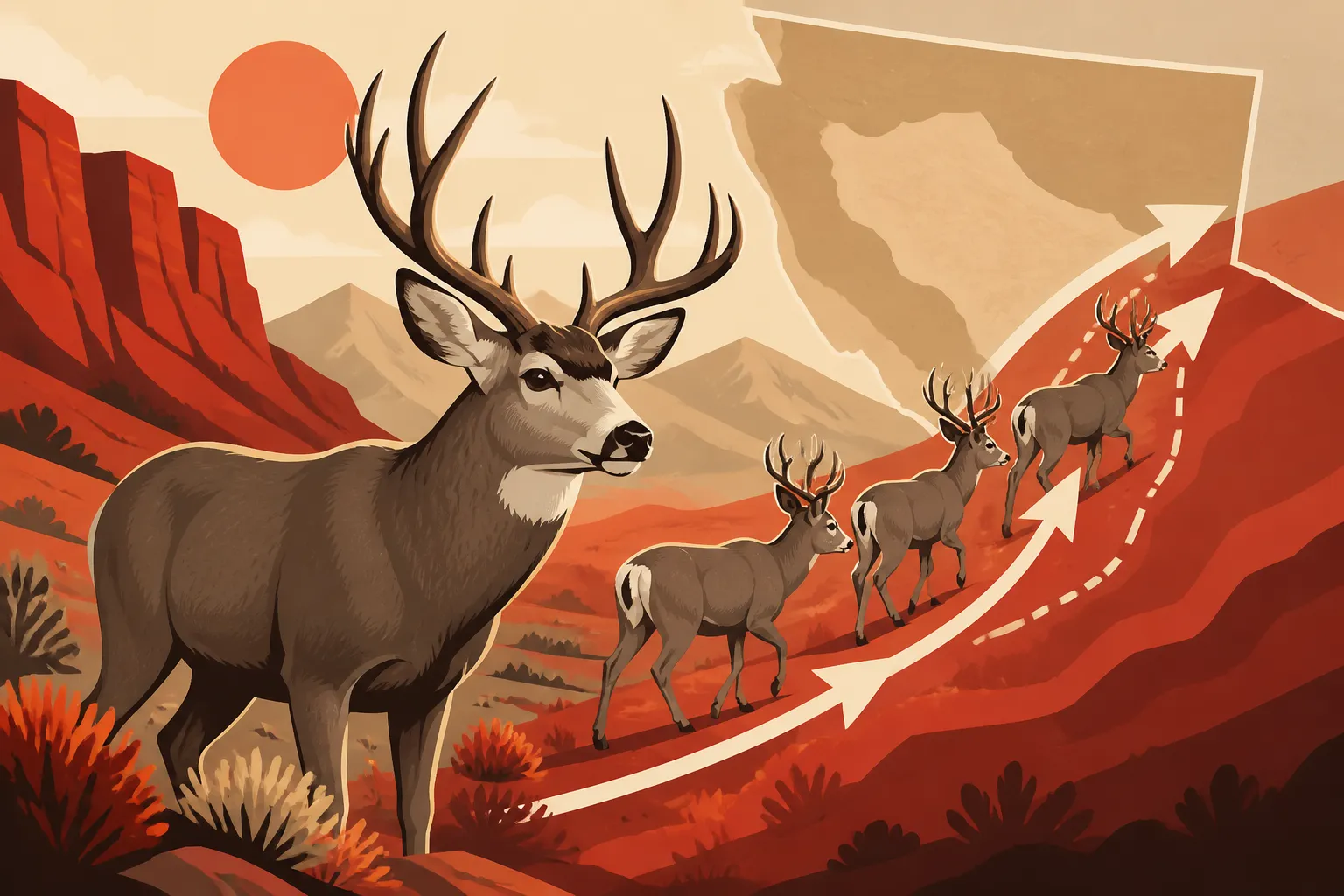
The Red Desert is home to several distinct mule deer herds, and each has its own migratory patterns, but arguably the most famous is the Sublette herd, known for having "Wyoming's Longest Recorded Mule Deer Migration." This epic trek sees deer traveling well over 150 miles one way, from the high peaks of the Gros Ventre Range down to the relatively milder Red Desert floor. It’s a journey that defies imagination, showcasing the incredible navigational abilities and endurance of these animals.
The Crucial Role of Habitat Corridors
These habitat corridors are more than just lines on a map; they are complex landscapes that provide not only a path but also critical forage and cover during the journey. Deer don't just sprint from point A to point B; they graze, rest, and navigate through varied terrain. A corridor might include a river bottom providing water and shade, a series of low ridges offering protection from wind, or vast tracts of unbroken sagebrush for continuous feeding. Any interruption along these routes, even a single stretch of problematic fencing, can create a cumulative stressor for the deer.
Imagine a deer attempting to navigate a maze of new obstacles every year. Each fence they have to jump, each highway they have to cross, each housing development that fragments their path, saps energy and increases their exposure to danger. These corridors are crucial because they minimize these stressors, allowing the deer to conserve energy for the harsh winter ahead or the demands of the fawning season. The integrity of these corridors is a constant focus for biologists and conservation groups, who are working to ensure these vital pathways remain open and functional for future generations.
Seasonal Movements: Wintering Grounds to Summer Range
The migration is a precise dance with the seasons. As autumn days shorten and the first heavy snows blanket the high country, mule deer begin their descent from their summer ranges in the mountains. This downward movement is typically triggered by snow depth and the availability of forage. They are not just escaping the snow; they are seeking out those specific wintering grounds in the Red Desert where snow is shallower and the critical sagebrush remains accessible. These "Mule Deer Winter Range Closures Explained" are often put into place by land management agencies to protect these vulnerable animals during the toughest time of the year.
Conversely, as spring arrives and snow begins to recede from the higher elevations, the deer reverse course. This uphill migration is driven by the emergence of new, nutritious plant growth, following what biologists call the "green wave." Does, in particular, need this rich forage to regain body condition after winter and to support their developing fawns. They move to specific fawning grounds, usually areas with good cover and relatively few predators, where they will give birth and raise their young throughout the summer. These seasonal movements are not optional; they are a deep-seated behavioral adaptation essential for the survival of the herd.
Challenges and Conservation Efforts for Red Desert Mule Deer
Despite the incredible resilience of Red Desert mule deer, their migratory lifestyle makes them particularly vulnerable to a host of modern challenges. Hunters and conservationists alike often feel the frustration of seeing these iconic herds face increasing pressure. From sprawling energy development to expanding road networks, the human footprint on the landscape can have devastating impacts on these long-distance travelers.
Obstacles Along the Migration Path
One of the most insidious threats to mule deer migration is habitat fragmentation. Imagine trying to drive a car down a highway, only to find the lanes constantly narrowing, blocked by construction, or requiring you to take massive detours. That's what fences, roads, and energy infrastructure can do to a deer migration. Older, woven-wire fences, designed for cattle, are incredibly difficult for deer to cross, especially fawns, leading to injuries, exhaustion, and even death. Busy highways create perilous crossing zones, resulting in significant deer-vehicle collisions.
Moreover, the vast energy development projects across parts of the Red Desert, while vital for our economy, can disturb critical winter range and migration routes. Noise, human presence, and new roads can push deer off traditional areas, forcing them into less optimal habitats or cutting off access entirely. These challenges contribute to concerns about declining herd numbers, even if "The Wyoming Range Deer Herd Is Half of What It Should Be" for another region, the Red Desert herds face similar existential threats that require ongoing attention.
How Hunters Contribute to Conservation
It's easy to feel helpless when facing such large-scale challenges, but hunters play an absolutely vital role in the conservation of Wyoming's mule deer, including those in the Red Desert. The funds generated from hunting license sales and federal excise taxes on hunting equipment are the primary source of funding for wildlife management, habitat projects, and scientific research. When you buy a Wyoming hunting license, a portion of that money directly supports efforts to study, protect, and enhance mule deer habitat and migration corridors.
Beyond financial contributions, many hunters actively participate in volunteer projects, such as fence modifications to make them more wildlife-friendly, or habitat restoration efforts. Ethical hunting also helps manage herd numbers, ensuring that populations remain within the carrying capacity of their habitat, which is particularly important during harsh winters or when facing disease outbreaks. Hunters are often the first to notice changes in herd health or habitat conditions, acting as crucial eyes and ears on the ground, advocating for the land and the animals they pursue.
Here’s a look at some of the common migration obstacles and conservation solutions:
| Obstacle Type | Impact on Mule Deer Migration | Conservation Solution |
|---|---|---|
| Traditional Fences | Block movement, cause injury, increase energy expenditure | Install wildlife-friendly fences (smooth bottom wire, greater height) |
| Major Highways | High mortality from vehicle collisions, barrier effect | Wildlife overpasses/underpasses, fencing to funnel deer |
| Energy Development | Habitat fragmentation, disturbance, displacement | Route infrastructure to avoid corridors, reclaim disturbed land |
| Urban/Suburban Sprawl | Loss of habitat, increased human-wildlife conflict | Land use planning, conservation easements, green spaces |
| Water Scarcity | Limits access to vital hydration during migration | Develop guzzlers in strategic locations, protect natural springs |
| Disease Outbreaks | Can decimate concentrated herds, especially on winter range | Monitoring, selective harvest, habitat management to reduce stress |
Hunting the Red Desert: Strategies for Success
Hunting mule deer in the Red Desert is a unique experience, a test of patience, glassing skills, and physical endurance. It's nothing like hunting in dense woods. Success often hinges on understanding the subtle nuances of the landscape and, critically, the timing of the mule deer migration. While the Red Desert can be challenging, it also offers some incredible opportunities for those willing to put in the work.
Timing Your Hunt Around Migration Patterns
The biggest strategic advantage you can gain in the Red Desert is timing. If your hunt coincides with the peak of the migration, whether it's the fall push to winter range or the spring movement to summer grounds (though hunting generally focuses on the fall), you can find yourself in an area funneling hundreds of deer. However, this is a moving target and highly dependent on weather conditions, particularly snow. An early, heavy snowstorm in the mountains can kick off the migration sooner than expected, while a mild fall might delay it.
This is where intensive scouting and research become indispensable. Utilizing resources like the "Wyoming Hunt Planner" or advanced mapping platforms can give you an edge. Many serious hunters track weather patterns in the high country areas that feed into the Red Desert, looking for those significant snow events that will start the deer moving. For bucks, the rut also plays a role, often occurring as they arrive on or are settled into their winter range, making late season hunts particularly appealing. Being in the right place at the right time is paramount, and it often means being flexible with your hunt dates if possible.
Glassing and Stalking in Open Country
Once you're in the Red Desert, your binoculars and spotting scope are your most important tools. This is a landscape designed for long-range glassing. You're not looking for deer in thick cover; you're often looking for small, tell-tale shapes or movements against a vast, unbroken backdrop. Taking advantage of the "Best Time of Day to Glass Mule Deer" – typically early morning and late evening – when deer are most active, will increase your chances. Find a high vantage point that allows you to see for miles, set up your optics on a sturdy tripod, and begin systematically dissecting the landscape.
Effective "Grid Glassing a Basin Without Missing Bucks" is a skill that takes practice. Divide the landscape into a grid in your mind and meticulously scan each section, looking for ears, legs, or a horizontal line that shouldn't be there. Once you spot a buck, the real challenge begins: the stalk. The open nature of the Red Desert means cover is scarce. You'll need to use every cut bank, every subtle depression, and every patch of taller sage to your advantage. Playing the wind is non-negotiable, as mule deer have an incredible sense of smell. Be prepared for long crawls and circuitous routes to get within shooting range. Good "Optics Power for Wyoming's Long Sightlines" will help you identify what you’re looking at and plan your approach effectively before you even take a step.
Disclaimer
This article is for general informational purposes only and does not constitute professional advice. Laws, prices and regulations vary by location and change over time. Consult a qualified professional for guidance on your specific situation.