A Whitetail Range Map for Eastern Wyoming
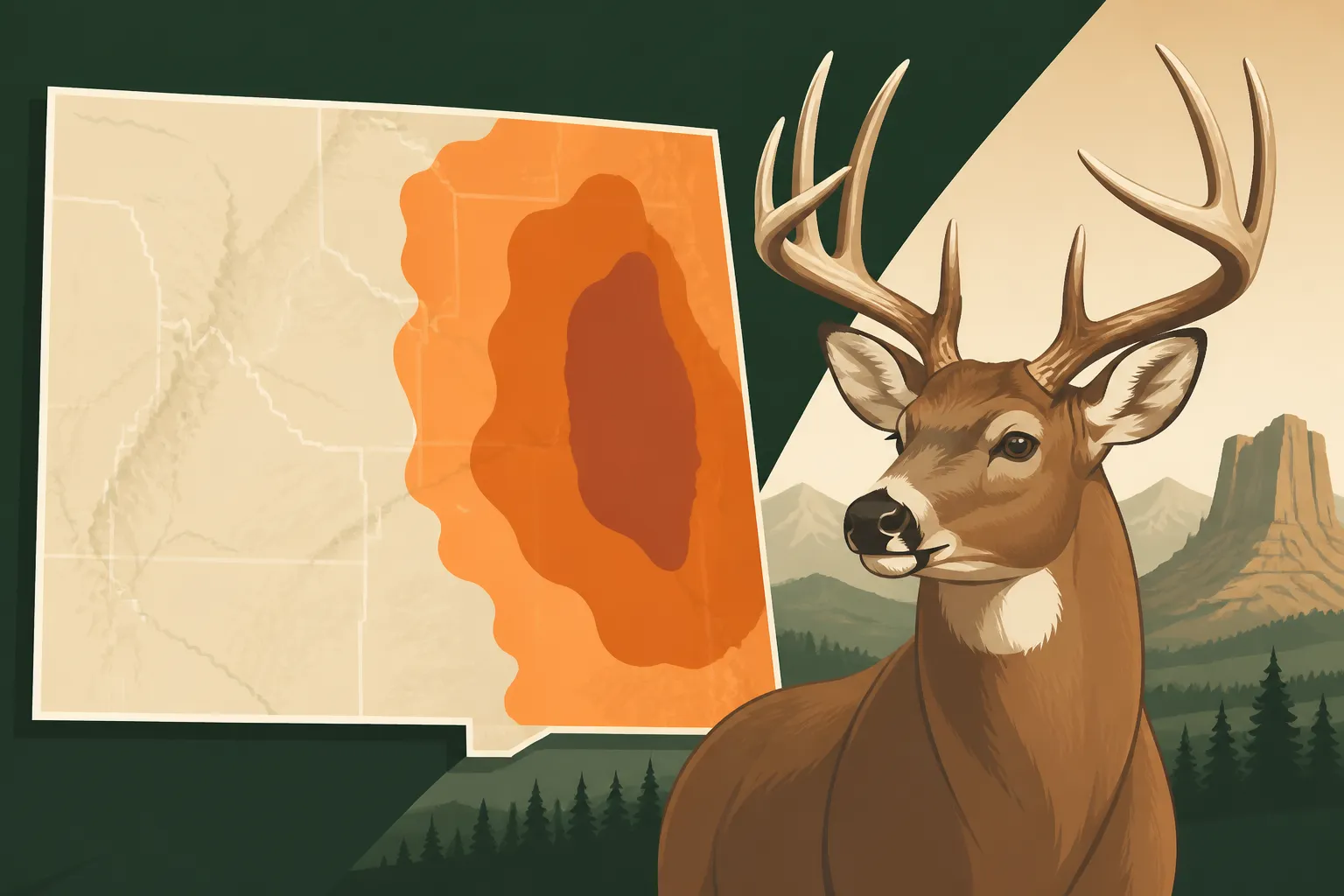
It can be incredibly frustrating for hunters to plan a Wyoming deer hunt only to discover that the vast, open sagebrush country many people associate with the state isn't exactly prime whitetail habitat. If you're envisioning a hunt for big-bodied whitetail deer, knowing where to focus your efforts in the Cowboy State is absolutely crucial. This guide will walk you through the distinct whitetail range in Eastern Wyoming, helping you understand the landscapes these deer call home and how to effectively plan your hunt.
Understanding Wyoming's Whitetail Landscape
Wyoming is famous for its mule deer, its vast plains, and towering mountain ranges, but tucked away in the eastern part of the state, a different deer species thrives: the whitetail. Many hunters, especially those new to Wyoming, mistakenly believe they'll find whitetails around every corner, only to spend weeks glassing open country that primarily holds mule deer. The truth is, whitetail deer in Wyoming are much more particular about their habitat, largely sticking to specific types of cover and terrain. Understanding this distinction is the first step in successful whitetail hunting here.
The Geographic Divide: East vs. West
When you picture Wyoming, you likely think of the rugged Rockies in the west, home to sprawling national forests and vast expanses of BLM land. This western and central part of the state, with its high-elevation sagebrush, aspen groves, and conifer forests, is predominantly mule deer country. They thrive in those wide-open spaces and steep, broken terrain. However, as you move eastward, the landscape gradually transforms. The mountains give way to rolling hills, expansive prairies, and crucially, more defined river systems. This transition creates the perfect niche for whitetail deer, which prefer thicker cover and more consistent water sources.
This geographic divide isn't a hard line, of course. You'll find pockets of whitetails further west in unique riparian zones, but their true stronghold, their dense populations, are firmly rooted in the eastern third of the state. It's a fundamental difference that dictates where you even begin to look, saving you countless hours of hunting the wrong country. If your goal is a whitetail, you're mentally drawing a map that largely ignores the western and much of the central portions of Wyoming.
Key Habitat Features for Whitetails
Unlike their mule deer cousins who often bed on open hillsides with commanding views, whitetails are creatures of security cover. They gravitate towards areas that offer dense concealment, both for bedding and for escaping pressure. This means thinking about specific types of vegetation and land formations. In Wyoming, this translates to river bottom thickets, cottonwood groves, dense willow riparian areas, and pockets of brushy draws. These features provide the overhead and lateral cover that whitetails depend on for survival.
Water is another critical factor. While mule deer can often range far from water sources, whitetails tend to stick closer to reliable water. This is why river and creek drainages are so important to their distribution. Coupled with the cover, these areas create a complete habitat package. Additionally, agricultural fields, particularly corn, alfalfa, or winter wheat, often border these river corridors, providing a crucial food source that can draw whitetails out of their dense cover during feeding times.
Pinpointing Eastern Wyoming's Prime Whitetail Havens
Once you understand why whitetails live where they do, the next step is to identify the specific areas where they thrive. Eastern Wyoming isn't one monolithic whitetail paradise; rather, it's a collection of key habitat types that concentrate these deer. Knowing these zones will allow you to narrow your focus, whether you're poring over maps or driving through the countryside.
River Bottoms and Riparian Corridors
When you're looking at a map of eastern Wyoming, pay close attention to the major river systems and their tributaries. Rivers like the North Platte, Cheyenne, Powder, and Belle Fourche, along with smaller creeks and drainages, form the backbone of whitetail habitat. The dense, overgrown banks of these rivers, often choked with cottonwoods, willows, and other brush, provide impenetrable cover that whitetails adore. This is where you'll find them bedding, moving, and often feeding, especially during daylight hours in heavily pressured areas.
Hunting the Whitetail River Bottoms of Eastern Wyoming requires a different approach than hunting open country. It often involves still-hunting through thick brush, or setting up blinds along travel corridors within these riparian zones. The denser cover means visibility is limited, making sign-reading and understanding deer movement patterns even more critical. These areas are often adjacent to private agricultural land, so understanding land boundaries is paramount to avoid trespassing.
Agricultural Interfaces and Shelterbelts
Eastern Wyoming is also characterized by extensive agricultural operations. These croplands, whether corn, alfalfa, or various grains, provide an irresistible food source for whitetails. The deer will often bed down in the thick river bottoms or dense draws during the day and move out into these fields to feed during the evening and morning hours. This creates distinct movement patterns that hunters can exploit.
Furthermore, many of these agricultural properties feature shelterbelts—rows of trees planted to break the wind. While not as extensive as river bottoms, these shelterbelts can offer excellent thermal and visual cover, acting as travel corridors or even bedding areas themselves, especially for a mature buck looking for a quiet spot. Identifying where these agricultural fields meet natural cover is a major part of understanding a whitetail's daily routine in this landscape.
Northeastern Strongholds: The Black Hills Edge
Moving specifically into the northeastern corner of Wyoming, you'll encounter a unique ecosystem known as the Black Hills. While a smaller portion of the Black Hills National Forest lies within Wyoming, this area, including districts around Bearlodge, Keyhole, and Inyan Kara, is a notable whitetail hotspot. Unlike the river bottoms further west on the plains, this region offers pine forests, oak draws, and more rugged terrain, reminiscent of whitetail country in other states.
Here, whitetails blend with mule deer populations, and you might even find yourself asking how to distinguish between them in the field. But the Black Hills proper offers consistent whitetail populations, particularly in the timbered draws and valleys. The public land access here is generally better than in some of the more intensely farmed river bottoms further south, providing more opportunities for hunters to roam. Areas like Deer Hunting Opportunity Across Crook County are known for their whitetail potential within this distinct habitat type.
| Habitat Type | Primary Location | Key Features | Whitetail Concentration | Access Potential |
|---|---|---|---|---|
| River Bottoms | Major river systems (Platte, Powder) | Dense cottonwoods, willows, thick brush | High | Often private-heavy |
| Agricultural Interfaces | Adjacent to croplands | Food sources, shelterbelts, transition zones | Moderate to High | Mix of public/private |
| Black Hills Edge | Northeastern Wyoming (Crook County) | Pine forests, oak draws, timbered valleys | High | Good public access |
| Brushy Draws/Coulees | Scattered across plains | Isolated pockets of dense cover, drainages | Moderate | Varies |
Strategies for Hunting Whitetails in Eastern Wyoming
Hunting whitetails in Eastern Wyoming is a different game than chasing mule deer in the wide-open basin country. It requires patience, attention to detail, and often a willingness to knock on doors. Successfully pursuing these animals involves understanding their movements and adapting your tactics to the specific cover they inhabit.
Scouting and Accessing Whitetail Ground
Effective scouting for whitetails in eastern Wyoming starts long before the season. Aerial maps, like those available through platforms like GoHunt, are invaluable for identifying river bottoms, shelterbelts, and agricultural fields. You'll want to trace these features, looking for pinch points, funnels, and natural travel corridors between bedding cover and food sources. Understanding the boundaries of public lands versus private is absolutely critical, as much of the prime whitetail habitat in Eastern Wyoming is Why Eastern Wyoming Is Mostly Private Ground.
Gaining access to private land often means respectfully approaching landowners well in advance of the season. A friendly conversation, a clear explanation of your intentions, and a willingness to abide by their rules can open up incredible opportunities. For public land options, focus on state lands, scattered BLM parcels, and the Black Hills National Forest, using resources like The Wyoming Hunt Planner to overlay land ownership and scout for entry points. Remember to be mindful of seasonal closures and restrictions, especially in areas that serve as winter range.
Adapting Tactics to Whitetail Behavior
Whitetails are notorious for their elusive nature, especially mature bucks. In Eastern Wyoming's dense cover, this means traditional spot-and-stalk methods, so effective for mule deer, might not be as fruitful. Instead, still-hunting through thick river bottoms, moving slowly and deliberately, pausing often to listen and observe, can be highly effective. Setting up ground blinds or tree stands along known travel routes, especially where deer transition from cover to food, is another classic whitetail tactic that works well here.
Understanding When Whitetail Rut Dates Fall on the Plains is also key, as this period offers increased daylight movement and predictable buck behavior. During the rut, rattling or grunting can be surprisingly effective in drawing out curious bucks. For late season whitetail hunting on the prairie, focusing on thermal cover and persistent food sources becomes even more important as deer concentrate to conserve energy. This might mean hunting later in the day, closer to the midday warmth of dense south-facing cover.
Additional Considerations for Your Whitetail Hunt
Beyond habitat and tactics, there are several practical and regulatory aspects to consider when planning your whitetail hunt in eastern Wyoming. These range from understanding license types to ensuring you're compliant with all state regulations.
License Types and Application Timing
Wyoming's licensing system can be a bit complex, especially for nonresidents. For whitetails, you'll generally be looking at a deer license, which in many eastern units covers both mule deer and whitetails. It’s important to research the specific hunt area you plan to pursue, as some may have antler point restrictions or other limitations. Additionally, there are often Whitetail Only Doe and Fawn Licenses Explained which provide great opportunities for meat hunting and filling the freezer.
Most deer licenses are acquired through the annual draw, so understanding the application deadlines is critical. However, some areas, particularly for antlerless tags, may offer Wyoming General Deer Licenses Over the Counter or through leftover sales. Always check the current regulations for your desired hunt area. Being familiar with how to read a Wyoming Hunt Area Number will help you navigate the regulations specific to your chosen location.
Understanding Public vs. Private Access
As mentioned, much of the prime whitetail habitat in Eastern Wyoming resides on private land. This reality makes it crucial to understand the rules of engagement for both public and private ground. On public lands, whether BLM, State Trust Land, or National Forest, you generally have the right to hunt, but always confirm access points and any specific regulations for that parcel. Using mapping apps with public/private land overlays is almost a necessity.
For private land, securing permission is paramount. Never assume access. Always ask, and be prepared for "no." If you gain permission, treat the landowner's property with the utmost respect. Leave gates as you found them, pick up any trash, and always thank them for the opportunity. This good stewardship helps keep private lands open for future hunters. And regardless of where you hunt, remember to always be prepared to show Carrying Proof of Certification in the Field if requested by game wardens.
Table: Key Differences: Mule Deer vs. Whitetail in Wyoming
| Feature | Mule Deer | Whitetail Deer |
|---|---|---|
| Primary Range | Western & Central (Mountains, Basins) | Eastern (River Bottoms, Black Hills Edge) |
| Preferred Habitat | Open sagebrush, timbered slopes, broken terrain | Dense riparian, thickets, agricultural fringes |
| Antlers | Typically bifurcated (forking) | Tines originating from main beam |
| Tail | Narrow, rope-like, black tip | Broad, flag-like, white underside |
| Ears | Large, mule-like | Proportionately smaller |
| Movement | Bounding, "stotting" trot | Running, white flag waving, lower to ground |
| Behavior | Often less cover-reliant | Highly cover-dependent, elusive |
Disclaimer
This article is for general informational purposes only and does not constitute professional advice. Laws, prices and regulations vary by location and change over time. Consult a qualified professional for guidance on your specific situation.