The Decoy Distance That Actually Pulls Antelope Bucks
Getting a wily Wyoming antelope buck into bow range can feel like trying to catch smoke with your bare hands, especially when they bolt at the first hint of movement. Many hunters struggle with exactly how to use a decoy effectively, often placing it too far, too close, or in the wrong spot entirely, leading to frustrated stalks and blown opportunities. This guide is all about nailing that perfect decoy distance and setup, helping you understand antelope behavior to make those crucial moments count.
Understanding Antelope Behavior and Decoy Reactions
Antelope, often called pronghorn, are truly unique animals on the Wyoming landscape. Their incredible eyesight and speed are legendary, making them notoriously challenging to hunt, especially with archery equipment. But these same traits, coupled with their strong territorial instincts, are what make decoying such an effective, albeit tricky, tactic.
Why Antelope Respond to Decoys
At the heart of a successful decoy setup is understanding why a pronghorn buck would even bother approaching a stationary, fake animal. During the late summer and early fall, when the rut approaches and even through its peak, bucks become intensely territorial. They see other mature bucks as direct competition for does, and an intruder in their territory is an invitation for a confrontation. A buck decoy acts as a challenge, an insult to their dominance, and many bucks simply can't resist investigating. It's often not even about fighting; it's about asserting dominance and running off the perceived rival.
Beyond aggression, curiosity also plays a significant role, particularly with younger bucks or even does. A lone doe decoy can sometimes draw in a cruising buck looking for a mate, or simply attract attention from any antelope curious about a new presence in their familiar landscape. However, for getting those mature bucks to commit, a buck decoy often taps into that deep-seated territoriality. Imagine a big buck, standing on a slight rise, spotting what he perceives as a rival out on the sagebrush flats – his natural inclination is to march over and see what's what. This innate drive is what we're trying to exploit with a well-placed decoy.
Reading a Buck's Body Language
Successfully decoying an antelope isn't just about the decoy itself; it's about how you interpret the buck's response. Pronghorn are incredibly expressive, and their body language can tell you a lot about their intentions and how committed they are to approaching. When a buck spots your decoy, his initial reaction will be one of assessment. He might stop, stare intently, and then often begin to circle widely, trying to get downwind to scent the intruder. This is where Pronghorn Eyesight and the Stalking Distance It Forces becomes so critical; they're trying to figure things out from a distance.
Look for key indicators: an aggressive buck might lower his head, stiffen his legs, and walk with a deliberate, almost swaggering gait. He might paw the ground or snort loudly, all classic signs of an animal ready to defend his turf. If he's slowly working his way in, but constantly stopping and looking back and forth, he's still assessing the threat level. Conversely, if he keeps his distance, or starts to trot away, he might have caught your scent, spotted something that looks off, or simply decided the perceived rival isn't worth the trouble. Understanding these nuances, especially when Field Judging a Pronghorn Buck From Distance, helps you know whether to hold tight, make a slight adjustment, or abandon the setup.
Optimal Decoy Distances and Setup Strategies
So, what's the magic number? The distance that truly pulls antelope bucks into range is often a dynamic target, but there are some reliable guidelines to follow that can significantly increase your odds of success. It's a delicate balance of getting them close enough to be effective without spooking them too early.
The "Goldilocks" Zone: Not Too Close, Not Too Far
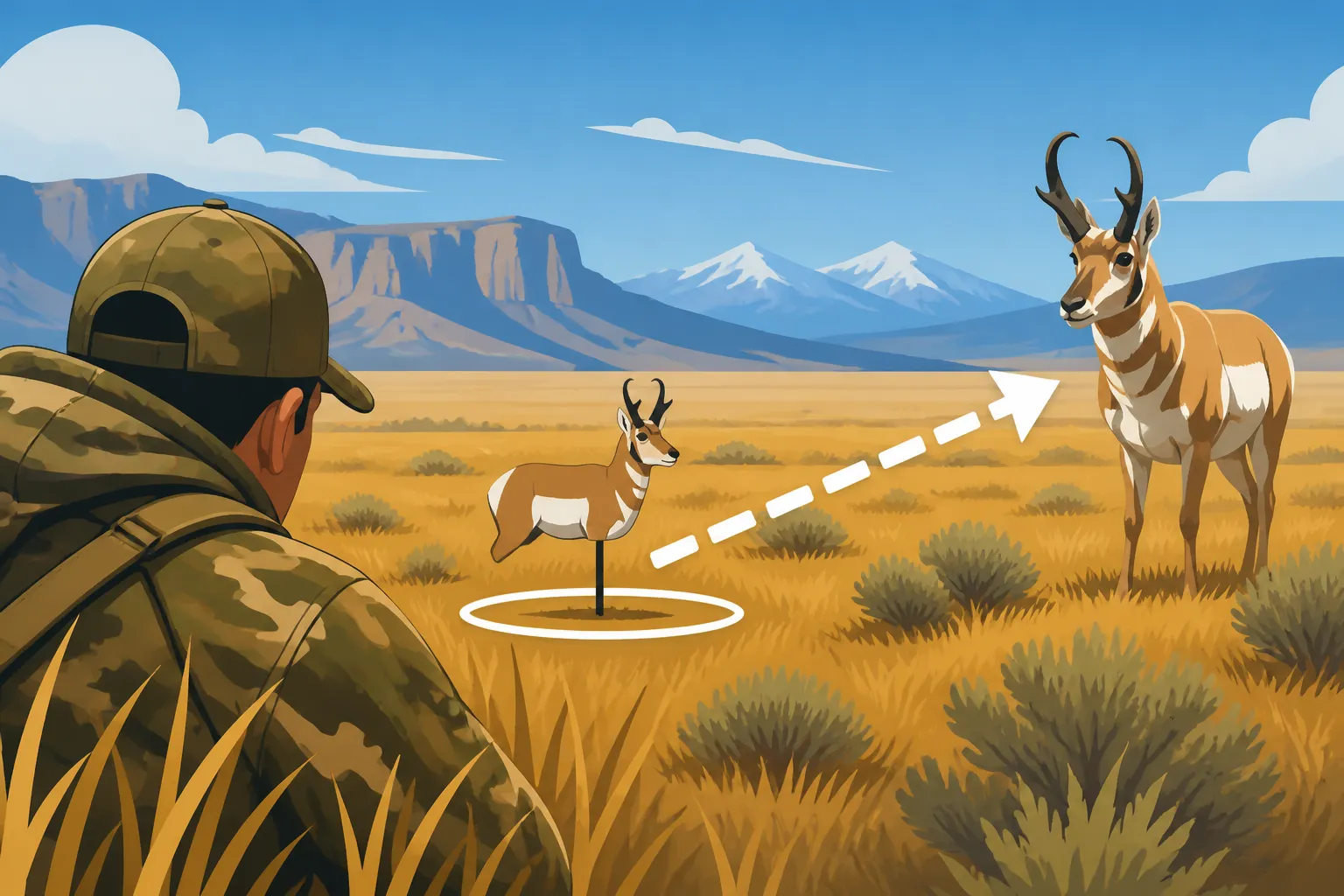
For bowhunting antelope, the ultimate goal is to get that buck within your effective shooting range, typically 40 yards or less for most archers. However, simply placing your decoy at 40 yards from your hiding spot often isn't the best strategy. Pronghorn are smart, and they'll rarely charge headlong into a challenge from such close quarters without first circling or pausing to assess. The "goldilocks" zone for initial attraction and closing the distance is usually between 60 to 100 yards from your position. This allows the buck to spot the decoy from a distance that feels safe to him, drawing him in confidently, but still leaves room for him to commit further once he gets closer.
Once a buck commits and starts closing the distance, many hunters find success by letting him come within 60-80 yards of the decoy (which is then 60-80 yards from you if using a two-person strategy or a stalking shield). At this point, you're hoping his aggression or curiosity will overcome his caution, allowing you to get a shot as he continues to approach, or as he circles for scent. For the single hunter employing a "stalking shield" type decoy, the distance becomes about how far you can effectively stalk while holding the decoy, aiming to close the gap to within 50-70 yards before getting into position for the shot. Remember, How Close a Bowhunter Really Needs to Get is often closer than many realize, making this initial attraction crucial.
Decoy Placement and Wind Direction
This is arguably the most critical component of decoying antelope in Wyoming's wide-open spaces. You must consider the wind. A pronghorn's nose is almost as keen as its eyes, and it will invariably try to get downwind of anything it's approaching to confirm identity. Therefore, you need to set up your decoy and yourself so that the approaching buck is forced to come into the wind towards your position, not towards the decoy itself, if you're separate.
The ideal setup often involves placing the decoy about 20-30 yards directly downwind from your concealed shooting position. This way, when the buck circles to catch the scent of the "intruder," he'll walk right into your shooting lane, still focused on the decoy, before he smells you. You'll need to use any available terrain – a small rise, a cutbank, a clump of sage – to hide yourself. This strategy of Playing Wind Direction on an Open Sagebrush Stalk is paramount. Don't forget, when using a stalking shield, you are essentially the decoy, so you must carefully manage your wind as you stalk and make your final approach. Decoy Setups That Pull Pronghorn Bucks will often emphasize this critical wind awareness.
Solo Decoying vs. Two-Person Tactics
There are two primary ways to decoy antelope, each with its own benefits and challenges, especially when considering optimal distance.
Solo Decoying: As a solo hunter, you typically become the decoy. This usually involves a "stalking shield" style decoy – often a flat, realistic image of a buck mounted to a lightweight frame that you can carry in front of you. Brands like Ultimate Predator or Montana Decoy offer excellent options. The beauty of this method is its mobility; you can actively stalk, moving with the decoy to cut off an antelope or move into a better position. The challenge is maintaining concealment behind the decoy while simultaneously trying to prepare for a shot. Your effective decoy distance here is essentially your stalking distance. You'll want to use terrain and your decoy to visually cut off a buck's escape route, then try to get within 70-100 yards, pop up the decoy, and draw him in the rest of the way. If the buck commits, you have to be ready to quickly shed the decoy, nock an arrow, and shoot. GoHunt frequently covers tactical tips for solo public land hunts, emphasizing self-reliance.
Two-Person Tactics: This is often the most effective method for getting antelope into tight bow range. One hunter (the decoyer) positions themselves with the decoy, often 100-200 yards away from the shooter. The decoyer will then use the decoy to attract the buck's attention, drawing him away from the shooter. The shooter, meanwhile, remains perfectly concealed in a strategic location. The decoyer's job is to keep the buck focused on the fake rival while simultaneously trying to direct his approach towards the hidden shooter. The ideal distance between the decoy and the shooter is often around 60-100 yards, and between the decoyer and the buck, it could be several hundred yards depending on the terrain and how aggressively the buck is approaching. The decoyer can even "hide" the decoy temporarily to simulate the rival buck moving, then pop it back up to re-engage the real buck, drawing him closer to the shooter. This method effectively allows you to position the buck for a clean, ethical shot without him ever realizing the true threat.
| Decoy Type/Scenario | Initial Sighting Distance (yards) | Decoy Placement from Hunter (yards) | Target Shot Distance (yards) | Key Benefit |
|---|---|---|---|---|
| Solo Stalking Shield | 200-400 | You are the decoy | 30-50 | Highly mobile, good for active stalks |
| Two-Person Aggressive | 300-600 | 60-100 downwind of shooter | 20-40 | Maximizes buck's focus on decoy, not hunter |
| Two-Person Passive | 300-600 | 100-150 downwind of shooter | 40-60 | Less aggressive, for wary bucks |
| Waterhole Blind Setup | N/A (stationary) | 30-50 in front of blind | 20-40 | Good for drawing attention, but limited mobility |
Factors Influencing Decoy Effectiveness in Wyoming
Wyoming's vast and varied landscape presents unique challenges and opportunities for decoying antelope. The effectiveness of your decoy strategy isn't just about distance; it's heavily influenced by the time of year, the specific terrain you're hunting, and the level of hunter pressure in the area.
Time of Year and Rut Activity
The timing of your hunt dramatically impacts how antelope bucks will respond to a decoy. For most archery seasons in Wyoming, the prime decoying window aligns perfectly with the early to peak rut, which typically falls from late August through mid-September. This is When Pronghorn Bucks Go Into Rut, and their territorial instincts are at their absolute peak. Bucks are actively rounding up does, defending their harems, and constantly on the lookout for rivals. During this period, an aggressive buck decoy can be incredibly effective at drawing in even the biggest, most wary bucks.
In the pre-rut, bucks might respond more out of curiosity or to size up a potential rival, but the full-blown aggression isn't quite there. As you get past the peak of the rut and into late September or early October, bucks are often worn out from weeks of chasing and fighting. Their testosterone levels begin to drop, and they become less interested in picking a fight. You might still draw in a buck or two, but the success rate generally decreases. Knowing the specific rut timing for your hunt area, which you can often find using tools like GoHunt's Insider, is key to maximizing your decoying efforts.
Terrain and Cover in Wyoming's Open Country
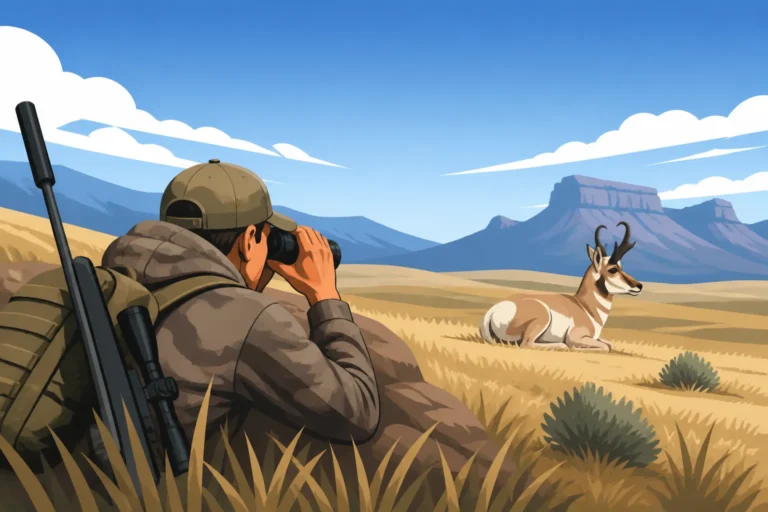
Wyoming is famous for its wide-open, high-desert plains, dominated by sagebrush. While this open landscape offers unparalleled long-range glassing opportunities, it can also make concealing a hunter for a close-range bow shot incredibly difficult. Antelope thrive in this environment, and their legendary eyesight is perfectly adapted to spotting movement across vast distances. This means that using even the smallest topographical features – a subtle swale, a dry wash, a small hill, or even a dense patch of sagebrush – is crucial for both your approach and your final setup.
You can't just set up a decoy anywhere and expect success. You need to leverage the ground to your advantage. When approaching an area, try Using Cutbanks and Draws to Close on Antelope as much as possible, staying out of sight until you're ready to deploy the decoy. For your final shooting position, choose a spot where you have a clear shooting lane but also some form of backdrop or cover that breaks up your silhouette. Remember, Terrain That Hides an Approach isn't always obvious; sometimes, a small depression barely a foot deep is all you need to disappear from a pronghorn's line of sight at a distance. If the ground is perfectly flat, your decoying window might be limited to very long shots, or you may need to reconsider your strategy for that particular location.
Hunter Pressure and Antelope Wariness
Just like any big game animal, pronghorn become warier with increased hunter pressure. In areas that see a lot of hunting activity, especially during the rifle seasons, antelope quickly learn to associate vehicles, human scent, and even certain types of movement with danger. A buck that has been decoyed multiple times unsuccessfully, or worse, has been shot at while approaching a decoy, will be much harder to fool.
In high-pressure areas, you might need to adjust your decoy tactics. This could mean being less aggressive with your calling (if you're combining calling with decoying), choosing a more subtle doe decoy instead of a dominant buck, or extending your shooting distance if necessary. Often, in heavily hunted units, your best bet is to find remote pockets that see less human activity. Resources like GoHunt often highlight these overlooked areas, giving you an edge. When you're in these areas, even without direct hunter pressure, you still need to be mindful of Stalking Pronghorn Across Wyoming's Open Sagebrush as quietly and carefully as possible.
Practical Tips for Decoying Antelope Bucks
Decoying antelope successfully often comes down to attention to detail and a willingness to adapt. It's a game of chess against an animal with incredible senses, and every little advantage helps.
Decoy Selection and Realism
Not all decoys are created equal, and choosing the right one can make a noticeable difference. For drawing in aggressive bucks, a realistic buck decoy is almost always preferred over a doe. The image of a rival male in his territory is what triggers that dominant response. Look for decoys with good coloration, realistic horn size (don't go too big unless you know you're in a monster buck area), and a natural stance. Some decoys even have movable legs or heads that add a touch of realism, especially if you're using a two-person strategy where movement can be introduced.
Weight and portability are also key considerations. You'll be covering a lot of ground in Wyoming's expansive country, so a lightweight, collapsible decoy that's easy to pack and deploy quietly is invaluable. Brands like Montana Decoy or Ultimate Predator offer excellent, packable options designed specifically for this kind of hunting. While a high-quality decoy is an investment, the confidence it inspires and its effectiveness in the field are well worth it. You're trying to fool one of the sharpest-eyed animals on the continent, so realism truly matters.
Concealment and the Shot Opportunity
You can have the most realistic decoy and perfect placement, but if the buck sees you, the hunt is over. Your personal concealment is paramount. Wear camouflage that blends seamlessly with the sagebrush and dry grasses of Wyoming. A good ground blind can be effective if you're stationary, but for mobile decoying, utilize natural cover. Always have your bow ready, with an arrow nocked, when a buck is approaching. These encounters can happen incredibly fast, and you might only get a few precious seconds for a shot.
Pre-ranging distances around your decoy is a smart move. Pick out landmarks at 20, 30, 40, and 50 yards so you know exactly how far the buck is when he enters your shooting lane. When the moment of truth arrives, stay calm, draw smoothly when the buck's head is behind the decoy or he is looking away, and execute your shot. Remember, How Far to Stalk a Bedded Pronghorn also applies to getting into position for decoying; often, a precise, patient stalk precedes the decoy setup. Also, if you're hunting during an overlap with rifle seasons, be mindful of Blaze Orange Rules While Decoying in Wyoming for safety.
Patience and Persistence
Antelope hunting, especially with a bow and decoy, is a test of patience. Not every buck will respond perfectly, and many will circle out of range, get your scent, or simply lose interest. It's crucial not to get discouraged. Every approach, whether successful or not, offers a learning opportunity. Pay attention to how different bucks react, what wind conditions seem to work best, and which terrain features are most effective for concealment.
Sometimes, the best strategy is to let a non-committing buck walk and move on to find another opportunity. Wyoming has abundant antelope, and persistence will often pay off. Keep your Optics Power for Wyoming's Long Sightlines dialed in, keep glassing, and be ready to adapt your strategy on the fly. Decoying an antelope buck into bow range is one of the most exciting and rewarding experiences in western hunting, and with practice and patience, you'll be punching your tag.
Disclaimer
Please remember that hunting regulations, seasons, and access rules can change. Always consult the most current Wyoming Game and Fish Department regulations before planning any hunt. This guide is for informational purposes only and should not replace official sources.