Do Shooting Hours Shift Through the Season?
It's a question that trips up so many hunters, especially as the season progresses and the days get noticeably shorter or longer: Do Wyoming's legal shooting hours actually shift through the season? You're out there, day in and day out, and you see the sunrise creeping later, the sunset earlier, and it's natural to wonder if those official hunting times are rigid or if they adapt with the changing light. This guide is here to untangle that common confusion and give you the definitive lowdown on how Wyoming handles its legal shooting hours, ensuring you're always on the right side of the law.
The Fixed Formula of Wyoming's Shooting Hours
Let's cut right to it: the rule for legal shooting hours in Wyoming doesn't change from opening day to closing day. However, the specific times that rule translates into on your watch absolutely do change. This is where the confusion often comes in, and it's a critical distinction every hunter needs to grasp.
The "Half-Hour Before/After" Rule
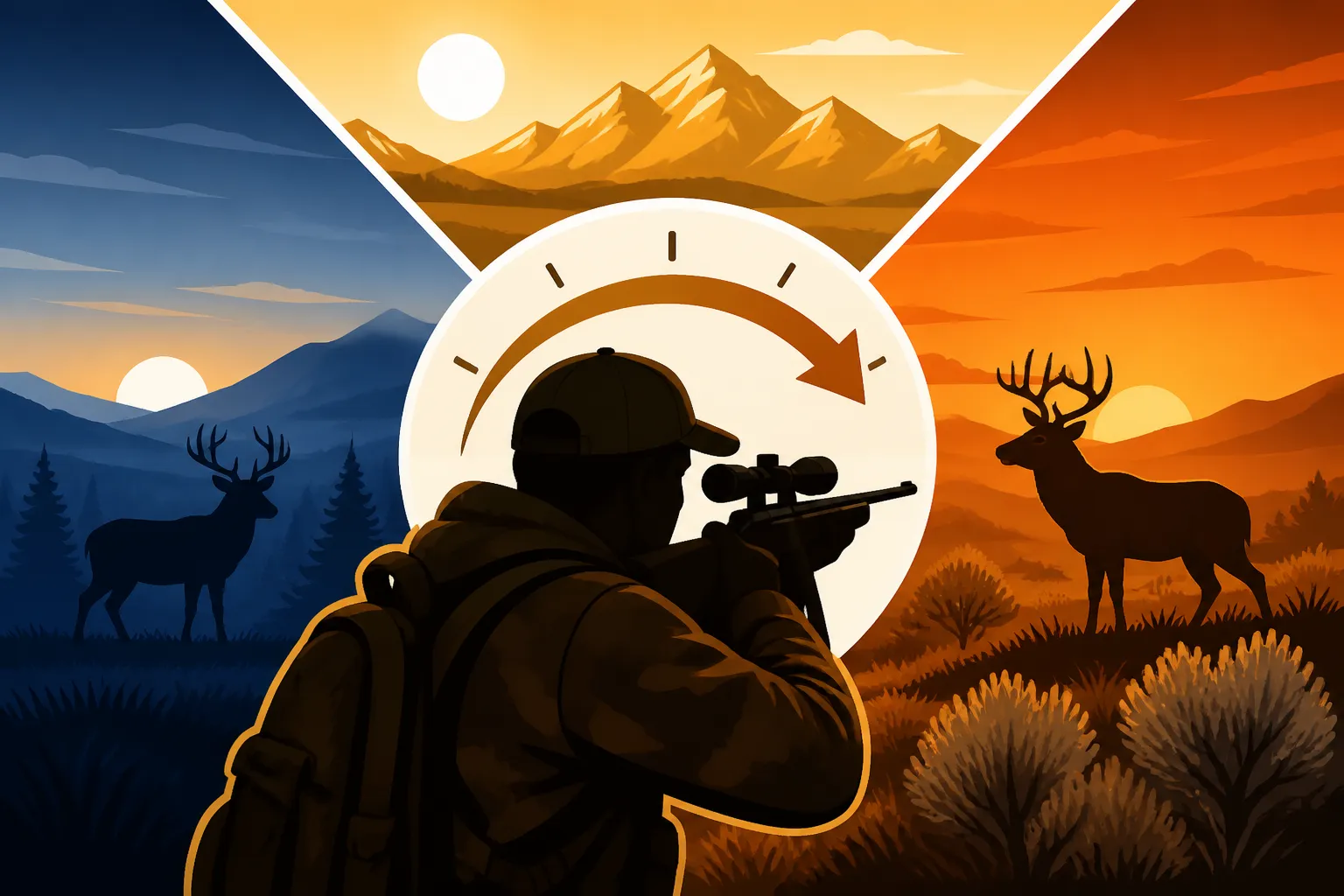
Wyoming's big game hunting regulations are pretty clear: legal shooting hours for big game animals (and many other species) are defined as one-half hour before sunrise to one-half hour after sunset. It sounds straightforward, right? But the key here is that "sunrise" and "sunset" are constantly in flux. They are natural phenomena, tied to the Earth's rotation and its orbit around the sun, not to a fixed time on a clock.
This means that while the formula — 30 minutes before the sun peeks over the horizon and 30 minutes after it dips below — remains constant, the actual clock times will vary every single day. In early September, you might be setting your alarm for a 5:30 AM start, but by late October, that same "half-hour before sunrise" could easily mean you're in your stand or position closer to 6:30 AM or even later, depending on your exact location in the state. This natural fluctuation often feels like the hours are "shifting," when in reality, it's just the consistent application of a solar-based rule. Understanding this distinction is fundamental to avoiding any potential issues in the field and ensuring you're abiding by the Wyoming Legal Shooting Hours for Big Game.
Why They Don't "Shift" Seasonally Like a Clock
Many states have specific regulations that might say something like "shooting hours are from 6:00 AM to 6:00 PM" during certain periods, or they might have early and late season blocks with different fixed times. Wyoming doesn't operate that way for big game. There's no separate set of hours for the archery season versus the general rifle season, for example. The framework is universal: sunrise and sunset dictate the windows.
This approach gives hunters the maximum amount of legal light possible, adapting seamlessly to the natural progression of the sun's path across the sky as the seasons advance. You don't have to remember different time blocks for different months; you just need to know the official sunrise and sunset for your specific day and location. It simplifies things in one way, but it also places the responsibility squarely on the hunter to determine those precise solar times daily. It's not about the clock shifting; it's about the sun dictating the clock.
Pinpointing Official Sunrise and Sunset Times
Given that Wyoming's legal shooting hours are intrinsically linked to the precise moments of sunrise and sunset, knowing how to accurately determine these times for your hunting location is paramount. Guessing, or relying on a general idea, isn't going to cut it when the law is involved.
The Importance of Localized Ephemeris Data
Sunrise and sunset times are not uniform across an entire state, especially one as geographically diverse as Wyoming. They vary based on longitude, latitude, and even significant changes in elevation or local topography that might cause the sun to appear or disappear earlier or later. For instance, sunrise in Cheyenne, in the southeastern corner, will likely be at a different exact moment than in Jackson, tucked away in the western mountains.
This is why "localized ephemeris data" (a fancy term for astronomical data specific to a particular place and time) is so crucial. Your phone's weather app might give you a general idea, but for hunting, you need to be precise. You need to know the exact minutes for your specific hunt area and that specific day. This is not just a suggestion; it's a critical safety and legal measure. Hunting outside of legal hours, even by a few minutes, can result in significant penalties.
Utilizing Technology and Official Resources
Thankfully, in this day and age, accurately determining sunrise and sunset times is easier than ever. You have a few excellent resources at your fingertips:
- Wyoming Game and Fish Department Website: The WGFD often provides links or tools on their website where you can look up specific regulations, including links to resources for sunrise/sunset tables. Always start with the official source to ensure accuracy for Where the Current Wyoming Regulations Are Posted.
- Specialized Hunting Apps: Many mapping and hunting apps are specifically designed with this information in mind. Apps like GoHunt, OnX Hunt, or similar platforms will often integrate localized sunrise and sunset times directly into their mapping interface. You can drop a pin on your exact hunting spot, and it will tell you the precise times for that day. This makes planning your entry and exit from your hunting area much simpler and more accurate.
- Weather Apps with Specific Location Data: While some general weather apps might be too broad, many now offer highly localized data. Just ensure you've input your exact hunting location (not just the nearest major town) for the most accurate results.
- Local Newspapers/Online Weather Sites: For those who prefer a more traditional approach, many local Wyoming newspapers still publish sunrise and sunset times, and most major online weather websites will provide this detail if you specify a zip code or city.
When in doubt, cross-reference! Check two different reputable sources to confirm the times. It's better to be safe than sorry, especially during the critical low-light periods when animals are most active and hunters are eager to be out.
Here’s a simplified example of how sunrise and sunset times might shift over a few weeks in a specific Wyoming location, illustrating the times changing while the rule remains constant:
| Date | Location | Sunrise (approx.) | Sunset (approx.) | Legal Start (30 min before) | Legal End (30 min after) |
|---|---|---|---|---|---|
| Sep 1st, 2024 | Casper, WY | 6:28 AM | 7:42 PM | 5:58 AM | 8:12 PM |
| Sep 15th, 2024 | Casper, WY | 6:46 AM | 7:18 PM | 6:16 AM | 7:48 PM |
| Oct 1st, 2024 | Casper, WY | 7:05 AM | 6:52 PM | 6:35 AM | 7:22 PM |
| Oct 15th, 2024 | Casper, WY | 7:22 AM | 6:29 PM | 6:52 AM | 6:59 PM |
Note: Times are approximate and can vary slightly based on exact coordinates and data source.
As you can see, the times for legal hunting shift significantly over just a few weeks, even though the rule (30 minutes before sunrise, 30 minutes after sunset) is unwavering.
Practical Implications for Your Hunt
Understanding the nuances of Wyoming's shooting hours isn't just about avoiding a ticket; it's about optimizing your hunting strategy, ensuring ethical shots, and maximizing safety. The changing light dictates so much of what we do in the field.
Adjusting Your Routine for Early Starts and Late Finishes
The dynamic nature of legal shooting hours means your daily routine needs to be flexible. What was a comfortable pre-dawn arrival in early September might become a rushed scramble if you don't adjust your wake-up time for a later October sunrise. This means checking the exact times the night before or first thing in the morning becomes part of your essential ritual. If you're hunting elk in the rugged country of the Bridger-Teton National Forest, getting to your glassing knob a half-hour before legal light often means leaving camp in pitch black, navigating treacherous terrain with a headlamp.
Conversely, knowing the precise legal end time means you can hunt those last precious minutes of daylight, which are often incredibly productive, without fear of violating regulations. This is especially crucial for still hunting timber for bedded mule deer or waiting for that trophy bull to step out of the dark timber just before legal shooting concludes. Remember, even if you pull the trigger legally, you still need enough light to follow a blood trail effectively, which brings us to ethical considerations. The legal shooting time is the latest you can shoot, not necessarily the latest you should shoot if light is fading fast.
Importance of Knowing Your Specific Hunt Area
Wyoming is a vast state, and your particular hunting unit can significantly impact how these solar times play out. For example, if you're in one of Wyoming's Elk Units, E1 Through E10 that covers high-elevation, rugged terrain, the sun might take longer to clear eastern ridgelines in the morning, or dip behind western peaks earlier in the evening, effectively shortening your visible hunting window even if the official "solar event" is still a few minutes away.
Topographical features like deep canyons, dense timber, or towering mountains can all influence when you actually perceive sunrise and sunset. While the official times are based on an unobstructed horizon, your practical hunting light might be less. This is where detailed E-Scouting a Unit Before the Season Opens with tools like GoHunt, which can show terrain elevation, becomes invaluable. You can anticipate these shaded areas and plan your movements accordingly. Being familiar with your specific How to Read a Wyoming Hunt Area Number and its unique features will give you an edge in maximizing your hunting time safely and legally.
Avoiding Common Misconceptions and Legal Pitfalls
There are a couple of pervasive myths and misunderstandings that often trip up even experienced hunters when it comes to legal shooting hours. Let's clear those up definitively to keep you out of trouble.
Daylight Saving Time Doesn't Alter the Rule
This is probably the most common source of confusion. When Daylight Saving Time ends in the fall, and we "fall back" an hour, many hunters wonder if the shooting hours shift in relation to the new clock time. The simple answer is no. The legal shooting hours are tied to solar events (sunrise and sunset), not to our arbitrary clock adjustments.
When the clock "falls back," for example, an 8:00 AM sunrise suddenly becomes a 7:00 AM sunrise by the new clock time. Your alarm clock might change, but the sun's position in the sky doesn't care about our human constructs of time. The rule remains the same: half an hour before the actual sunrise. So, while your watch might say a different number, the natural light window doesn't fundamentally change due to Daylight Saving Time. Always adjust your mindset and your hunting plans to the sun's schedule, not just your clock.
The Danger of "Best Guess" or Group Consensus
It's tempting, especially when hunting with a group, to rely on a general consensus or a buddy's "best guess" for legal shooting hours. You might hear, "Oh, it's light enough now," or "We've still got plenty of time." While these sentiments might be well-intentioned, they are dangerous and can lead to legal issues. Ignorance of the precise times is not a valid defense if you're caught hunting outside of legal hours.
The consequences for violating shooting hour regulations can be severe, including fines, loss of hunting privileges, and even confiscation of game and equipment. Beyond the legal ramifications, there's an ethical component: shooting in dangerously low light increases the risk of a poor shot placement, leading to wounded and unrecovered animals. Always verify the times for yourself using reliable sources. Apps like GoHunt are great for this, as they pull in the precise data you need. Don't leave it to chance or a casual observation. Be precise, be responsible, and focus on those crucial moments of Best Time of Day to Glass Mule Deer or position yourself for an ethical shot.
Disclaimer
Please remember that hunting regulations can change, and it is always your responsibility to consult the most current Wyoming Game and Fish Department regulations for the specific year and hunt area you plan to hunt. This guide is for informational purposes only and should not be considered legal advice.