Crossbow Rules That Differ From Vertical Bows
Navigating Wyoming's hunting regulations can sometimes feel like trying to track a mature bull elk through a blizzard – confusing and full of hidden obstacles. One area that consistently trips up new and even seasoned hunters is the distinction between vertical bow and crossbow rules, especially when it comes to eligibility and equipment specifics. This comprehensive guide aims to untangle those nuances, offering clarity on where crossbow rules truly diverge from traditional archery equipment, ensuring you're legal and ethical in the field.
The Fundamental Distinction: Archery Season Eligibility
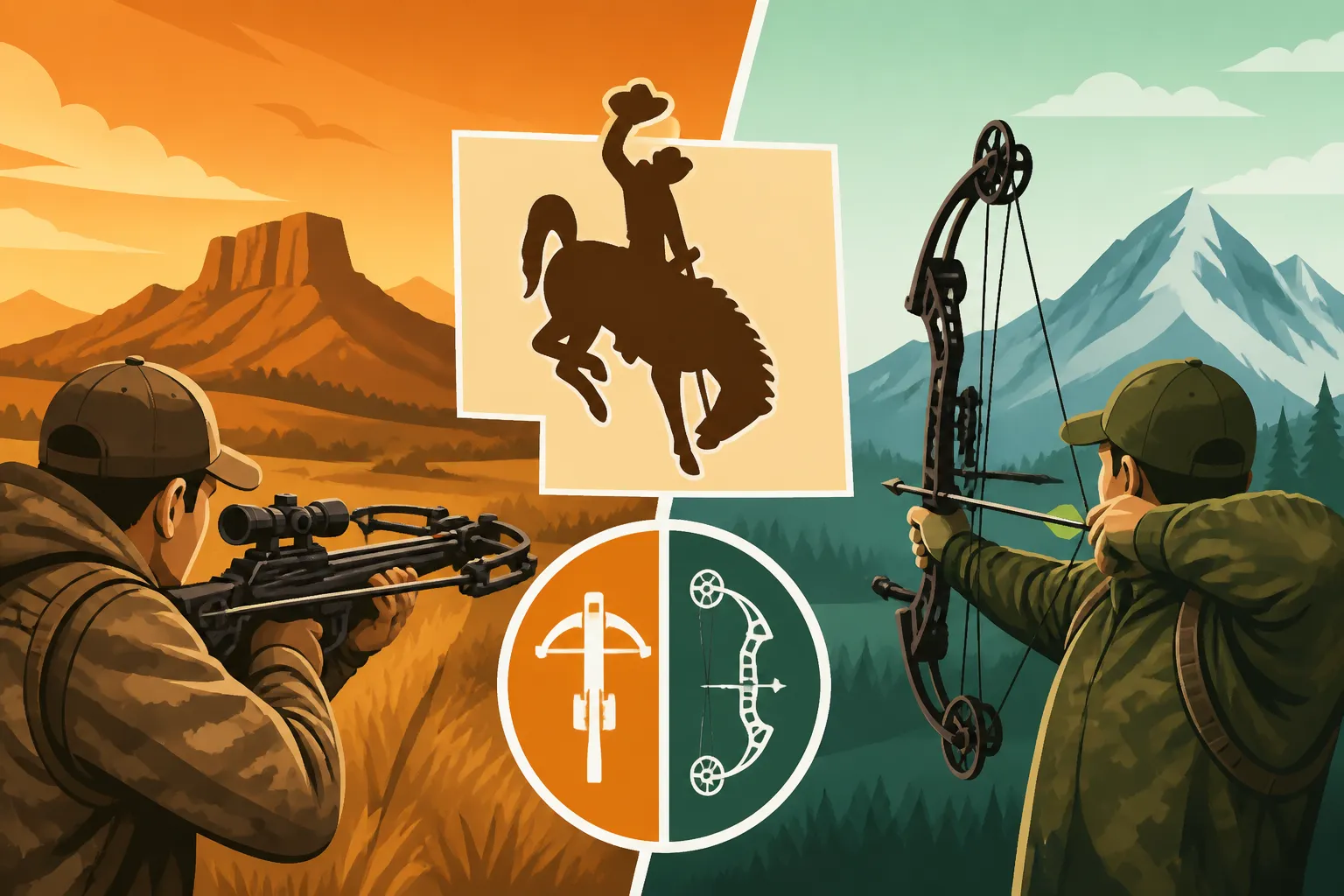
The most significant difference between hunting with a vertical bow (compound, recurve, longbow) and a crossbow in Wyoming boils down to when you can actually use them, particularly during those coveted early archery seasons. This isn't just a minor technicality; it’s a cornerstone of the state's hunting philosophy.
When Crossbows Are Not Allowed for General Archery
For most big game species, during the dedicated "archery only" seasons that precede the general firearm opener, traditional vertical bows are the only legal archery equipment allowed. This is a critical point that many hunters new to Wyoming, or even those transitioning from states with more lenient crossbow regulations, often misunderstand. Imagine planning your dream early-season elk hunt, having diligently scouted, practiced your calling, and secured a special archery license, only to discover on opening day that your crossbow renders you ineligible for that specific season. It’s a frustrating scenario that's entirely avoidable with proper understanding. The Wyoming Game and Fish Department, like many western states, places a high value on the traditional challenge and skill associated with vertical bowhunting during these early windows. The longer range potential and different shooting mechanics of a crossbow are generally seen as not aligning with the spirit of these specific archery-only seasons. Therefore, if you're eyeing those crisp September mornings for bugling bulls or stalking velvet bucks, and you plan to hunt during an archery-only season, a compound, recurve, or longbow is your only option. For those wondering, the answer to Is a Crossbow Legal in Wyoming Archery Season? during the general archery season is a resounding "no" for most big game.
Special Circumstances for Crossbow Use
While crossbows are generally restricted during archery-only seasons, there are vital exceptions and other periods when they become perfectly legal hunting tools. The primary allowance for crossbows comes during any general firearm season for big game. This means that if you're hunting deer, elk, antelope, or other big game during the rifle season dates for a particular unit, you can absolutely carry a crossbow. This offers a fantastic option for hunters who may prefer the mechanics of a crossbow or who are looking for a different challenge outside the traditional archery window. Additionally, Wyoming recognizes that not all hunters have the physical ability to draw and hold a vertical bow. For individuals with qualifying permanent physical disabilities, the state offers a specific authorization that allows them to use a crossbow during any open archery season. This ensures accessibility for all hunters, recognizing that physical limitations shouldn't completely bar someone from participating in the sport they love. To learn more about this, you can look into the specifics of Crossbow Allowance for Hunters With Disabilities. It's crucial for hunters relying on this exception to carry the proper documentation in the field to avoid any misunderstandings with game wardens.
Draw Weight and Kinetic Energy: A Tale of Two Technologies
When it comes to the power and force required to ethically harvest big game, both vertical bows and crossbows have specific minimum standards in Wyoming. However, how those standards are measured and what they entail for each equipment type differs significantly, reflecting their distinct mechanical designs.
Vertical Bow Minimum Draw Weights
Traditional vertical bows, whether they are compound bows with let-off, recurves, or longbows, are measured by their peak draw weight. This is the maximum amount of force required to pull the string back before release. Wyoming has specific minimum draw weights designed to ensure sufficient kinetic energy for a clean kill on various big game animals. For species like deer, antelope, and bighorn sheep, the minimum draw weight is set at 40 pounds. This means your bow, when drawn, must be capable of producing at least 40 pounds of force at its peak. However, if you're chasing larger, tougher animals like elk or moose, the requirement jumps to a more substantial 50 pounds. This tiered system acknowledges the increased penetration needed for these animals' thicker hides and larger bone structures. It's not just about hitting the animal; it's about delivering enough energy to achieve a pass-through shot, maximizing the chances of a quick, humane harvest. This distinction is clearly outlined in regulations like Wyoming Sets Bow Draw Weight at 40 Pounds, 50 for Elk. For a more detailed breakdown, you might explore Wyoming's 40-Pound Minimum for Deer, Antelope and Sheep or The 50-Pound Bows Elk and Moose Require. Before heading afield, always check your bow's draw weight to ensure it meets the legal minimum for the species you intend to hunt.
Crossbow Peak Draw Weight and Bolt Length
Crossbows, with their different firing mechanism, have distinct measurement standards. Instead of a "draw weight" in the traditional sense, they are measured by their peak draw weight and also have a specific requirement for bolt length. In Wyoming, a crossbow must have a minimum peak draw weight of 90 pounds. This is a higher number than vertical bows, but it's important to remember that crossbows are designed to be cocked and held, and this 90-pound figure ensures adequate power and kinetic energy for big game penetration. Unlike vertical bows, where the hunter physically holds the string at full draw, a crossbow locks in the drawn position, allowing the hunter to aim without muscle fatigue. This higher peak draw weight ensures that when the bolt is released, it travels with sufficient force to be effective.
Beyond draw weight, crossbows also have a minimum bolt length requirement: bolts must be at least 16 inches long. This standard helps ensure stability and sufficient fletching surface for accurate flight, contributing to ethical shot placement. These specific requirements ensure that crossbows are used as effective and humane hunting tools, aligning with the state's conservation principles. The combination of Crossbow Peak Draw Weight and Bolt Length in Wyoming and Minimum Crossbow Bolt Length for Big Game are critical aspects to review if you plan to hunt with a crossbow. Ensure your equipment meets these specifications before you ever head into the field.
Broadhead Specifications: Identical Rules for Lethality
One area where the regulations for vertical bows and crossbows perfectly align is with broadhead specifications. This consistency underscores the Wyoming Game and Fish Department's commitment to ethical hunting practices and ensuring that regardless of the delivery system, the terminal tackle is designed for a humane and effective kill. The focus isn't on how the arrow or bolt is propelled, but on its effectiveness once it reaches the target.
Fixed Blade and Mechanical Broadhead Requirements
For both vertical bow hunters and crossbow hunters targeting big game in Wyoming, the rules for broadheads are identical and non-negotiable. All broadheads must have a minimum cutting width of 7/8 of an inch. This standard is in place to ensure that the broadhead creates a sufficiently large wound channel to quickly and ethically dispatch the animal. This 7/8-inch rule applies whether you prefer the robust simplicity of a fixed-blade broadhead or the aerodynamic advantages and larger cutting diameter of a mechanical (expandable) broadhead. The key is the actual cutting diameter at impact.
The Game and Fish Department even has a specific "ring test" in place. If your broadhead, when fully deployed (for mechanicals), cannot pass through a 7/8-inch diameter ring, it is not legal. This test ensures that the design, whether it's two blades, three blades, or four, provides the minimum required cutting surface. This uniform standard removes any ambiguity and puts the responsibility squarely on the hunter to ensure their equipment meets the legal threshold for humane harvest. Checking out Broadheads That Fail the 7/8-Inch Ring Test and The Minimum Cutting Width a Broadhead Must Make can provide further clarity. When researching your options, remember to check current regulations; even though Are Expandable Broadheads Legal in Wyoming?, they still must meet the cutting width requirements.
The Rationale Behind Broadhead Rules
The consistent broadhead rules across all archery equipment types in Wyoming are rooted deeply in ethical hunting and wildlife management principles. The goal is always to achieve the quickest, most humane harvest possible. A broadhead's cutting width directly correlates to the size of the wound channel it creates, which in turn affects the rate of blood loss and, consequently, the speed of incapacitation. A broadhead that is too small or designed inefficiently risks merely wounding an animal, leading to prolonged suffering and potentially unrecoverable game.
By standardizing the minimum cutting width, Wyoming ensures that all archers – whether shooting a recurve, compound, or crossbow – are using equipment capable of delivering a lethal blow. This eliminates any perceived advantage or disadvantage based solely on the propulsion method and instead focuses on the terminal performance of the projectile itself. It's about respecting the animal and upholding the integrity of the hunt. This commitment to ethical harvest means that while the bow or crossbow might look different, the business end of the arrow or bolt must perform to the same high standard.
Accessories and Enhancements: Where Lines Can Blur (or Not)
Beyond the core components of bows and broadheads, many hunters utilize various accessories to enhance their accuracy, comfort, or overall hunting experience. While some accessories are universally accepted for both vertical bows and crossbows, others might have specific limitations or be entirely prohibited, creating another point of distinction.
Release Aids, Sights, and Scopes
For vertical bow hunters, especially those using compound bows, mechanical release aids are not just legal but widely used. These devices clip onto the bowstring and offer a crisp, consistent release, contributing significantly to accuracy. They are considered an integral part of modern compound bow hunting, and Wyoming regulations fully permit them. So, if you're wondering Are Release Aids Allowed for Archery Hunting?, the answer is a definitive yes.
When it comes to sights, both vertical bows and crossbows can utilize various aiming systems. Vertical bows commonly employ pin sights, often with fiber optic pins for visibility, allowing archers to compensate for different distances. Some even use single-pin slider sights for precision at varying ranges. Crossbows, on the other hand, frequently come equipped with or can be fitted with magnified scopes, similar to those found on rifles. This is a key difference: while magnified optics are standard and legal on crossbows, they are generally not permitted on vertical bows for big game hunting in Wyoming. This distinction recognizes the inherent design differences and potential range capabilities of the two weapon types, maintaining a more traditional challenge for vertical bowhunters. Always verify specific regulations on magnified optics for vertical bows, as rules can occasionally evolve or have very specific definitions.
Lighted Nocks and Electronic Devices
Modern hunting technology has introduced several innovations, and hunters often wonder which ones are permissible. One popular accessory that sees consistent regulation across both vertical bows and crossbows is the lighted nock. These nocks illuminate upon release, making arrow or bolt flight visible and aiding in recovery after a shot, especially in low light conditions. In Wyoming, Whether Lighted Nocks Are Legal for Bowhunters is a question with a clear affirmative answer – they are permitted for both vertical bow and crossbow hunting. This is a practical enhancement that improves safety and recovery rates without altering the challenge of the shot itself.
However, when it comes to electronic devices that actively aid in locating or attracting game, the rules are much stricter and are universally applied to all archery hunters, regardless of their weapon choice. Electronic calls, for instance, are strictly prohibited for hunting big game animals in Wyoming. You cannot use a device to play recorded elk bugles, deer bleats, or antelope snorts to draw animals closer. This maintains fair chase principles and ensures the hunter's skill, knowledge of animal behavior, and calling prowess (if applicable) are the primary factors in success. While electronic calls are often legal for predators and varmints, they are a definite no-go for big game. This universal prohibition, which you can read more about in Electronic Calls and What Wyoming Allows, highlights the state's commitment to traditional hunting ethics, ensuring that technology does not unfairly tip the scales against the animals.
Tagging, Field Care, and Hunter Education: Universal Requirements
While the equipment rules for vertical bows and crossbows have their distinctions, it’s crucial to understand that many fundamental aspects of hunting in Wyoming remain absolutely universal. These non-negotiable requirements ensure ethical conduct, proper wildlife management, and the safety of all participants in the field, irrespective of their chosen weapon.
Hunter Education and Licensing
Before you even step foot in Wyoming's breathtaking wilderness with any weapon, a few key prerequisites apply to everyone. Hunter education is paramount, and Wyoming, like many states, has a specific requirement: anyone born after January 1, 1965, must complete a hunter education course to purchase a hunting license. This applies whether you plan to hunt with a rifle, a vertical bow, or a crossbow. The core curriculum covers firearm safety, wildlife identification, hunting ethics, basic first aid, and game laws – knowledge essential for responsible hunting, no matter your gear preference. To avoid any issues, be sure to know Anyone Born After 1965 Needs Wyoming Hunter Education and carry proof of completion.
Beyond education, securing the appropriate license and tag is, of course, a universal requirement. Whether you’re pursuing a highly sought-after bull elk with a compound bow or an antelope with a crossbow during rifle season, you must possess a valid hunting license for the species and the specific hunt area. Wyoming offers various license types, including general licenses and limited quota licenses, and understanding which one you need for your chosen unit and species is critical. The process for applying, drawing, or purchasing licenses remains the same for all hunters. Tools like the GoHunt platform can be incredibly useful for researching draw odds, unit specifics, and ensuring you apply for the correct license type and area.
Game Retrieval and Ethical Considerations
Once an animal is harvested, the responsibilities of a hunter become identical, regardless of the weapon used to take the game. Ethical hunting demands diligent game retrieval. You are legally and morally obligated to make every reasonable effort to locate and retrieve any wounded animal. This commitment ensures that wildlife is not wasted and that the hunt is concluded with respect for the animal. Whether a vertical bow's arrow or a crossbow's bolt delivers the shot, the imperative to recover the animal is the same.
Furthermore, post-harvest regulations—such as proper tagging, evidence of sex requirements, and meat salvage laws—apply uniformly to all hunters. Wyoming has strict wanton waste laws, meaning you cannot let edible portions of game meat spoil in the field. This means proper field dressing, care of the meat, and transportation are essential, regardless of how the animal was taken. These rules are in place to ensure that the privilege of hunting is always exercised with responsibility and respect for the natural resource. The ethical framework surrounding the hunt is consistent across all weapon types, reinforcing that true sportsmanship transcends equipment choices. The GoHunt community forums often have excellent discussions on practical field care and retrieval tips, valuable for all hunters.
| Feature | Vertical Bow (Compound, Recurve, Longbow) | Crossbow |
|---|---|---|
| Archery-Only Season | Generally Legal | Generally NOT Legal (exceptions for disability) |
| General Firearm Season | Legal | Legal |
| Minimum Draw Weight | 40 lbs (deer, antelope, sheep) | 90 lbs (all big game) |
| 50 lbs (elk, moose) | ||
| Arrow/Bolt Length | No specific minimum | 16-inch minimum bolt length |
| Broadhead Cutting Width | 7/8 inch minimum | 7/8 inch minimum |
| Magnified Optics | Generally NOT Legal for big game | Generally Legal |
| Release Aids | Legal | Built-in mechanism |
| Lighted Nocks | Legal | Legal |
| Electronic Calls | Illegal for big game | Illegal for big game |
| Hunter Education | Required for post-1965 birth year | Required for post-1965 birth year |
| Licensing/Tagging | Universal requirements | Universal requirements |
Disclaimer
The information provided in this guide is for general informational purposes only and does not constitute legal advice. Hunting regulations in Wyoming are subject to change, and specific rules can vary by hunt area, species, and license type. It is the individual hunter's responsibility to consult the most current Wyoming Game and Fish Department regulations, available on their official website or by contacting the department directly, before engaging in any hunting activities. Always prioritize safety and ethical hunting practices.